


When technology takes the wheel, who takes responsibility?
In traffic awareness month, the great debate is to delimit where the role of technology ends and our presence begins
By
Flávio Passos
Published on 2026-09-05 at 09:00 AM
Published on 2026-09-05 at 09:00 AM
Be the first to comment.
Summarize with:
September is the month in which Brazil turns its eyes and its campaigns to the streets and highways with a slightly more critical eye. Between the 18th and 25th, we celebrate the National Traffic Week, whose theme this year, maintained by Contran, is a direct, necessary and urgent message: “Slow down. Your greatest asset is life”. It is a fundamental period for awareness, but, taking advantage of the beginning of the month, I propose that we look at this scenario through a prism that goes a little beyond the traditional driving rules booklets.
SEE ALSO:
- Technology becomes an ally in choosing the right
- When does the cost of use exceed the purchase price?
- Hybrid cars are key to more sustainable
car
mobility The provocation I bring for reflection is structural: the automobile has evolved exponentially in recent decades, becoming safer than ever. But has the behavior of those who sit behind the wheel followed this same evolution?
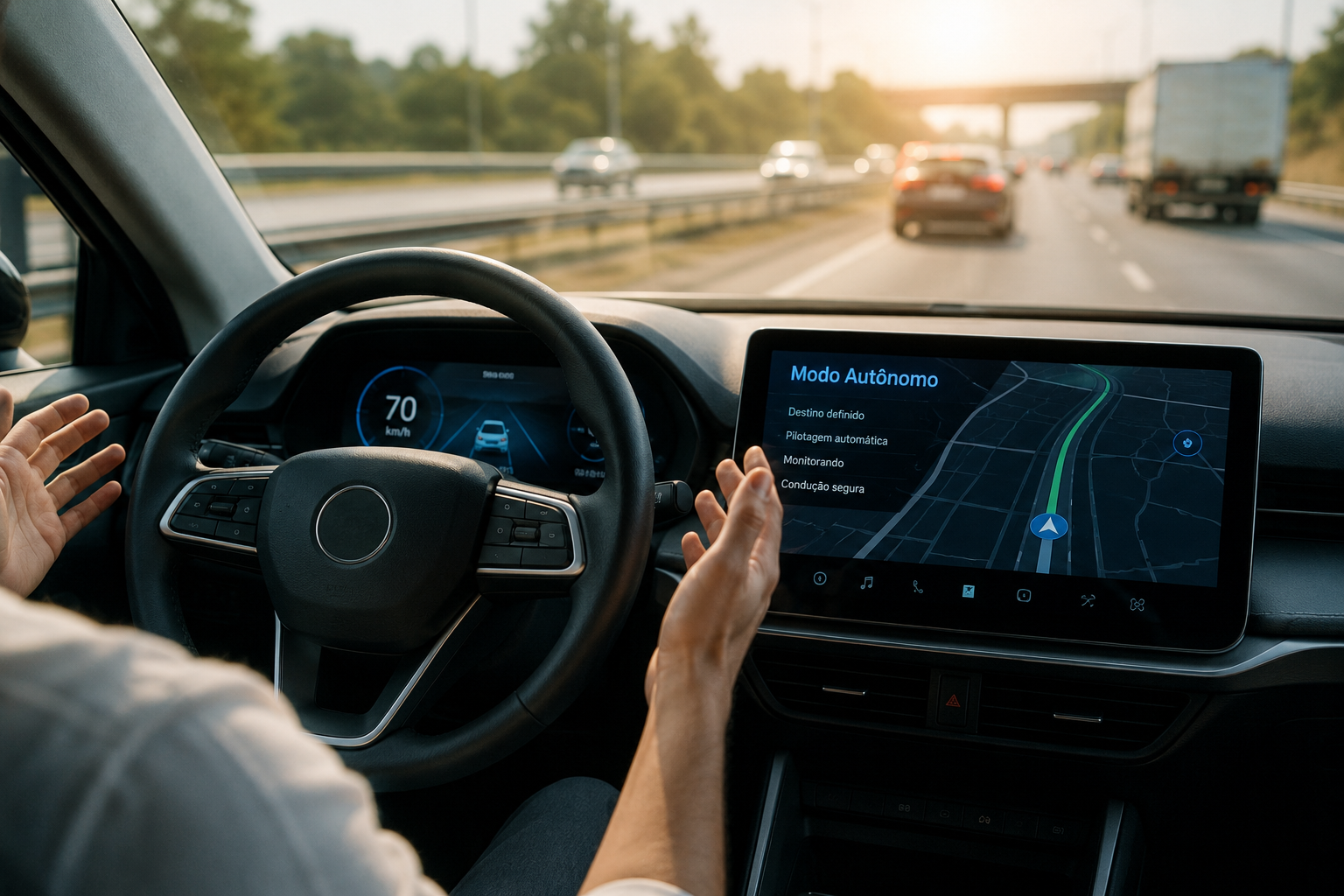
If we look at the contemporary automotive industry, the technological leap is impressive. Today, even entry-level models are beginning to incorporate protection packages that, just a few years ago, were exclusive to luxury sedans. We are talking about autonomous emergency braking systems, collision and blind spot alerts, lane keeping assistants, multiple airbags, and connectivity that monitors the vehicle in real time. The car is no longer just a transport machine to become an intelligent ecosystem, programmed to predict and mitigate errors.
Almost three deaths per hour in Brazilian
traffic However, this formidable technological armor comes up against an analog and highly unpredictable obstacle on a daily basis: the human factor. While engineering invests billions to create fail-safe cabins on the streets, what we are witnessing is a chronic epidemic of speeding, uninterrupted use of cell phones while driving, aggressiveness, and recklessness. The driver of the twenty-first century has, perhaps, the most fragmented attention span in history. To get an idea of the dimension of this crisis, data from the National Public Security Information System (Sinesp) released at the end of July 2026 show that Brazil registers an alarming average of 67 deaths per day in traffic accidents.
This creates a dangerous paradox on the asphalt. There is a behavioral theory known as “risk homeostasis” that suggests that when we feel more protected by technology, we tend to engage in riskier behaviors. The false sense of invincibility that a modern car with a top safety rating can convey ends up encouraging some drivers to accelerate more or take their eyes off the road to respond to a quick message.
We must face the reality that technology helps reduce the severity of accidents, but it does not override the laws of physics, much less replace common sense. A braking assistant can indeed save a life, but it is not designed to be a poetic license for inattention. The machine does its part, but the decision to stay focused remains entirely ours.
In our daily lives, following the journey of millions of Brazilians in the search for the next vehicle, we clearly notice that safety has become a decisive factor in purchasing. There is a growing demand for used and used cars that are increasingly equipped. The renewal of the circulating fleet and the democratization of access to active and passive safety technologies through the second-hand market is a tremendous advance for society. It makes innovation leave the auto shows and protect royal families.
Technology alone does not work miracles
However, access to a smarter and safer car requires a driver who is equally aware of his role in the mobility gear. There is no point in having avenues full of vehicles capable of braking on their own if we continue to keep our eyes fixed on smartphone screens instead of paying attention to the traffic light, the cyclist or the pedestrian.
Therefore, the “Slow Down” message of National Traffic Week gains an extra layer of meaning. Slowing down is not just about taking your foot off the right pedal to avoid fines. It is also about slowing down the anxiety of being connected all the time, the unjustified haste and the impulse that turns traffic into an environment of dispute.
The car of the future has already arrived and is parked in many of our garages. It does almost everything for us, except being aware. May this September we also be able to update our behavior. After all, technology is a fantastic tool, but the responsibility of valuing life will always be of those in charge.

SEE MORE ABOUT

0 Comments
Comments are the sole responsibility of their authors and do not represent the opinion of this site. Comments containing profanity or offensive language will not be published. If you identify anything that violates the terms of use, please report it.