


Technology becomes an ally in choosing the right car
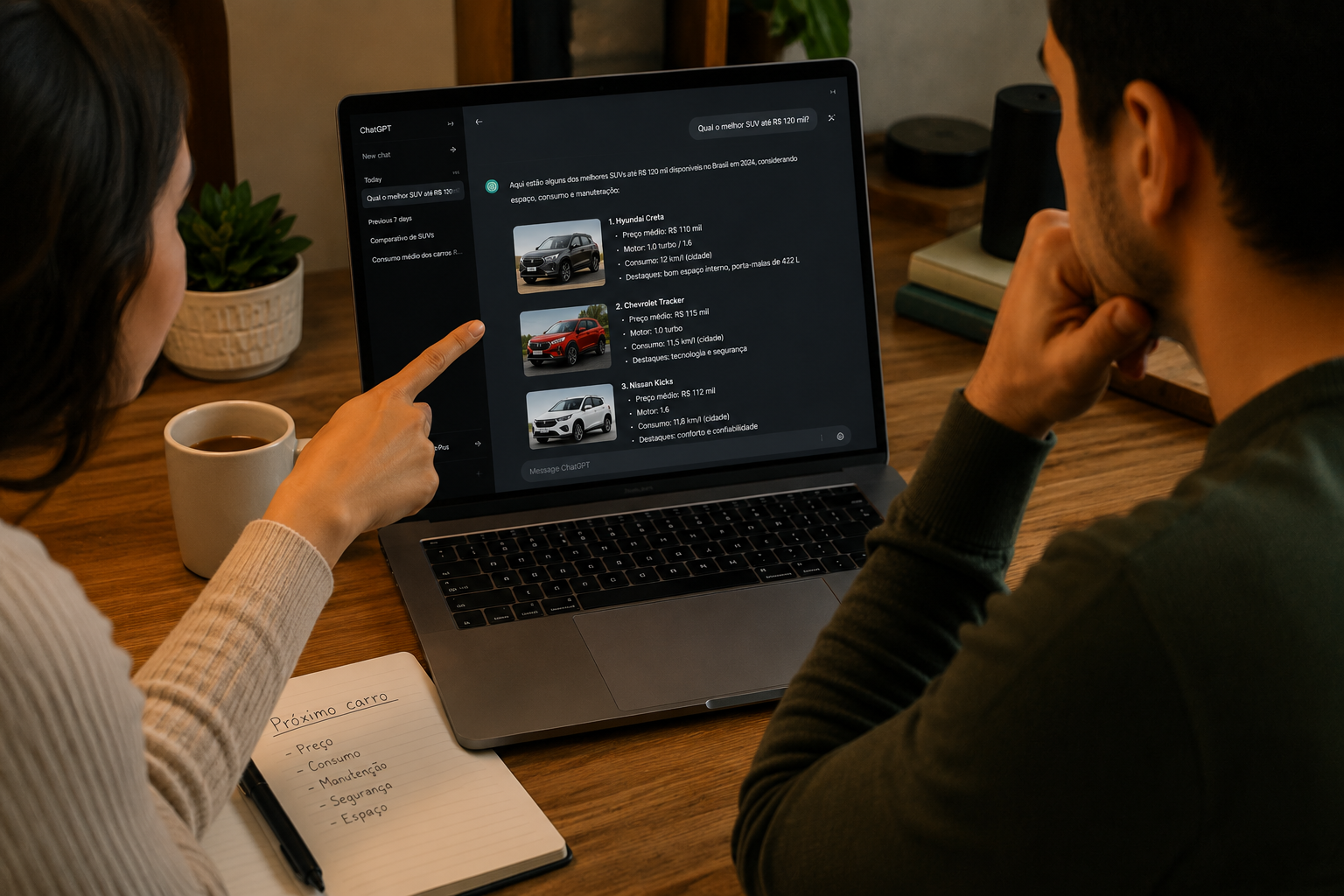
How technology has transformed the online sale of cars into a trusted experience, in a segment that goes beyond the financial transaction
By
Flávio Passos
Published on 2026-08-01 at 09:00 AM
Published on 2026-08-01 at 09:00 AM
Be the first to comment.
Summarize with:
Buying a car has never been just a financial transaction. It is a choice loaded with an impact on the budget, expectations and, often, a lot of emotion. Historically, in the used and used market, this decision has always depended on a highly subjective factor: “eye to eye”. The confidence was sealed with a handshake and that classic, but unscientific, kick in the tire. The great challenge we have taken on in our industry in the last decade was to answer a central question: how to transport this same emotional and practical security to the digital environment?
SEE ALSO:
- Hybrid cars are key to more sustainable mobility
- Localiza’s ‘bet’ may impact the used electric car market
- When does the cost of use exceed the purchase price?
Until a few years ago, the internet was seen only as a big ad counter, which inevitably ran into the barrier of fear and distrust. Today, the reality that I follow daily shows us the opposite. We closed the year 2025 with an all-time record in Brazil: more than 18.5 million used and used vehicles sold, an increase of 17.3% compared to 2024, according to consolidated data from Fenauto. Although the economic context always drives part of this demand, technological evolution also has its responsibility in making this massive volume of transactions viable.
What we are experiencing is not a simple digitalization of consumption, but a reengineering of trust. It has ceased to be a strictly interpersonal and intuitive attribute to become a data-driven asset. The information asymmetry, that old dynamic in which the seller held all the technical knowledge while the buyer navigated blindly, simply collapsed. Technology has stepped in as the balance keeper, ensuring that both ends of the negotiation table operate with clarity and predictability.
For the consumer, the online journey has become a process of continuous validation. Instead of hoping to have made a good deal, today’s buyer has the complete “biography” of the vehicle at his disposal. Quick access to vehicle histories, structural reports, real-time pricing intelligence, and reviews from other users have created an architecture of transparency in which unwanted surprises are quickly mitigated even before the car is seen live.
On the other hand, we cannot forget who sells, whether it is a professional shopkeeper or a private owner. The pain of insecurity has never been exclusive to those who buy. And it is in this aspect that the backstage of technology operates even more intensely. Advanced identity verification, biometrics, and artificial intelligence models act as an invisible filter. They identify suspicious behavior and block fraud attempts before the first “hello” is exchanged, establishing a safer environment for genuine business to flourish.
Throughout my time following the evolution of automotive retail, I find it fascinating that all this digitalization does not cancel out the physical experience. On the contrary, it resignifies it. The purchase of a car still culminates, in large part, in a face-to-face meeting to hand over the keys. The magic of today’s tools lies in removing the friction and anxiety that precedes this moment. The online environment prepares, certifies and brings the parties together; The store’s sidewalk or the physical meeting only materializes a choice that was already made and attested by data.
This new ecosystem has forged a more pragmatic and mature consumer. He researches for weeks, crosses indicators and arrives at the seller knowing exactly what he is looking for and what the fair value of the good is. To get a dimension of this change, the most recent study by Radar Autos, produced by Data OLX Autos, revealed that 89% of Brazilians point to vehicle history as the most decisive attribute in the purchase journey.
In light of this, this customer no longer seeks to be persuaded by commercial rhetoric or vague speeches; He demands that his journey be made easier by facts. This is exactly where the role of platforms transforms. We are no longer just a static connecting link to take responsibility for the integrity of each transaction.
When I look at the immediate future of the used car market in Brazil, I don’t see disruptions based on science fiction, such as test drives solved with virtual reality glasses on the living room sofa. The future we are already building is based on the invisibility of friction. I’m talking about integrating journeys that connect credit, history, and identity verification into a single flow. The goal is not to intermediate the financial transaction, but to ensure that the business happens fluidly, quickly and with the necessary confidence.
The Brazilian market for used and used cars has proven its resilience and has consolidated itself as an unquestionable economic pillar. However, the real engine of this gear no longer resides only under the hood of automobiles, but in algorithms, data, and fraud prevention. The handshake continues to exist and seal exciting deals throughout the country. The difference is that now it starts on a screen, strengthened by the robustness of information that technology has finally made possible.

SEE MORE ABOUT

0 Comments
Comments are the sole responsibility of their authors and do not represent the opinion of this site. Comments containing profanity or offensive language will not be published. If you identify anything that violates the terms of use, please report it.