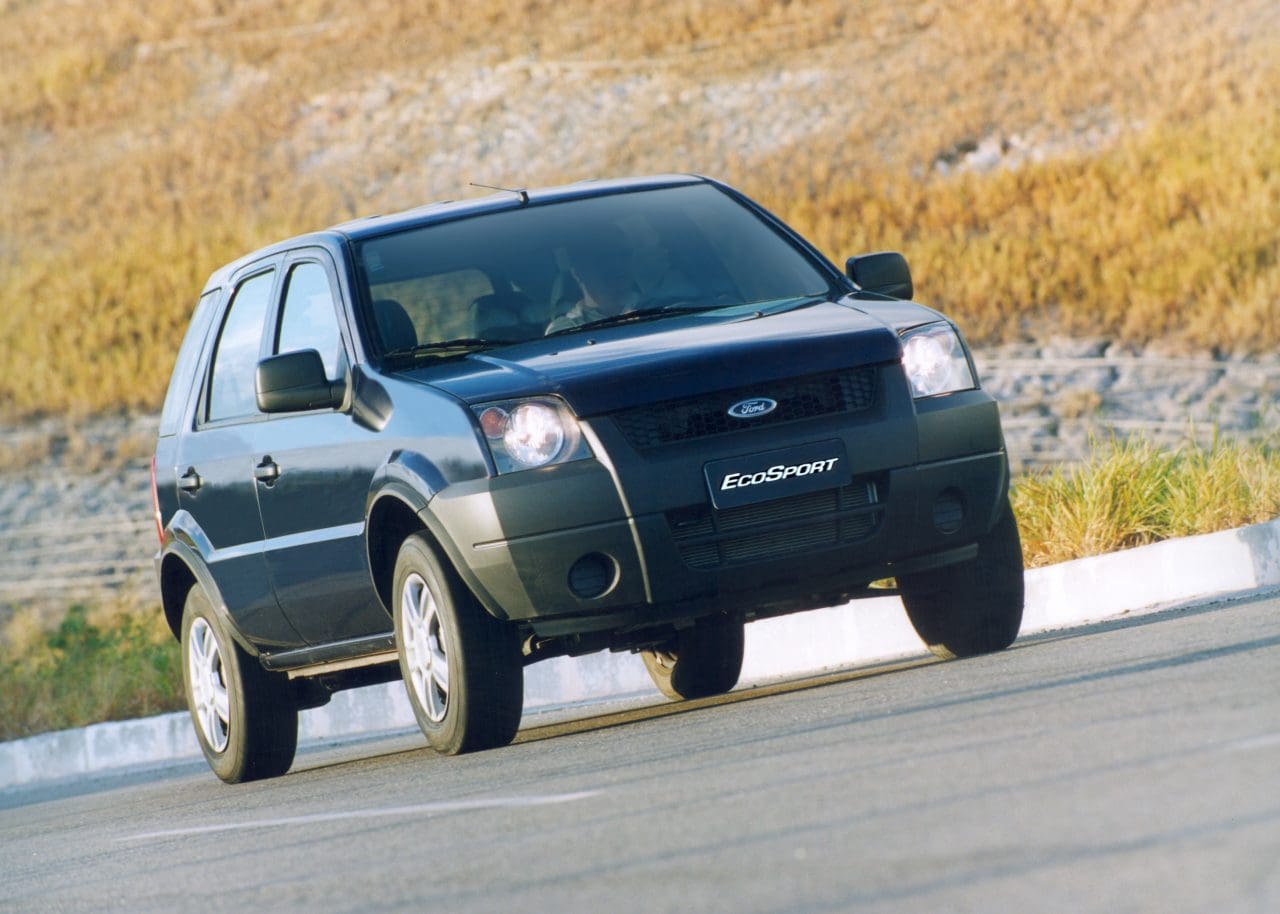
In the early 2000s, Ford hit the nail on the head. While most automakers bet on minivans to serve Brazilian families, the American brand launched, in 2003, the EcoSport, the first compact SUV produced in Brazil and developed according to the needs of the national consumer. Instead of the large imported SUVs that dominated the imagination of those who dreamed of an SUV, Ford created a smaller, more affordable model based on the Fiesta platform, which allowed it to accelerate its development and production.
While Mercedes-Benz A-Class, Renault Scénic, Citroën Xsara Picasso, Fiat Idea and Chevrolet Meriva competed for consumer preference, Ford came up with a different proposal. The EcoSport offered an adventurous look, an elevated driving position and an image much closer to the SUVs that were successful abroad. The result was immediate: the model quickly conquered the Brazilian market and started to sell in volumes much higher than those of competing minivans.
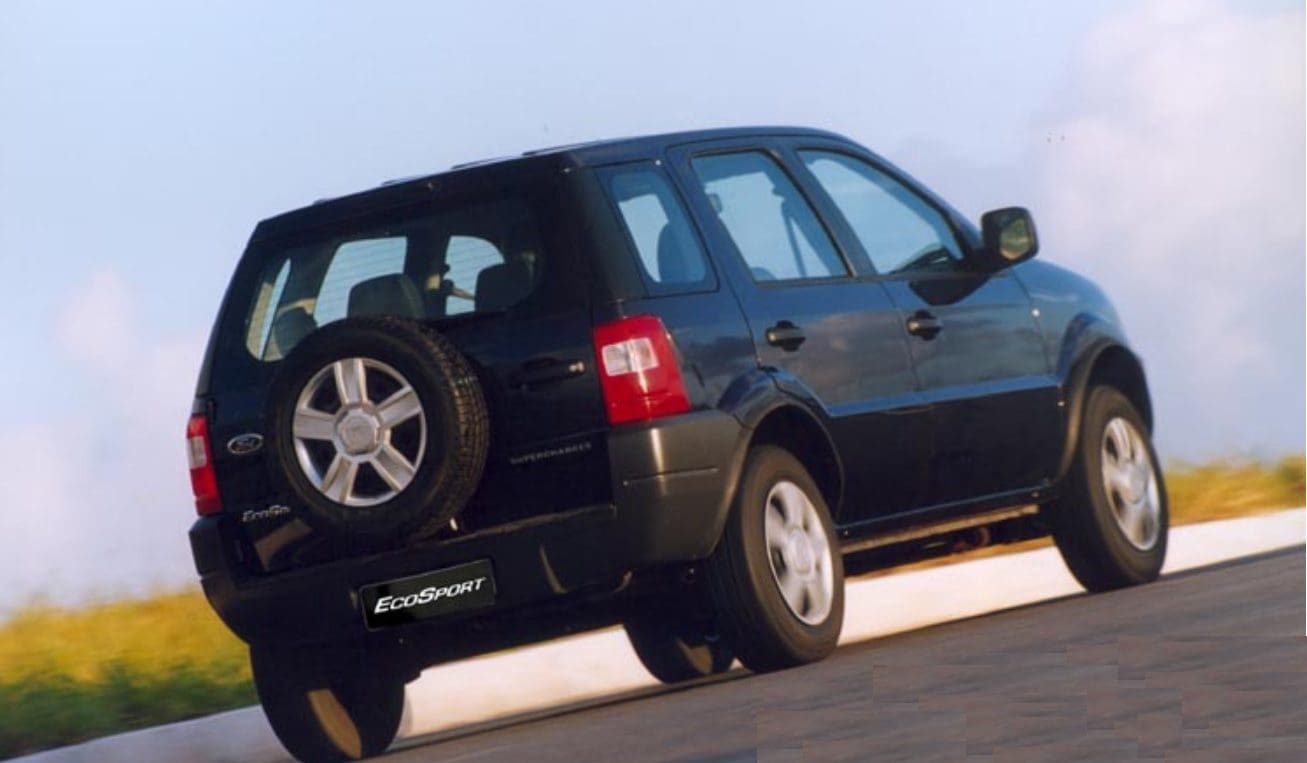
Launched in 2003, the EcoSport was offered with three engine options: 1.0 Supercharger Zetec Rocam of 95 hp, 1.6 Zetec Rocam of 98 hp, and the 2.0 Duratec of up to 143 hp. Ford’s strategy with version 1.0 was quite clear. At the time, vehicles equipped with engines of up to one liter benefited from reduced IPI and ICMS rates, allowing more competitive prices to the final consumer.
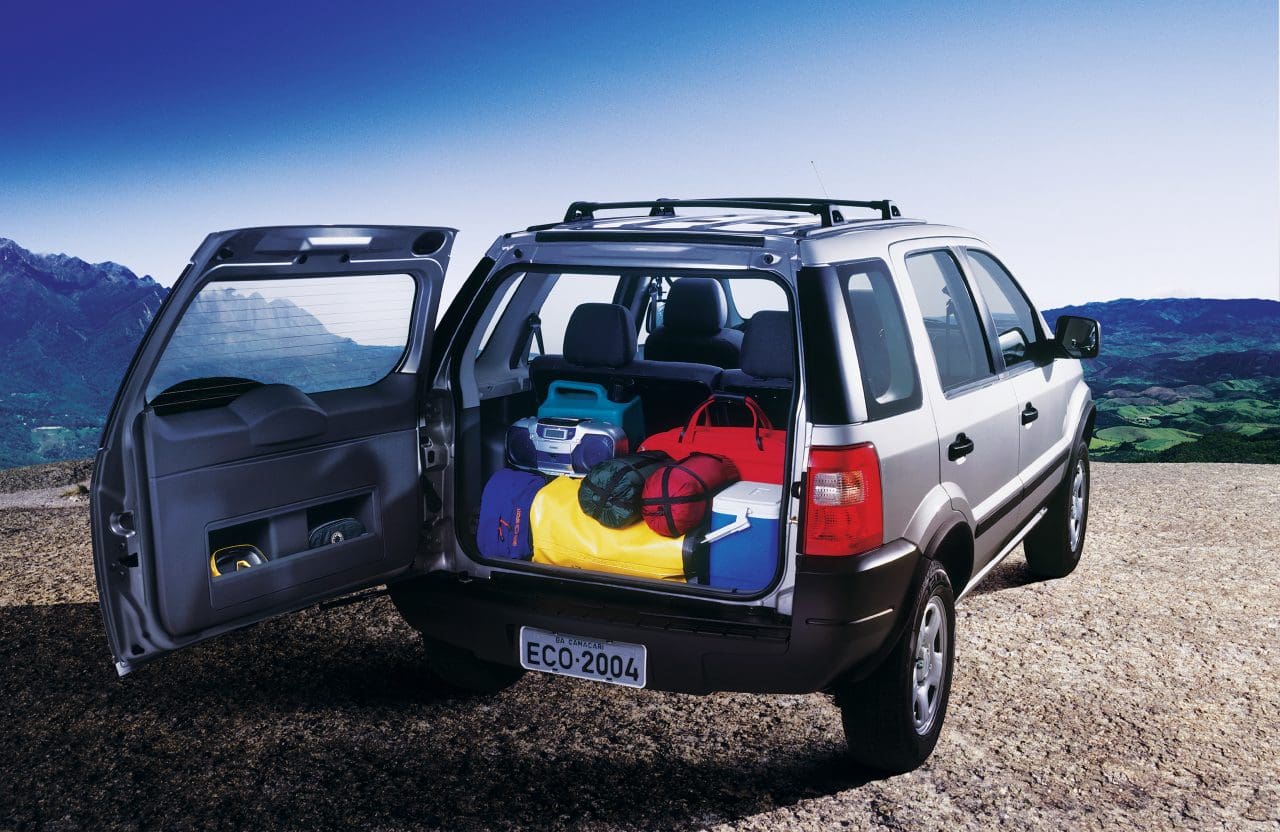
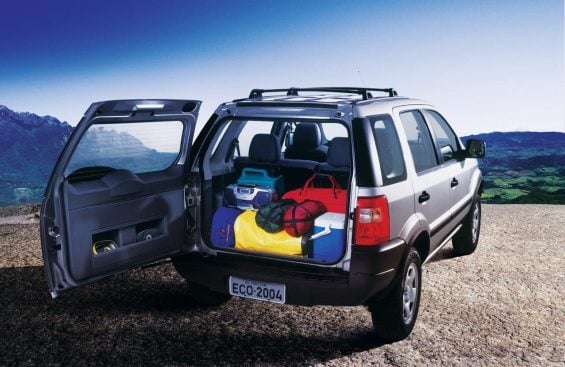
Supercharger version was the only one with plastic hubcaps and without the roof rack (Photo: Ford | Disclosure)
The brand’s executives believed that a compact SUV with a price close to that of a popular car would have enormous acceptance in the market. The expectation was that the EcoSport 1.0 would sell in high volumes, taking advantage of both the success of the segment and the tax incentives offered to models with smaller displacement.
The Brazilian consumer had really fallen in love with SUVs, and Ford had merit in noticing this trend before competitors. The problem is that those who wanted a sport utility vehicle didn’t want a 1.0 engine under the hood. At that time, engines of this displacement were strongly associated with entry-level cars, bought mainly by those looking for savings and low acquisition costs.
Even equipped with a mechanical compressor to increase power and torque, the small Zetec Rocam could not change this perception. The buyer of an SUV wanted performance compatible with the vehicle’s image, regardless of its size.
In addition, the price difference between the versions was not so great. At the time of launch, the EcoSport 1.0 Supercharger cost around R$ 31 thousand, while the 1.6 version was sold for approximately R$ 35 thousand. In exchange for this additional value, the consumer took home a car with superior performance, faster responses to the accelerator and even more balanced consumption in certain situations of use. Given this scenario, the market’s choice was practically automatic: tradition and reliability of the 1.6 engine.
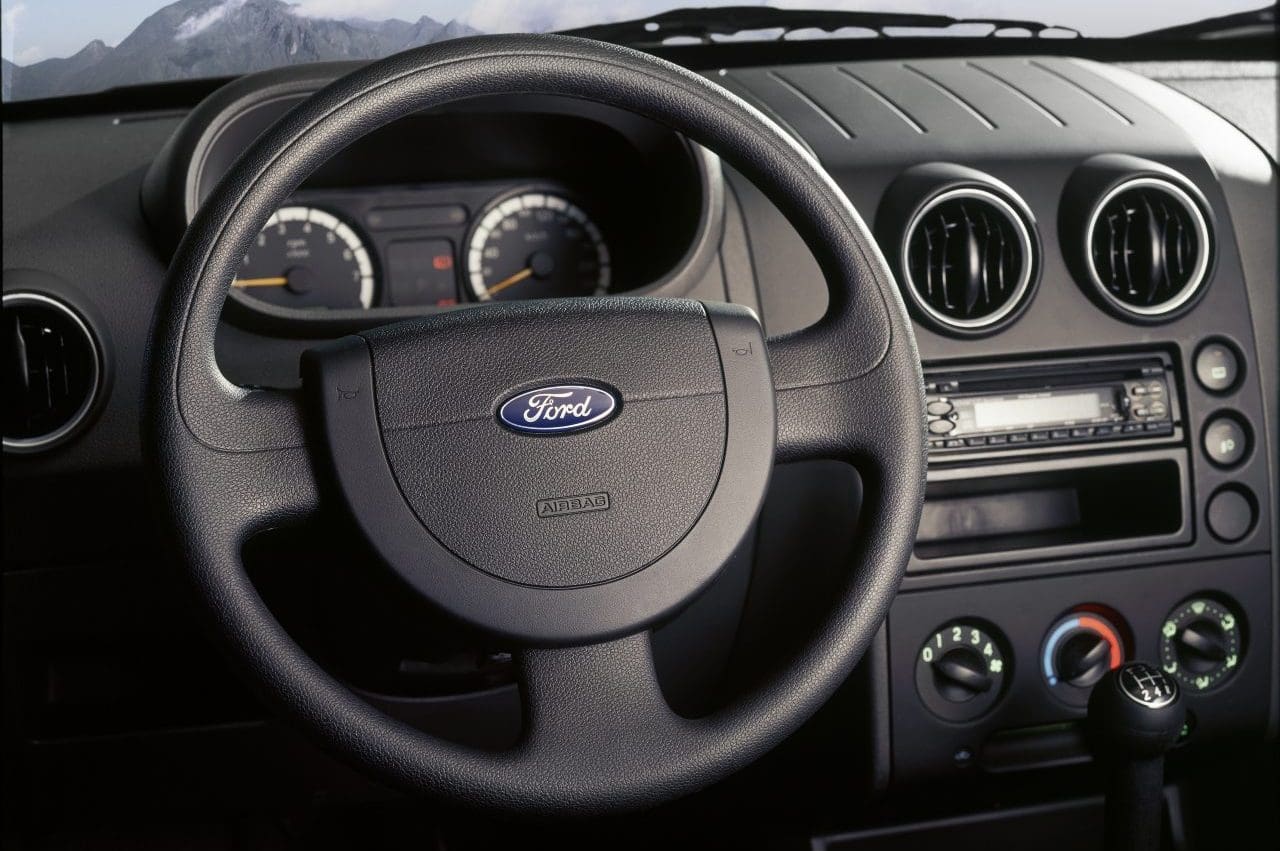
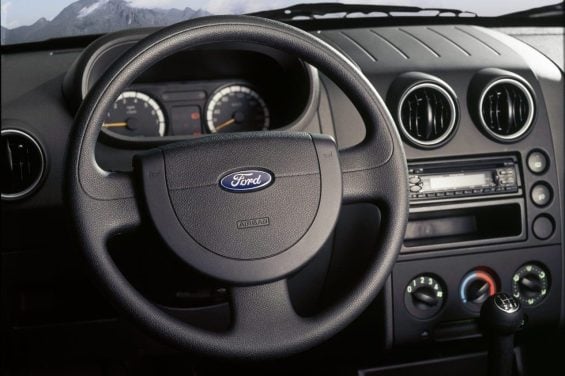
The 95 hp engine was already suffocating, loaded so it was necessary to be patient on the road (Photo: Ford | Disclosure)Air conditioning was optional (Photo: Ford | Disclosure)
While the EcoSport was consolidating itself as one of Ford’s biggest commercial successes in Brazil, the 1.0 Supercharger version followed a completely different path. Sales were very low and the model never managed to win the trust of consumers. After only three years on the market, Ford decided to end its production in 2006. The EcoSport 1.0 was discontinued discreetly and without leaving successors.
To further complicate its trajectory, the Supercharger system required some specific maintenance care. The mechanical compressor used its own lubrication and many owners and workshops were unaware of the correct maintenance recommendations. Over time, cases of premature wear of the set, excessive increase in noise, loss of performance and significant growth in fuel consumption were not rare.
Thus, the version that was born to be the most affordable in the line ended up becoming one of the least desired. The EcoSport became a huge market success, but its 1.0 Supercharger configuration went down in history as an experience that did not find harmony with the profile of the Brazilian consumer at the time. Another curious chapter of the national automobile industry.
Comments are the sole responsibility of their authors and do not represent the opinion of this site. Comments containing profanity or offensive language will not be published. If you identify anything that violates the terms of use, please report it.