


When does the cost of use exceed the purchase price?
Moments of economic uncertainty, and even geopolitical imbroglios, influence the purchase of cars by Brazilians
By
Flávio Passos
Published on 2026-07-04 at 11:00 AM
Published on 2026-07-04 at 11:00 AM
Be the first to comment.
Summarize with:
Anyone who has been working in the automotive market for some time realizes one thing: the purchase of cars is one of the first thermometers of the economy. Before any official indicator, before retail numbers, before consumer confidence reports, the behavior of those who are looking for a car already says a lot about what people are feeling. And what they are feeling today is a mixture of caution, pragmatism and the desire not to make a mistake in the decision.
SEE ALSO:
- Hybrid cars are key to more sustainable mobility
- Localiza’s ‘bet’ may impact the used electric car market
- Chinese cars have redesigned the used car market in Brazil
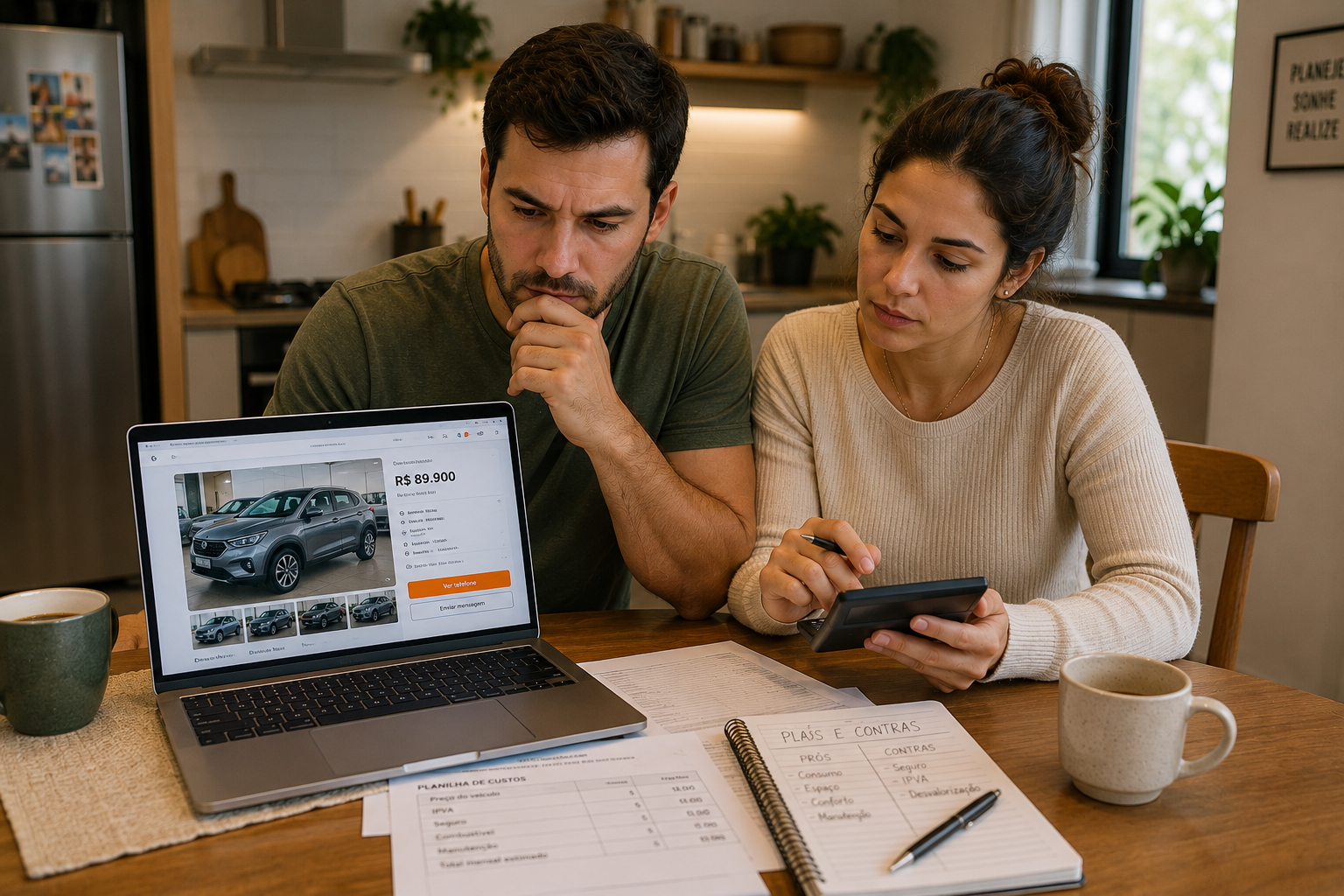
This is not historical news. In every moment of economic instability, the automotive market reacts in a very predictable way: the consumer does not stop wanting to buy, but profoundly changes the way he buys. He researches, compares and ponders more. Momentum gives way to calculation. And the calculation, invariably, goes through the long-term budget, not just the entry price.
What has drawn attention in recent months is that this perception of instability does not come only from internal factors. Brazil is inserted in a global context that pressures expectations even when the problem is thousands of kilometers from here. Geopolitical conflicts, tensions in the supply of energy, fluctuations in the price of oil – all this reaches the Brazilian consumer through a simple and direct reading: if it is complicated abroad, here it can become more expensive.
A recent example makes this clear. A survey conducted by Data OLX Autos in April 2026, with 541 buyers interested in automobiles, measured the impact of the conflict in the Middle East on vehicle purchase intentions in Brazil. The result: 62% of respondents said that the economic uncertainties generated by this scenario influence their purchase decision. The index rises to 75% among those looking for used cars and reaches 74% among women. These are not alarming numbers, but they are numbers of real attention. They show that the consumer is connected to what happens in the world and that this connection has concrete weight when deciding.
In practice, this influence changes the criteria for choice. Among those who declared feeling this impact, about 70% started to prioritize vehicles with lower fuel consumption. In my reading, this reflects something broader: the buyer is increasingly attentive to the cost of use, not just the purchase price. The question that used to be “what car do I want?” begins to be accompanied by another – “how much will this car cost me over time?” – and this change in mentality is one of the most relevant transformations I have observed in the behavior of the Brazilian consumer.
This movement also appears clearly among those who do not yet have a car. In this group, 37% are reevaluating the available budget and 30% have started to consider used cars instead of new ones. The consumer does not abandon the intention to buy – he reorganizes the choice. It seeks more predictable alternatives that are more compatible with the moment. This is where the used and used car market gains strength, not for lack of option, but because it makes more sense within the equation of the moment.
It is also worth mentioning a fact that reveals an interesting paradox: despite all the concern about fuel, 65% of respondents do not consider buying a hybrid or electric vehicle, and almost 60% continue to prefer traditional combustion models. The search for efficiency exists, but it still coexists with a real resistance to technology change. Infrastructure, trust, and price of entry remain concrete barriers for most of the public.
What all this reveals is that periods of uncertainty transform the buyer’s profile. They do not keep him away from the market, but make him more demanding, judicious and difficult to convince with superficial arguments. He wants to understand what he is buying, he wants to trust who is selling and he wants to be clear about what that decision will represent in his pocket over time.
For the automotive sector, this scenario requires a different posture. It’s not enough to have the right product. It is necessary to communicate the right value, at the right time, to a consumer who has his radar on and his patience calibrated. Transparency, information and trust are no longer differentials – they have become a requirement. And those who understand this before will come out ahead, regardless of how the external scenario develops.

SEE MORE ABOUT

0 Comments
Comments are the sole responsibility of their authors and do not represent the opinion of this site. Comments containing profanity or offensive language will not be published. If you identify anything that violates the terms of use, please report it.