


Not giving way in the left lane can generate a fine, even if you are at the maximum speed allowed
Failing to give way in the left lane when another vehicle requests it is a traffic violation that yields a fine and points on the CNH; understand why
By
Julia Vargas
Published on 2026-09-04 at 03:00 PM
Published on 2026-09-04 at 03:00 PM
Be the first to comment.
Summarize with:
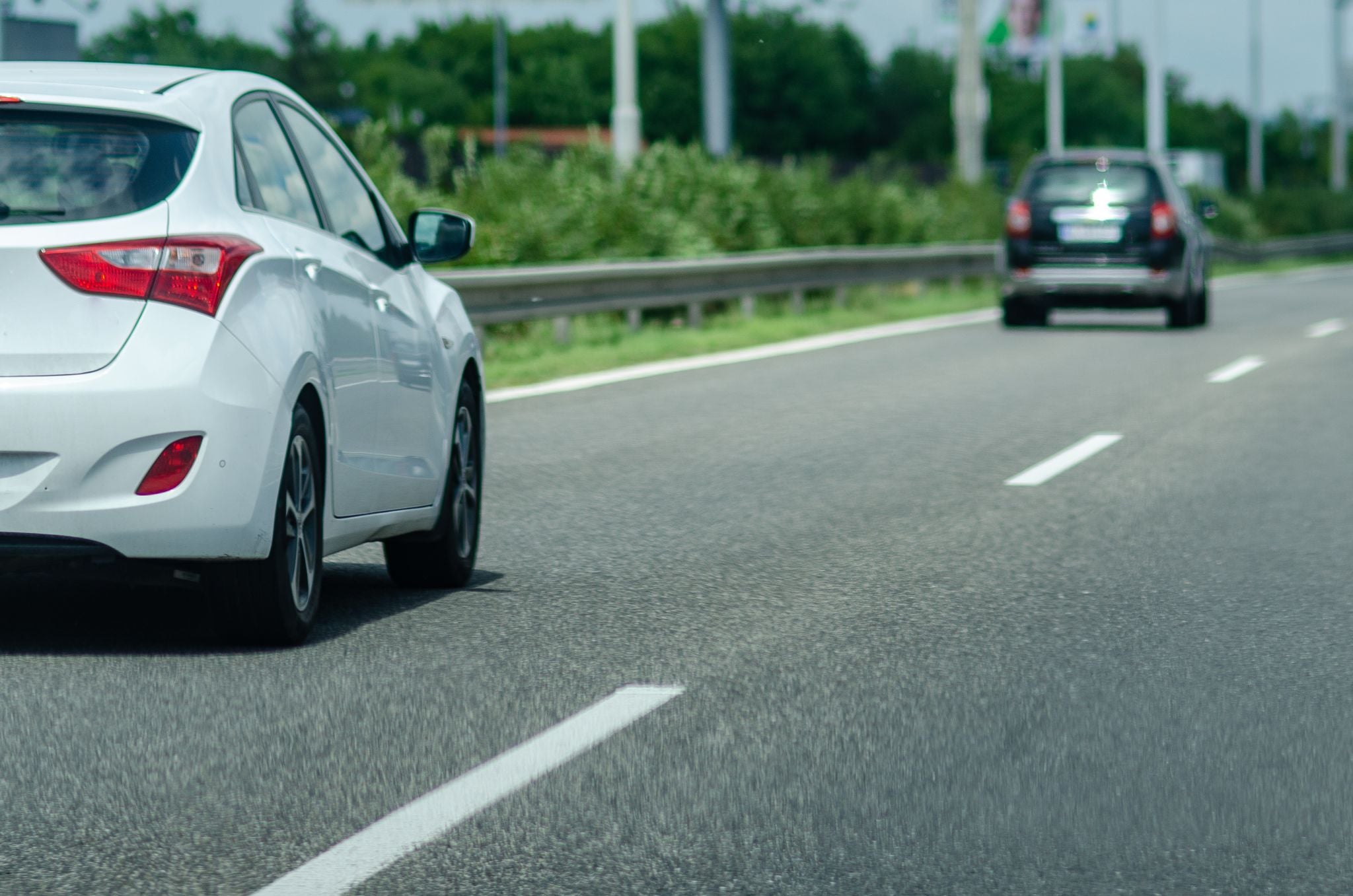
Did you know that you can be fined for being in the left lane, even if your vehicle is within the speed limit? This is because a driver cannot remain indefinitely in that portion of the lane and prevent another vehicle from passing, even if it exceeds the maximum allowed limit.
The Brazilian Traffic Code (CTB) establishes a specific infraction for those who fail to give way when another driver requests to overtake. The situation is common especially on highways. One vehicle travels in the left lane within the allowed speed, while another approaches from behind and signals that it wants to overtake, either by activating the headlights or by another regulatory signal.
SEE ALSO:
- Can a traffic violation lead to jail? Understand!
- No overtaking: see what are the situations and amounts of fines
- Can you use the high beam to signal overtaking? See what the CTB says
In these cases, the driver in front must facilitate overtaking, as long as the lane change can be done safely.
What does the Brazilian Traffic Code (CTB) say?
According to article 198 of the CTB, it is an infraction:
Failing to give way on the left,
when requested
- Infraction – average (4 points);
- Penalty – fine (R$ 130.16).
The rule seeks to ensure greater traffic fluidity and prevent vehicles from remaining unnecessarily in the lane intended, especially on highways, for overtaking. Therefore, after completing an overtaking, the driver must return to the right lane whenever there are safe conditions for it.
I’m at the speed limit. Do I need to give way? Can I get a fine?
The answer is: yes. Respecting the speed limit of the road does not eliminate the obligation to facilitate overtaking when there is a request and safe conditions to perform the maneuver. Consultant and professor of Traffic Law Julyver Modesto explains:
It is important to note that, according to article 29 (CTB), item IV, when the carriageway has several lanes of circulation in the same direction, the left lane is intended for overtaking and moving vehicles at HIGHER SPEED; therefore, even if a certain vehicle is already within the speed limit established for the road, its driver must still leave the left lane free, when he realizes that another, at higher speed, is approaching, that is, the fact of the potential commission of a traffic violation by the fastest one, due to the excess practiced, does not remove the requirement established for the driver who, at that moment, is not at higher speed, in relation to everyone who travels on the same road.”
In other words, the two situations are independent. If the vehicle approaching from behind is above the allowed speed, the driver who is exceeding the limit may be fined for the corresponding infraction. This, however, does not authorize the driver in front to deliberately remain in the left lane to prevent the passage.
It is up to the bodies responsible for inspection to identify and fine any speeding. Each driver, in turn, must comply with the traffic rules that apply to his own conduct.
Giving way does not mean making a dangerous
maneuver The obligation to facilitate overtaking does not mean that the driver needs to change lanes immediately or put his own safety at risk. Before performing the maneuver, it is necessary to:
- Check the mirrors;
- Observe the movement of other vehicles;
- Signal the intention to change lanes;
- Make sure there is enough space;
- Make the change only when there are safe conditions.
The driver should also not use the shoulder to make way or make sudden movements that may surprise other drivers.
When should the left lane be used?
On highways with more than one lane in the same direction, the left lane is mainly used for overtaking or when traffic conditions require its use. On urban roads, however, the dynamics can be different. Left turns, intersections, traffic lights, exclusive lanes and the volume of traffic can determine how each lane should be used.
Therefore, in addition to the general rules of the CTB, the driver must observe the signs and characteristics of the road.
SEE MORE ABOUT

0 Comments
Comments are the sole responsibility of their authors and do not represent the opinion of this site. Comments containing profanity or offensive language will not be published. If you identify anything that violates the terms of use, please report it.