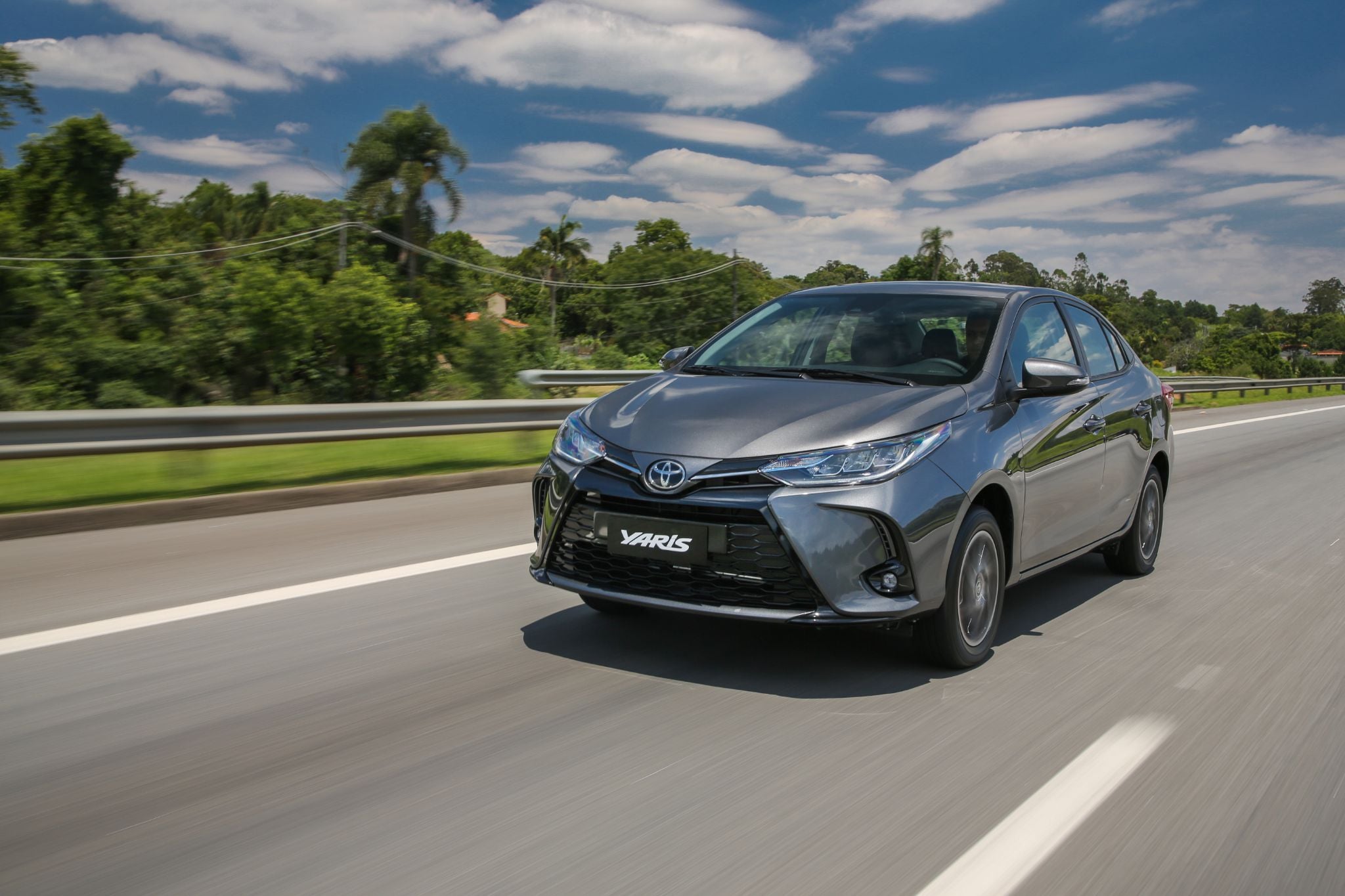
The Toyota Yaris has established itself in the Brazilian market as a rational, discreet and reliable car. The sedan option of the compact also added great interior and trunk space, which made it a good used or semi-new option.
For this reason, the Toyota Yaris Sedan has become a frequent choice among taxi drivers and app drivers, or even families looking for cars with a reputation for durability and little sought after – which is reflected in more attractive insurance quotes.
Even without the emotional appeal of some competitors, the model has built a solid reputation throughout its almost eight years of existence in the country. See now 10 facts about the Toyota Yaris Sedan.
1. Yaris
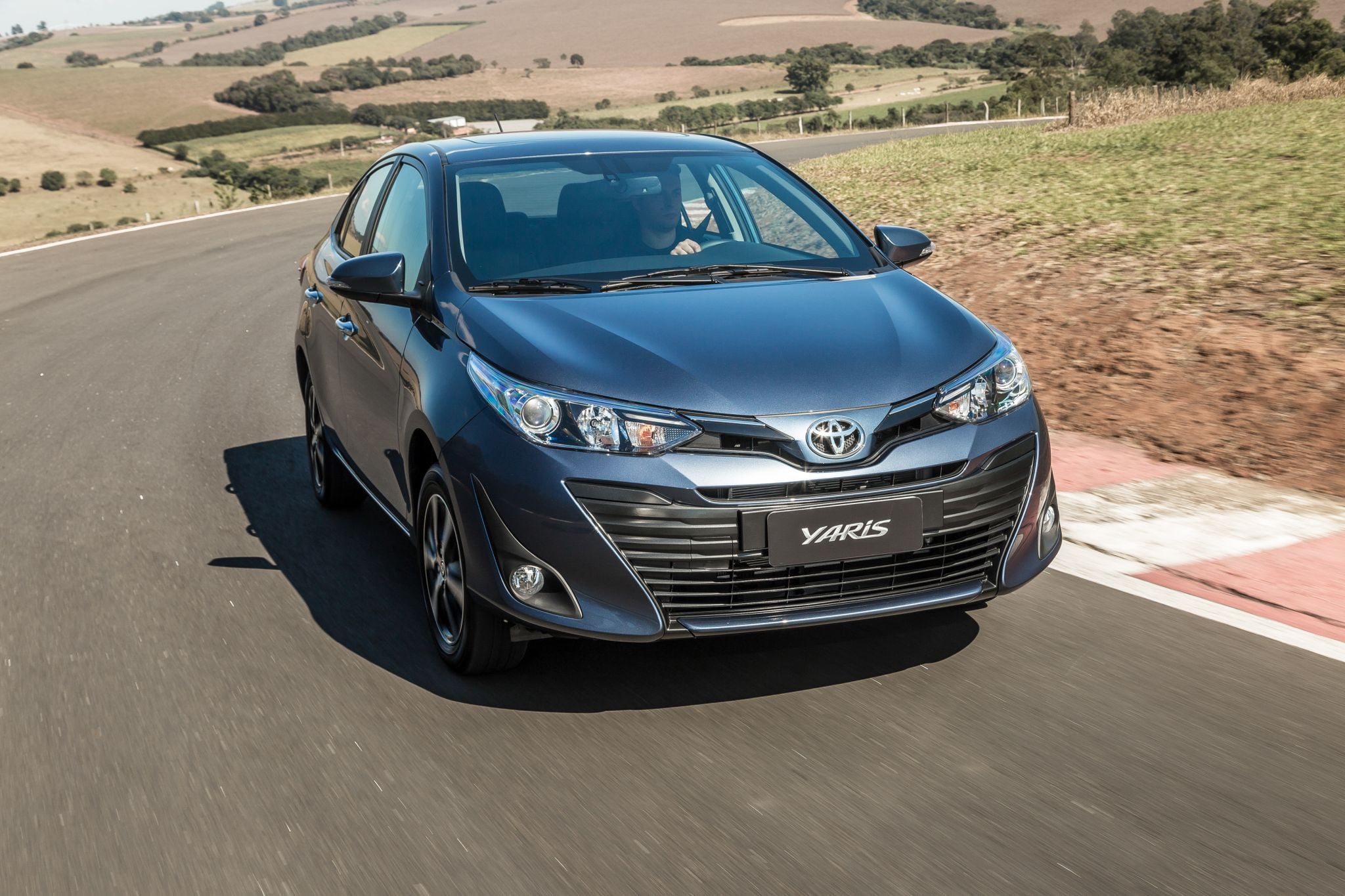
trajectory The Yaris arrived in Brazil in 2018 with the mission of occupying the space between the Etios and the Corolla. The idea was to position it as a premium compact, with more refinement than the Etios and a lower cost of ownership than the famous medium sedan.
Yaris arrived in 2018 to position itself between the Corolla and the Etios (Photo: Toyota | Disclosure
)
Produced in Sorocaba (SP), the Yaris was launched in hatch and sedan bodies, with engines already known from the Toyota line: the 1.3 of up to 101 hp and the 1.5 of up to 110 hp. It also offered versions with manual and automatic CVT transmission.
The restyling in the 2022 line brought a Toyota Yaris with a leaner positioning. The 1.3 engine was discontinued, as well as the versions with manual transmission. Since then, the model has been sold only with the 1.5 and continuously variable transmission.
They were the signs that the Yaris hatch and Sedan would be short-lived. In 2025, the two cars ended production – the Sedan alone totaled 134 thousand units registered since 2018. In place of the duo, Toyota put the Yaris Cross, its first compact SUV.
2. Our Yaris is Asian
Despite carrying the same name, the Brazilian Yaris has no direct relationship with the European model – more modern, with a hybrid version and based on another platform. Our compact derives from the model produced in Thailand and uses the same base as the Etios.
This Asian origin also helps to explain the car’s proposal: a rational compact, with a focus on durability and low maintenance costs, without great technological or design daring.
3. Well Sharp Set
Etios engines are far from being a benchmark in performance, but they deliver good behavior for a compact sedan (Photo: Toyota | Disclosure)
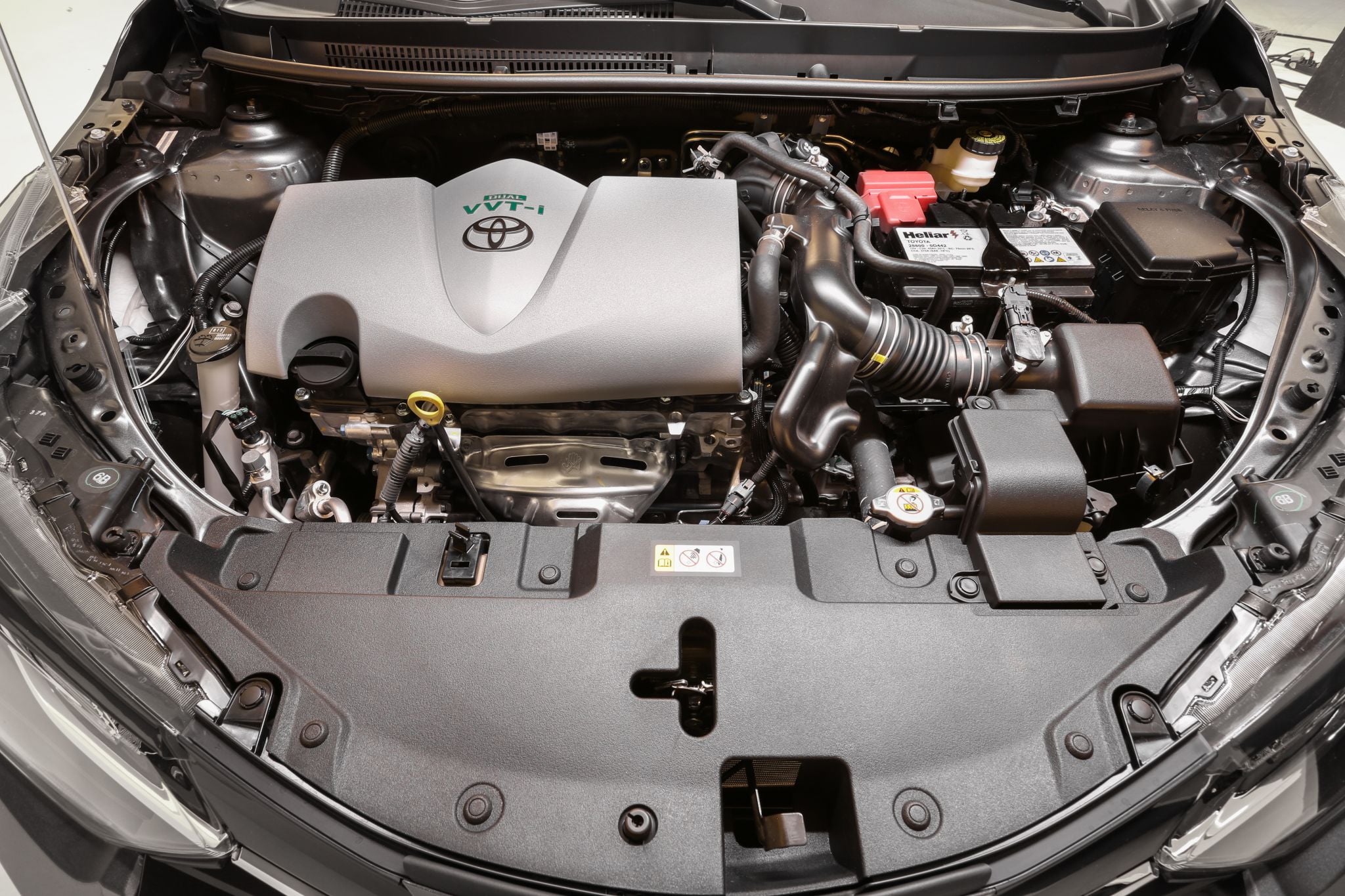
The Yaris’ mechanical set is one of its greatest assets. The 1.3 and 1.5-liter naturally aspirated four-cylinder, multi-valve engines, shared with the Etios, are known for their robustness and simple maintenance. They have dual camshafts and variation in intake and exhaust.
But these engines from the Yaris hatch and Sedan had slightly increased power compared to the Etios. And they work with the simulated seven-speed CVT gearbox that was used in the previous generation Corolla.
If in the medium sedan this box already drew praise, in the Yaris, the combination with the 1.5 engine in particular, results in predictable, smooth and economical behavior – remember that the Yaris is not a performance-oriented car.
4. Performance
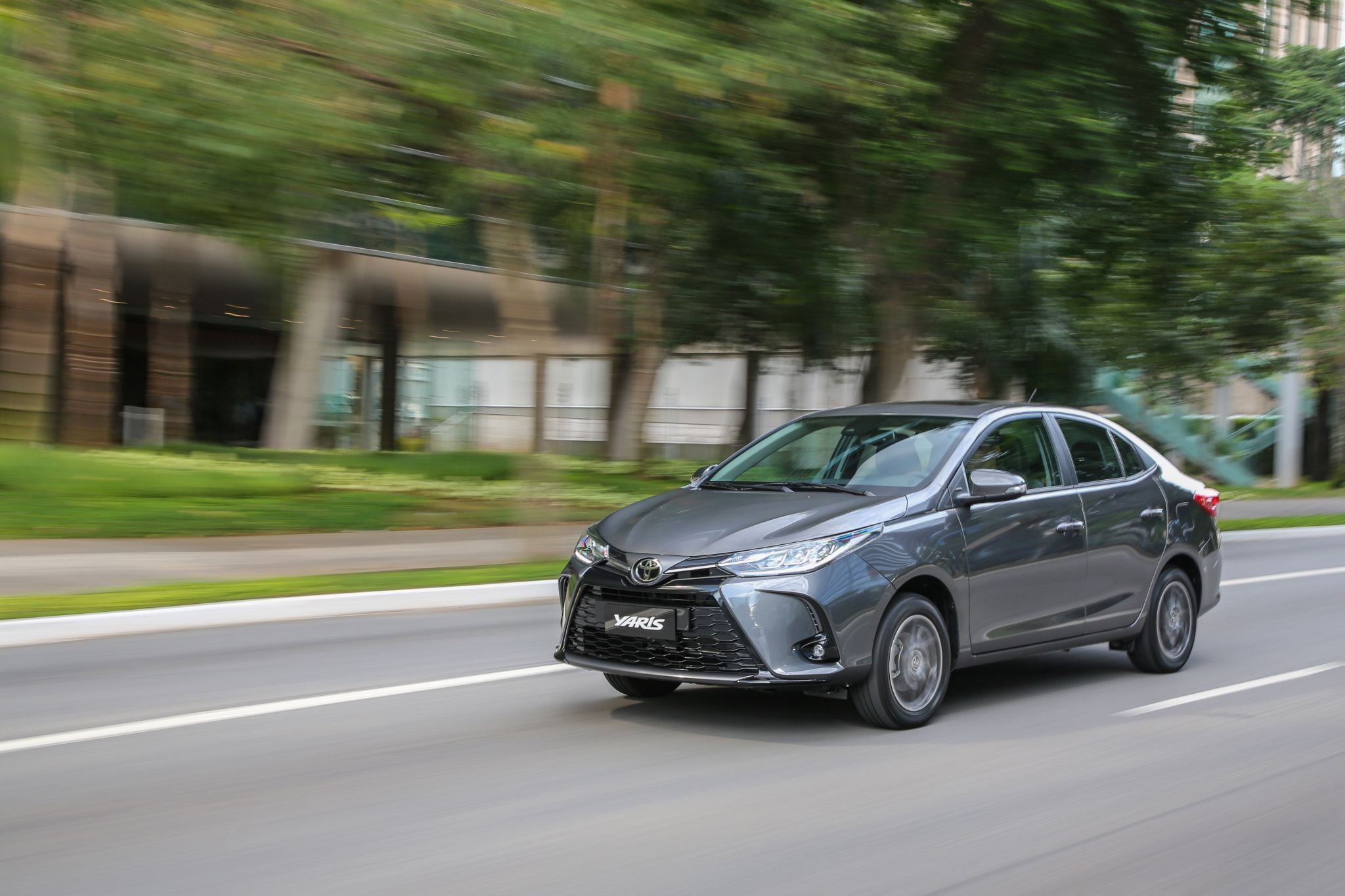
As of 2022, the Yaris Sedan started to use only the 1.5 engine (Photo: Toyota | Disclosure)
The Toyota Yaris was designed to deliver efficiency. In the versions with a 1.3 16V engine – existing until the 2022 face-lift – performance is only sufficient for urban use, with modest accelerations and restrained responses.
The power focuses on 101 hp with ethanol and 94 hp with gasoline. Torque is 12,9 and 12,5 kgfm, respectively, at 4 thousand revolutions. The 0 to 100 km/h is done in 12 seconds and consumption is very interesting.
Toyota Yaris Sedan 1.3 16V AT:
Ethanol: 8.9 km/l (city) and 10.6 km/l (highway)
Gasoline: 13 km/l (city) and 14.4 km/l (highway)
Let’s focus on the Toyota Yaris with a 1.5 16V engine. The engine offers a more comfortable ride, especially on highways, where the car maintains speed with less effort.
There are 110 hp of power with ethanol and 105 hp, when fueled entirely with gasoline. Torque is 14,9 kgfm with vegetable fuel and 14,3 kgfm, with fossil fuel, always at 4 thousand rpm.
The 2022 line brought Eco and Sport driving modes, which adjust the behavior of the gearbox and acceleration. Still, the focus remains on consumption:
Toyota Yaris Sedan 1.5 16V AT:
Ethanol: 8.8 km/l (city) and 10 km/l (highway)
Gasoline: 12.6 km/l (city) and 13.8 km/l (highway)
5. The advantages of the Toyota Yaris Sedan
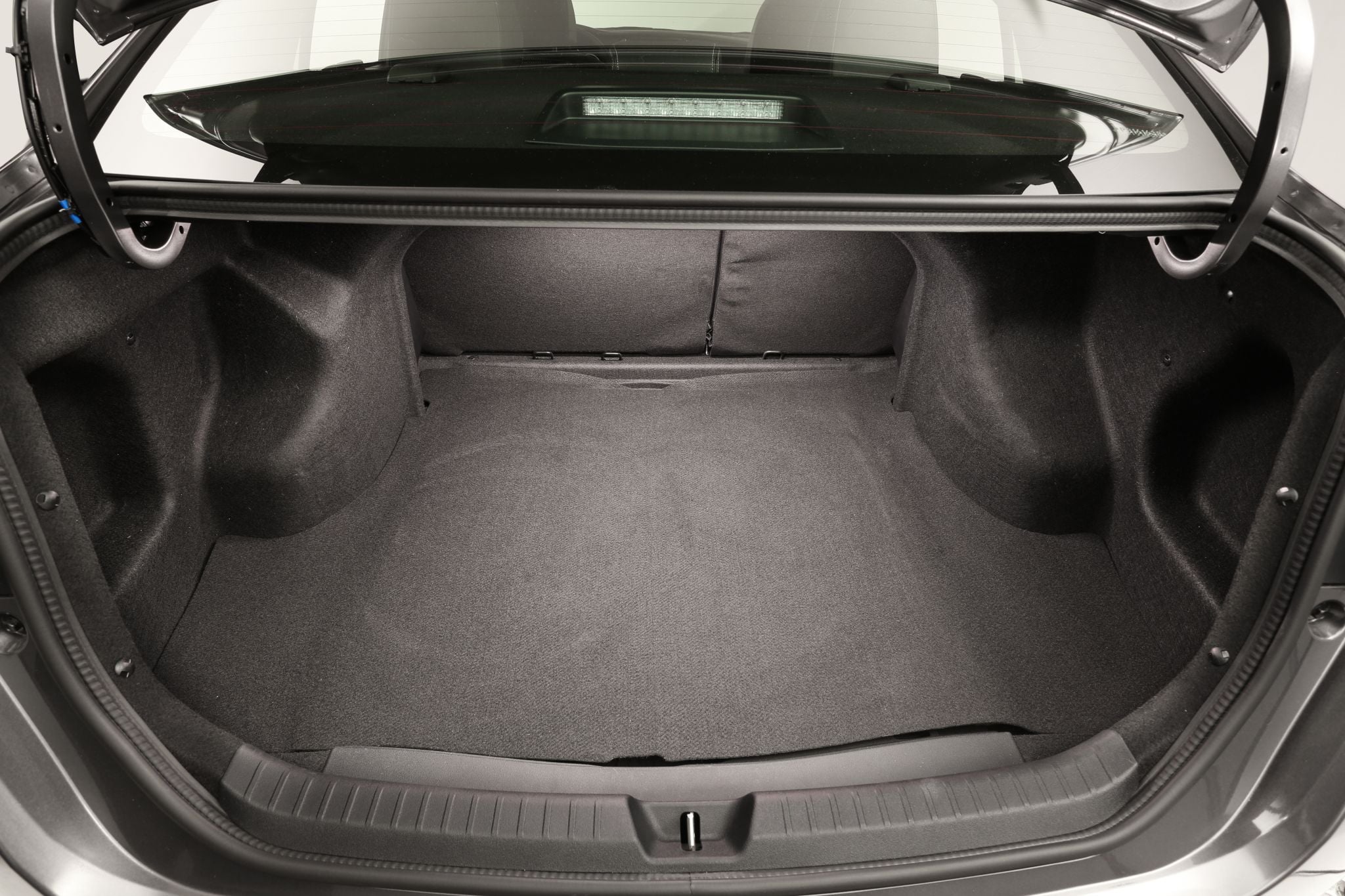
The Toyota Yaris Sedan has the same wheelbase dimensions (2.55 meters) and width (1.73 meters) as the hatch. However, it is 4.42 meters long, 28 cm more and a much better use of the cabin.
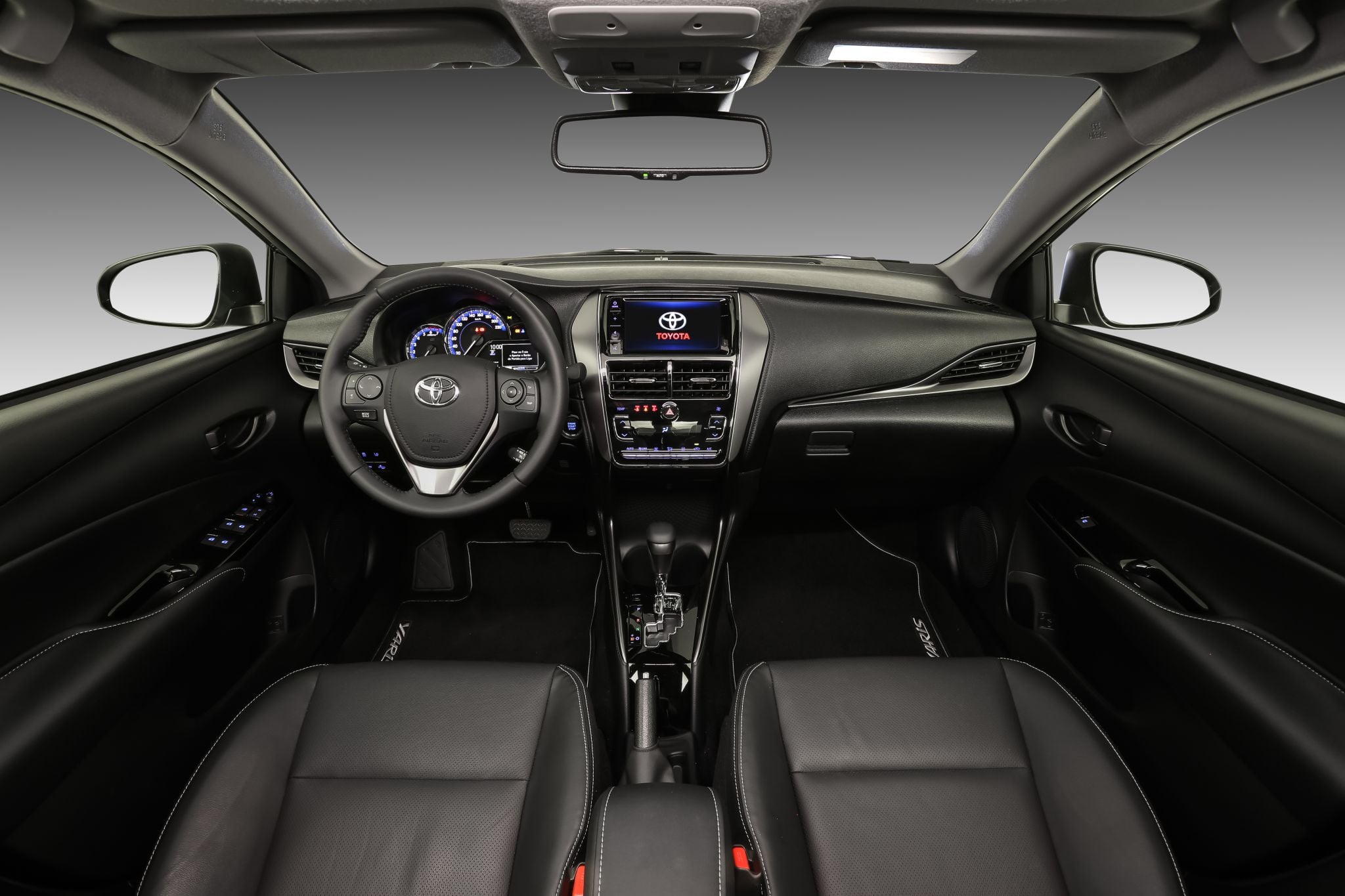
So much so that, in addition to the trunk with a great 473 liters, engineering managed to move the rear seats back well. The result is a space for five adult passengers well above the average of what is seen in the compact sedan category.
6. Comfort and interior space
The finish of the Yaris Sedan is simple, but has good assembly (Photo: Toyota | Disclosure)
The CVT transmission is largely responsible for the feeling of comfort when driving the Yaris. It operates smoothly, without jerks, and avoids the annoying “liquifying effect” common in older CVT transmissions.
As said, the space is enough and interesting for all occupants. They just forgot to adjust the front center console. It is too far back and hinders the central rear passenger a little – apart from that it yields some blows to the knees in the most distracted travelers when getting in or out of the car.
The ergonomics are correct, although the driving position could be more flexible. And there’s that detail of the Toyota seat belts that annoys anyone. If you pull the strap a little harder, forget it: it will lock. You need to bring the belt as if you were practicing tai chi chuan.
The suspension – with McPherson at the front and torsion axle at the rear – works well to isolate holes and irregularities on the track. The acoustic insulation is flawed at slightly higher speeds and the interior finish, in addition to abusing plastic, is devoid of any charm.
7. Our tip
Let’s go for Toyota Yaris Sedan in the XLS version year 2023/24. According to KBB Brasil, it has a Dealer Price, on average, of R$ 108.992 and a Private Price of R$ 99.183 (values calculated in September 2026).
In terms of safety equipment, the 2024 Yaris Sedan XLS line had already incorporated some driving assistance items, such as forward collision warning with autonomous emergency braking and lane departure alert.
Trunk holds 473 liters, which guarantees plenty of space for luggage (Photo: Toyota | Disclosure)
Still on safety, the Yaris Sedan XLS 23/24 offers seven airbags, stability and traction controls, ramp start assistant, reversing camera, Isofix and electrochromic rearview mirror.
The multimedia center has a 7″ screen and allows connection to Android Auto and Apple CarPlay. Completing the list are automatic air conditioning, leather seats, face-to-face key, sunroof, electric trio and USB sockets for the rear seat.
8. Wide
warranty Even a semi-new Yaris Sedan can take advantage of Toyota’s extended warranty. There are up to 10 years of coverage, if the former owner has done all the revisions in the dealership network and on time.
9. Maintenance
The Yaris Sedan takes advantage of that reputation as an unbreakable car that Toyotas usually have in Brazil. The 1.3 and 1.5 engines really have no mysteries and the components are easy to find, in addition to being competitively costable.
Toyota Yaris Sedan 1.5 AT Parts:
Set with 4 front brake pads: R$ 150 to R$ 220
Set with 4 spark plugs: R$ 280 to R$ 420
Fuel pump: R$ 350 to R$ 550
Oil change kit (4 liters of 10W30 + filter): R$ 180 to R$ 260
Rear shock absorber: R$ 280 to R$ 450
Rear bumper: R$ 600 to R$ 900
Right headlight: R$ 650 to R$ 1.100
10. Main problems
Although it is one of the most reliable compacts on the market, the Yaris has some recurring reports among owners, collected in discussion groups, internet forums and on the Reclame Aqui website.
Excessive charring in the engine
Premature failures in the alternator
Problems in the multimedia centers of the first units
Comments are the sole responsibility of their authors and do not represent the opinion of this site. Comments containing profanity or offensive language will not be published. If you identify anything that violates the terms of use, please report it.