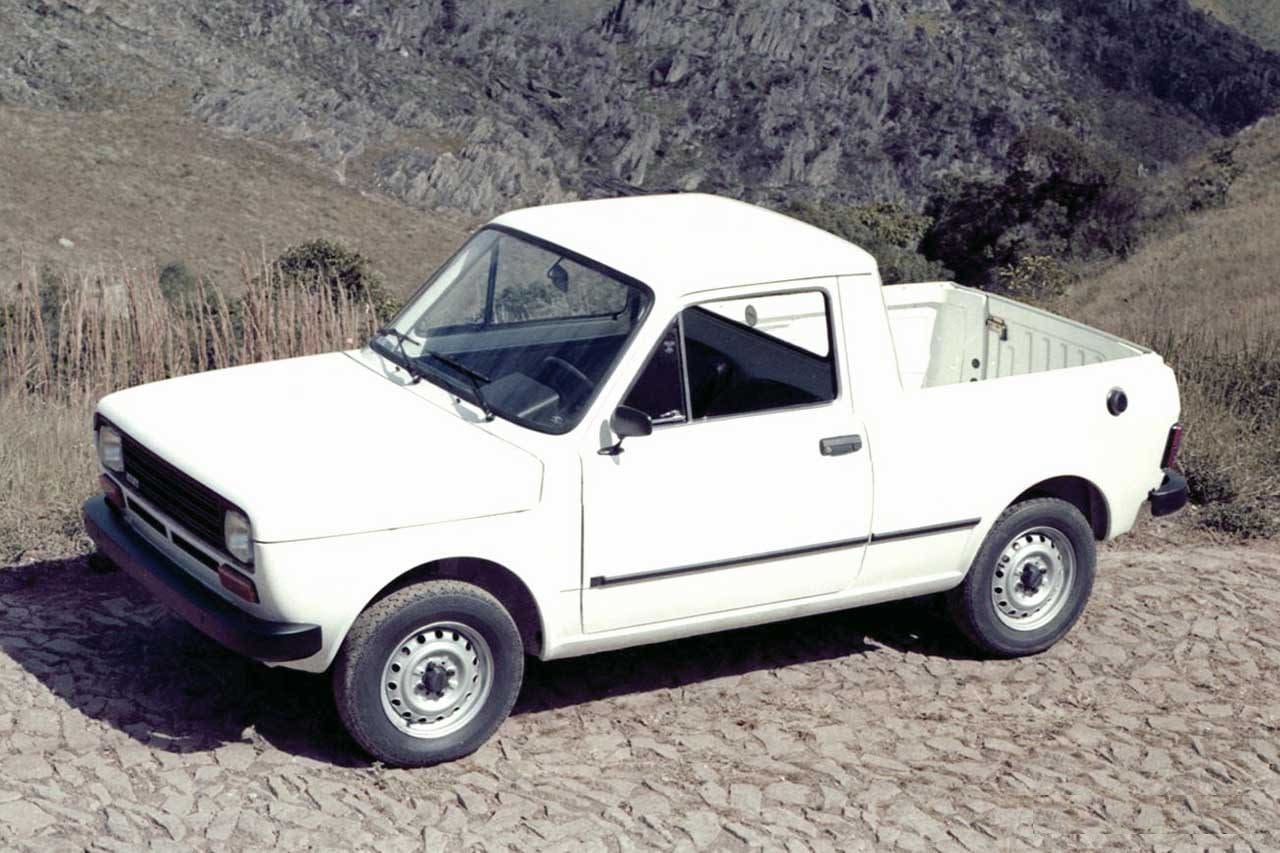
Here in Brazil, Fiat was a pioneer in transforming its passenger vehicle into a pickup-type utility. In 1978, the Italian brand transformed the then newly launched 147 into a small service pickup. The unusual thing about this new car is that the model was born from the 147 monocoque, which had been launched in 1976.
But, in reality, this idea already existed in other parts of the world and it was Henry Ford who, in 1917, launched a pickup derived from his Ford T passenger vehicle. It is worth remembering that, as early as 1908, some North American companies took advantage of the robustness of the Ford T and adapted bodies for cargo transport. Ford itself took nine years to launch a factory model.
Nicknamed “Tamanquinho”, the 147 Pick-Up was the first light pickup truck in the Brazilian market
In our country, after the launch of the 147 Pick-Up, the Fiorino pickup arrived, which used as a base a structure similar to that of the Panorama station wagon, with a wheelbase much larger than that of the 147. As the 147 was a compact car, the pickup derived from its monocoque was a bit disproportionate and extremely short. So much so that, at the time, the Brazilian soon baptized the pickup “Tamanquinho”, due to its resemblance to the wooden-soled footwear. To make it more functional for work, Fiat took advantage of the Panorama base and launched, in 1981, the pickup renamed Fiorino.
As it was already successful among small and medium-sized companies that needed an economical and agile vehicle for transporting cargo, the Fiorino aroused the interest of the competition for this type of vehicle. In 1982, Volkswagen presented the Saveiro on the basis of the Parati, while Ford showed the Pampa, derived from the Corcel. GM would later enter this market with the Chevy 500, based on the Chevette.
All followed a recipe similar to that used by Fiat initially in the 147 and later in the Panorama. From that moment on, Fiat’s pioneering idea in the domestic market expanded to the other brands. The Italian manufacturer helped to create a new segment in the Brazilian market.
Fiat Uno
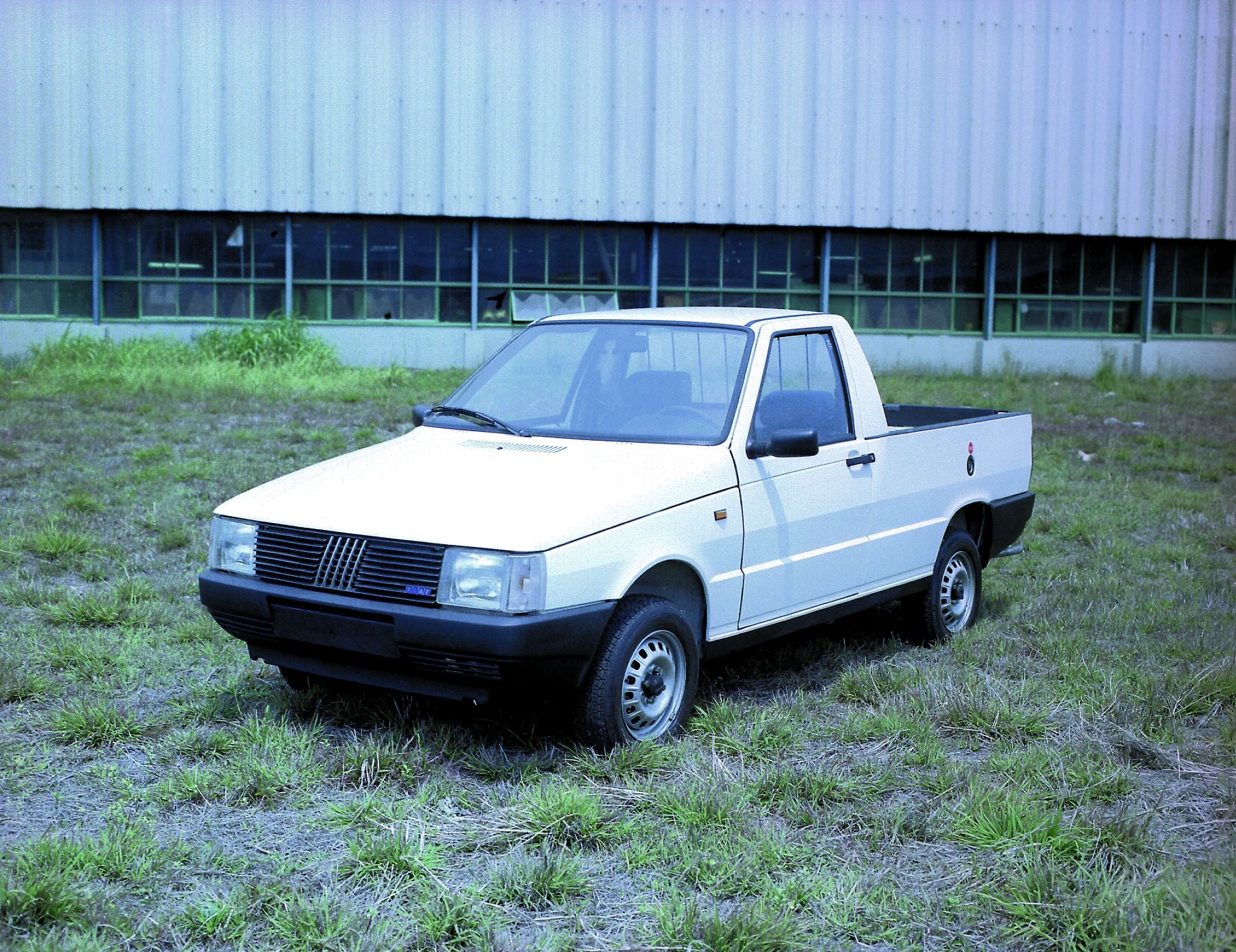
pickup But Fiat continued to develop this idea. With the launch of the Uno, in 1984, the brand had a new compact that would later serve as the basis for its pickup. As the Fiorino name was already established among pickup trucks, Fiat kept it when it launched, in 1988, the new generation of the utility, now derived from the Uno.
Fiat Fiorino had rear suspension with leaf springs, but it was not able to overcome the hegemony of VW Saveiro in the 1980s
The design and main components of the cabin were similar to those of the compact and simplified the production process, since the 147 had already been discontinued in 1986. The change modernized the product and adapted the pickup to the brand’s new compact family.
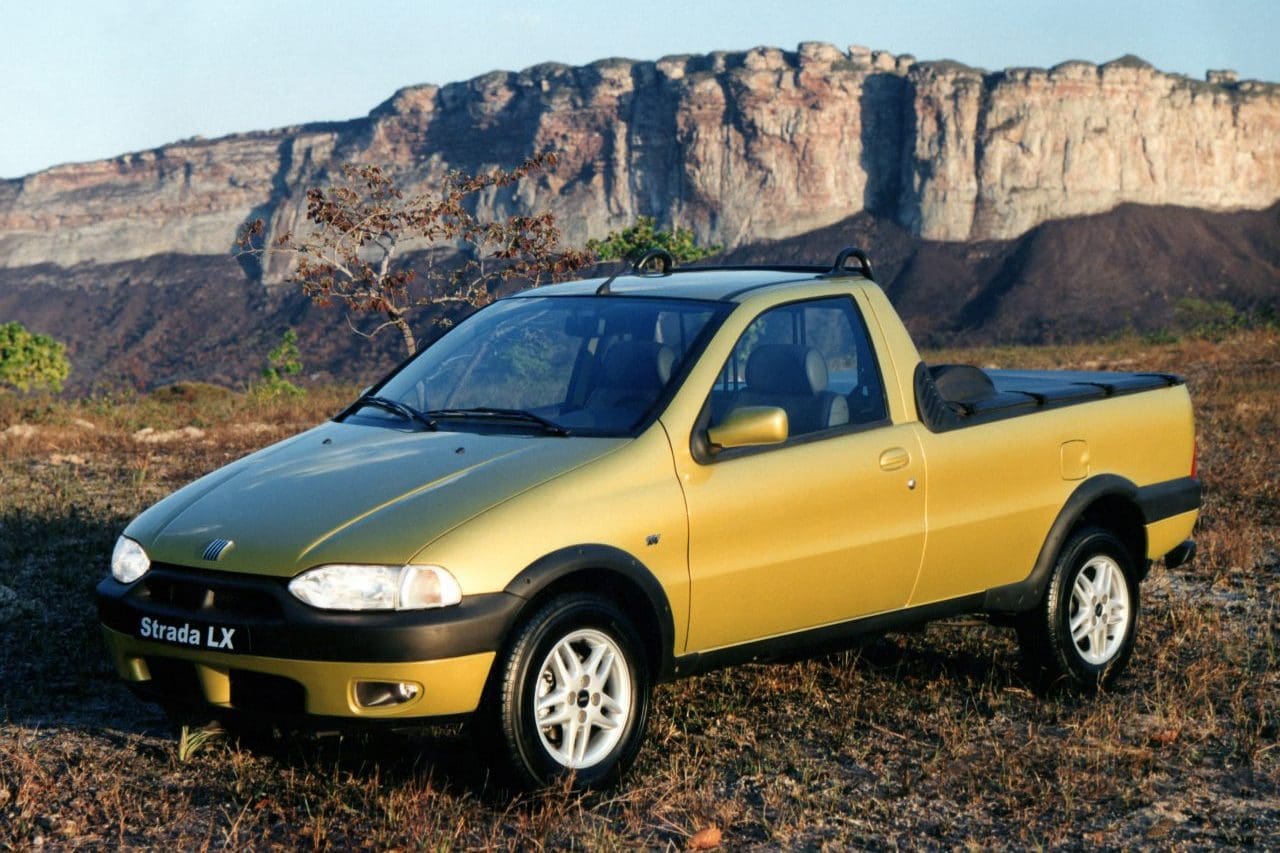
Until then, Volkswagen Saveiro led this segment of pickup trucks. But Fiat did not give up and, after the launch of the Palio, in 1996, created a new pickup based on the structure of the recently launched compact. With an attractive and modern design and a robust mechanical base, as befits a work utility, Fiat launched the Strada in 1998.
Unlike what happened when the brand’s pickup went from the 147 family to the Uno and kept the Fiorino name, now the new model gained its own name. The Strada also had rear suspension with a rigid axle and leaf springs, a solution suitable for the resistance and load capacity expected of a utility.
Rise of the Fiat Strada
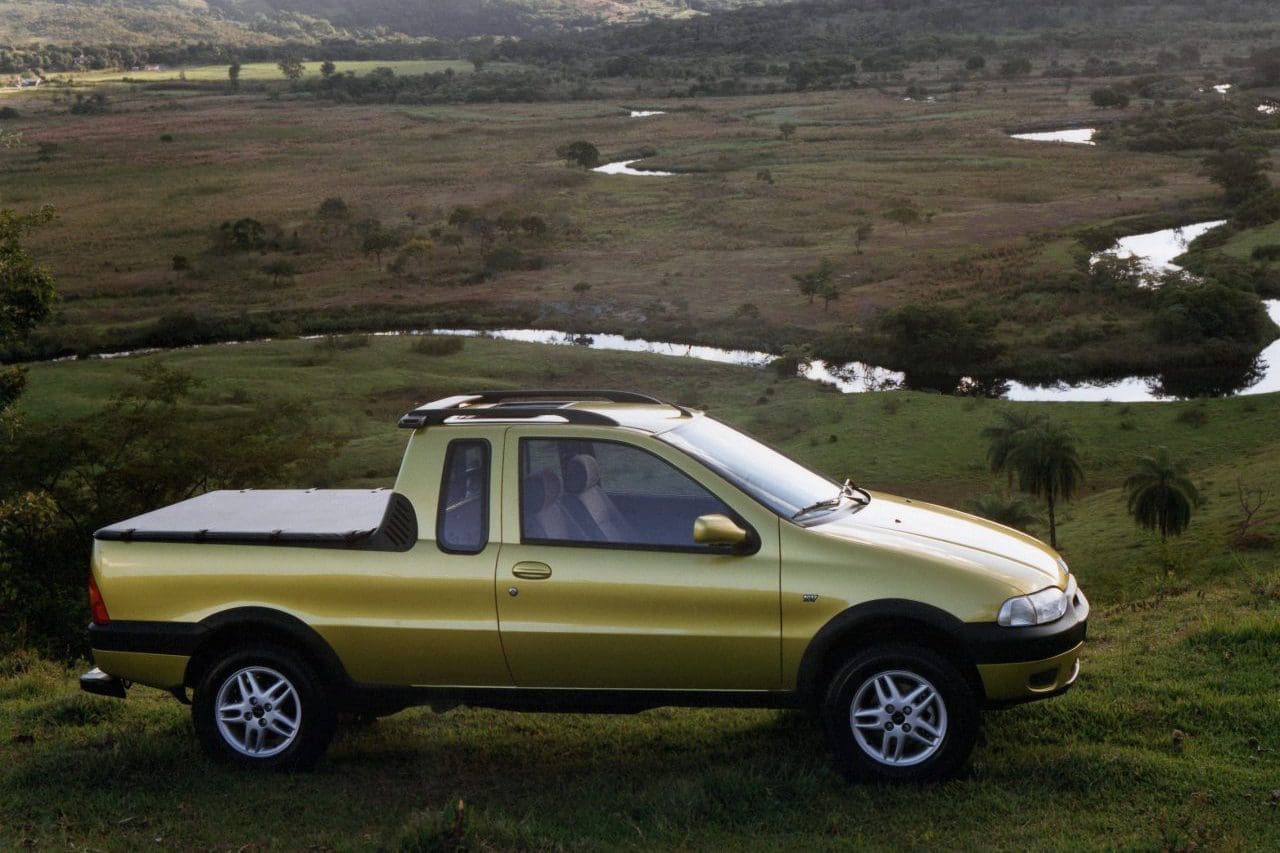
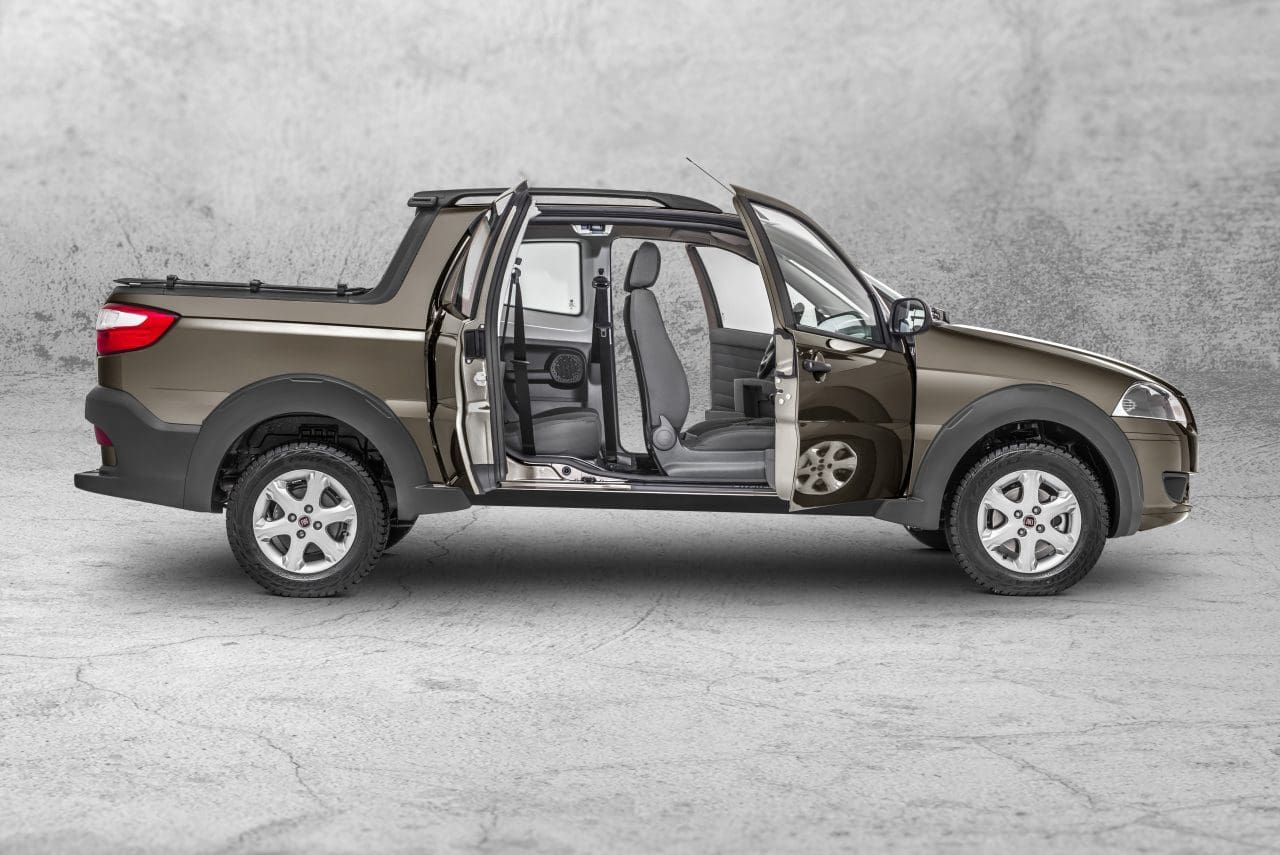
To maintain the good performance of the Strada, Fiat started to present punctual novelties, such as the version with an extended cabin
The national market soon began to look at the Fiat Strada in a different way, and this was reflected in sales. Within the policy of keeping the new pickup always up to date and interesting for the consumer, in 1999 an extended cab version was launched, a novelty that attracted a new audience to the pickup segment. In 2001, Fiat launched the Adventure version, an enhanced Strada with a look inspired by off-road vehicles.
With these novelties, the brand expanded the range of consumers interested in small pickup trucks. Sales increased and the Strada’s reputation for robustness further expanded its commercial success. The car pleased small and medium-sized entrepreneurs who used the pickup as a work tool during the week and also as a passenger car on weekends. A vision that competitors took time to understand and follow.
Strada Double Cab
With so many novelties and offering a range of versions for different audiences, the Strada assumed, at the beginning of the century, the leadership of its segment in the pickup market. And the Italian brand did not stop there. In 2009, it launched the Strada with double cab, making the utility even more suitable for family use.
Strada double cab was a pioneer in the light pickup truck segment
In 2013, another innovation came: a third door to facilitate access to the rear seat. The interesting thing is that this door had an inverted opening and dispensed with the center column, making it much easier for passengers to enter. At this point, the Strada was already a true family pickup, while competitors were still skating to keep up with its evolution.
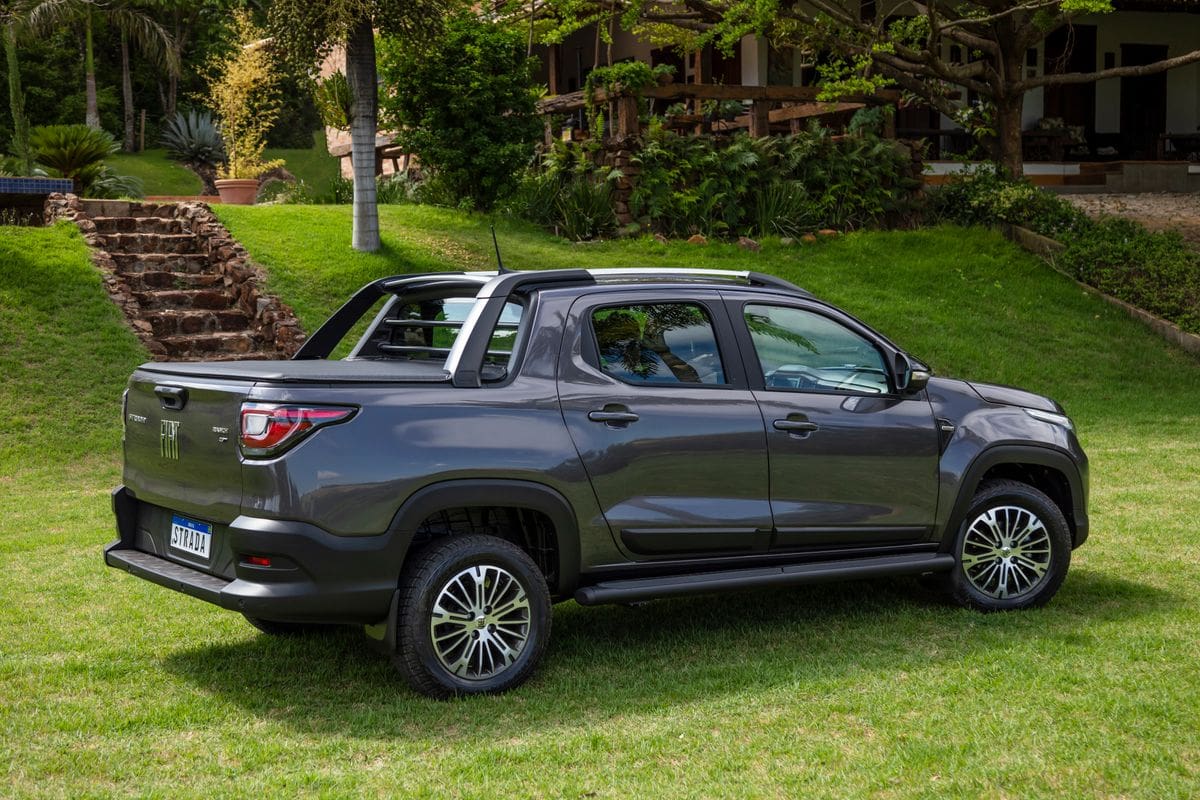
In 2020, the Fiat Strada was already one of the best-selling vehicles in the Brazilian market and, in another blow to the competition, Fiat launched a completely new generation, including the four-door double cab configuration. What was already good got even better.
In this version, the Strada reconciled the role of a work tool with leisure use on weekends even more efficiently. So much so that, in 2021, Fiat’s utility took the lead in the domestic market, a position that had been occupied by hatches for about 30 years. The Strada remained in this position until 2024.
Current generation Strada arrived in 2020 and consolidated itself as the overall market leader
Without a doubt, Fiat took a clear shot when, in 1978, it launched the 147 Pickup derived from its passenger model. The formula evolved over the decades until it reached the Strada, which became one of the brand’s greatest commercial successes in Brazil. Today, it represents the result of almost half a century of evolution of Fiat’s small pickup trucks in the Brazilian market.
Comments are the sole responsibility of their authors and do not represent the opinion of this site. Comments containing profanity or offensive language will not be published. If you identify anything that violates the terms of use, please report it.