The sedan body has always been linked to an executive car, taxi, Uber and even “uncle”. But the Volkswagen Virtus doesn’t surrender much to such stereotypes. That’s because the model carries different qualities to be a used car to consider.
To begin with, it has performance that distances it from that conservative traditionalism that we see in many sedans of Japanese brands. The same can be said of the dynamic set-up. Add to this the fact that the Volkswagen Virtus, despite the compact positioning, offers generous space.
In this content we will highlight the Volkswagen Virtus year 2020 and detail its virtues and defects.
1. Trajectory of the Volkswagen Virtus
The Virtus officially began its history in January 2018, although production began a few months earlier, still in 2017, at the Volkswagen plant in Anchieta, in São Bernardo do Campo (SP).
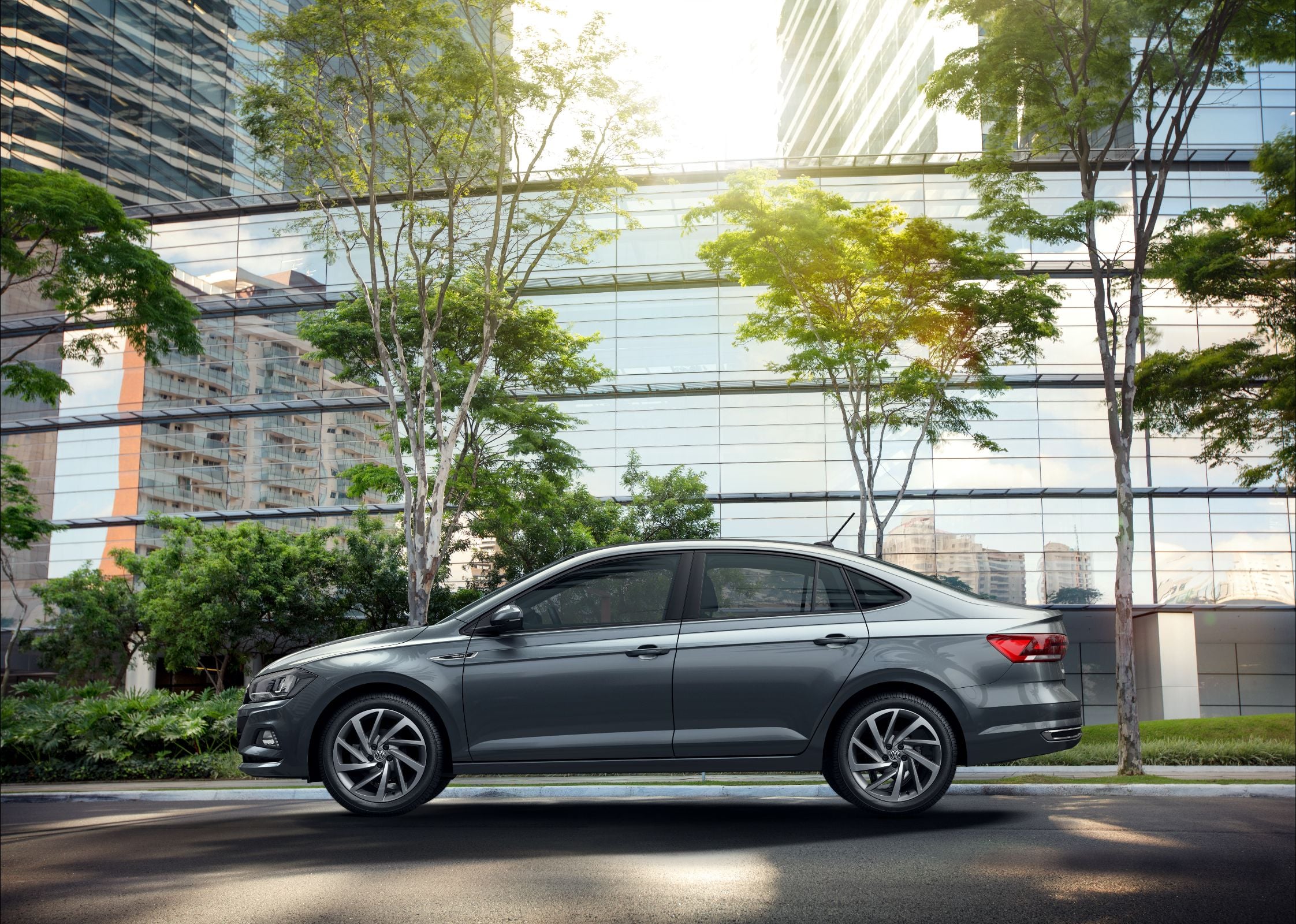
Derived from the Polo, the Virtus arrived at a time when the compact sedan was still in great demand in the market (Photo: VW | Disclosure)
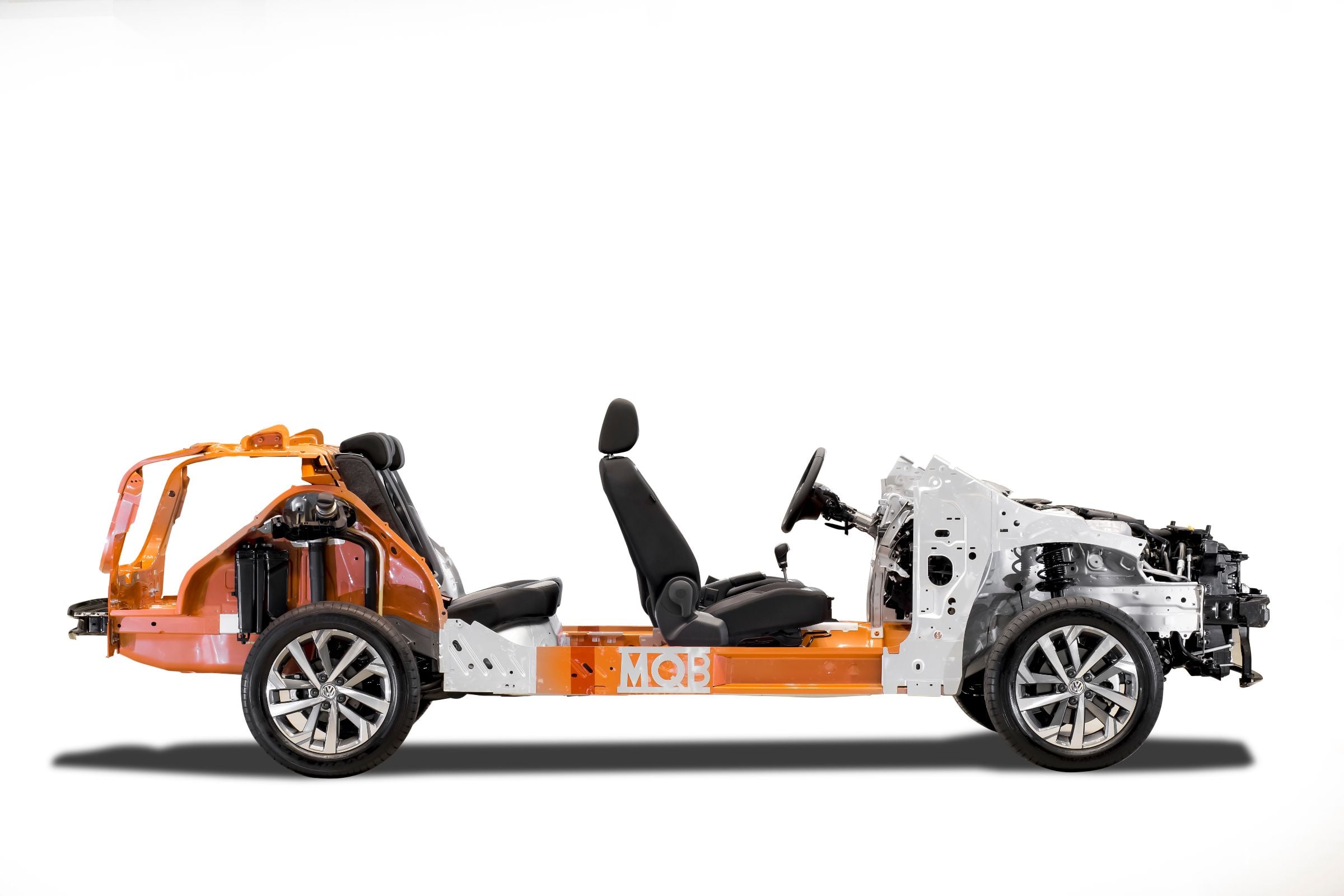
Developed on the MQB modular platform, the model was born as the German brand’s bet to occupy, let’s say, a step up among compact sedans. From the beginning, it was offered in three versions, with aspirated and turbo engine options.
Shortly after, in June 2018, the Virtus already debuted its 2019 line. The most important novelty was the arrival of the automatic transmission to the 1.6 MSI version. Later that year, the sedan won its first special series, Beats, focusing on the sound system.
In 2020, Volkswagen decided to revisit a historical acronym and presented the Virtus GTS, a sporty version that arrived along with the Polo GTS. The model brought mechanical and visual changes that reinforced the more aggressive character of the proposal.
The modular platform is common in the industry, but almost 10 years ago it was a primacy in the Brazilian market (Photo: VW | Disclosure)
The deeper update to the Volkswagen Virtus line, however, would only come in 2023, when the Virtus underwent a facelift, retired the 1.6 engine, received adjustments to the turbocharged set of the entry-level versions and gained the new top-of-the-line Exclusive configuration, with an eye on midsize sedan customers.
In 2024, the change was at the base of the range. The Volkswagen Virtus debuted the new entry-level version, called Sense – previously exclusive only to PwD.
2. Space and comfort
Digital instrument panel, multimedia with connection to smartphones, as well as digital climate control contrasted with the spartan finish (Photo: Alexandre Carneiro | AutoPapo)
Although it shares the base with the Polo, the Virtus stands out for offering a significantly wider interior. The MQB platform allowed the sedan to adopt a wheelbase of 2.65 meters, 8 cm longer than the hatch – which guarantees good accommodation for five occupants.
The length of 4.48 meters also contributes to another asset: the generous trunk. There are 521 liters, which makes the Virtus capable of receiving large luggage without much effort.
The driving position is well resolved, and the steering and pedal adjustment conveys a feeling of control and precision. On the other hand, the interior finish and acoustic insulation fall short of what is expected from a model that positions itself as a more refined option within the segment.
3. Performance with the naturally aspirated
engine Within the 2020 Volkswagen Virtus lineup, the EA211 1.6 MSI engine was still responsible for equipping the entry-level versions of the model. It is not a set focused on sportiness, but it delivers what it promises: smooth operation, honest accelerations and balanced consumption.
With up to 117 hp on ethanol and 110 hp on gasoline, the sedan achieves agile starts. Especially when combined with the five-speed manual transmission, which allows it to reach 100 km/h in less than 10 seconds (with ethanol).
At cruising speed, the Virtus keeps the engine at low revs – about 2,500 rpm at 100 km/h – which favors comfort and helps control consumption. According to Inmetro data, the averages of the Volkswagen Virtus 2020 1.6 manual are 8.2 km/l in the city and 9.5 km/l on the highway with ethanol. And 11.9 km/l and 13.8 km/l, respectively, with gasoline.
4. Turbo engine: the liveliest and most efficient Virtus
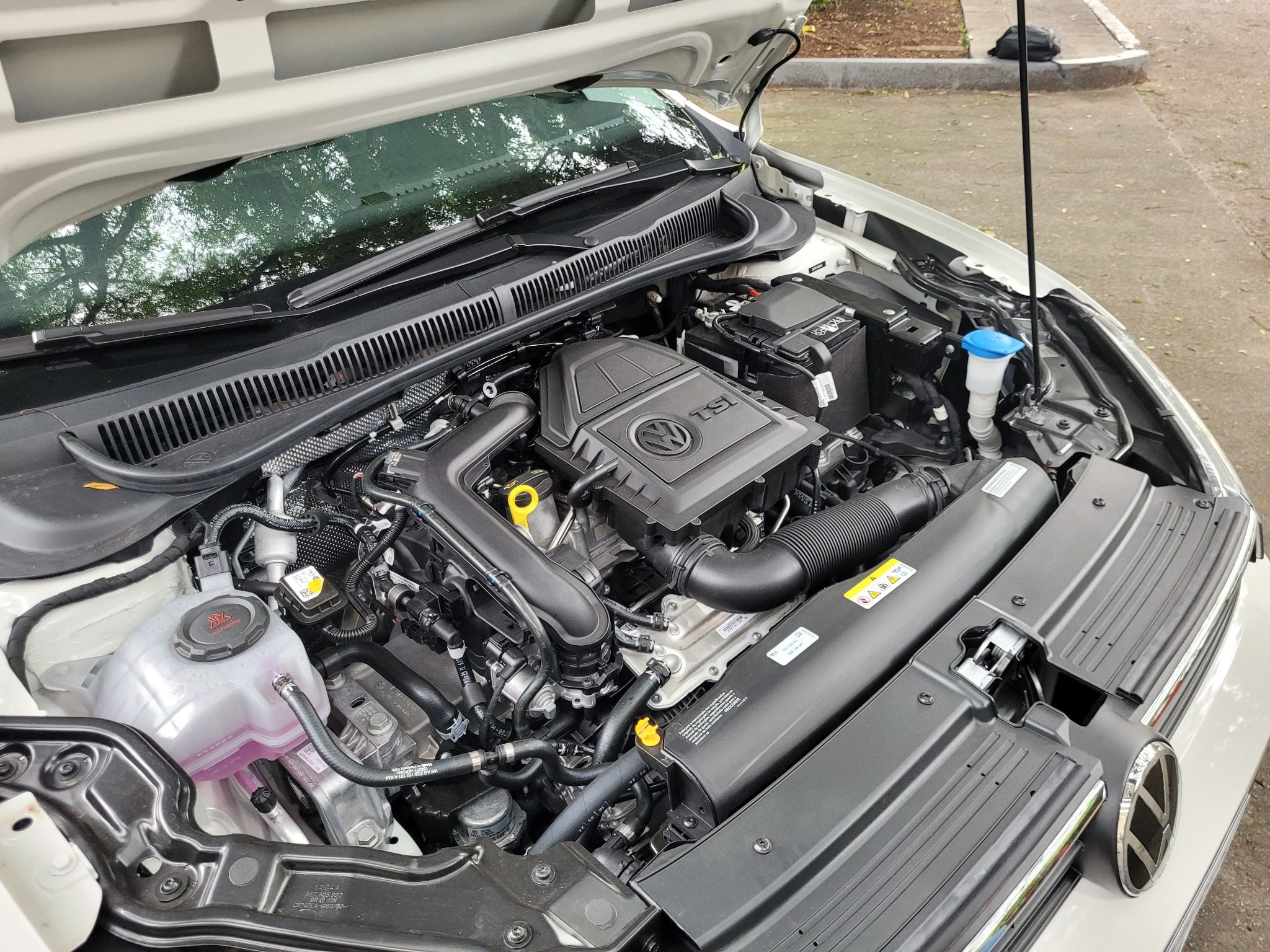
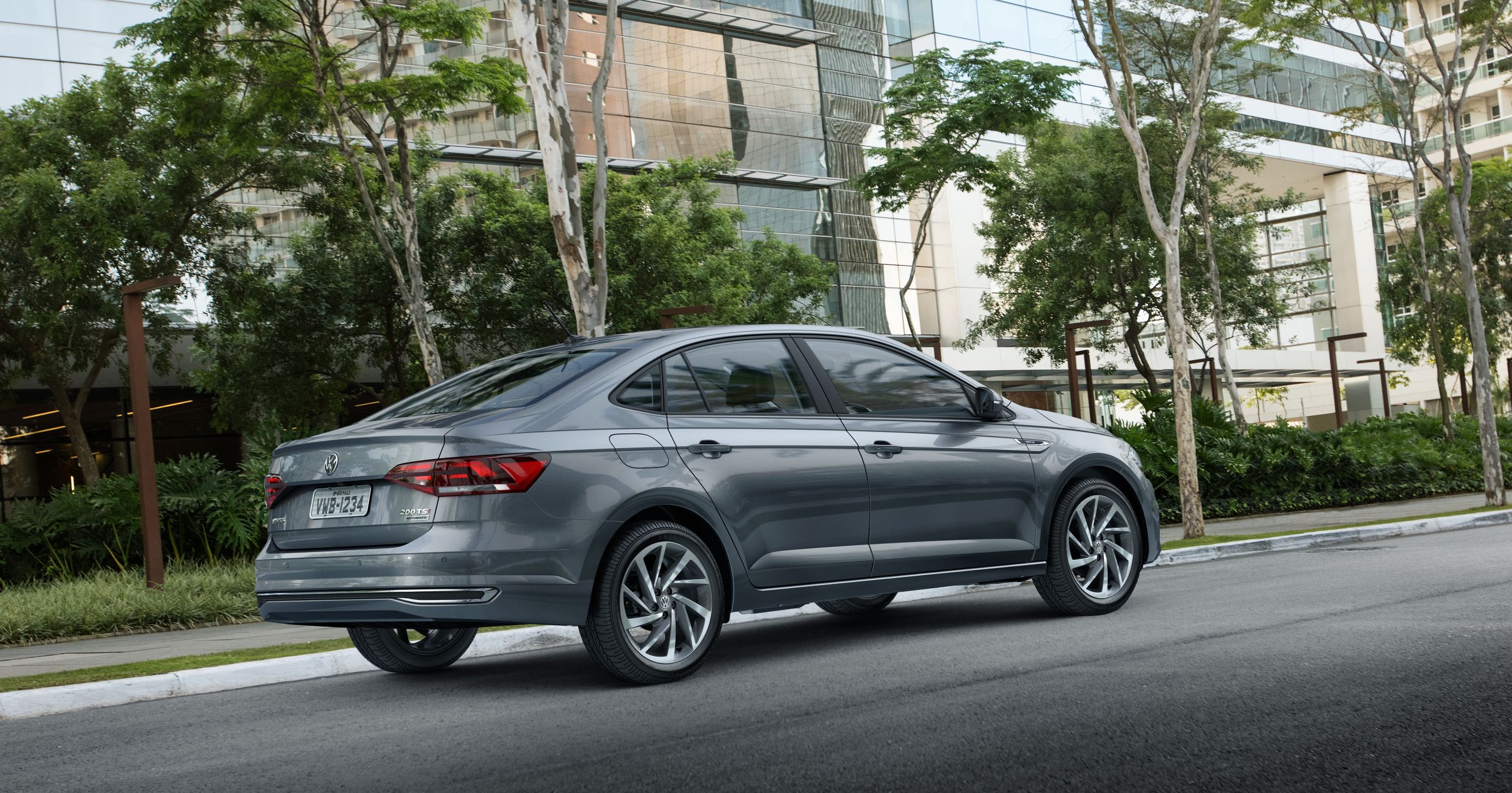
200 TSI engine gave the Virtus the performance of a 2.0 engine with a 1.0 block (Photo: Eduardo Rodrigues | AutoPapo)
The versions equipped with the 1.0 TSI engine are clearly more exciting. With up to 128 hp (ethanol) and 116 hp (gasoline), the Virtus turbo delivers quick responses and is more lively and dynamic.
Acceleration to 100 km/h occurs in 9,9 seconds with automatic transmission. But the highlight is the resumptions, when the maximum torque of 20,4 kgfm between 2,000 and 3,500 rpm makes all the difference.
This arrangement makes the sedan safer in overtaking and more efficient on road stretches. According to Inmetro, the Virtus 1.0 TSI registers averages of 7.8 km/l in the city and 10.2 km/l on the highway – with ethanol. While with gasoline it reaches 11.2 km/l and 14.6 km/l.
5. Dynamic behavior: a typical Volkswagen
Since its debut, the Virtus has carried outstanding characteristics of Volkswagen. The body has excellent rigidity and the suspension and steering set conveys confidence to the driver.
When cornering, the sedan remains firm and glued to the ground, while at higher speeds the direct steering reinforces the feeling of stability, with a touch of interesting sportiness.
6. Sportiness without exaggeration
Virtus GTS was the sporty derivation of the sedan, which was eventually replaced by the Exclusive (Photo: VW | Disclosure)
In February 2020, Volkswagen brought back the mythical acronym GTS to give life to the sporty version of the Virtus. The model received the 1.4 TSI engine, capable of delivering 150 hp and 25,5 kgfm at 1,500 rpm. With an automatic transmission, the sedan accelerates to 100 km/h in 8,7 seconds, according to the manufacturer’s own data.
In addition to the stronger engine, the Virtus GTS received specific adjustments to the suspension, brakes and steering, which became heavier. The look also gained exclusive elements, such as LED headlights and darkened details, without exaggeration.
7. Our Volkswagen Virtus 2020
tip Let’s go for Virtus Highline 2020 with a 1.0 TSI engine and automatic transmission, one of the most complete versions of the Volkswagen sedan in those times. In safety, four airbags, stability, traction and climb controls, camera and reverse sensor, four-wheel disc brakes and DRL.
Pay attention to items that were optional and may be in the used car you have your eyes on. Among them, front parking sensor, electrochromic rearview mirror, tire pressure monitoring and fatigue detector.
Virtus Highline 2020 is our suggestion to combine price, performance and a good equipment package (Photo: VW | Disclosure)
In terms of comfort, the Virtus Highline 2020 offers automatic air, trio, steering wheel height and depth adjustments, face-to-face key, fins for sequential gear changes, climate-controlled glove box, among others.
The multimedia center allows connection to Android Auto and Apple CarPlay and features native GPS, in addition to Bluetooth, USB and SD card inputs and CD player. The options at the time provided for leather upholstery, in addition to twilight and rain sensors.
Average values of the Volkswagen Virtus Highline 2020, according to KBB Brasil (August 2026).
Reseller Price: R$ 87.995
Private Price: R$ 79.195
8. Maintenance
The Virtus turbo is more expensive to maintain than the aspirated versions, mainly due to the more sophisticated mechanical set.
Check out the main problems in relation to the Volkswagen Virtus pointed out by owners of the sedan in discussion groups and on the Reclame Aqui website:
Jerks and vibrations in the automatic
transmission
Early carbonization of the intake
valves
Excessive oil
consumption
Noise and vibrations in the brake
system
Leaks in the cooling
system
Musty smell in the cabin due to infiltrations
Infiltration in headlights and taillights, causing fogging
Occurrence of recalls involving the center column, engine module and component attachment
Comments are the sole responsibility of their authors and do not represent the opinion of this site. Comments containing profanity or offensive language will not be published. If you identify anything that violates the terms of use, please report it.