Mechanical engineer Milad Kalume Neto worked for almost 23 years at Jato Dynamics do Brasil, a consultancy specializing in the collection and analysis of data on vehicle registrations, prices and specifications in more than 55 countries. When he left, he founded his own company in 2025, K.LUME Consultoria, in partnership with Máia Màrtins, focused on data and strategic analysis of the automotive sector.
It aims to provide important information to manufacturers, dealerships, traders, rental companies and other segments that gravitate around the industry.
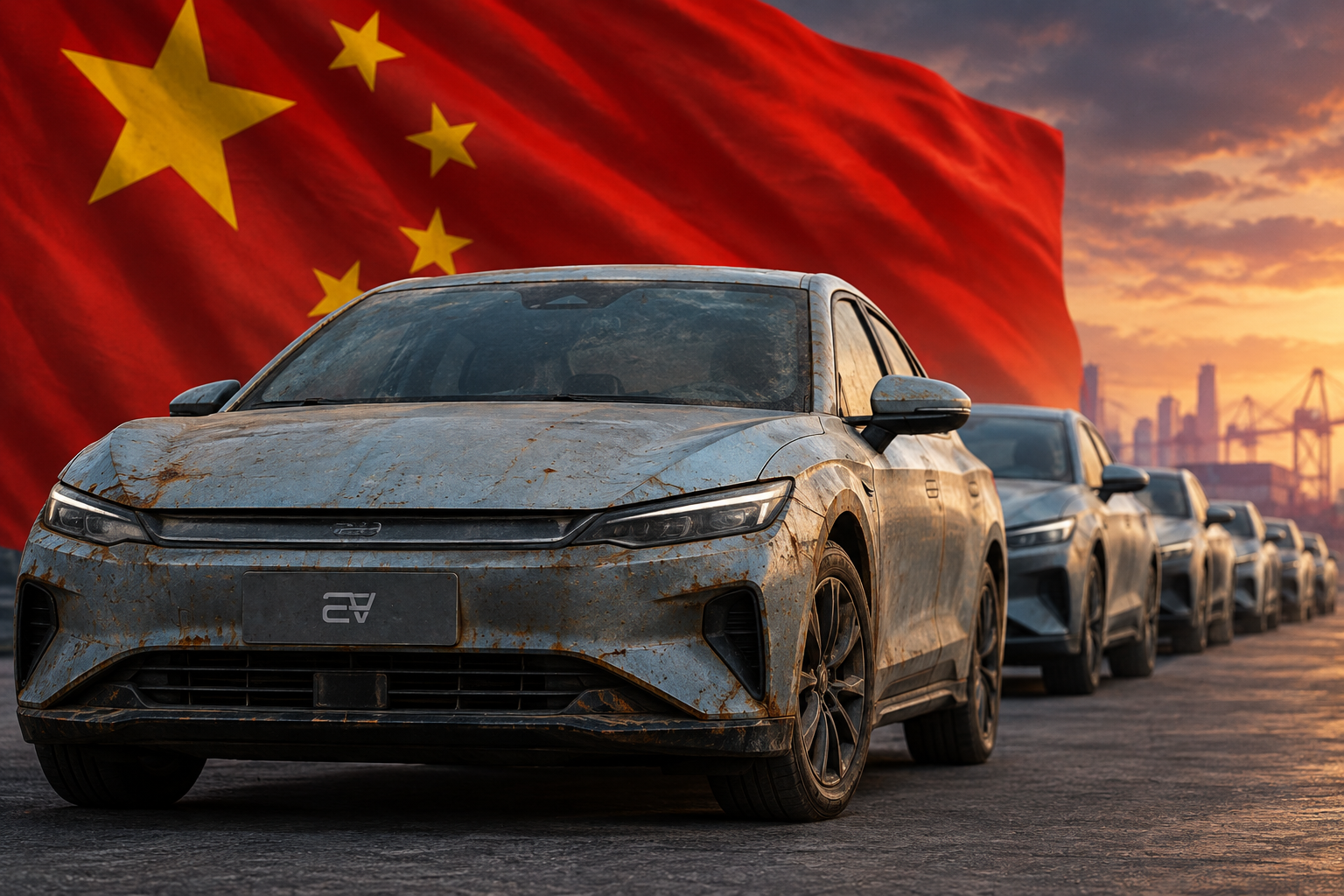
In his most recent article , he raised pertinent questions, also addressed by this column, about the very rapid growth of 16 Chinese brands in Brazil (although they may rise to 18 or 19, according to other sources), including the sub-brands that explore almost all shares of the Brazilian market.
Only compact pickup trucks, such as Strada, Saveiro and Montana, still do not face direct competition. Kalume rightly recalled that the Chinese car sold well, but now it needs to age well.
He warned about the price war in China, due to excess installed capacity. This led the central government, not at all democratic, to order exports at any cost and, in addition, to a relevant pressure on the brands already installed here.
BYD factory in Bahia (Photo: BYD | Disclosure)
Three scenarios
Kalume points to three scenarios from 2026 to 2032. In the first, clearly underway, the Chinese gain share here at an accelerated rate. In the second, while some brands consolidate, others remain marginal or give up on Brazil. In the third, there may be a retraction of certain operations.
In the central scenario, in K. LUME’s view, “the share of Chinese DNA brands could reach between 33% and 36% of the Brazilian market in 2032, or approximately one in three vehicles sold. The main question, therefore, will not be how many Chinese brands will still arrive, but how many will be able to remain, grow and transform sales into long-term confidence.”
Comments are the sole responsibility of their authors and do not represent the opinion of this site. Comments containing profanity or offensive language will not be published. If you identify anything that violates the terms of use, please report it.