


Toyota prepares new generation Corolla Cross for 2028 with new engine and more space
To distance itself from the Yaris Cross, SUV will grow in dimensions and adopt a plug-in hybrid system with up to 100 km of electric range
By
Júlia Haddad
Published on 2026-04-15 at 10:00 PM
Updated on 2026-04-15 at 10:40 PM
Published on 2026-04-15 at 10:00 PM
Updated on 2026-04-15 at 10:40 PM
Be the first to comment.
Summarize with:
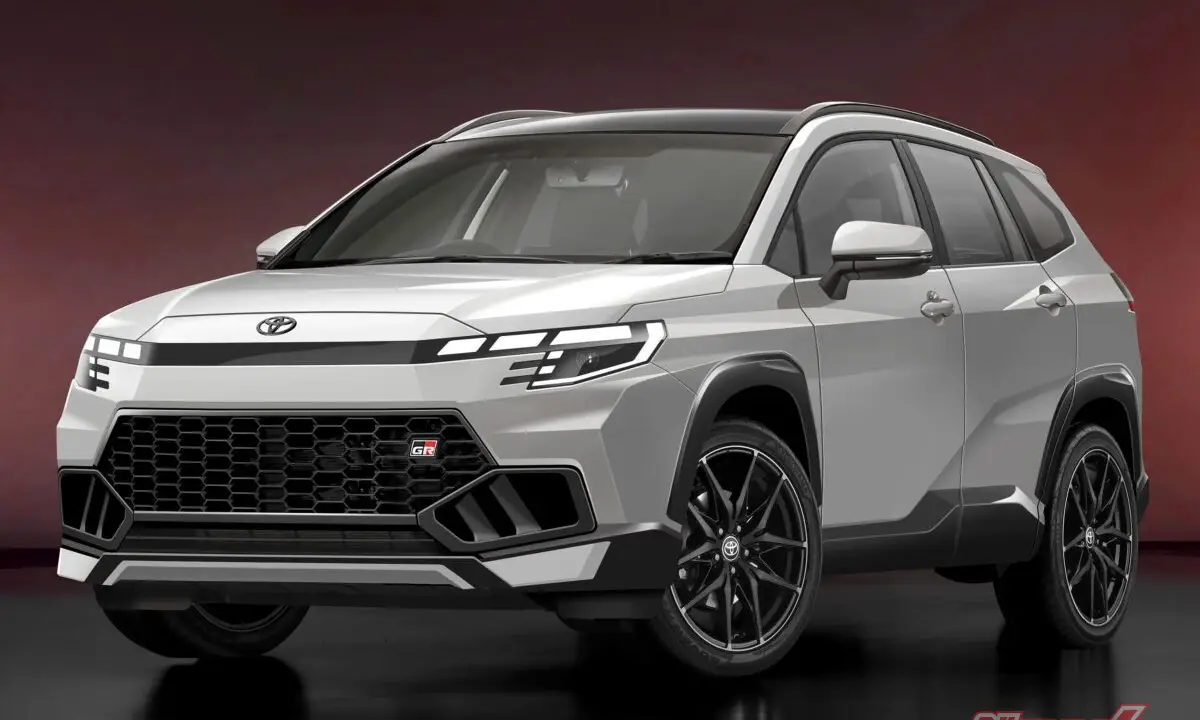
Toyota has started development of the next generation of the Corolla Cross, with a global launch projected for early 2028, according to Japanese press reports. The model will undergo a deep reformulation that will accompany the update of the Corolla sedan — scheduled for the end of 2027 —, adopting new proportions, an advanced technological package and an unprecedented family of electrified engines.
To distance itself from the recently launched Yaris Cross and reposition itself in the global market, the new Corolla Cross will present a significant leap in its dimensions. The project foresees an elongation in the wheelbase, exceeding the current 2.64 meters, and a length that should reach the mark of 4.65 meters. The structural change aims to ensure greater interior space and luggage capacity, constant demands in the medium SUV segment.
SEE ALSO:
- Rolls-Royce launches giant R$ 50 million electric convertible
- BMW starts retirement of iX electric SUV to prioritize new platform
- Nissan unveils new X-Trail 2027 hybrid, but Brazil will have an earlier-looking version in 2026
Arene technology and new thrusters
In terms of connectivity, the main novelty will be the introduction of the Arene operating system. The new software architecture will enable the integration of artificial intelligence capabilities into the cabin and more robust support for continuous remote (OTA) updates. The active safety package will also evolve into the Toyota Safety Sense 4.0 version, enhancing the vehicle’s autonomous driving assistants.
The engine strategy reaffirms Toyota’s commitment to technological plurality, keeping hybrid sets as protagonists. The manufacturer develops a new line of four-cylinder engines, including 1.5 (aspirated and turbo) and 2.0 turbo options, the result of a joint project with Subaru and Mazda. More compact and thermally efficient, the engines are designed to run on gasoline, biofuels and synthetic fuels.
The new generation portfolio will be strengthened by the introduction of high-capacity plug-in hybrid (PHEV) variants, with the automaker aiming to deliver up to 100 km of range in 100% electric mode. In addition to energy efficiency, the market awaits the possible integration of high-performance configurations signed by the sports division Gazoo Racing (GR).
SEE MORE ABOUT

0 Comments
Comments are the sole responsibility of their authors and do not represent the opinion of this site. Comments containing profanity or offensive language will not be published. If you identify anything that violates the terms of use, please report it.