

The incredible return of the plane that was “frozen in time” for 50 years
Understand how engineers brought back to life a World War II fighter buried 82 meters deep
By
Júlia Haddad
Published on 2026-05-15 at 08:00 PM
Published on 2026-05-15 at 08:00 PM
Be the first to comment.
Summarize with:
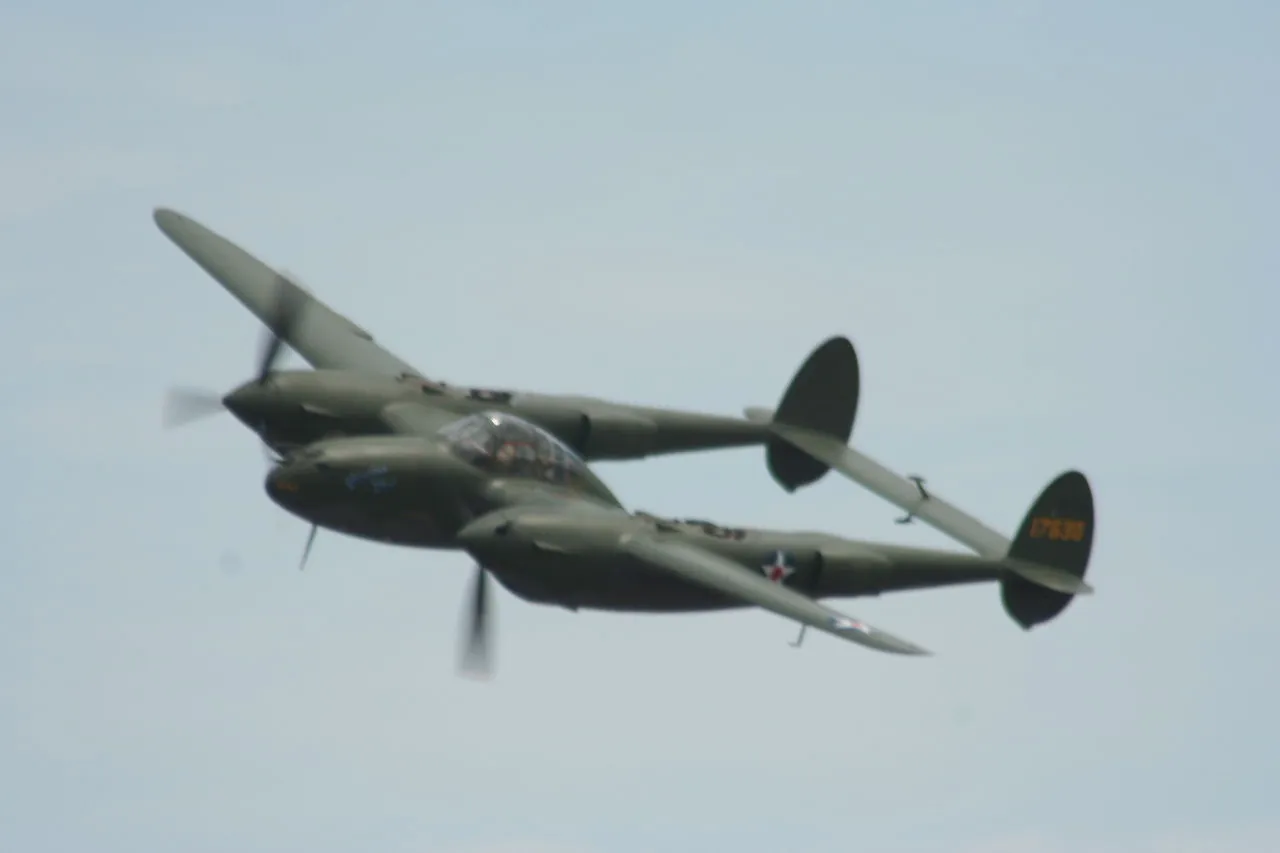
The famous “Glacier Girl,” a Lockheed P-38 Lightning fighter from World War II, resumed its flights in early May after completing a two-year maintenance schedule. Operated by the Lewis Air Legends Foundation and piloted by veteran Steve Hinton Sr., the aircraft is one of the rare surviving examples of a group that became known as the “Lost Squadron” after spending five decades buried under the ice of Greenland.
The aircraft’s trajectory dates back to July 1942, during Operation Bolero. At the time, six P-38 fighters and two B-17E Flying Fortress bombers were leaving the United States for Great Britain. The group was surprised by a severe snowfall that forced an emergency landing on the polar cap. Although the crew members were rescued alive after 11 days, the planes were abandoned and, over the decades, ended up buried by successive layers of snow.
SEE ALSO:
- Ford Transit City will be the new electric van in the Brazilian market
- Lula will give credit to app drivers to buy their own vehicle
- BYD negotiates purchase of Stellantis plants to dominate Europe
The recovery effort only gained traction in the 1980s, led by entrepreneurs Pat Epps and Richard Taylor. Contrary to what the initial estimates predicted, the aircraft were not close to the surface, but at a depth of about 80 meters. The rescue operation, carried out only in 1992, required the use of a thermal probe called “Super Gopher”, which melted the ice to create access tunnels.
Once the correct depth was reached, technicians excavated a cave around the P-38 to disassemble it piece by piece before hoisting it. The restoration process that followed is considered a milestone in aeronautical archaeology: about 80% of the original structure was preserved, including the Allison engines and the set of operational machine guns. Today, the “Glacier Girl” is not just a museum piece, but a functional testament to twentieth-century military engineering.
SEE MORE ABOUT

0 Comments
Comments are the sole responsibility of their authors and do not represent the opinion of this site. Comments containing profanity or offensive language will not be published. If you identify anything that violates the terms of use, please report it.