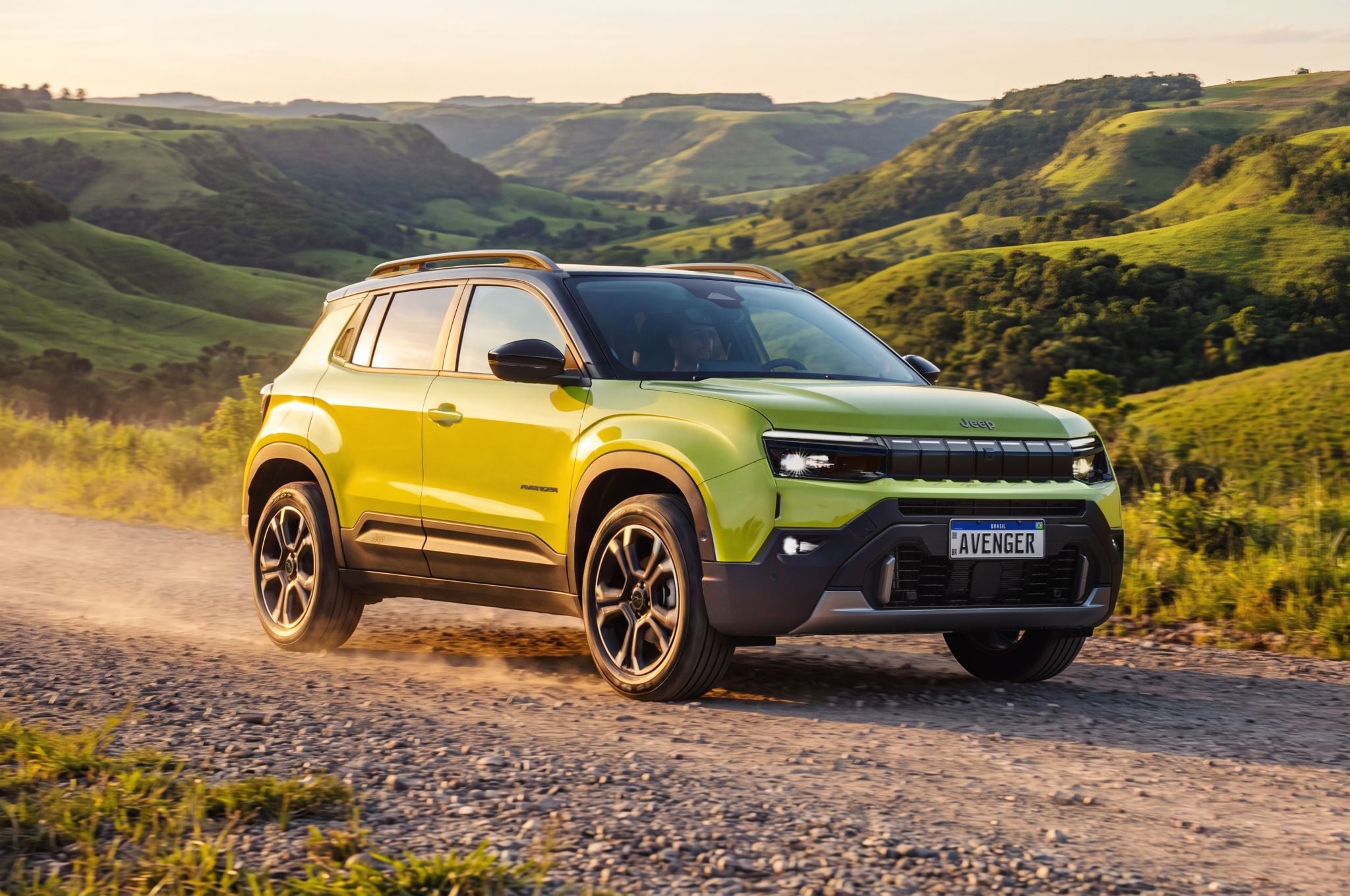
The Jeep Avenger has just been launched in Brazil, with prices starting at R$ 115 thousand (for the first thousand units) and placing it at the base of the range. The model competes directly with SUVs derived from hatches, such as Volkswagen Tera, Renault Kardian and cousins Citroën Basalt and Fiat Pulse.
And speaking of cousins, the Avenger has the look of a Jeep, the size of a Jeep, but a mixed soul, with solutions developed by the Italian and French arms of the group. And this indicates that much of the behavior and even the after-sales of the new model of the seven slots is quite predictable.
Avenger’s CMP Platform
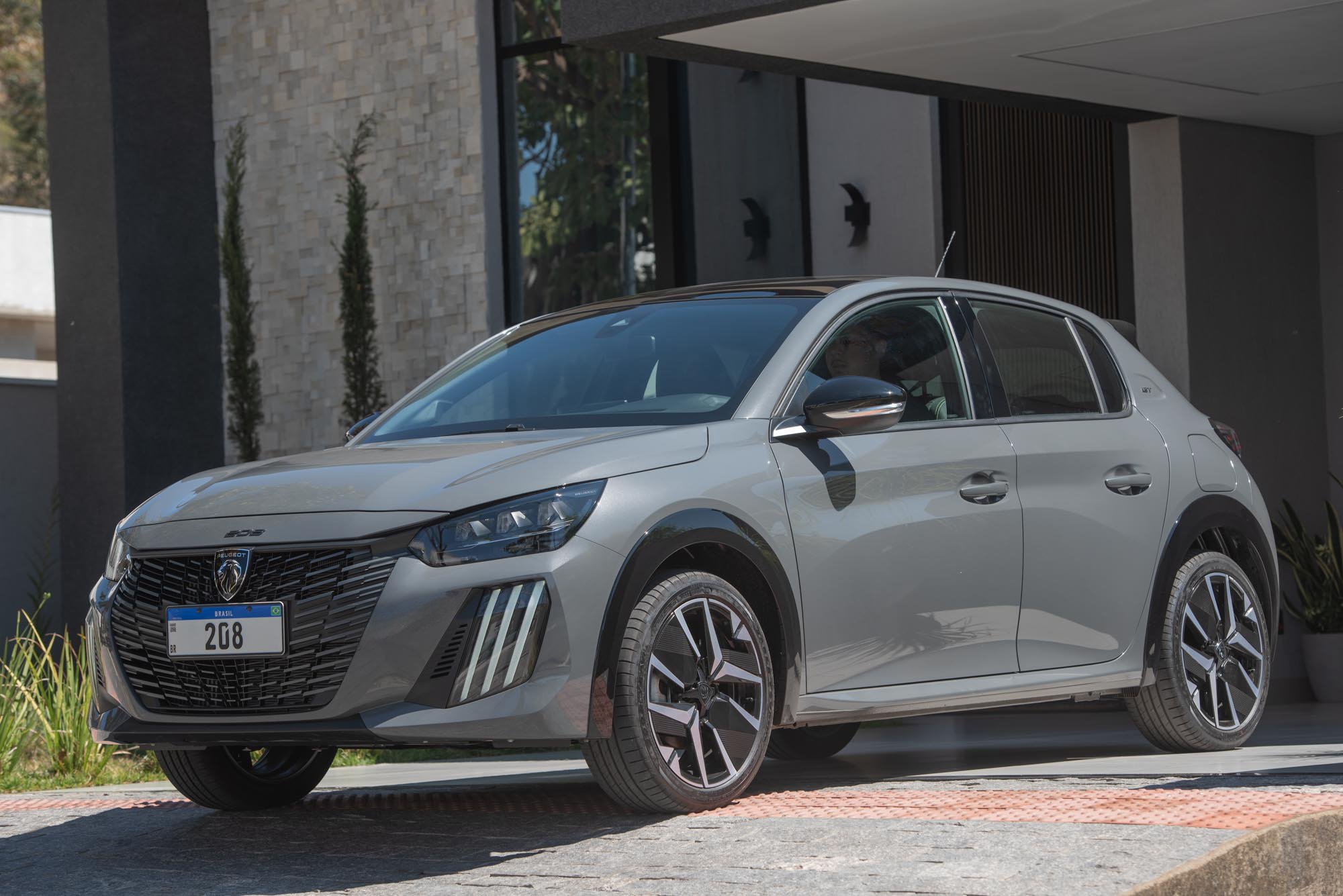
The Avenger is mounted on the CMP modular platform. This base has become standard in Stellantis’ compact models. It debuted in the Latin market in 2020, with the Peugeot 208.
Peugeot 208 was the group’s first model made on the CMP platform that was sold in Brazil (Photo: Peugeot | Disclosure)
Today it is also present in the 2008 SUV, in the Citroën C3, Aircross and Basalt, as well as in the Fiat Argo X, which arrives later this year. In Europe, the platform is also applied to models such as the German Opel Mokka and Corsa, as well as the Italian Alfa Romeo Junior and Lancia Ypsilon.
This platform’s main attribute is the possibility of adjusting measurements such as wheelbases and overhangs according to the needs of the car project. In addition, it also allows the installation of electrified powertrains. That is, it is possible to launch a car with combustion engine options, hybrid or purely electric, since the base provides for the installation of batteries and other components.
Italian soul engine
A lot of people don’t know, but Jeep has long adopted Fiat engines in its national range. The old 1.8 block of the Renegade is known as Etorq, which Fiat applied in the 2010s in models such as Bravo, Strada, Palio and other models in the line range.
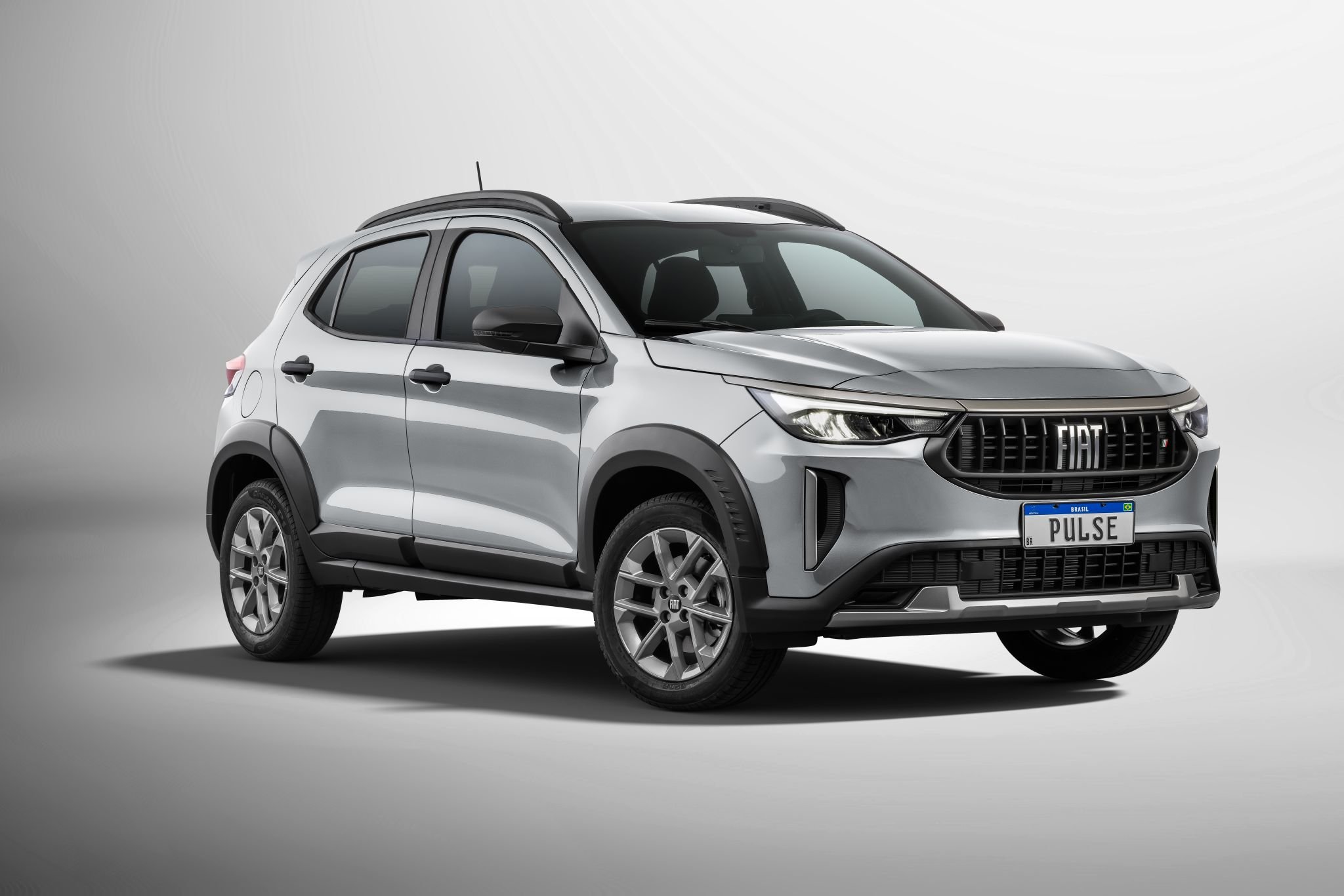
For the Avenger, the T200 1.0 turbo unit with 116 hp and 20,4 kgfm of torque was adopted, with the help of the 12V mild hybrid module. This engine debuted in 2024 in the Fiat Pulse and the Fastback, Strada, in addition to the 208 and 2008.
If the base of the Avenger came from the 208, the heart of the Jeep debuted here in the Fiat Pulse in 2021 and was electrified in 2024, once again under the hood of the Italian (Photo: Fiat | Disclosure)
In practice, we can expect a behavior very close to what we have in the other models that share this engine and platform. The reduction in power, to comply with the IPI Green program, should not compromise acceleration, since torque has been maintained. Of course, there are subtle differences in weight, tire width, which can change performance and consumption figures. But in practice, the behavior will not be much different: Vigorous accelerations and a lot of torque at low, which are positive factors of the unit.
The transmission is the well-known CVT gearbox, with seven-speed emulation. This box equips most of the models assembled by Stellantis in Brazil and Argentina, such as Fiat Argo, Cronos, Pulse, Fastback and Strada, as well as Citroën C3, Basalt and Aircross, and the Peugeot 208 and 2008 hermanos.
Jeep Avenger suspension and brakes
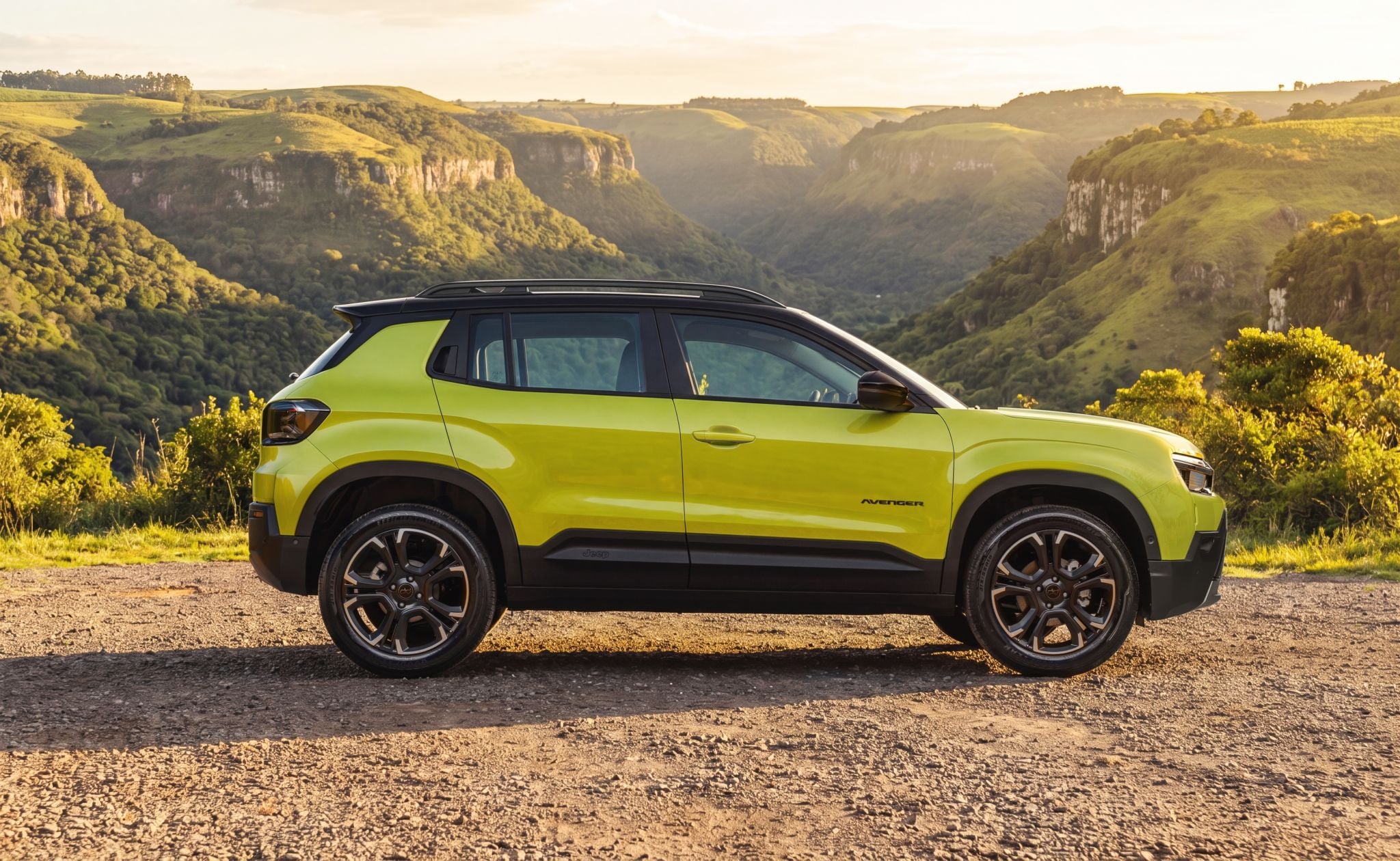
Four-wheel disc is a luxury in Stellantis’ compact SUVs, shared only with the Peugeot 2008 (Photo: Jeep | Disclosure)
The suspension is also far from the configuration of other Jeep models, which use an independent set on all four wheels. As it is an urban car, the Avenger uses what it already has on the shelf in King’s Landing, such as a McPherson front set (independent) and torsion axle for the rear wheels. On the other hand, the Avenger, unlike practically all its compact relatives (with the exception of the 2008) adopts disc brakes on all four wheels. Basalt, Aircross, Pulse and Fastback use drums on the rear axle.
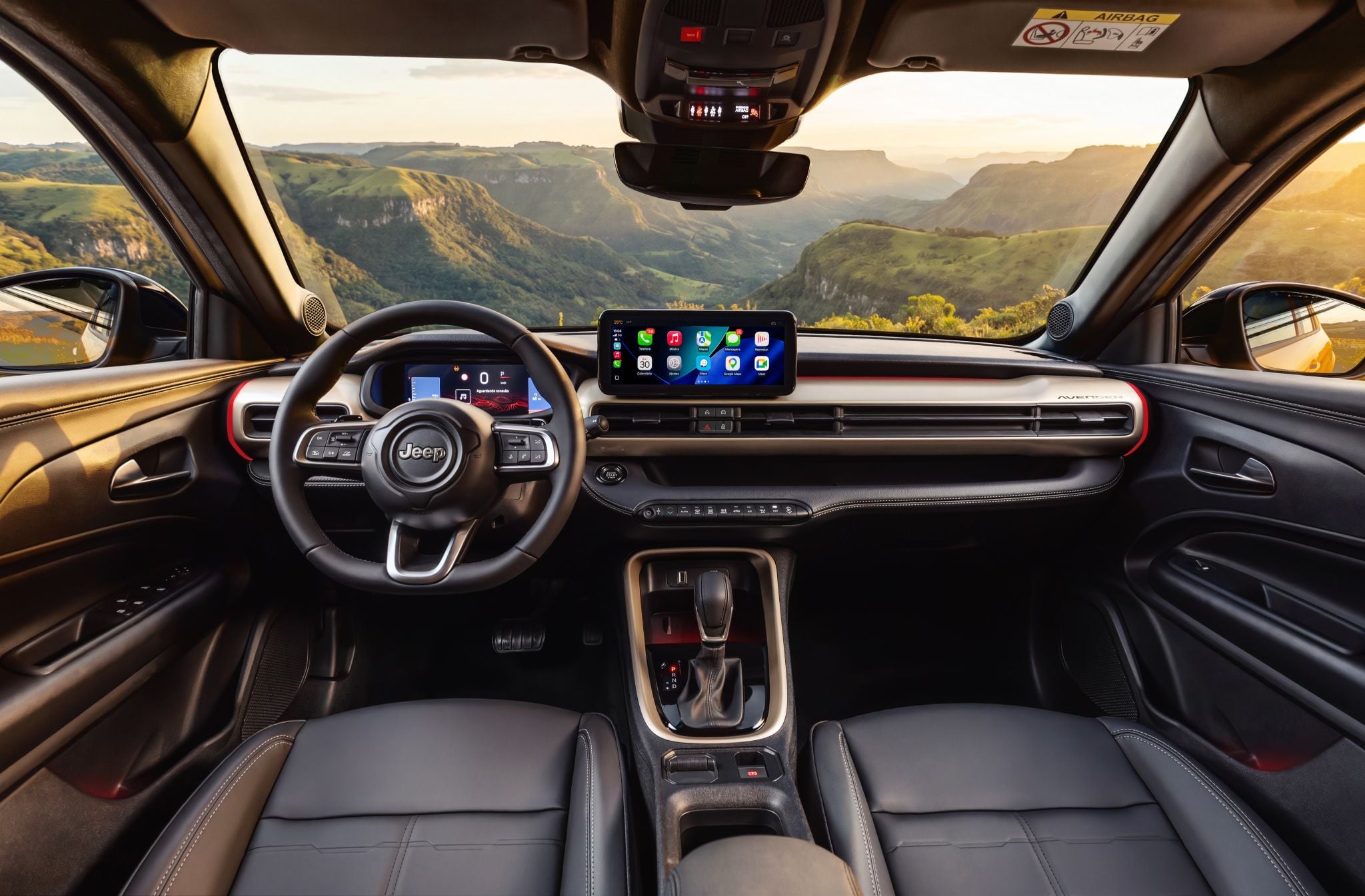
Inside, many Avenger content is present in other models of the group (Photo: Jeep | Disclosure)
Other convenience content such as electric steering, driving assistants, multimedia with wireless connection, digital instrument panel, electronic parking brake, remote assistance service, keyless start and digital climate control are commodities present in practically the entire range. The variations are due to finishing version.
For Stellantis, the sharing of components translates into economies of scale, with a greater volume of parts, which reduces the unit cost. In addition, it simplifies approval processes.
For the consumer, it means greater availability of parts, as well as a wide service network and a huge number of professionals familiar with engines and transmission. After all, everything is a car and often, what changes is the status that one emblem has over the other.
Comments are the sole responsibility of their authors and do not represent the opinion of this site. Comments containing profanity or offensive language will not be published. If you identify anything that violates the terms of use, please report it.