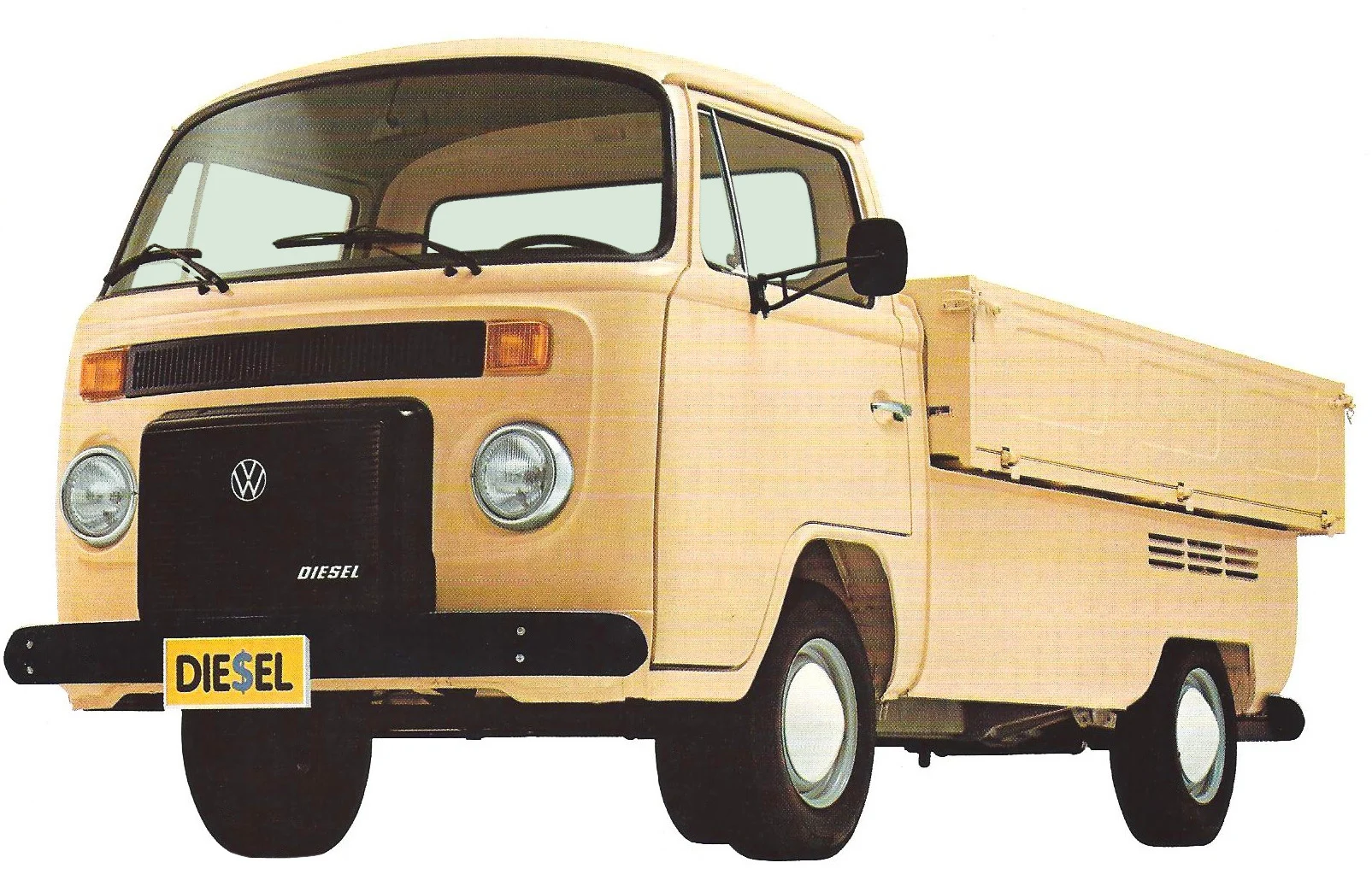
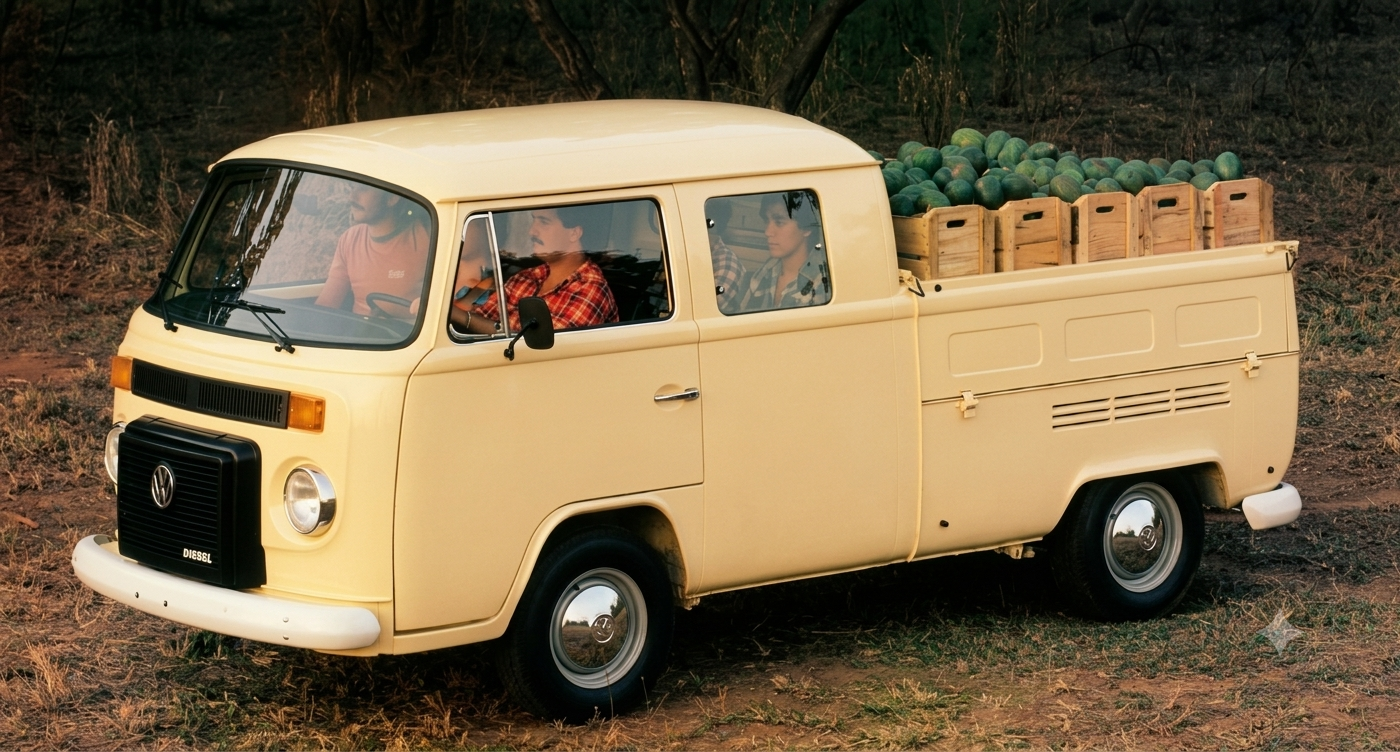
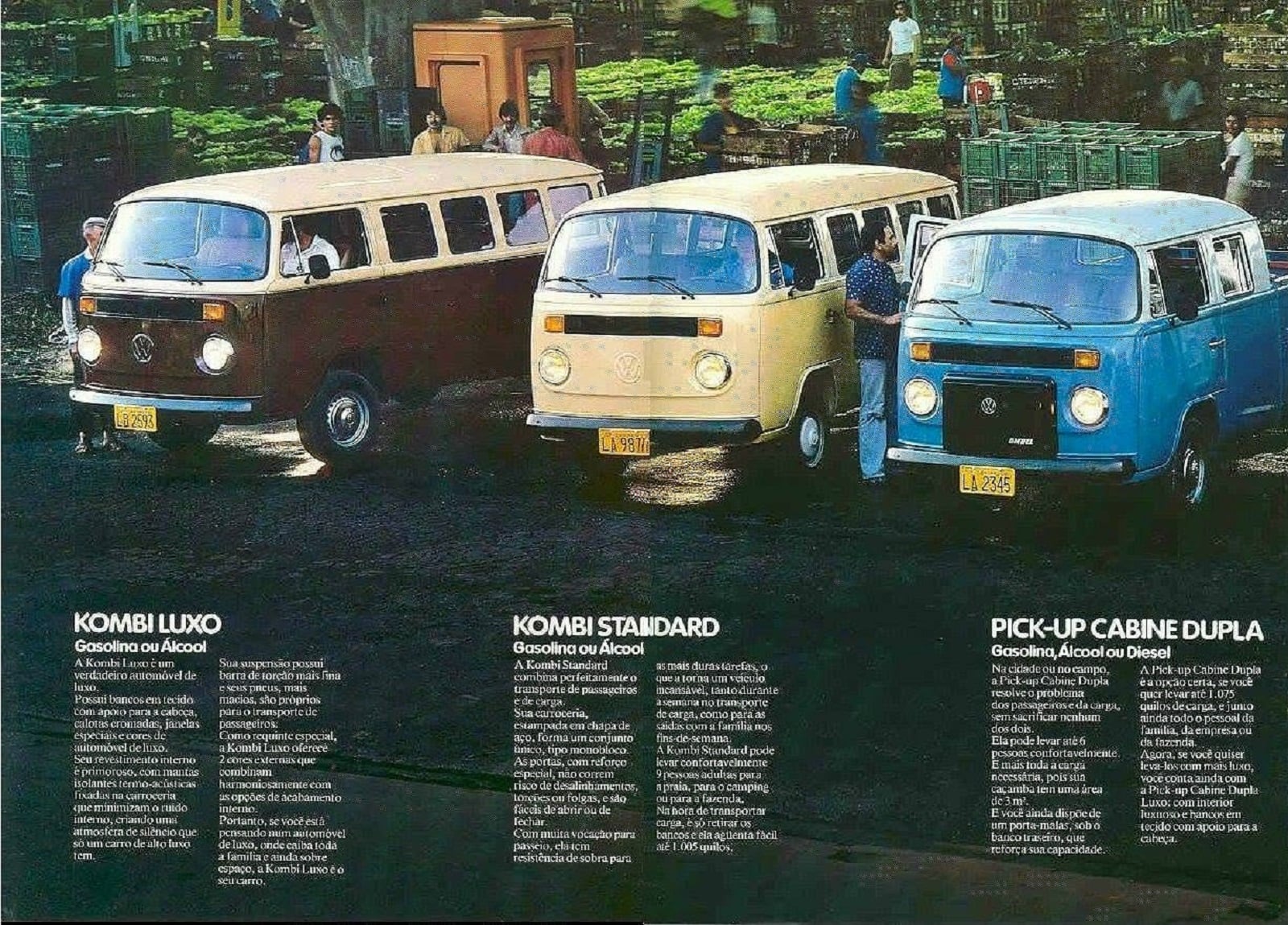
It was the early 80s, more precisely in 1981. Volkswagen prominently announced the launch of the Kombi Diesel, offered in Standard and Luxury versions for passenger transport, in addition to the single cab and double cab pickup configurations aimed at transporting cargo. It was an extremely versatile utility vehicle for the time. The passenger versions could accommodate between eight and ten occupants, while the cargo versions catered for everything from small merchants to large companies, thanks to the transport capacity of more than one ton of gross weight.
In theory, it was an extremely attractive product. The Kombi was already cheaper than many pickup trucks available on the market and had enormous versatility of use. In view of this, Volkswagen decided to further expand its advantages with a diesel-powered version. In the early 1980s, fuel was subsidized by the Brazilian government and cost significantly less than gasoline, making it especially interesting for fleet owners and transporters.
For this, the brand brought from Europe the technology of a 1.6-liter diesel engine, belonging to the same basic family used in other Volkswagen models. Naturally aspirated, without the aid of a turbocharger, the engine delivered only 50 hp of power and about 9.7 mkgf of torque. Even by the standards of the time, these were quite modest numbers.
There was a lack of breath
It was enough to imagine a Kombi loaded with eight or ten passengers trying to overcome a mountain climb or overtake to realize the size of the problem. With only 50 hp available, performance was poor and compromised not only comfort, but also safety in certain situations. The scenario was even worse in the cargo versions. When close to maximum capacity, pickup trucks demanded much more from the mechanical assembly, which clearly did not have enough power to handle the weight carried.
Despite the good proposal, lack of power and torque demanded a lot from the engine, which had frequent overheating problems
The problems did not stop there. In the rush to put the product on the market, some technical limitations ended up becoming evident. The engine remained installed at the rear, as was the case with the air-cooled versions, but now relied on a liquid cooling system. The radiator was at the front of the vehicle and the liquid had to travel a long distance between the front and rear. In practice, the system showed limitations when the vehicle was subjected to severe use.
As performance was already quite limited, drivers spent much of their time accelerating to the maximum to maintain reasonable speeds. On hot, high-load days, reports of overheating were not uncommon. The group ended up constantly working at the limit.
Diesel kombi cost 30% more
To make matters worse, the Diesel Kombi cost approximately 30% more than the versions equipped with the traditional air-cooled boxer engine. These variants delivered about 65 hp and more torque, in addition to being simpler, known to mechanics and significantly cheaper. The only real advantage of the diesel version was lower fuel consumption. The problem is that the savings took a long time to compensate for the difference in price at the purchase.
Entrepreneurs and fleet owners quickly realized this equation. The financial gain obtained from diesel required many years of use to cover the additional investment. Meanwhile, they lived with a more expensive, slower vehicle that required greater mechanical attention. The result was predictable.
But expensive and weaker, fleet owners saw no advantage in adopting the diesel Kombi, even with the price per liter subsidized by the federal government
Between 1981 and 1985, the Kombi Diesel sold about 13 thousand units. In the same period, the traditional versions with an air-cooled engine exceeded the mark of 128 thousand copies sold. The numbers make clear the size of the market’s rejection of the novelty.
Faced with the disappointing commercial performance, Volkswagen quickly withdrew the version from the line. Over the years, many of the few surviving examples had their original engines replaced by other more robust and reliable options. In several specialized workshops, adaptations with diesel engines from other applications or even gasoline engines have become common, in an attempt to circumvent the limitations of the original set.
The Diesel Kombi ended up going down in history as a classic case of a product that looked promising on paper, but failed to deliver what the market expected. The proposal was excellent. Execution, however, fell far short of what was necessary. The result was one of the most remembered commercial failures of the Kombi’s trajectory in Brazil. Stories from our auto industry.
Comments are the sole responsibility of their authors and do not represent the opinion of this site. Comments containing profanity or offensive language will not be published. If you identify anything that violates the terms of use, please report it.