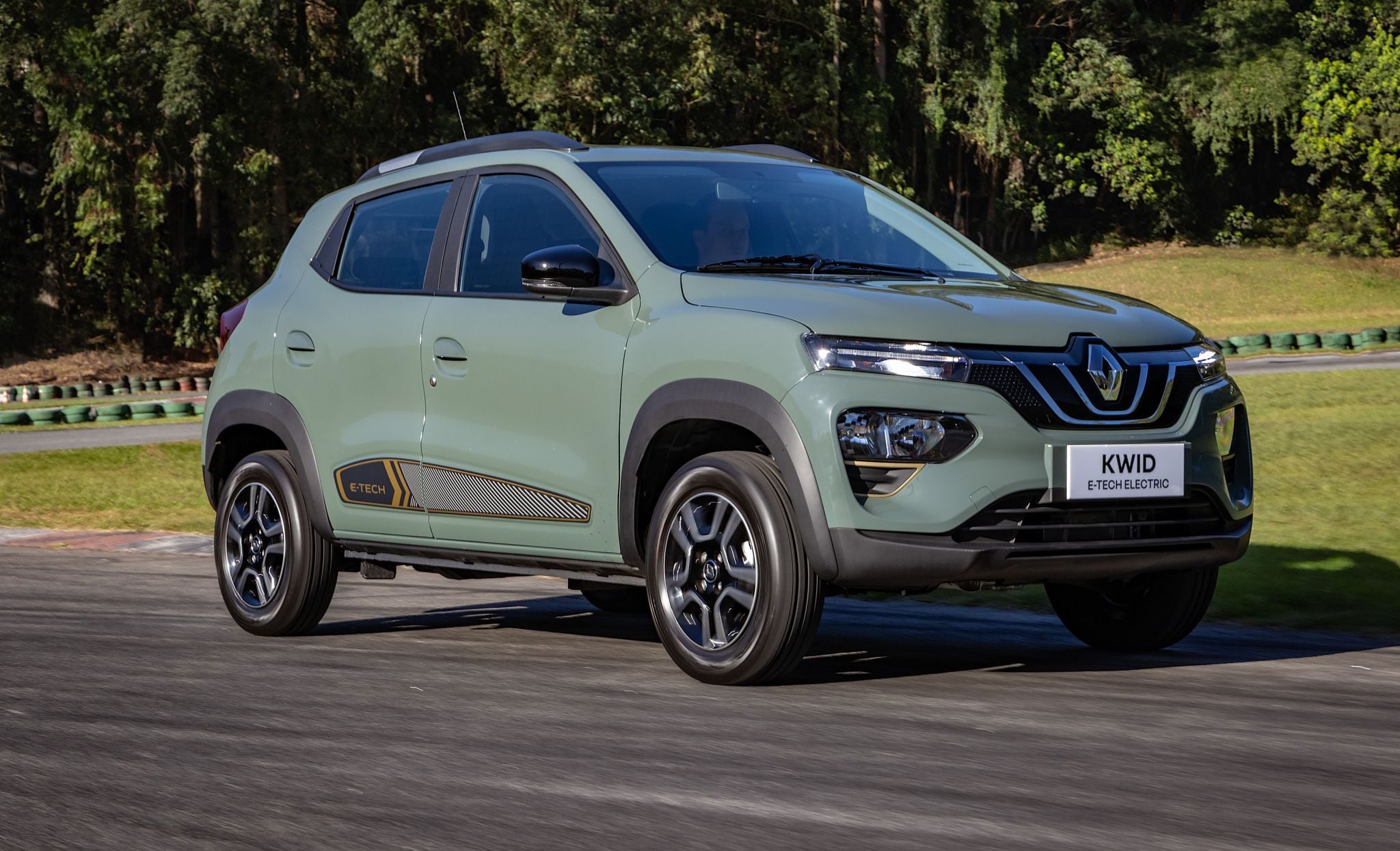
If there was an electric car that arrived with good conditions to face the Chinese, it was the Renault E-Kwid. The subcompact was the first model powered 100% by battery below R$ 100 thousand.
The cheapest electric car station in Brazil has rarely been displaced. However, it was not enough and the Kwid E-Tech had a short life on the market. The good news is that, even in the used and second-hand vehicle segment, it remains one of the cheapest electric cars.
Check out 10 facts about the Renault Kwid E-Tech.
Trajectory of the Kwid E-Tech
The Renault Kwid E-Tech was launched in Brazil in September 2022. Imported from China, the zero-combustion variant of the French brand’s subcompact has already arrived as the cheapest electric car in Brazil – it cost R$ 142.990.
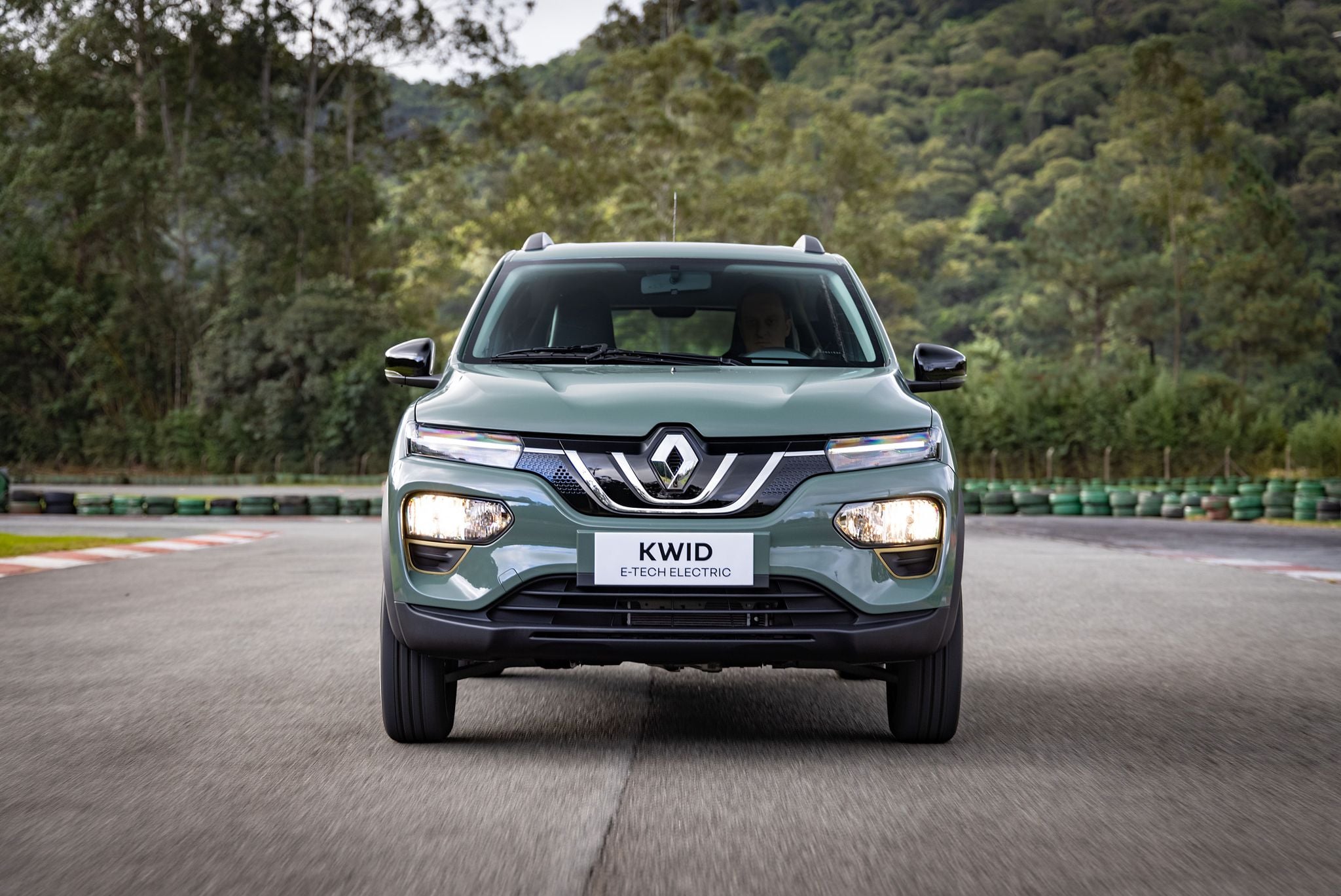
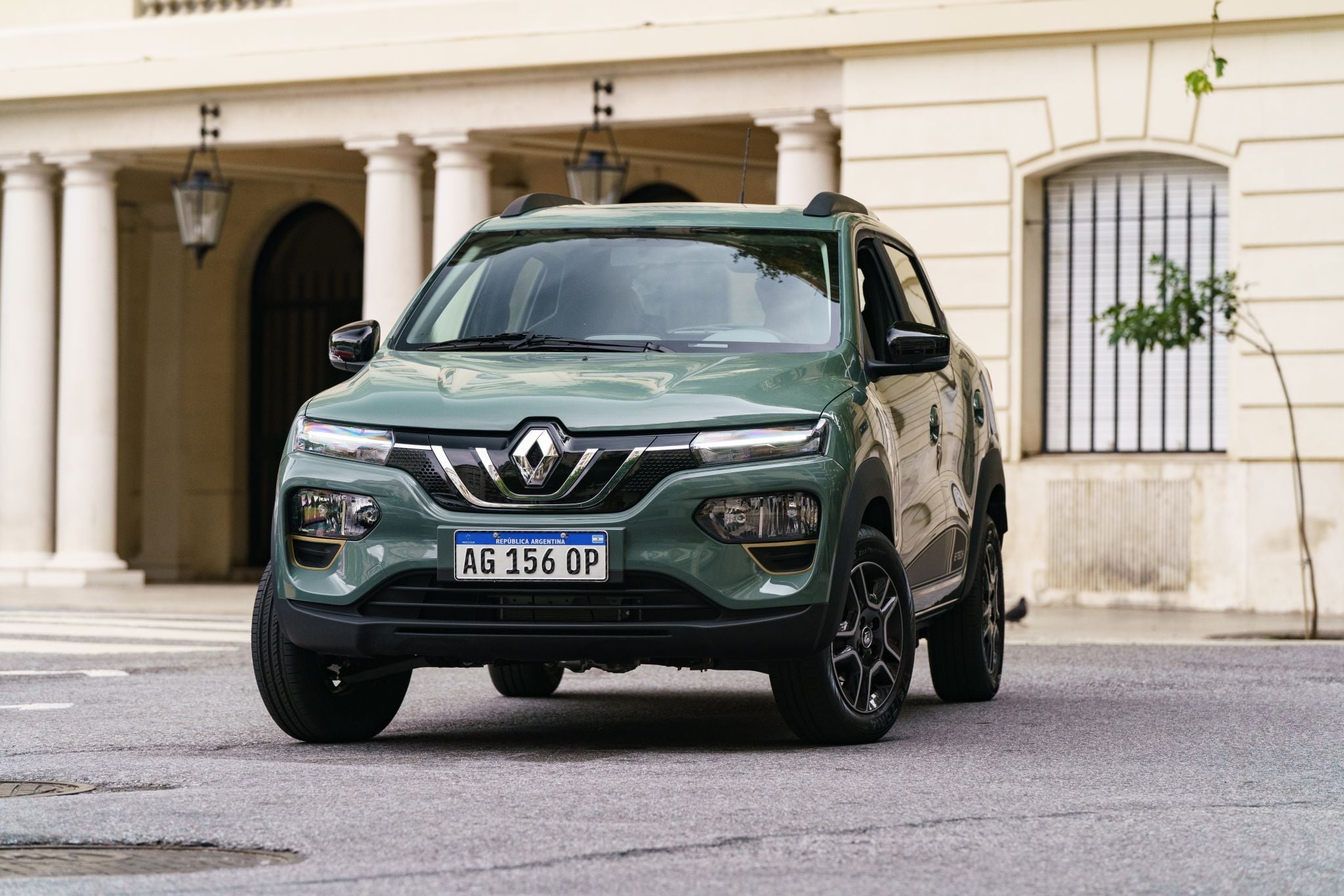
Visually, the Kwid E-Tech differs only by the coating that accommodates the recharging nozzle and replaces the radiator grille
The model debuted in the wake of the launch of Renault On Demand, the brand’s vehicle subscription service, which already included the small electric car. Visually, the difference between it and the Kwid flex was in the front grille and the wheel, with four instead of three holes.
In October 2025, Renault launched the renewed 2026 Kwid E-Tech lineup. The model gained important driving assistance equipment and was restyled, inspired by its European version: the Dacia Spring.
The car adopted a front with straighter elements, a darkened grille with embossed bars and the new diamond of the French brand. The headlights were also redesigned and the LED daytime running lights gained a “Y” shape.
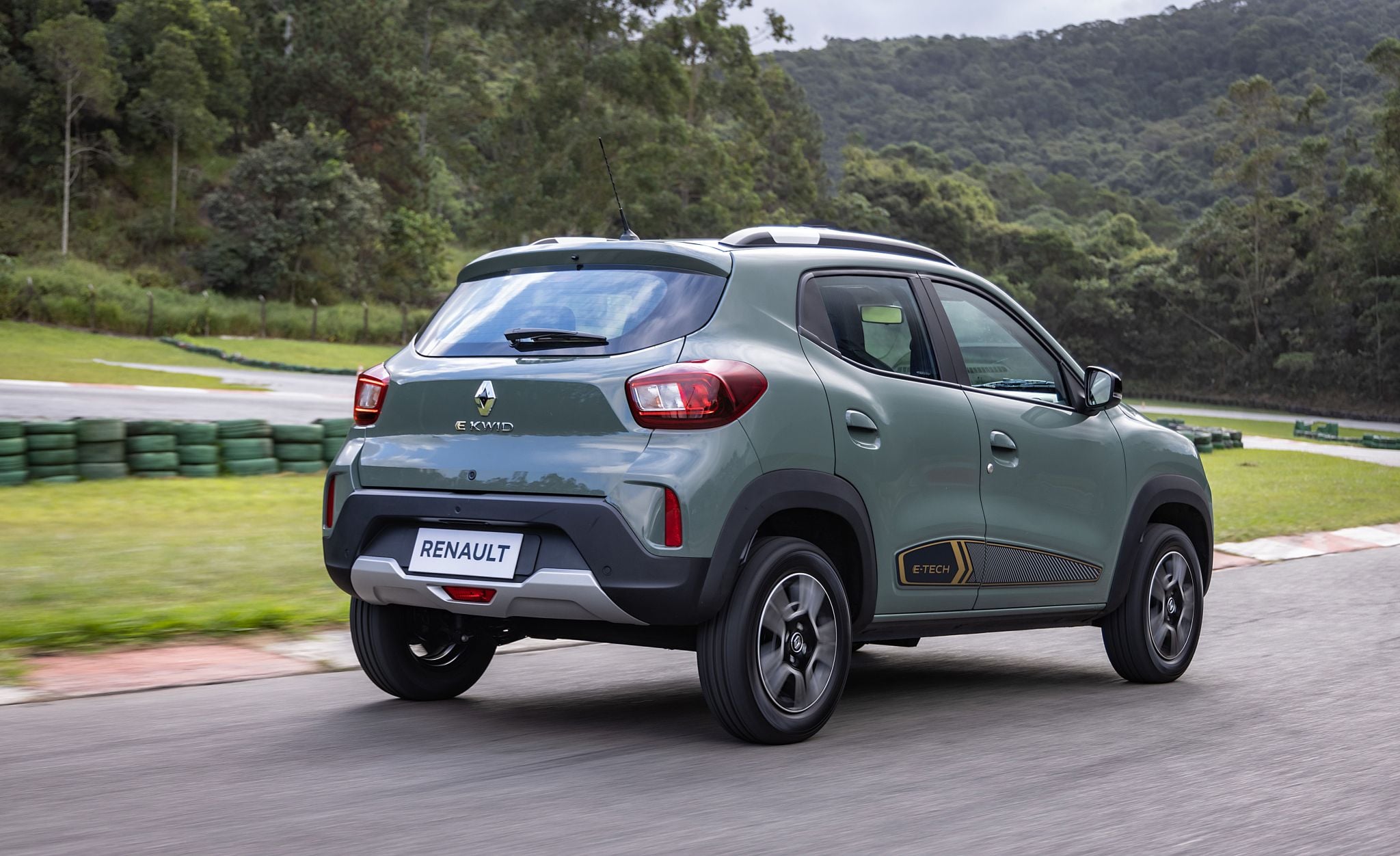
At the rear, the Kwid E-Tech received a horizontal black strip over the trunk lid and integrating the LED taillights. These lights gained new internal sections.
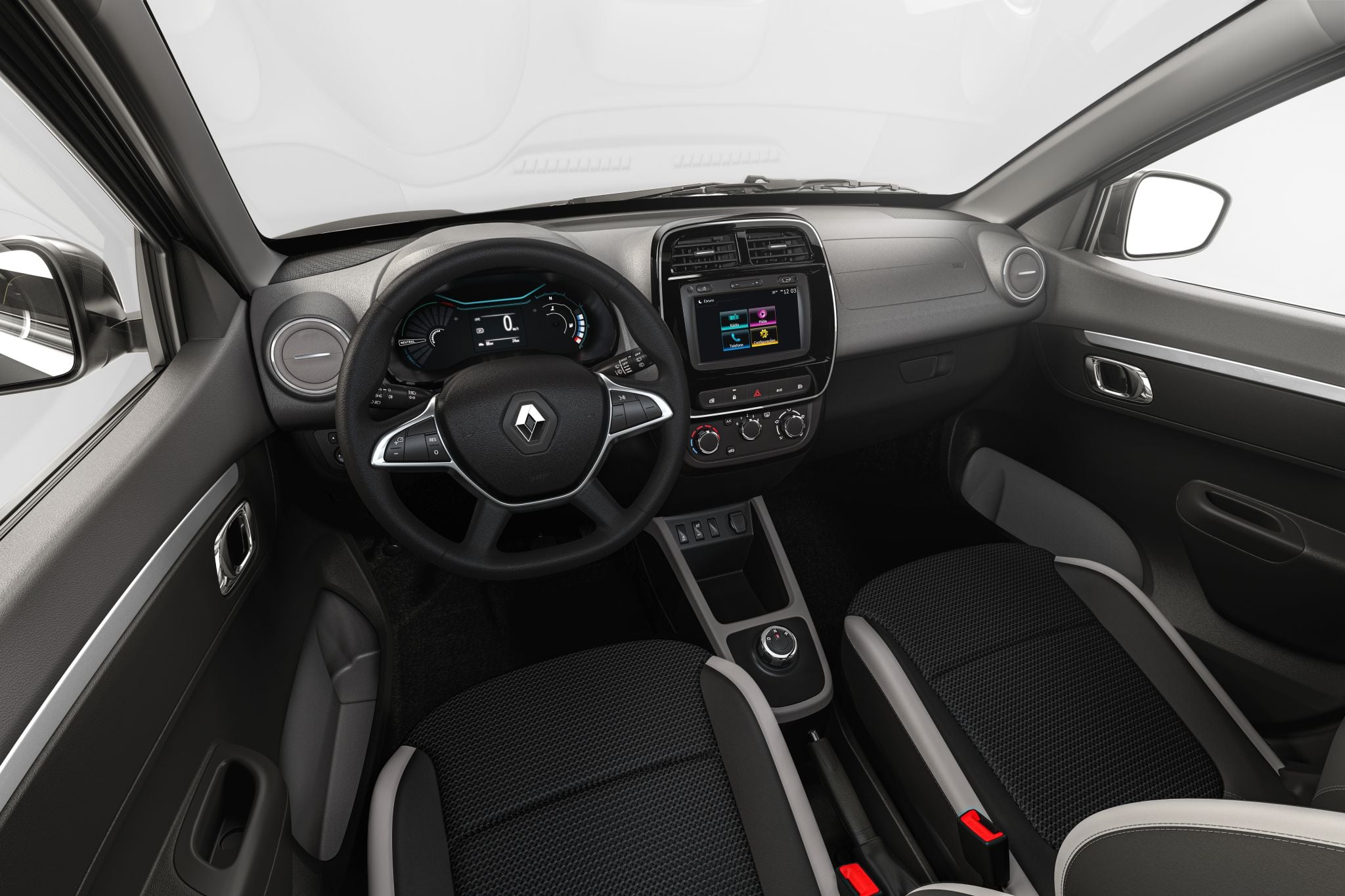
Inside, electronic instrument panel, multimedia center with detached panel screen and joystick-type lever for the gearbox – just like the Kardian. But the car was short on these changes: it stopped being imported in May 2026.
Performance
Despite being heavy (977 kg), the 65 hp and 11,5 kgfm of the electric motor manage to move the Kwid E-Tech with a certain dignity in the city. The responses are immediate to the accelerator as in any electric car.
Its 65 hp and 11,5 kgfm of torque may be insufficient in road use, but they are more than satisfactory in the city
Reaching 50 km/h is easy – it’s 4.1 seconds, according to the manufacturer’s data. But then the car takes time to develop. So much so that, for 0 to 100 km/h, it takes a long 14.6 seconds. In other words, his business is really the urban habitat.
Autonomy
The Kwid E-Tech’s engine is powered by lithium-ion batteries with a capacity of 26.8 kWh. According to the PBEV/Inmetro cycle, with a full charge the hatch is capable of running 185 km.
According to Renault, the batteries can be completed in 9 hours at common grounded 220V outlets. In Wallbox type devices, from 20% to 80% it takes 3 hours, while in direct current (DC) equipment, this same charge takes 45 minutes.
Dynamics
Unlike most electric vehicles available on the market, the Kwid E-Tech does not have a thoughtful basis for electrification. It is a car designed for a combustion engine that was adapted to receive the electric set.
This is reflected in the dynamics. The batteries positioned under the rear seat interfere with the center of gravity. As in the Kwid flex, the electric gives signs of fluctuation on the road above 90 km/h and resents any side wind.
In curves, that feeling of fragility of the subcompact is repeated. The body twists beyond what is expected from a car with only 2.43 meters of wheelbase.
Space and comfort of the Kwid E-Tech
As said, it is a small car, with 3.70 meters and approved for four passengers. The driving position is poor and drivers over 1.75 meters tall tend to scrape the ceiling and have their vision compromised.
Inside, the main difference between the Kwid E-Tech and the combustion versions is in the gear position selector, instead of the trambulator lever
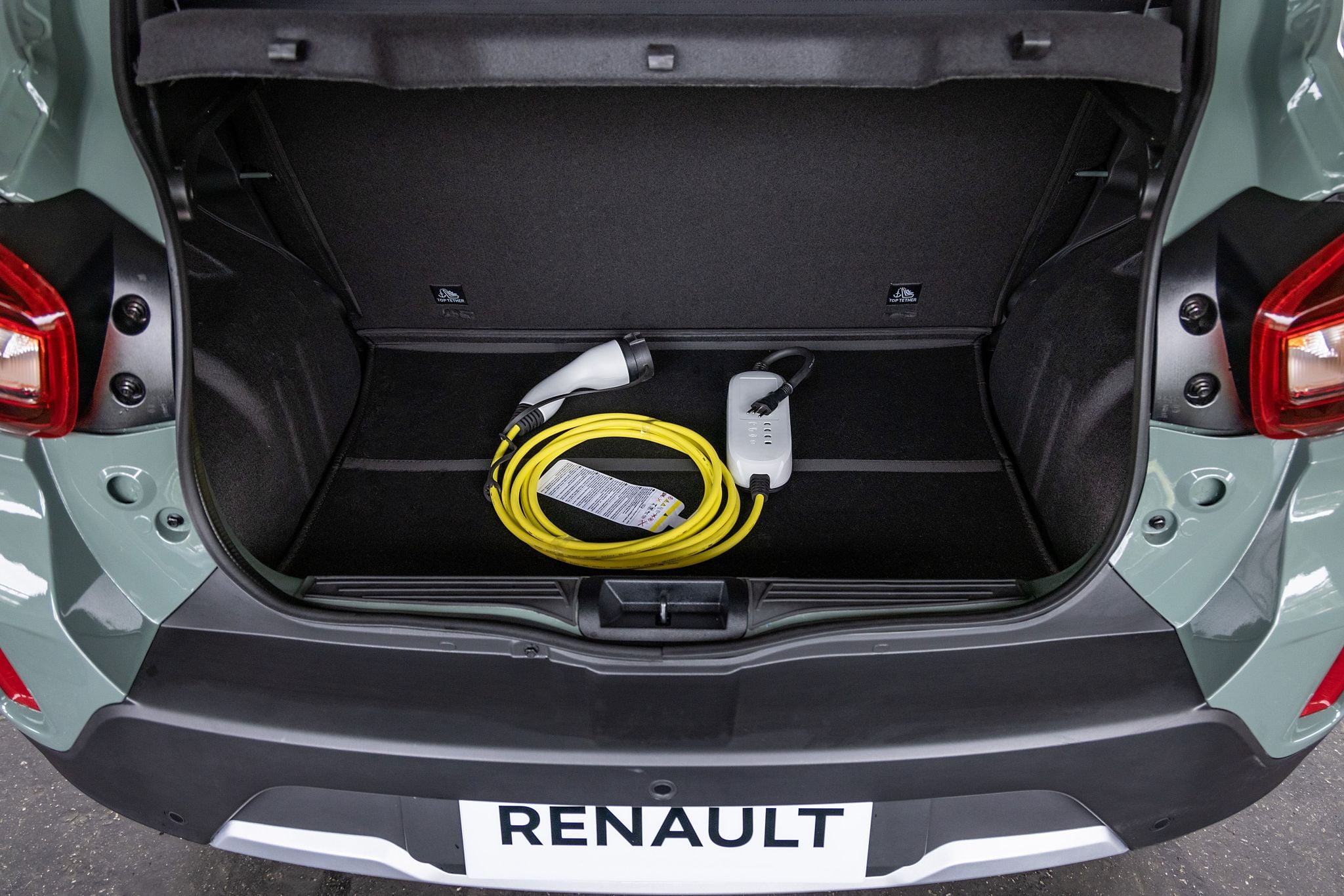
In the rear seat, there is limited legroom and knee room. There is still an elevated tunnel there on the floor – remember that it is a project of a combustion vehicle. The trunk receives 290 liters of capacity.
The Kwid E-Tech has curious things that an electric car doesn’t usually have. Like the handbrake (that, by lever) and key for starting the engine – most rivals use electronic parking brake and push-button start.
The steering with electric assistance is very light and has a turning circle of 9.60 meters. Along with the lean dimensions, it is easy to maneuver the Renault Kwid E-Tech.
Trunk holds 290 liters of volume, which makes it practical for transporting everyday offal
Acoustic comfort is due to the absence of vibration from the three-cylinder flex engine, but wind noises invade the cabin without asking permission. The finish, despite the improvement in the 2022 update, is still a weak point.
The suspension calibration, in turn, is harsh, even compared to the adjustment of the combustion Kwid. On the other hand, the hatch doesn’t look like that João Bobo when passing through speed bumps and holes as with most Chinese brand rivals
The cheapest electric car in the country
Remember that it arrived for R$ 142.990? Well, it was much cheaper than the JAC E-JS1, (R$ 164.900). It only lost the position of cheapest electric car in Brazil when Caoa Chery launched the iCar for R$ 139.990 – but the Renault was more equipped.
The playground caught fire even in 2023, after BYD launched the Dolphin for R$ 149.800. The Chinese brand’s electric car was much larger than the aforementioned trio and more equipped.
A price war then began. Caoa Chery and JAC lowered the prices of their cars to less than R$ 120 thousand. But Renault, until then, was eating popcorn like in Michael Jackson’s GIF.
When the buzz arose that the Dolphin Mini would be launched in 2024 with a price below R$ 100 thousand, the French brand played its card and reduced the price of the Kwid E-Tech to R$ 99.990. BYD’s rival, in turn, disappointed, and arrived for R$ 115.800.
Our tip
Let’s go with Renault Kwid E-Tech Techno 2025/26, still under warranty and which remains a cheap electric car. KBB Brasil’s Store Price costs R$ 89.565, while the Private Price is R$ 80.608 (calculated in August 2026).
For less than R$ 90 thousand it is possible to take a Kwid E-Tech, which offers more than the top-of-the-line version 0 km
This latest batch of Kwid E-Tech already makes use of a great package of driving assistance items: ACC, autonomous emergency braking, blind spot sensor, fatigue alert, license plate recognition and lane assist. Rare or non-existent items in compact combustion hatches and even in entry-level Chinese electric cars.
Still in security, it remains well equipped. There are six airbags and the subcompact offers front and rear parking sensors, as well as a reversing camera. Electronic instrument panel on 7″ display, multimedia on a 10″ screen, digital air conditioning and electric trio close the filling.
But it wasn’t enough…
Despite being the cheapest electric car in the country and the great cost/benefit, the Renault Kwid E-Tech never excited in sales. Its best year was 2025, with more than 1,600 licenses. In almost four years, the car sold 3,870 units in total.
Maintenance of the Kwid E-Tech
The hatch was sold with a three-year warranty, and eight years or 120 thousand km of battery coverage. At launch, the automaker promised revisions at half the price of maintenance of the combustion Kwid.
See the values:
10.000 km: R$ 320
20.000 km: R$ 366
30.000 km: BRL 366
40.000 km: R$ 412
50.000 km: BRL 412
Main problems of the electric Kwid
According to reports in forums with owners and on the Reclame Aqui website, the main complaints about the electric Renault Kwid concern:
Breakdown in electrical systems such as windows and mirrors
Comments are the sole responsibility of their authors and do not represent the opinion of this site. Comments containing profanity or offensive language will not be published. If you identify anything that violates the terms of use, please report it.