


Is electric car easier to steal? Understand the rise in thefts and thefts of electrified vehicles
With an increase higher than the growth of the fleet, thefts and thefts of electrified vehicles jump in the capitals of Brazil and require extra attention from owners
By
Julia Vargas
Published on 2026-09-06 at 03:00 PM
Updated on 2026-09-06 at 05:34 PM
Published on 2026-09-06 at 03:00 PM
Updated on 2026-09-06 at 05:34 PM
Be the first to comment.
Summarize with:
The increase in electric and hybrid vehicles on Brazilian streets has brought an indigestible side effect to owners: the skyrocketing rates of robberies and thefts. Data from the sector indicate that the volume of occurrences involving this category has more than doubled in some states such as São Paulo and Rio de Janeiro.
The problem is that the pace of growth in crimes exceeds the expansion of the electrified market itself. So the questions arise: what are the reasons for this increase? Is it possible to avoid these crimes? In this article you can see what is behind this wave of subtractions.
SEE ALSO:
- Do you know all the fluids present in your car?
- 5 situations that make the electric car a great deal (besides the hype)
- Is electric car insurance still more expensive? Check out values of battery-powered and combustion models
Skyrocketing numbers outpace fleet
growth According to data from the Brazilian Electric Vehicle Association (ABVE), the accumulated fleet of electrified vehicles in Brazil went from 445.9 thousand units in May 2025 to 765.9 thousand in the same month of 2026, representing an increase of 71.7%.
In the state of São Paulo, surveys by the telemetry company Ituran Brasil based on data from the Secretariat of Public Security (SSP-SP) reveal a strong increase in the volume of subtractions:
- A comparison of the periods from January to May 2025 and January to May 2026 recorded a jump from 44 to 101 occurrences in the state, which represents a variation of 129%.
- In another study by the same entity for the same period, 107 records were recorded in 2026 against 53 in 2025, indicating an increase of 101%.
- The capital of São Paulo concentrated most of the cases in the state, adding up to 74 records between January and May 2026.
For Ricardo Bastos, president of ABVE:
The circulating fleet increased at the same time that the consumer understood the technology, he ‘lost his fear’. And we know that on the other side the criminals also began to understand the electric and electrified cars better. Usually the bandit prefers a car that he already knows.”
In this way, the executive points out that the rise in the number of thefts and thefts of electrified vehicles does not mean that they are more vulnerable in relation to combustion cars, but that criminals are more familiar with these models. Today they have come to know them and know the high market value that many have.
I believe it is not easier or more difficult because today cars, even combustion cars, have all their security with a very strong electronic content. Comparing the most modern cars, those that have a face-to-face key, for example, today there is not much difference when it comes to having access, starting the car and stealing it. Security systems have very similar electronics.”
Batteries and dismantling
action The battery is the main and most valuable part of electric and plug-in hybrid cars. Despite this, official data show that there are no thefts and thefts only of this component itself due to technical barriers and risks at the time of crime.
The set of cells is installed on the floor, integrated into the vehicle’s structure and fixed by dozens of screws, in addition to the system operating at very high voltages, requiring de-energization of the circuit and electrically insulated tools for removal. Any failure can generate fatal electric shock or fires. In addition, the battery pack weighs between 300 kg and 500 kg, requiring car lift and support platform.
In view of this, the modus operandi of the bandits consists of stealing or stealing the entire vehicle and transporting it. Ricardo Bastos points out that disassembly for dismantling and sale on the parallel market can happen for common parts and for the electrical part of the vehicle. However, he points out that the degree of difficulty to remove the battery is high, as it is a very sensitive item and complex operation, which requires enormous security control.
In addition, the ABVE authority points out that many of the batteries currently produced are traceable and have electronic sensors and very specific characteristics of each automaker, which facilitates their tracking.
In fact, Bastos does not recommend that owners of electrified vehicles buy these parts on websites or parallel markets if they need to replace the battery, due to the unknown origin and complexity of the installation. For the executive, it is essential that this procedure is carried out by the manufacturer of the model.
Theft of charger
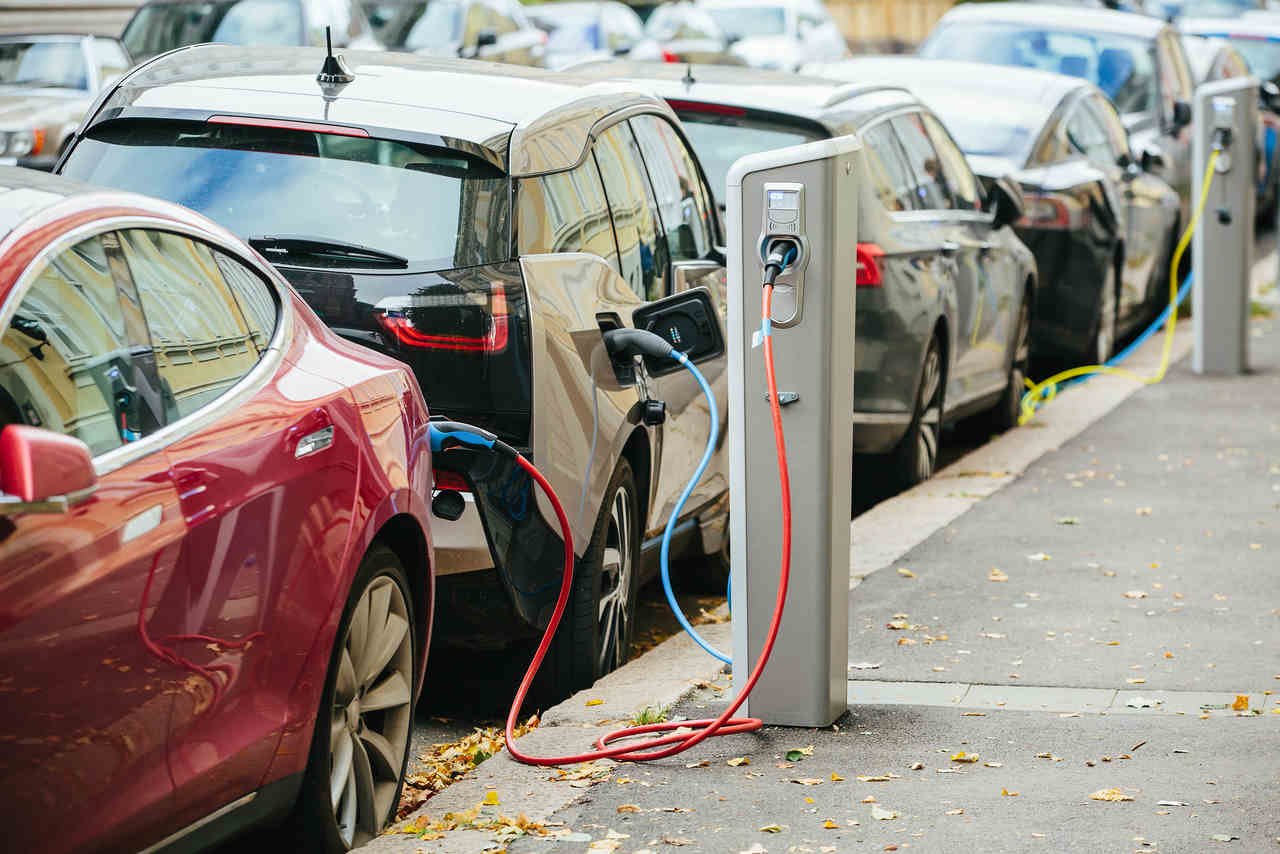
cables In addition to vehicles, chargers of electrified models are also being targeted by a series of thefts, which render the devices unusable. Attracted by the appreciation of copper in the clandestine scrap market, criminals cut the wiring of electric stations with few tools in actions that last less than 30 seconds, as recently recorded in Curitiba (PR), Florianópolis (Coqueiros, SC) and Brasília (DF).
This is facilitated by the fact that these devices are exposed in outdoor areas, parking lots, and places of public circulation. According to Arthur Carrão, CEO of Recharge Brasil, an engineering and electromobility company, to prevent theft and reduce losses, vehicle charging companies are already applying some strategies and adaptations. In Brazil, the solutions consist of:
- Physical Reinforcement: cabling coating with steel cables or meshes or attached to the charger structure to prevent cutting.
- Protected compartments: cables are housed in a specific compartment that only opens when the customer releases the charger through a QR Code.
Preventive behavior when driving and accessing the vehicle to avoid robberies
The driver’s posture in moments of transition and during the journey is decisive to reduce exposure to risks and discourage a robbery.
- Attentive approach: when heading to the car, observe your surroundings and have your keys in hand (except in approach key systems). Avoid distractions such as cell phone conversations or searching for objects in the bag next to the vehicle.
- Agility in boarding: get in, lock the doors immediately, start the engine and get the vehicle moving as soon as possible. Leave items such as mirrors or personal belongings organized and adjusted inside the car, because the shorter the time stopped, the less vulnerability.
- Attention in traffic: keep the windows completely closed and avoid putting your arms out. When you notice the traffic light closed ahead, reduce speed gradually to avoid a total stop, especially at night.
- Positioning on the roads: prioritize the central lanes, which are farther from the sidewalks and make it difficult to approach on foot.
- Unforeseen management: if the tire goes flat or the glass is hit by rocks in isolated places, do not stop immediately; proceed to a safe and busy place, such as a gas station. Likewise, avoid stopping to provide assistance in deserted areas or opening the window to adjust the rearview mirror.
- Route planning: check the route on the GPS before leaving and avoid detours through neighborhoods or unfamiliar roads just to save a few minutes.
Cautions when parking and protection of valuables
The opportunity for criminal action often arises from the exposure of valuable items and parking in inappropriate places. Therefore, be aware of the following factors:
- Choice of parking location: give preference to well-lit, busy and visible roads. When waiting for passengers, avoid standing inside the car; make a turn around the block or wait in a safe place outside the vehicle.
- Hiding belongings: do not leave bags, backpacks, cell phones or watches on the seats. Store your belongings on the floor of the vehicle or in the trunk. Accommodate objects in the trunk before reaching the final destination to prevent observers in the parking lot from identifying the contents.
- Access to the residence: the installation of automatic gates reduces exposure when arriving or leaving home. If you notice suspicious people on the block, take one more turn before entering the garage.
- Locking and keys: Always check that the doors and windows are locked. Never leave the key in the ignition, the vehicle started unattended or spare keys hidden in the glove compartment or under the vehicle.
Technological devices and safety equipment
The use of complementary equipment acts as a deterrent and helps in the recovery of the asset in cases of theft or robbery. Good examples are:
- Anti-vandalism films: applied to the windows, they make it difficult to break and shatter the material against impacts from stones or objects, delaying the invasion of the passenger compartment. It is worth mentioning that the film does not have the property of armoring against firearms.
- Alarms and visible devices: sound devices attract unwanted attention to the criminal. Visual resources, such as steering wheel locks, engraving of the identification number on the windows and alarm indicator lights, discourage break-in attempts.
- Immobilizer and blocking systems: smart keys with ignition cut-off and safety switches disable the vehicle’s systems, preventing it from being started without authorization.
- Trackers and locators: equipment that uses wireless technology and GPS transmits signals to monitoring centers and police authorities, allowing for faster location and recovery of the stolen car.
SEE MORE ABOUT

0 Comments
Comments are the sole responsibility of their authors and do not represent the opinion of this site. Comments containing profanity or offensive language will not be published. If you identify anything that violates the terms of use, please report it.