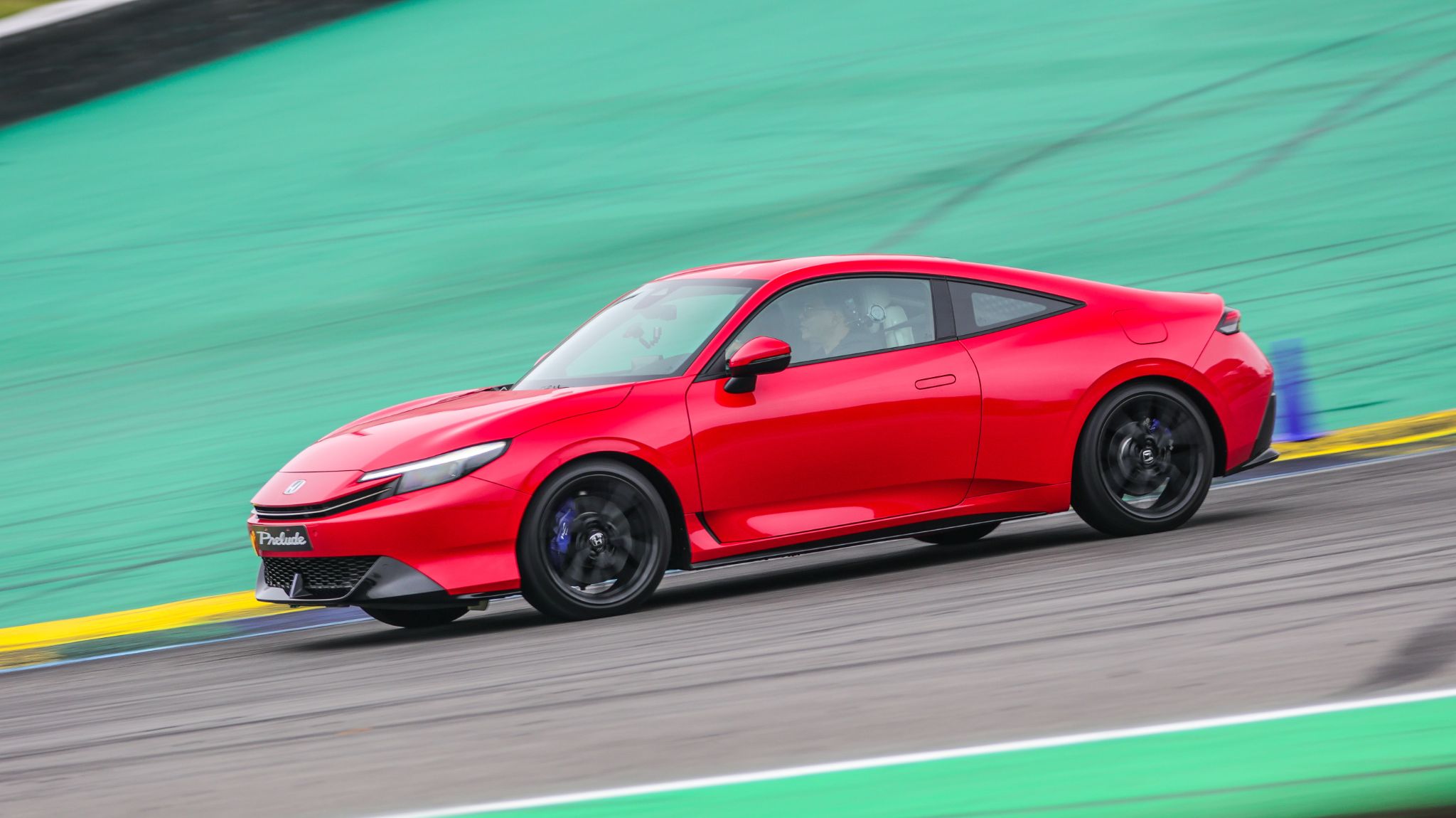
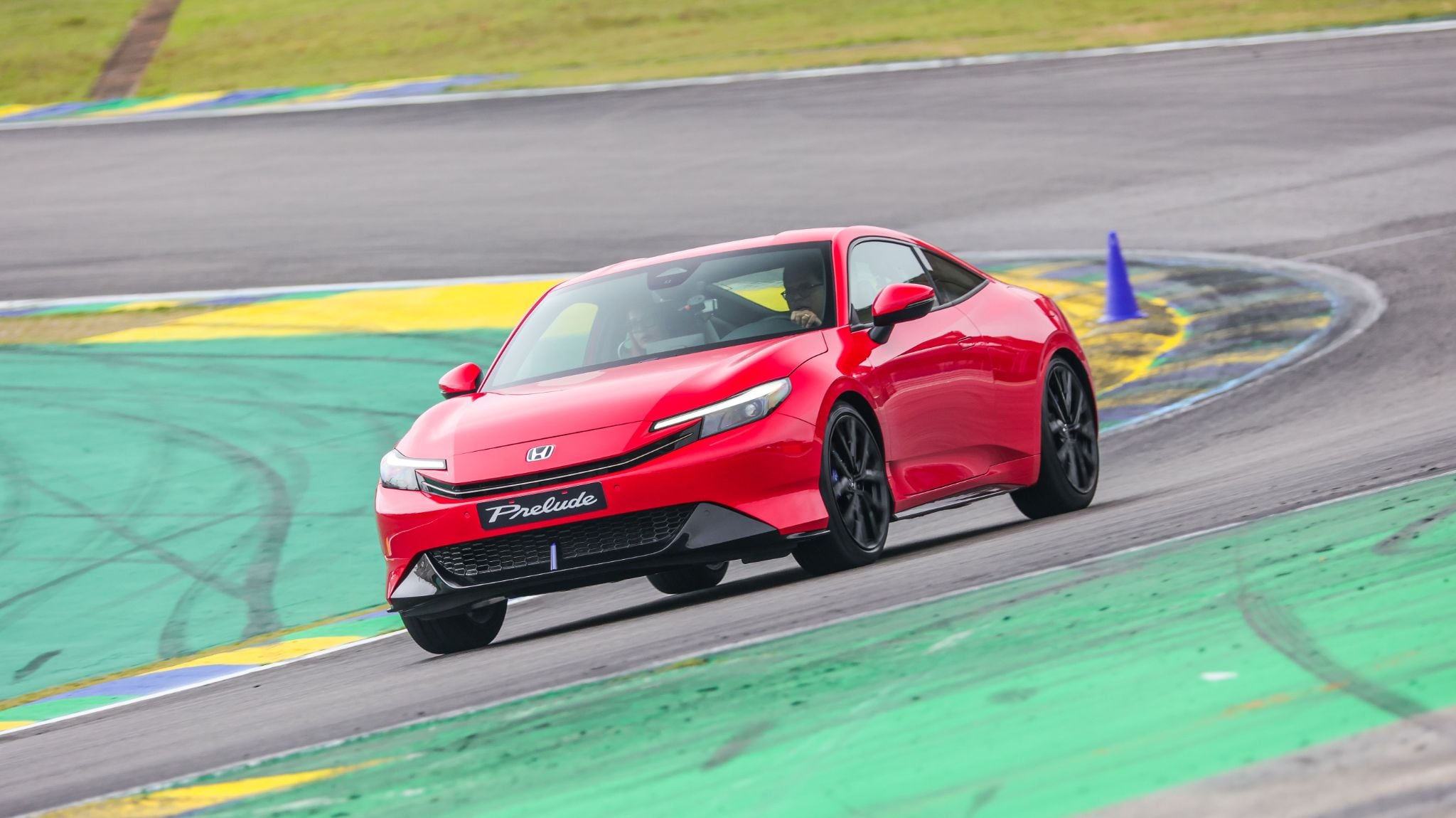
Honda’s 2+2 coupe was imported again after 34 years, without losing its original proposal by offering handling and performance of a good level. It is not, however, about feeling your back stick to the seat, after a few laps at the Interlagos racetrack in this first contact. Prelude has a history of attractive lines since it debuted in Japan in 1978 and continues to do so. According to the manufacturer, its design refers to the profile of a glider. 19-in. wheels leave the brake calipers painted blue very visible. 235/40 R19 tires.
sieve With a wheelbase of 2,605 mm and 1,355 mm in height, only children can accommodate themselves in the rear seat, like other sports cars. Trunk is limited to 264 L. An interesting feature is the driver’s seat with a firmer seat than that of your companion. Ergonomics facilitates access to all controls. There are two USB-C ports, a 9-inch multimedia center. with support for Android Auto and wireless Apple CarPlay, as well as eight airbags.
Japanese coupe delivers 203 hp and 32,1 kgfm of torque combined (Photo: Honda | Disclosure)
Prelude is a full hybrid with a 2.0-liter aspirated engine, 143 hp, 19,1 kgfm, plus two electric (one traction and one generator), which add up to 184 hp and 32,1 kgfm. Combined power of 203 hp and also combined torque of 32,1 kgfm. Gearbox, if you can call it that, has eight virtual gears and even punta-tacco simulation. At higher speeds, such as on the racetrack or long straights on highways, the combustion engine acts directly on the front wheels. Most of the time, however, only the electric motors operate, while the gasoline engine works as a generator.
Its architecture inherited from the Type R includes adaptive dampers. Directional precision is one of the highlights. At Interlagos, this feature stands out. It gives confidence to those who drive even in the Ferradura, open and uphill curve, one of the most difficult on the São Paulo circuit due to its layout. Honda does not disclose acceleration from 0 to 100 km/h in Brazil, but tests abroad point to between 6.4 s (if the battery is fully charged) and 6.7 s. With virtual gears, times worsen to the range of 7.3 s to 9.2 s.
Audi launches two stations as alternatives to SUVs
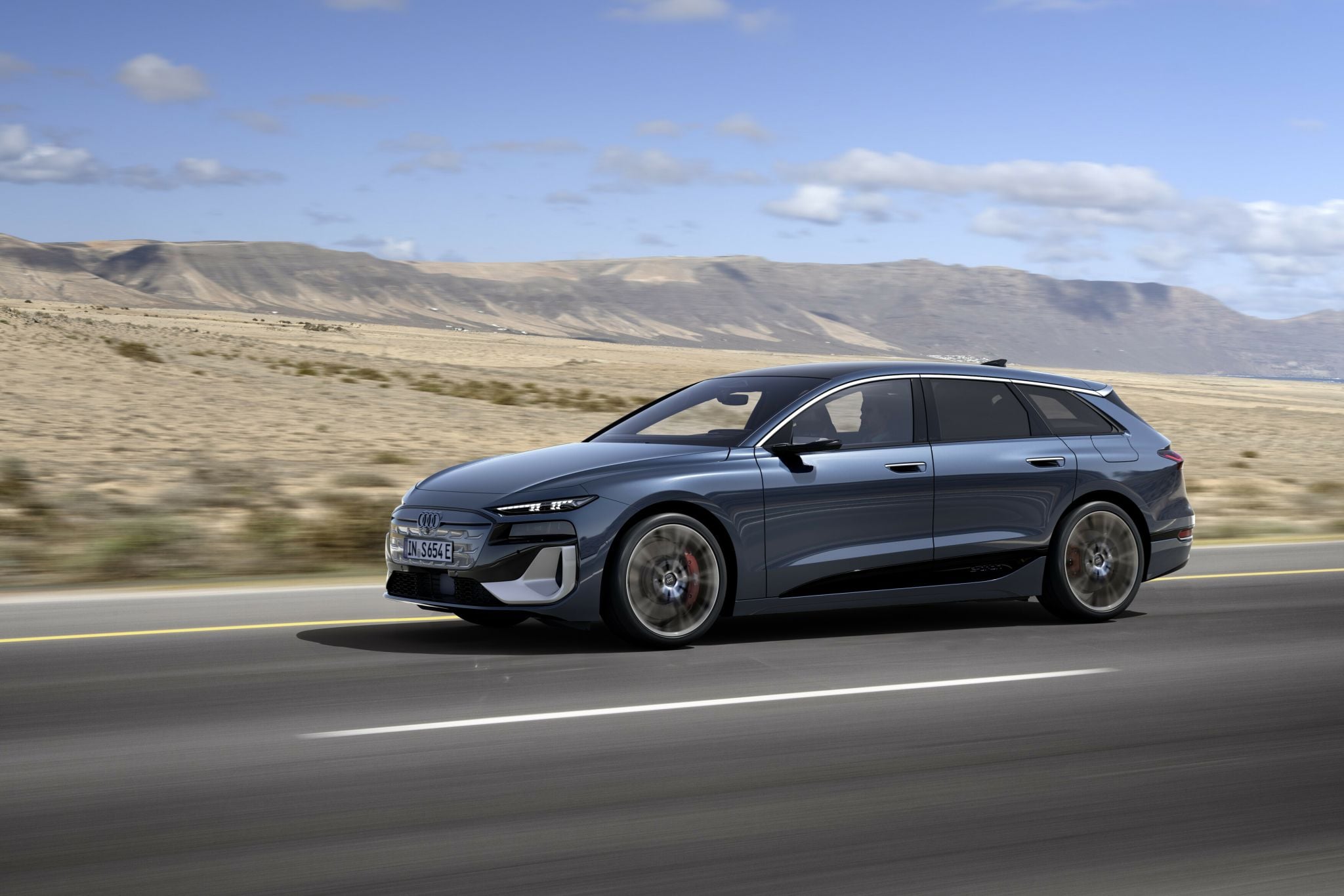
Audi A6 Avant e-tron accelerates from 0 to 100 km/h in 5,4 seconds (Photo: Audi | Disclosure)
In a market overwhelmingly dominated by sport utility vehicles (SUVs), Audi makes a commendable and courageous decision: it renews its bet on the station wagon niche with mechanical proposals and different technological approaches. A5 Avant S-Line features the 2.0, turbo, gasoline, four-cylinder, 272 hp and 40,8 kgfm engine. Transmission is the seven-speed S-tronic dual-clutch automated and on-demand all-wheel drive. Range (km): 487 (city); 644 (highway).
The A6 Avant e-tron S-Line is 100% electric, larger in all dimensions and with a trunk of 502 L, plus 27 L, front (in total, 54 L more than the A5). 367 hp engine, 57.6 kgfm and rear-wheel drive. 800 V architecture, 100 kWh battery and range of 440 km (Inmetro standard). The recharging system accepts up to 270 kW in direct current and in this case replenishes the charge from 10% to 80% in 21 minutes. Energy recovery in deceleration varies from coasting to one-pedal mode, selectable by paddles on the steering wheel.
Highlight for the set of digital screens: 11.9-inch instrument panel, 14.5-inch multimedia center. and another dedicated to the 10.9-inch passenger. There is a panoramic sunroof with variable opacity, data projector on the windshield and a complete driving assistance package (Adas).
Dynamic evaluation on the route between São Paulo and Porto Feliz (SP) revealed the accuracy of the suspension and acoustic insulation adjustment in both. A5 delivers almost imperceptible gear changes and the A6 e-tron excels in progressiveness. The station wagon with a combustion engine accelerates from 0 to 100 km/h in 5.9 s. However, A6 Avant e-tron, even with 410 kg more due to the battery and slightly larger dimensions, achieves better acceleration: 0 to 100 km/h in 5.4 s.
In short, different models in the concept of propulsion, but brothers in dynamic care and construction. The choice will fall on the preference for a combustion engine or electric — in addition, of course, to the price factor.
Comments are the sole responsibility of their authors and do not represent the opinion of this site. Comments containing profanity or offensive language will not be published. If you identify anything that violates the terms of use, please report it.