The Fiat 147 revolutionized the small, economical and popular car segment in 1976, bringing an automobile with compact exterior dimensions and ample interior space for passengers. Mechanically, the small Fiat presented the novelty of transversely arranging the engine and gearbox assembly, an innovative architecture for the Brazilian market at the time.
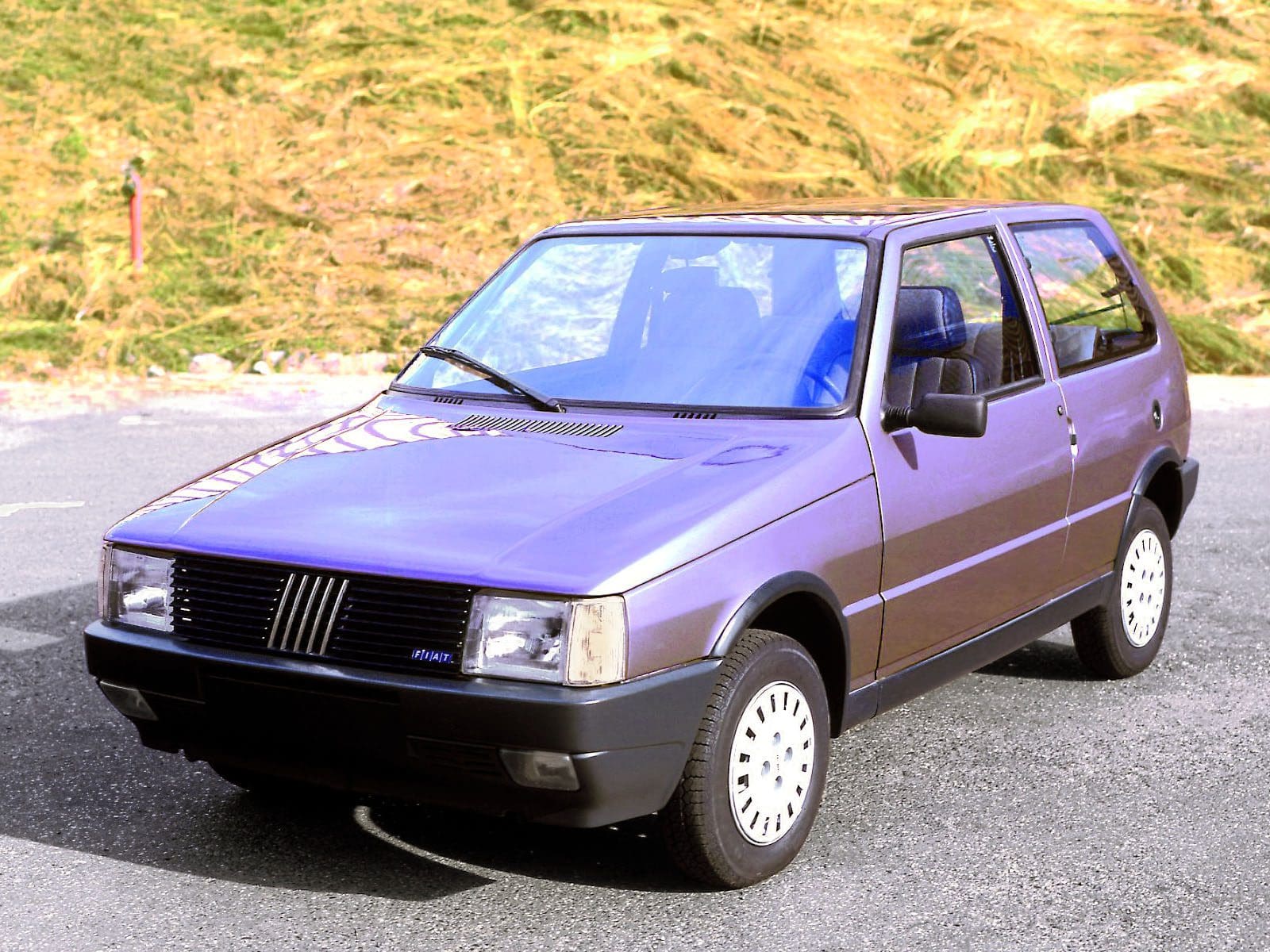
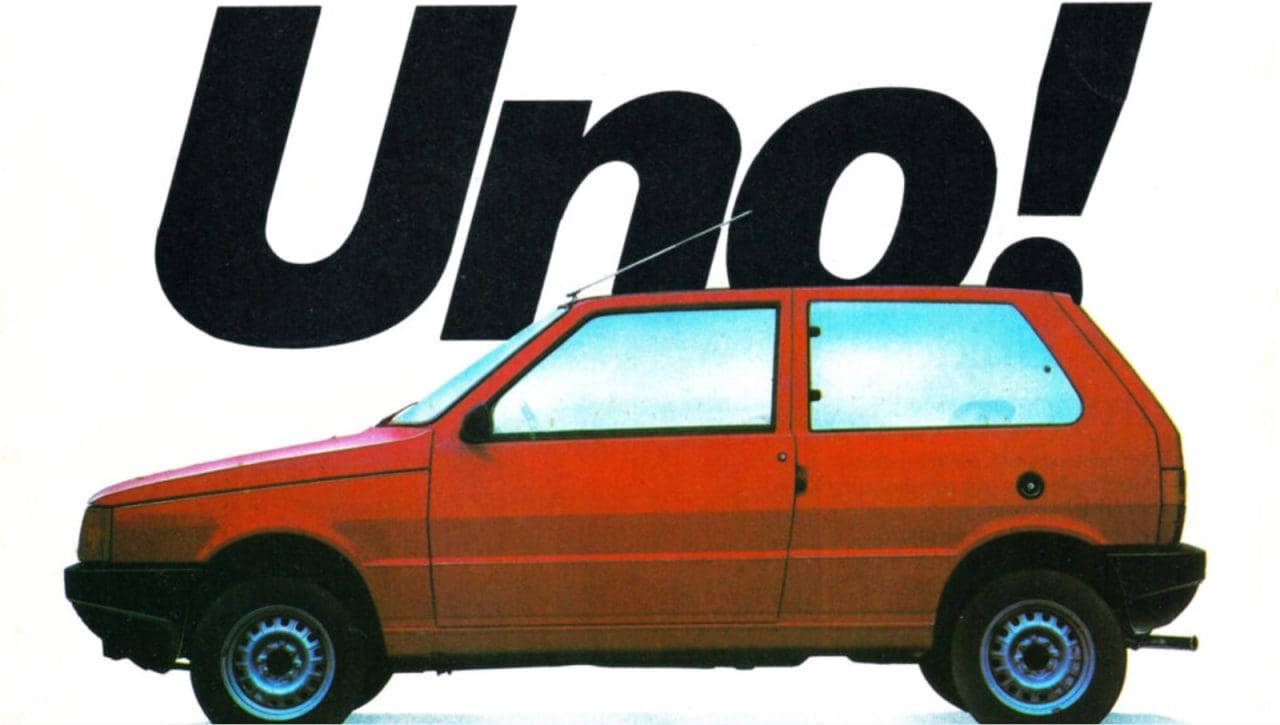
Eight years later, in 1984, Fiat innovated again by launching the Uno, in August of that year. A compact designed from the inside out, with constructive architecture and ergonomics capable of making competitors envious. With a generous glazed area, the new model offered a bright and tall interior, conveying a pleasant feeling of space, despite being a small and economical car.
Despite the similarity with the Italian model, the Brazilian Uno brought significant engineering changes
Launched a year earlier in Europe, the concept of the new car arrived practically intact in Brazil. The interesting thing is that, although it followed the entire philosophy of the European model, the Brazilian Uno was adapted to the needs of our market. Among the main differences were the rear suspension, which in the national model was independent with a transverse leaf spring, and the position of the spare tire. Here in Brazil, it was housed next to the engine, while in the European model it took up space in the trunk.
To accommodate the spare tire in the front compartment, the national Uno received a hood that wrapped more around the front and fenders. In the European, the hood was just a simple cover for access to the engine.
The mechanics with transverse engine and gearbox were directly inherited from the Fiat 147. In the new Uno, the S version used the 1.050 engine with a simple carburetor, capable of generating 52 hp. The most equipped version, the CS, used the 1.300 engine also with a simple carburetor, delivering 59 hp.
Fiat Uno SX was the most powerful option in the line
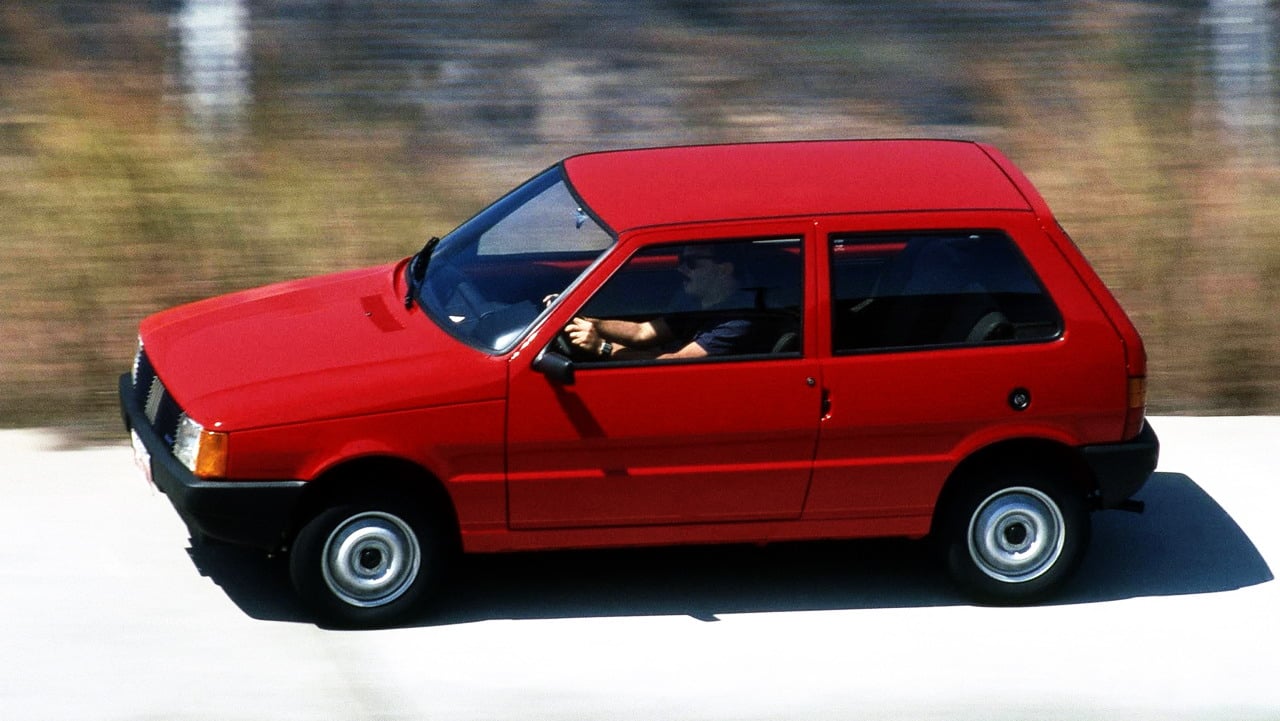
In October 1984, the SX sports version, an acronym for Super Experimental, was launched. The model used the 1,300 alcohol-powered engine and, thanks to the adoption of a double-barrel carburetor, produced a respectable 70 hp.
It is curious to remember that, at that time, there were no flex-fuel cars. At the time of purchase, the consumer had to choose between gasoline or alcohol. Usually, the more conservative opted for gasoline, while the more daring preferred the better performance provided by vegetable fuel.
Spare tire housed under the hood was used until the Uno’s apoentadoria, at the end of 2013
Regarding the gearbox, Fiat offered the S version only with a four-speed manual transmission. In the CS and SX versions, the brand offered a five-speed manual transmission. Thanks to the proper staggering, the fifth gear of the Uno CS favored fuel economy. In the SX sports car, the shorter ratios were aimed at improving performance.
With independent suspension on all four wheels, the Uno offered very pleasant dynamic behavior for those who liked to drive. At the same time, the front disc brakes did the job for those who preferred a faster pace. The rack-and-pinion steering did not have hydraulic assistance, but the narrow tires made maneuvering relatively light.
But Fiat’s new compact really stood out for its ergonomics. The door handles were embedded in a discreet side crack, with no protrusions or apparent parts. Everything was clean and unobtrusive. On the huge windshield, the single wiper drew attention, capable of sweeping about 75% of the total area of the glass. A real technological scandal for the time.
When entering the car, the driver’s more upright position already anticipated a concept that the industry would adopt decades later in SUVs. Instead of being sprawled on the seat, as was common in cars at the time, in the Uno the driver sat almost as if in a chair. This greatly facilitated access to the vehicle and improved visibility. To make this possible, the ceiling was higher, increasing the glazed area and creating a bright and pleasant interior environment.
Light, Fiat Uno offered good performance, especially in the SX version, with a 1.3 engine of 70 hp, fueled with alcohol
For the driver, in addition to better visibility and the consequent feeling of safety, the Uno brought another interesting innovation. There were two satellite modules positioned next to the steering wheel, bringing together practically all the controls used while driving. It was possible to activate flashlights, headlights, windshield washer and wiper, rear wiper, defroster and high beam signal without taking your hands off the wheel.
It was an extremely modern solution for the time, since the other national cars forced the driver to stretch his arm towards the dashboard to access most of these controls.
Front spare tire was a smart space-use solution
As the spare tire had been moved to the engine compartment, the national Uno offered a good trunk of 290 liters, despite the contained length of only 3.64 meters. It is worth remembering that, with the rear seat folded down, the capacity jumped to an impressive 620 liters.
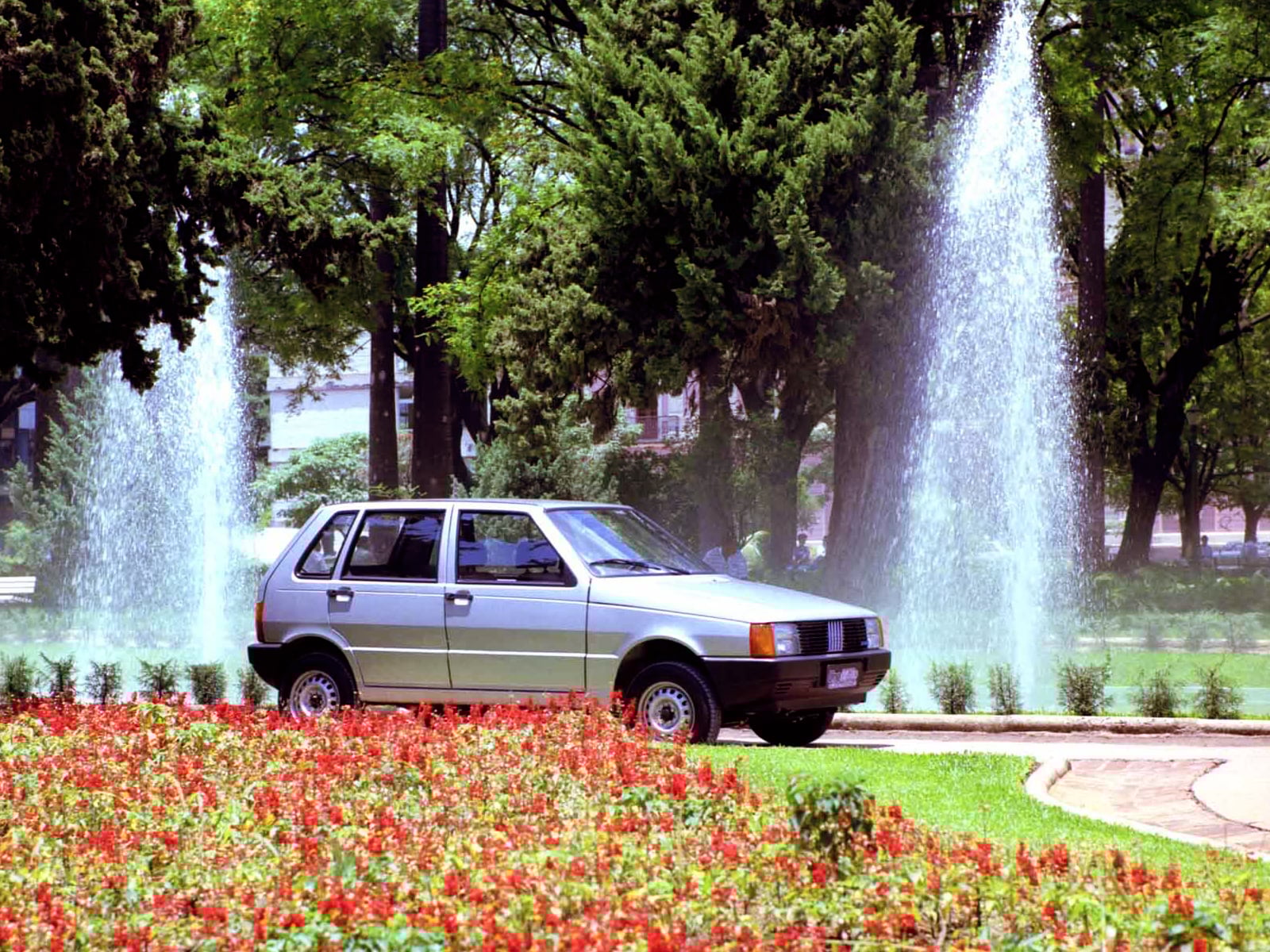
At its launch, the Uno was only offered in a two-door configuration. The four-door version only arrived in the Brazilian market in 1992, shortly after the introduction of the Uno Mille.
Four-door option only hit the market in 1992, after eight years on the market
I had the pleasure, at the beginning of 1984, of being professionally invited by Fiat Automobiles to write the launch release of the new Uno, material intended to provide all the technical and commercial information of the car to the Brazilian specialized press.
Living in São Paulo, I made several trips to Betim, in Minas Gerais, to talk to technicians, engineers, pilots and professionals involved in the development and production of the new car. The result was a very detailed material that, after being approved by Fiat’s communication department, ended up being distributed to the entire Brazilian press.
Therefore, I have a special affection for this remarkable little man, who introduced innovative concepts and helped shape part of the evolution of the national automobile industry. Undoubtedly, a car that marked its era.
Comments are the sole responsibility of their authors and do not represent the opinion of this site. Comments containing profanity or offensive language will not be published. If you identify anything that violates the terms of use, please report it.