Fiat has already manufactured trucks, but it would have been better to have focused only on cars
The beginning of Fiat's trucks in Brazil was, in fact, the continuation of FNM, a story that had not ended well
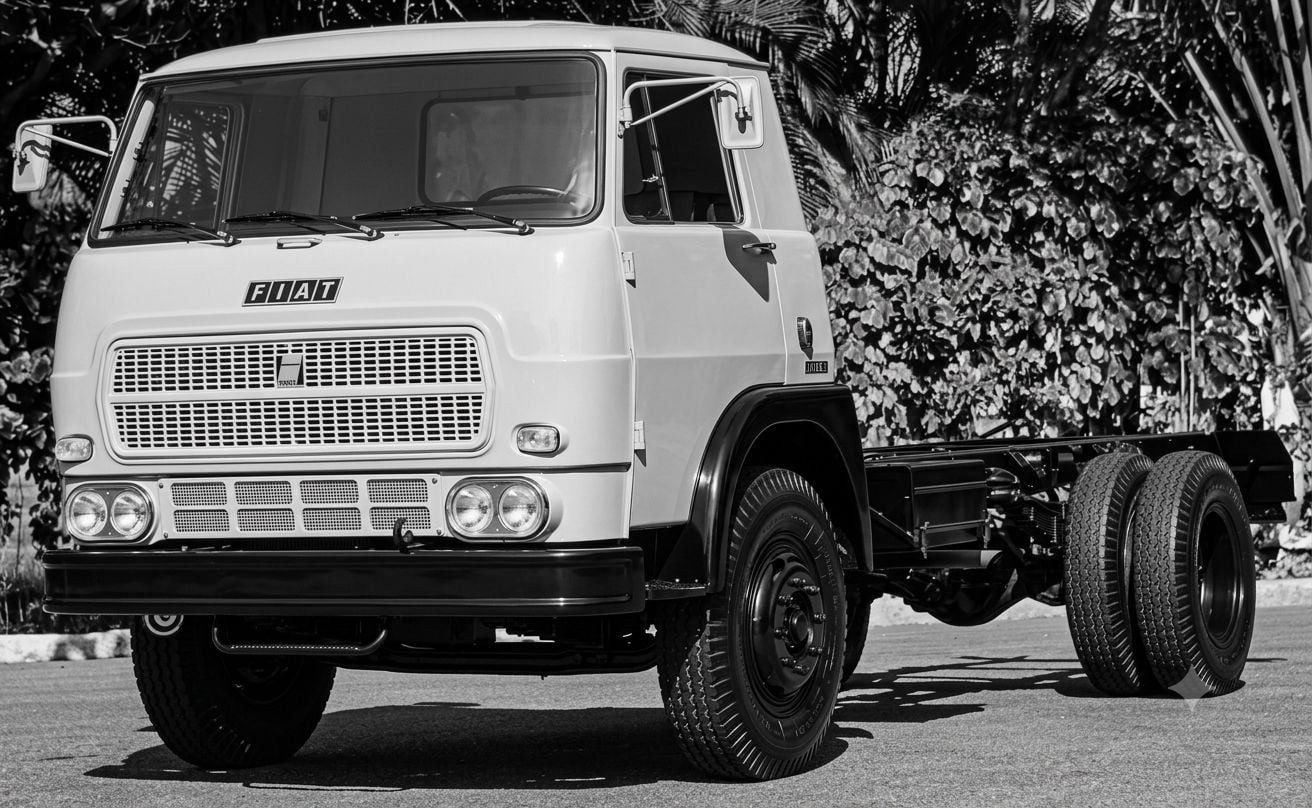
Fiat 130 hit the market in the 1970s almost at the same time as the inauguration of the plant in Betim (MG) (Photo: Fiat | Disclosure, with AI resolution boosting)
Celebrating 50 years as a manufacturer in Brazil, Fiat collects good stories built by its automobiles. But as much as it is consecrated as a passenger car manufacturer, the Italian brand has already ventured to produce trucks here. However, this trajectory was not as prosperous as that of its cars.
As in any good story, the beginning of this endeavor was not easy at all, mainly because it was a continuity of the old National Motor Factory, or for the most intimate, the legendary “Fenemê”.
In short, the history of FNM began on June 13, 1942, in the middle of World War II, for the manufacture of aircraft engines in Duque de Caxias (RJ). With the end of the conflict in 1945, the company started to manufacture heavy trucks in 1949, simultaneously becoming the first automobile industry in Brazil.
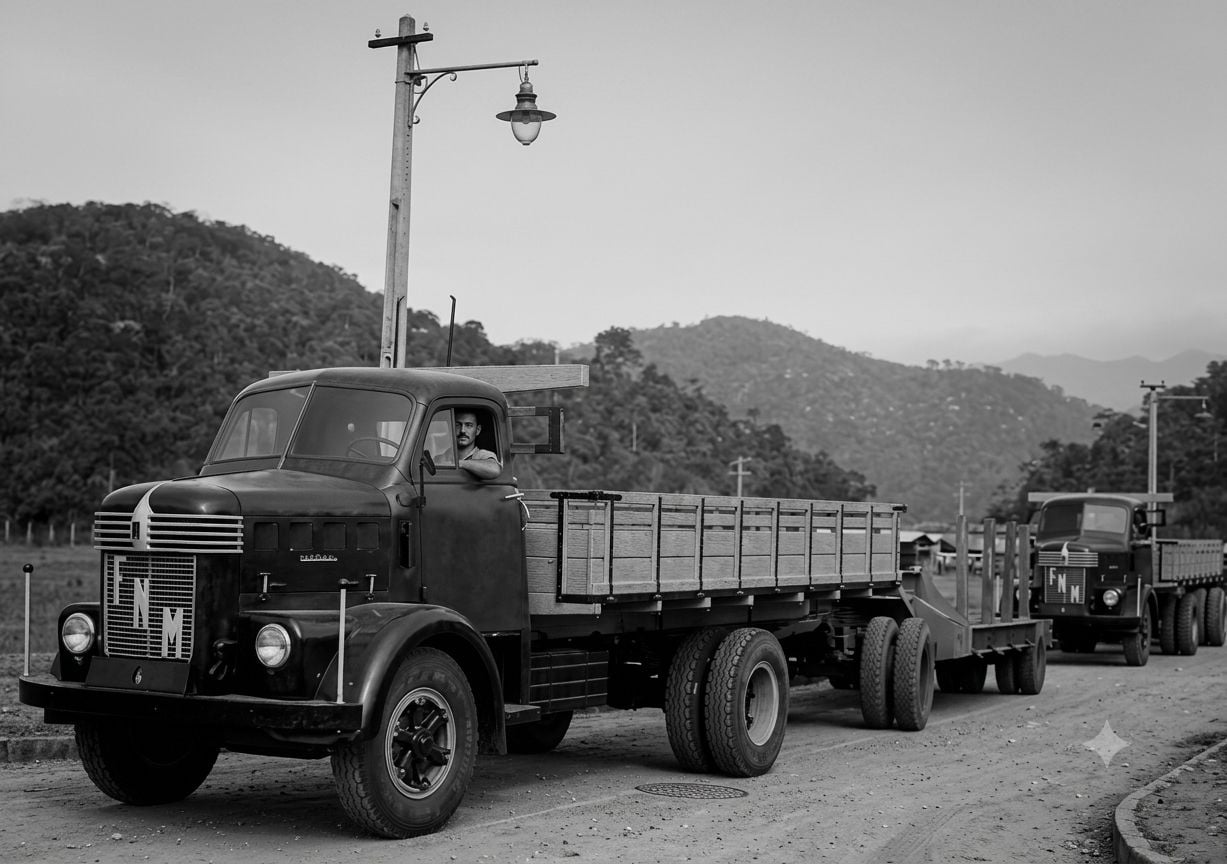
The FNM D-7300 was the first truck manufactured in Brazil (Photo: Paulo Roberto Steindoff, with AI resolution increase)
FNM’s first major milestone in the automotive sector was the partnership with the Italian Isotta Fraschini. From this collaboration came the FNM D-7300, launched in 1949. Based on the Isotta Fraschini D.80, it was the first mass-produced truck in the country, equipped with a 7.3-liter diesel engine with 100 hp and a load capacity of 8 tons.
However, to add more drama to this story, years later Isotta Fraschini went bankrupt. With this, FNM established an alliance with the then Italian state-owned company, Alfa Romeo, starting the era of the iconic “Fenemê” trucks. The first model of this phase was the FNM D-9500, launched in 1952, with a 130 hp diesel engine and a capacity of 8.1 tons of cargo (or 14 tons when coupled to a trailer). From 1953, FNM began a program of nationalization of components, including cabins, tires and batteries, seeking to achieve 45% local content.
FNM’s trajectory as a state-owned company came to an end in 1968, when it was privatized and acquired by Alfa Romeo. In 1973, Fiat took control of Alfa Romeo and, consequently, FNM.
Fiat’s beginning in the truck segment
Four years before retiring the FNM brand in 1973, Fiat had solid plans to expand its presence in Brazil. While building its manufacturing unit in Betim (MG), the company acquired 43% of Alfa Romeo do Brasil (then FNM’s parent company). The objective was clear: to use the Duque de Caxias plant to produce an unprecedented line of trucks.
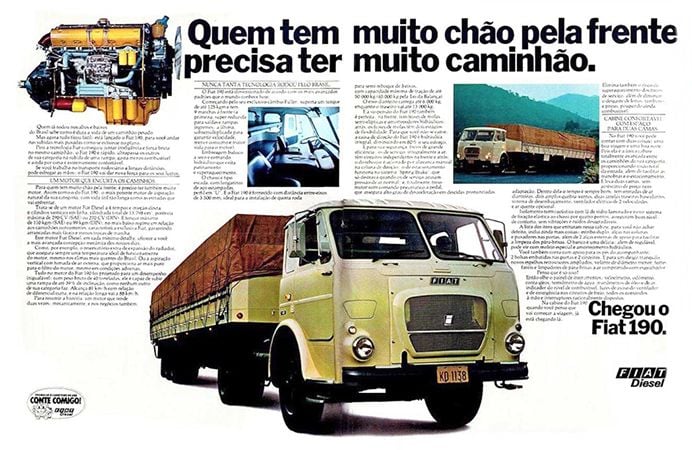
Three years later, in 1976, the Fiat 130 was presented, a medium model equipped with a six-cylinder engine and an advanced cab (“flat face”), representing a great leap in modernity compared to the old FNM of the 1960s. In the same period, the heavy FNM 190 began to incorporate the influence of the Italian group.
The Fiat 190 truck still had an FNM look, but it was much more advanced (Photo: Fiat | Reproduction)
Still in 1976, Fiat took full control of the operation and extinguished the FNM brand. In 1977, Fiat Diesel Brasil S.A. appeared, at which time the brand finally started to carry only the Fiat name in the heavy vehicle portfolio.
With the new corporate name, the automaker promoted a renewal in the range: the 70 and 130 models gave way to the new Fiat 80, 120 and 140. The heavy 190 gained a new version, called 190H, which brought a more comfortable and updated monocoque cab. In addition, the brand started to offer chassis for urban buses and options with a third axle from the factory, increasing the load capacity.
Problems with the Fiat truck begin
It didn’t take long for Fiat to face logistical and operational challenges that many automakers face to this day when operating in a country of continental dimensions. The bottlenecks were evident:
Reduced dealer network
Difficulty in sourcing and obtaining parts
Low market confidence in the durability of products
Constant labor conflicts at the Xerém plant (RJ)
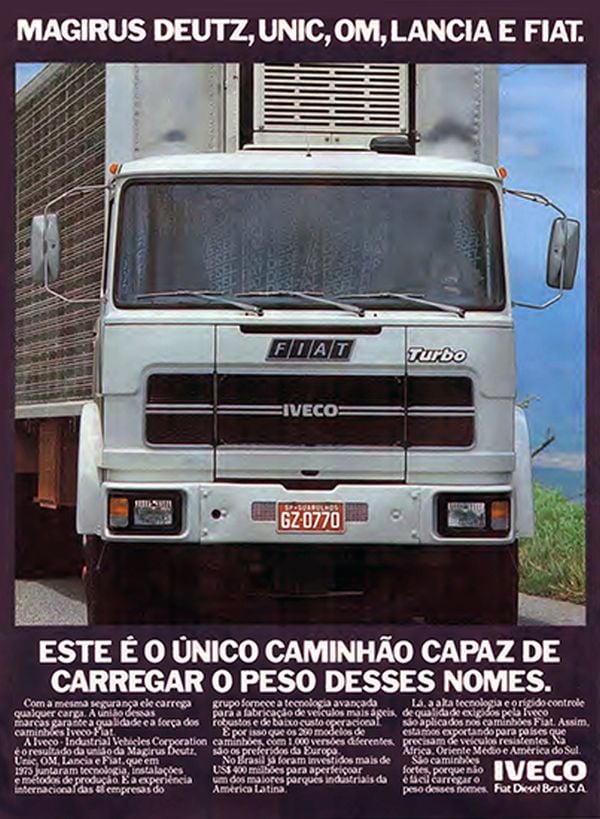
Even in the face of these obstacles, Fiat continued to update its lineup. In 1982, it presented the Fiat 190 Turbo, equipped with a 306 hp turbocharged engine, aligning the model with the technological level of competitors at the time, such as Mercedes-Benz, Scania and Volvo. In addition to the new engine, Fiat bet on unprecedented comfort items for the category at that time.
Fiat truck had the support of major brands in the group, but did not convince the owner of the ride (Photo: Fiat | Reproduction)
However, the novelty was not enough to reverse the scenario. In addition to the low acceptance of Fiat trucks in the market, successive strikes and clashes on the factory floor generated layoffs and protests. Unexpectedly, in June 1985, Fiat definitively stopped the production of trucks. Part of the machinery was sold to other manufacturers, while the Xerém plant was acquired by Ciferal.
In total, Fiat Diesel operated in Brazil for only 9 years (1976 to 1985). Despite their short life, their trucks are still remembered on the roads as brave and rare models.
Comments are the sole responsibility of their authors and do not represent the opinion of this site. Comments containing profanity or offensive language will not be published. If you identify anything that violates the terms of use, please report it.