For us, Brazilians, the Chinese passenger car market is an increasingly common subject. After all, we are still experiencing the strong wave of arrival of these brands, some that we, even in a fully connected world, did not even know existed. But just look at the sales numbers to be impressed.
And know that this is no different when we look at the heavy market in China. To give you an idea, in 2025 alone, the Chinese market recorded the sale of 1.145 million heavy trucks. Not to mention the other segments, such as semi-light, light and semi-heavy.
Just to illustrate, in 2025, according to Fenabrave, 49.5 thousand heavy trucks were licensed in Brazil. That is, less than 5% of what moved the Chinese domestic market. But almost no one knows about truck brands, unlike car companies. To help, we have listed the 5 giants that dominate this universe.
1. Foton is one of the largest Chinese truck brands
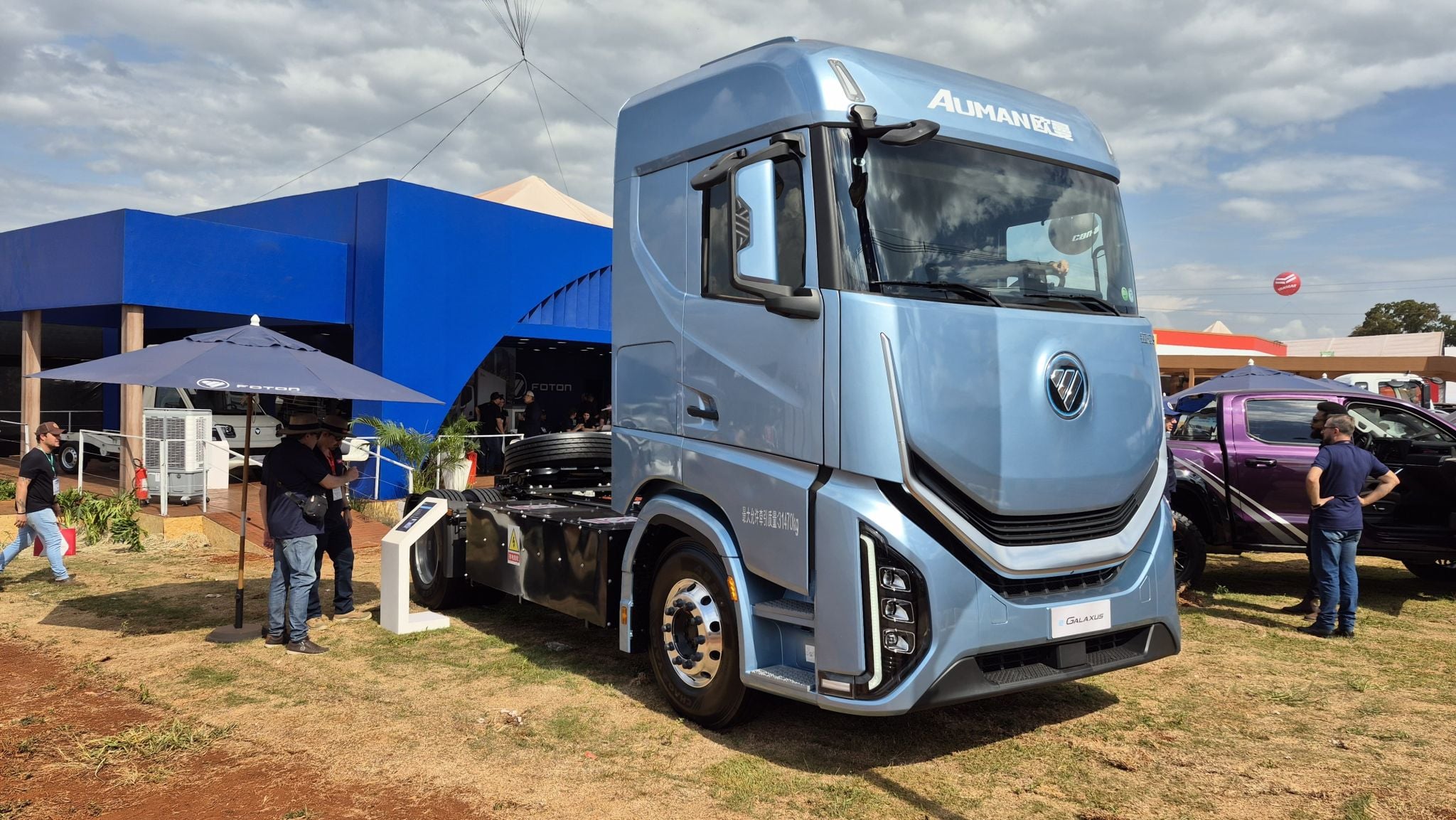
The eGalaxus is one of Foton’s models, which uses a 100% electric motorization, which has already been exhibited in Brazil (Photo: Foton | Disclosure)
Foton (of the BAIC group) already operates in Brazil and has registered an increase in light and medium truck registrations. However, in the Chinese market, it is simply one of the biggest forces in the industry, with about 650 thousand units sold in 2025. Its sales are more consolidated in the heavy and extra-heavy segments with the Auman line, the result of a global partnership with Daimler (owner of Mercedes-Benz).
In Argentina, the automaker sells its entire line, with diesel and electric models, with emphasis on the heavy Auman R, equipped with a 460 hp Cummins engine. In Brazil, during the 2026 Agrishow, the company brought the all-electric eGalaxus, which promises to be one of the brand’s great attractions for Fenatran 2026, which takes place in São Paulo between November 9th and 13th.
2. CNHTC (Sinotruk)
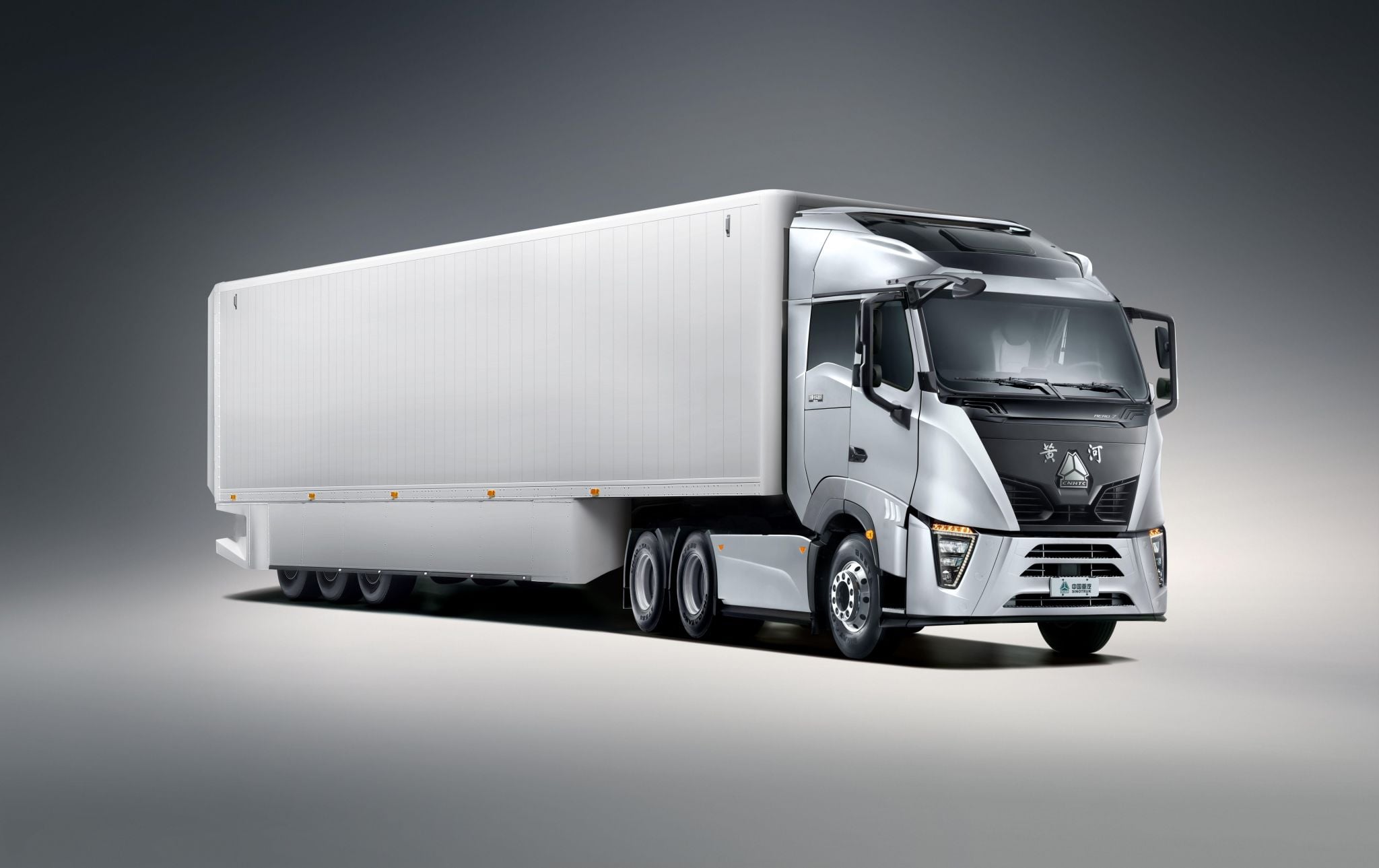
Sinotruk’s Huanghe 600HP bets on aerodynamic horsepower to increase efficiency (Photo: Sinotruk | Disclosure)
If in Brazil Sinotruk has become a nightmare for transporters who invested in the brand in the past, and it is worth remembering that it is rehearsing a comeback, as I have already shown there on the Mídia Truck Brasil Portal, in China business is going very well, thank you.
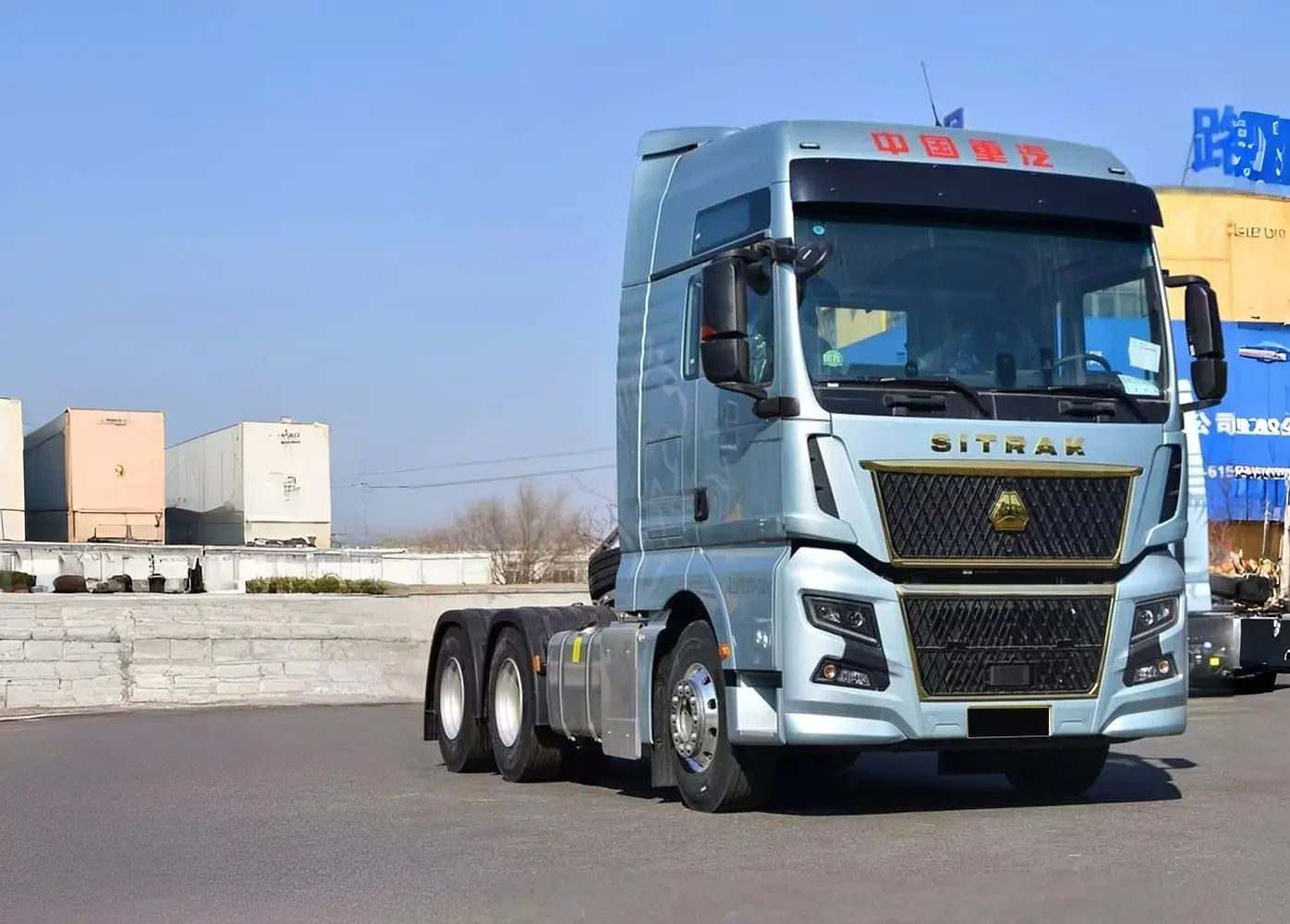
In addition to the local market, CNHTC stands out for making strategic alliances with other automakers, creating niches to offer more affordable products, but with established basic technology. A clear example is the Sitrak brand, a union with the German MAN (of the Traton Group). The trucks in this line use the cab of the last generation MAN TGX (which is the same structure used in our Volkswagen Meteor).
3. FAW Jiefang
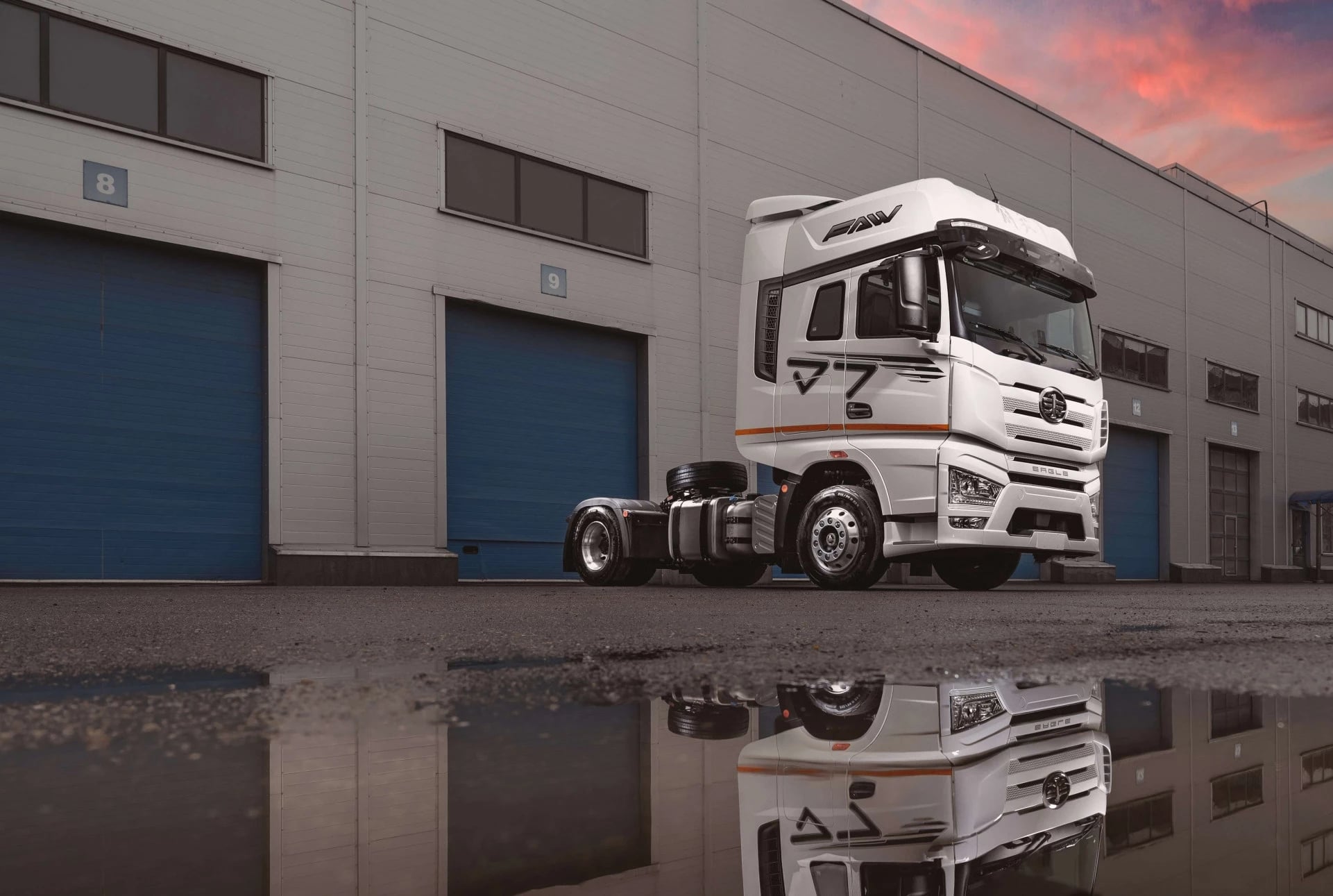
Sales champion in China, FAW J7 Eagle also records good sales in the Australian and African markets (Photo: FAW | Disclosure)
FAW is considered the first truck manufacturer in China, and we have already talked about it here at AutoPapo when the brand tried to dare to use a rotary engine. Within the Chinese borders, it strongly leads the heavy segment through the J7 and JH lines, models that have also gained a lot of space in the African and Australian markets.
The name FAW may sound familiar for another reason: in 2020, the Chinese giant showed strong interest in buying the Italian IVECO (which at the time was under the umbrella of CNH Industrial). The business ended up not prospering, and the official withdrawal was communicated in 2021. Just over four years later, in 2025, Iveco ended up being sold to India’s Tata Motors.
4. Dongfeng
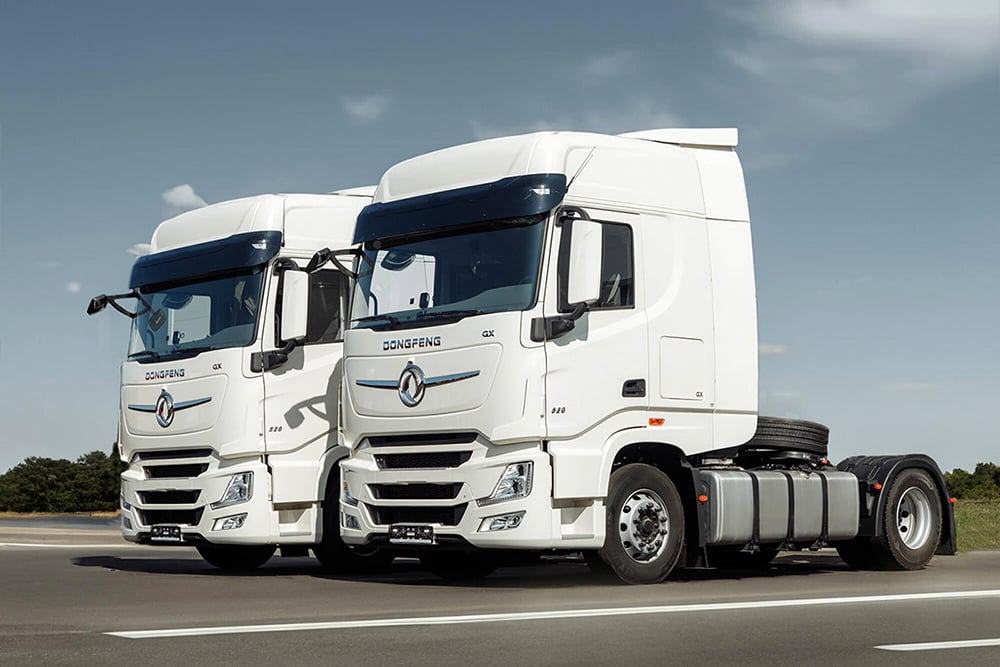
With Volvo’s expertise, Dongfeng has become one of the major Chinese truck manufacturers (Photo: Dongfeng | Disclosure)
The newest car manufacturer that plans to land in Brazil (and already with very solid plans) is also a real monster in truck manufacturing in China. For the transportation sector, their portfolio includes the heavy-duty models GX, KX, KL and VL.
In 2013, the Volvo Group signed a major agreement with the manufacturer, acquiring 45% of a new subsidiary of the company, giving rise to Dongfeng Commercial Vehicles (DFCV). This union was a watershed, resulting in a huge leap in quality in Chinese products. The first great fruit came five years later, with the launch of the new line of KL trucks, raising the technical standard and skyrocketing the automaker’s sales in the Asian market.
5. Shacman and the Biggest Chinese Truck Brands
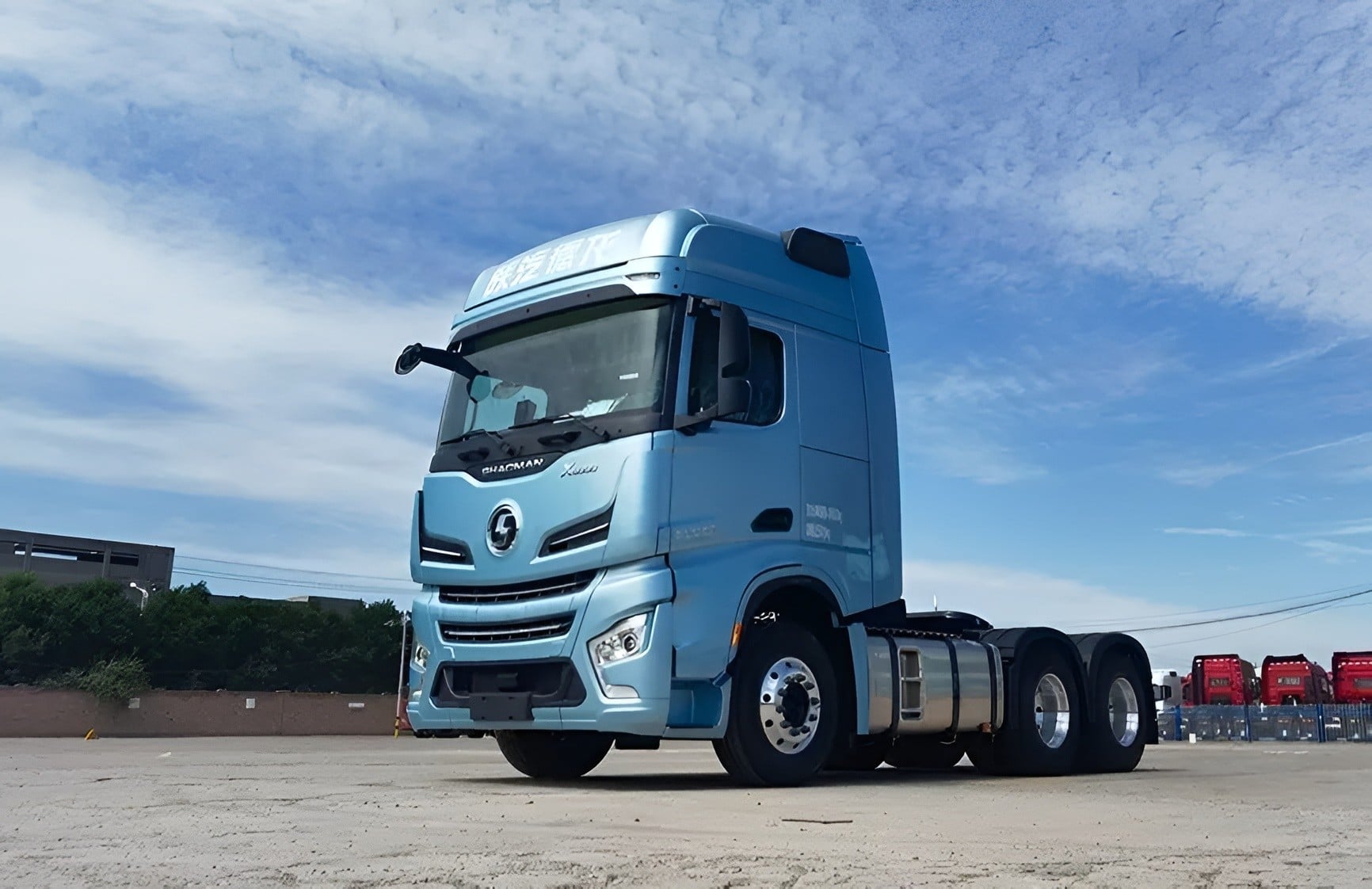
Shacman almost arrived in Brazil, but gave up, however it has one of the most powerful trucks on the market (Shacman | Disclosure)
Another old acquaintance of those who follow the transport sector here is Shacman. The brand did a beautiful rehearsal to settle in Brazil, but at the time of the show, it jumped out, a story that I have also detailed here in my column.
Although the adventure on Brazilian soil has foundered, in China the numbers are overwhelming: from 1988 to 2024, the automaker delivered more than 360 thousand trucks, a significant volume for the segment.
Recently, Shacman attracted all the spotlight in the world with the launch of the Shacman X6000. The brute comes equipped with a 17-liter Weichai engine, generating an impressive 840 hp of power and 382 kgfm of torque. With this mechanical jewel, the traditional dispute for the crown of the most powerful road truck in the world, which was restricted to the Swedish Scania and Volvo, ended up migrating to China.
For comparison purposes, Scania’s strongest model today is the 770S or R, depending on the cabin (V8 with 770 hp and 377 kgfm), while Volvo’s top of the line is the FH16 (with 780 hp and 387.5 kgfm).
Comments are the sole responsibility of their authors and do not represent the opinion of this site. Comments containing profanity or offensive language will not be published. If you identify anything that violates the terms of use, please report it.