Currently, China is a protagonist in the global automotive sector, especially when it comes to electric cars. Whether we like it or not, it is undeniable that Chinese brands have gone from the total unknown to dominate several markets. However, not every technological bet in the country was a success.
A curious example of this trajectory was the attempt to use the Wankel engine in trucks and buses. The project resulted in a veritable “pastel de vento” — a promise that, in practice, lacked substance. This is a story that is not very widespread in the West, but it is worth remembering.
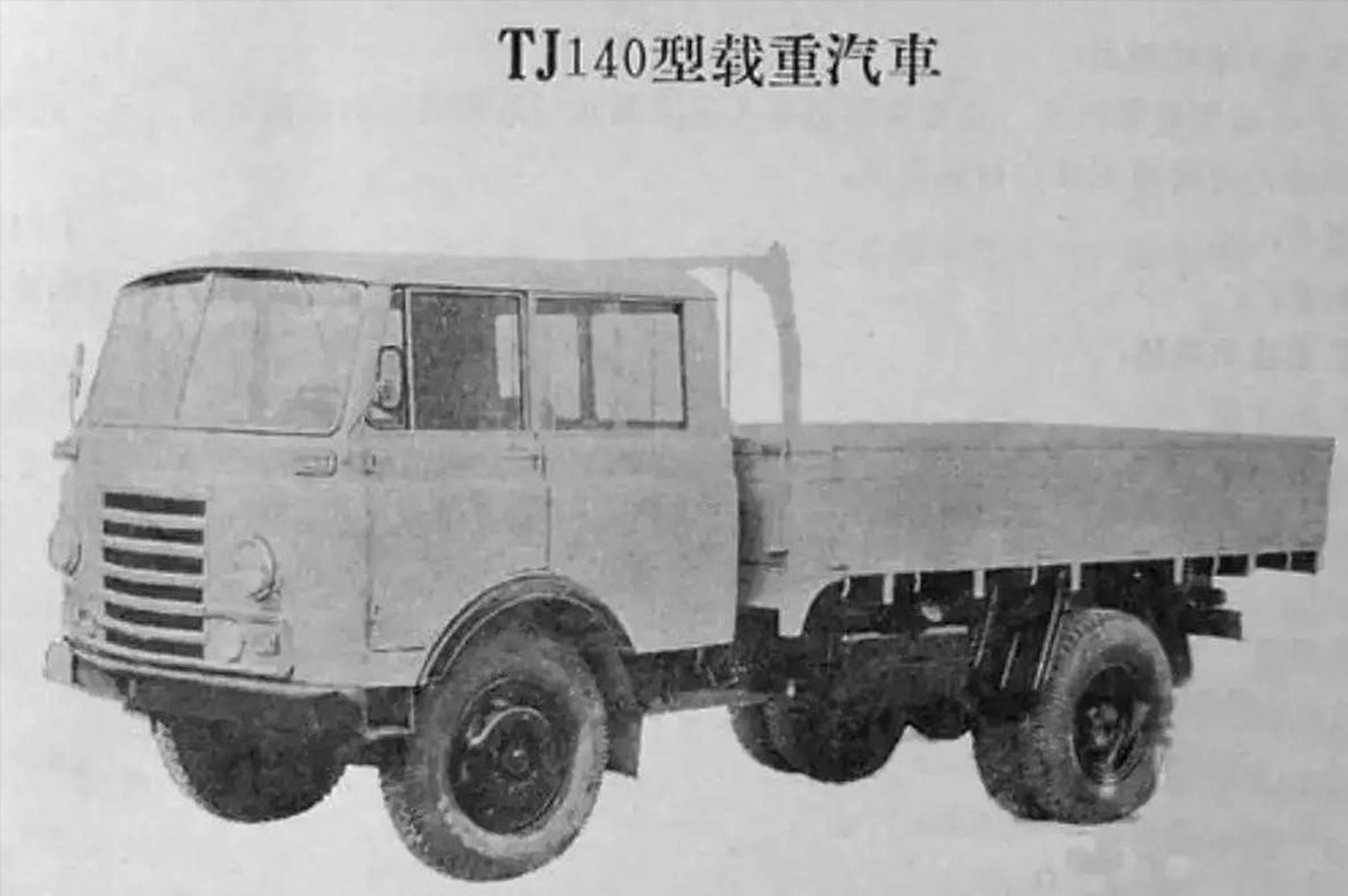
Publicity photo of the FAW TJ140 Wenkel: failure in the market (Photo: FAW | Disclosure)
What is a Wankel Engine
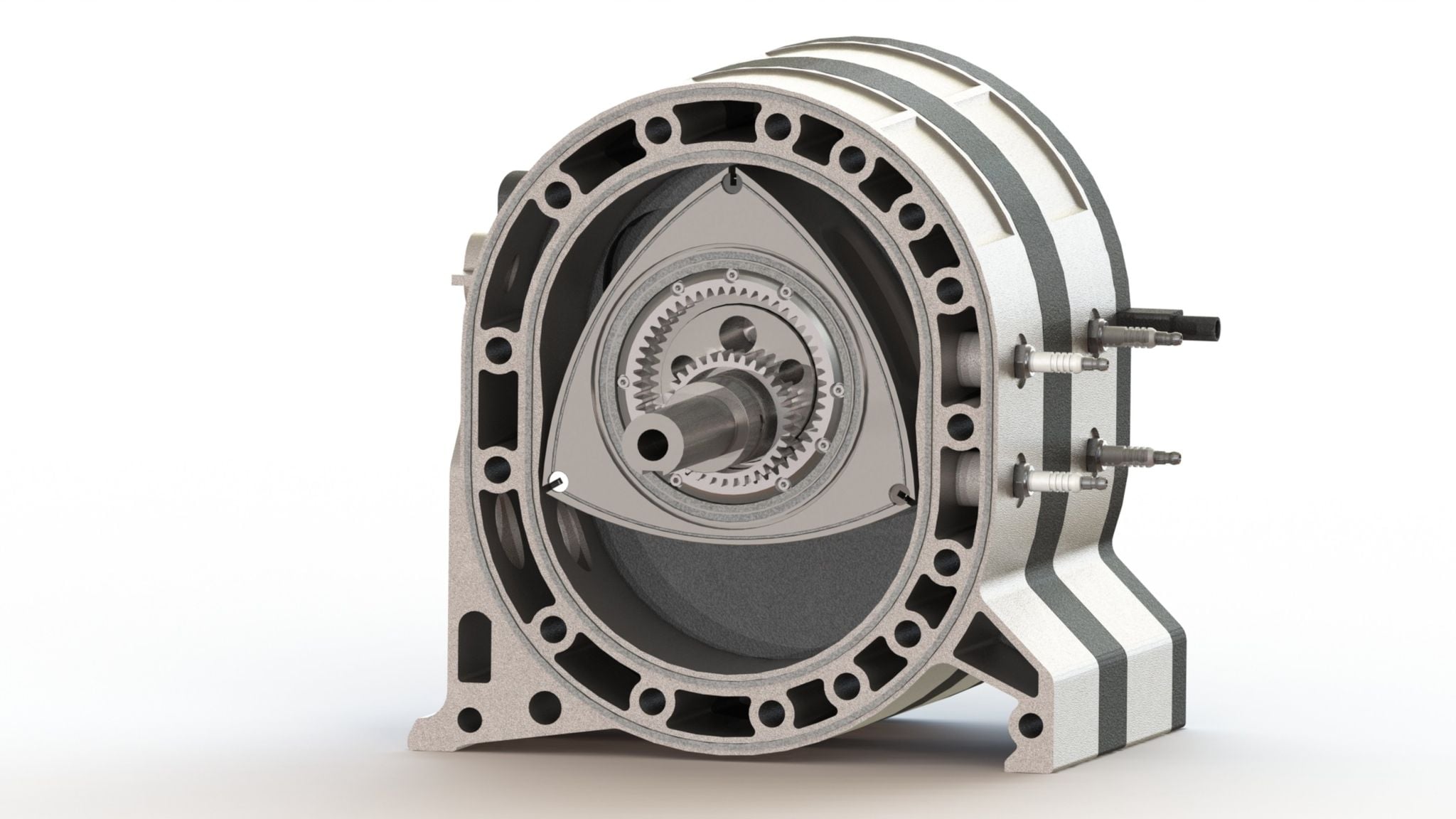
Unlike conventional piston and connecting rod engines, the Wankel engine has an intriguing operation. It uses a triangular rotor that rotates inside a stator (the cylinder). As the rotor rotates, it creates four distinct chambers: intake, compression, expansion (combustion), and exhaust.
The volume of these chambers varies according to the angle of rotation of the shaft. This design allows the engine to complete the four strokes of combustion in a single rotational cycle.
The triangular piston of the Wankel engine rotates inside cylinder (Photo: Shutterstock)
The main advantages of this engine are compactness, low weight and the ability to reach high revs (above 8,000 rpm). On the other hand, it has a low torque at lower revs — which is acceptable in a sports car, but problematic for cargo vehicles.
The idea of a rotary engine is not new: James Watt patented a steam version in 1781, making rotary machinery viable for the factories of the Industrial Revolution. However, the Wankel combustion engine as we know it was only conceived by German engineer Felix Wankel in 1929. Development was interrupted by World War II, and the first passenger car to use it was the NSU Spider in 1964.
Although Mazda became famous with the RX-7, it had already been exploring the technology since the Mazda 110 S Cosmo, from 1967 (Photo: Mazda | Disclosure)
The pioneer that no one asked for
While Japan improved the technology for sports performance, the Chinese at First Automobile Works (FAW) — today the leader in truck sales in China — tried to apply the concept to cargo transportation.
The project was eventually passed on to the Tianjin Machine Factory, which in 1970 presented the TJ140: a 4-ton truck equipped with a two-rotor Wankel engine.
In theory, it seemed like the ideal solution: a lightweight engine, with few moving parts and easy maintenance to transport rice and salt. To validate the robustness of the project, they sent the prototype to the Sichuan-Tibet highway, a mountainous route known for punishing even the most modern diesel engines. Surprisingly, the truck completed the 10,000 km test, but the real problems were not long in coming.
Too much RPM, too little torque
The Wankel engine is excellent for revving high, but terrible at generating brute force at low revs. The TJ140’s engine delivered only 29 kgfm of torque, and that’s at an impressive 8,500 RPM.
For a truck to carry weight and come out of immobility, the driver needed to “exhaust” the engine, keeping the rev very high at all times. The result was catastrophic:
Astronomical fuel consumption.
Premature wear of the rotor seals (the so-called apex seals), which could not withstand the continuous stress.
The interest of other automakers
Despite the obvious flaws, other Chinese automakers have tried to follow suit. Jinhua Repair Factory created the Qiantangjiang small truck. Marketing at the time guaranteed that the 1.0-liter Wankel engine would withstand 50,000 kilometers without heavy maintenance.
In practice, at 30 km, the engine already had a critical loss of compression and excessive oil consumption.
In the end, physics spoke louder. Attempting to apply a high-revving, low-torque engine to vehicles made to carry tons proved to be a strategic mistake, becoming just another exotic chapter in the history of Chinese automotive engineering.
Comments are the sole responsibility of their authors and do not represent the opinion of this site. Comments containing profanity or offensive language will not be published. If you identify anything that violates the terms of use, please report it.