Nowadays, it is common to witness heated discussions about the effectiveness of electric vehicles. There are even those who say that automotive electrification has “died and resurrected” at least four times throughout history. In fact, battery-powered cars and trucks are not a recent novelty. To give you an idea, during World War II, the Czech manufacturer Škoda developed surprising electric solutions to circumvent the fuel crisis.
During World War I and II, the global automotive industry underwent a radical transformation. Many factories have totally or partially suspended the production of civilian vehicles to focus on the war effort, manufacturing tanks, planes and armored vehicles.
Because the entire military machine relied heavily on gasoline and diesel, fuel for the civilian population was severely rationed — a measure enforced even more rigidly in the second global conflict, thanks to the learnings of the first.
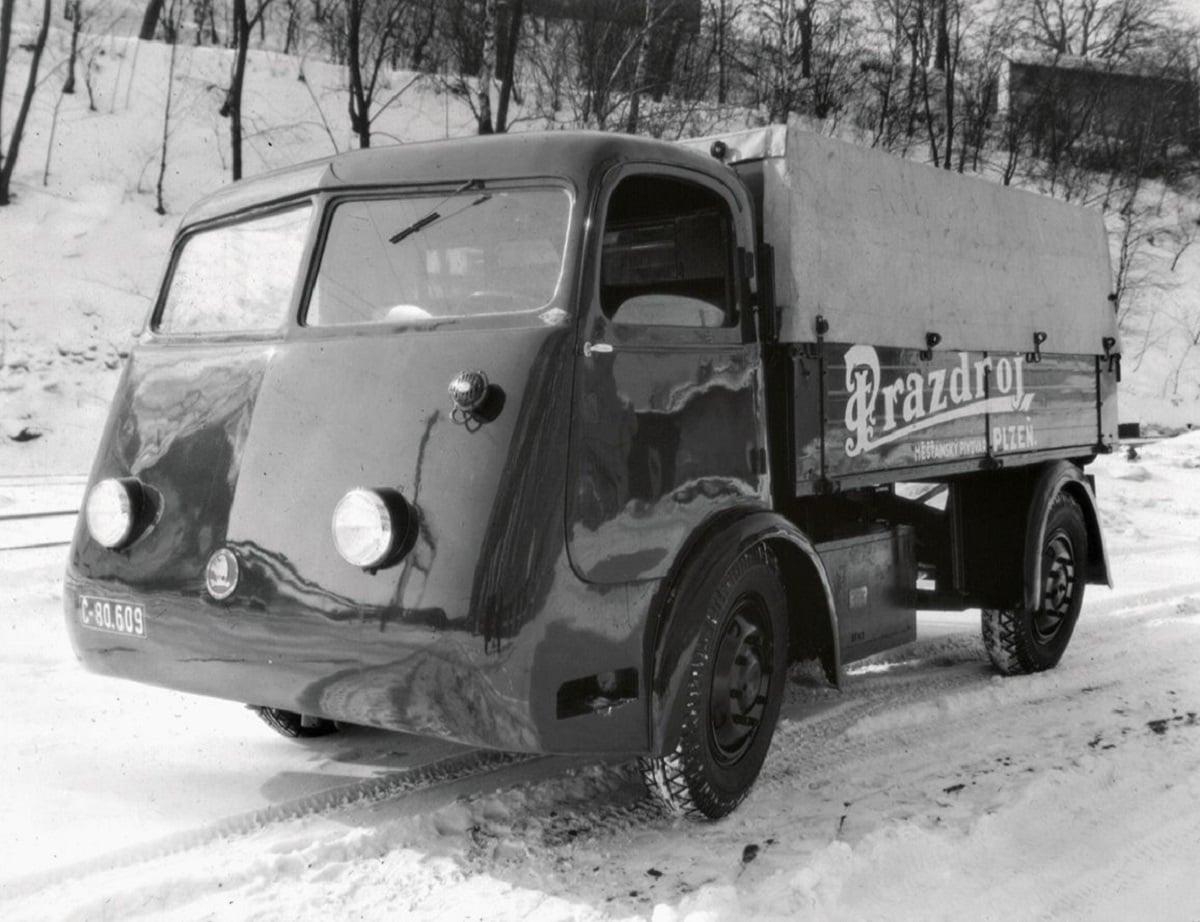
It was against this backdrop of scarcity that Škoda found an opportunity. With the German occupation of the Sudetenland (in what was then Czechoslovakia) and the incorporation of the city of Pilsen into Reich territory, the routine of local transport changed drastically. In order for the famous Prazdroj brewery (producer of the iconic Pilsner Urquell and active to this day) to be able to continue distributing its production without relying on scarce diesel fuel, the company ordered a purely electric truck from Škoda.
Škoda Electric: The ‘VUC’ of the 40s
The result of this project was a two-axle truck with a compact size that, by today’s standards, would be classified as a VUC (Urban Cargo Vehicle).
Estimated Technical Sheet (Škoda Truck)
Load capacity: about 3 tons
Batteries: lead-acid, weighing an impressive 1,200 kg
Operation: restricted to urban deliveries in the city of Pilsen
Although official data from the time are scarce — Škoda itself cites the model in its historical timeline mentioning only that the engine was mounted on the front axle — historical records indicate that the autonomy varied between 50 km and 100 km. The top speed was in the modest range of 18 km/h to 30 km/h.
Despite appearing rustic and limited by modern standards, the truck operated successfully for many years, proving to be an extremely robust and reliable solution for its purpose.
Trolleybus expertise: The pioneering Škoda 1Tr
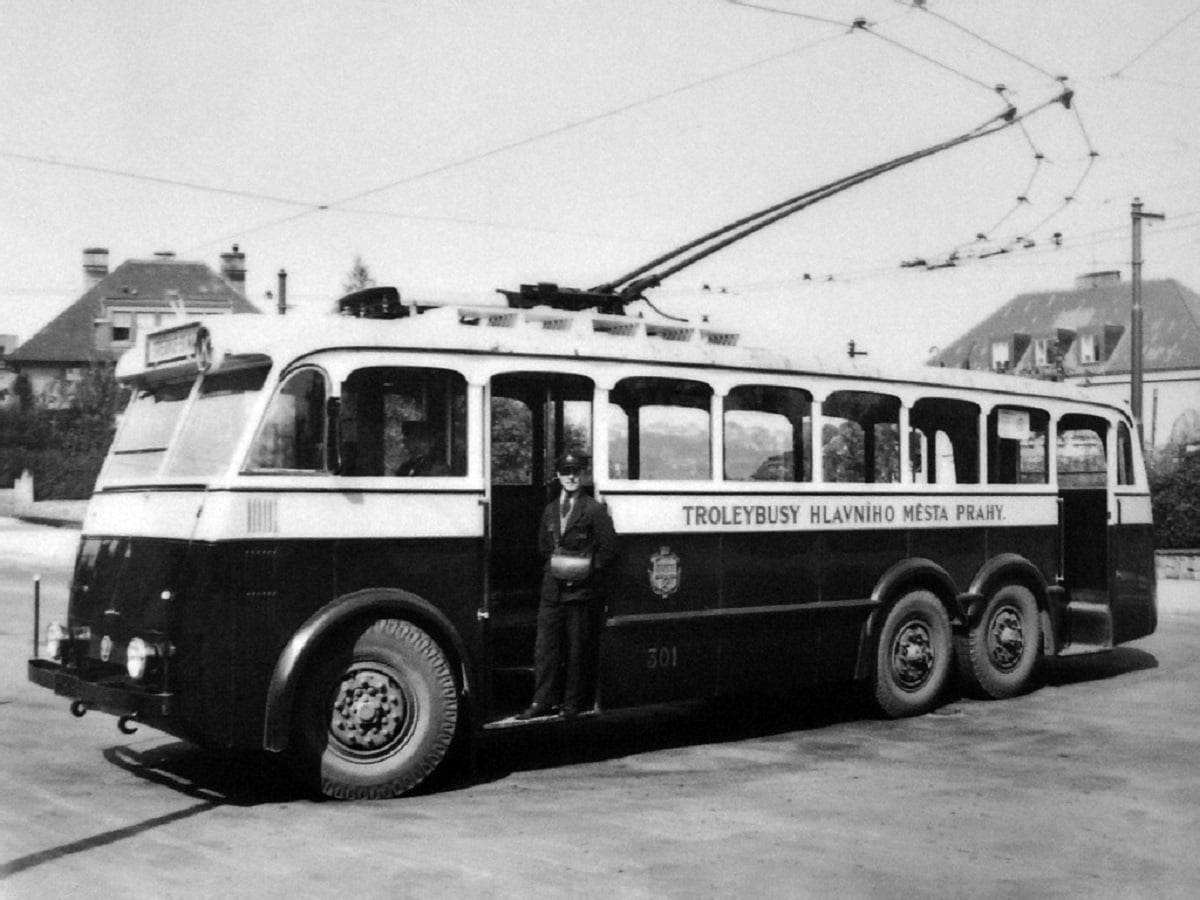
The brand’s experience with electricity, however, came from a little earlier. In 1936, Škoda introduced the 1Tr, a prototype trolleybus-type bus — powered by an electric motor powered by overhead power cables, a system similar to that of some subways and surface trams.
The prototype 1Tr trolleybus operated in Prague and evolved the public transport of the time
Based on the chassis of the Škoda 553 truck, the pioneering 1Tr brought an advanced technical configuration for the time:
Structure: Metal body with refined wooden interior.
Chassis: 6×2 configuration with single tires on each axle.
Technological braking: Equipped with three distinct braking systems — a pneumatic one, the mechanical parking brake and, surprisingly, a regenerative electric brake, which harnessed the energy of decelerations.
The model entered regular operation in the city of Prague and provided public transport services until 1955. After his retirement, it was preserved and integrated into the collection of the National Technical Museum in Prague, where it remains on display to this day as a landmark of Czech engineering.
Comments are the sole responsibility of their authors and do not represent the opinion of this site. Comments containing profanity or offensive language will not be published. If you identify anything that violates the terms of use, please report it.