


Government renews tax exemption for importing electric and hybrid cars; What is the impact on the national industry?
Federal government renews import quota for CKD and SKD kits of electrified models; measure benefits Chinese operation and generates criticism from Anfavea
By
Julia Vargas
Published on 2026-06-28 at 03:00 PM
Published on 2026-06-28 at 03:00 PM
Be the first to comment.
Summarize with:
The federal government has decided to renew the quotas for importing “kits” of electric and hybrid cars with total exemption from the tax. The action, approved by the Executive Management Committee of the Chamber of Foreign Trade (Gecex-Camex), provides that the tax benefit, which had originally expired in January 2026, will last for six months. This provoked a strong reaction from entities such as the National Association of Automotive Vehicle Manufacturers (Anfavea) and the Federation of Industries of the State of São Paulo (Fiesp).
The discontent of traditional automakers rests on the fact that the reopening of the zero tax especially benefits Chinese automakers that are setting up in the country. In a statement, Anfavea said that the measure is “contrary to the interests of workers, national vehicle manufacturers and Brazilian auto parts companies”.
SEE ALSO:
- What are the CKD and SKD regimes? We explain!
- Chamber of Deputies wants plaques to have city and state again
- Federal government decision favors BYD and revolts traditional automakers
The manufacturers’ association also highlighted that “the decision, taken without consulting the productive sector, untimely changes a policy defined by the Federal Government itself, which aimed to combine the expansion of electromobility in Brazil with the attraction of long-term productive investments to the country”.
In this article you can check the operation of tax quotas and the analysis of experts on the different perspectives of this government measure.
How does the renewal of the quota for importing electrified vehicles without tax work?
The new resolution of the Ministry of Development, Industry, Commerce and Services (MDIC) establishes that as of July 1 of this year, disassembled or semi-disassembled electrified vehicles will be imported at a zero tax rate. The measure also provides for a ceiling of US$ 463 million (about R$ 2.4 billion) for these imports.
If the limit is exceeded, partially disassembled models (SKD regime) will now collect a full fare of 35%, while those fully disassembled (CKD regime) will be taxed at 14%. It is worth noting that the import of ready-made electric and hybrid vehicles remains excluded from the benefit, reaching the maximum rate of 35% as of next month, according to the original schedule of gradual encumbrance signed at the end of 2023.
Difference between SKD, CKD and complete national production regimes
The acronyms SKD and CKD stand for simpler production methods, using imported components:
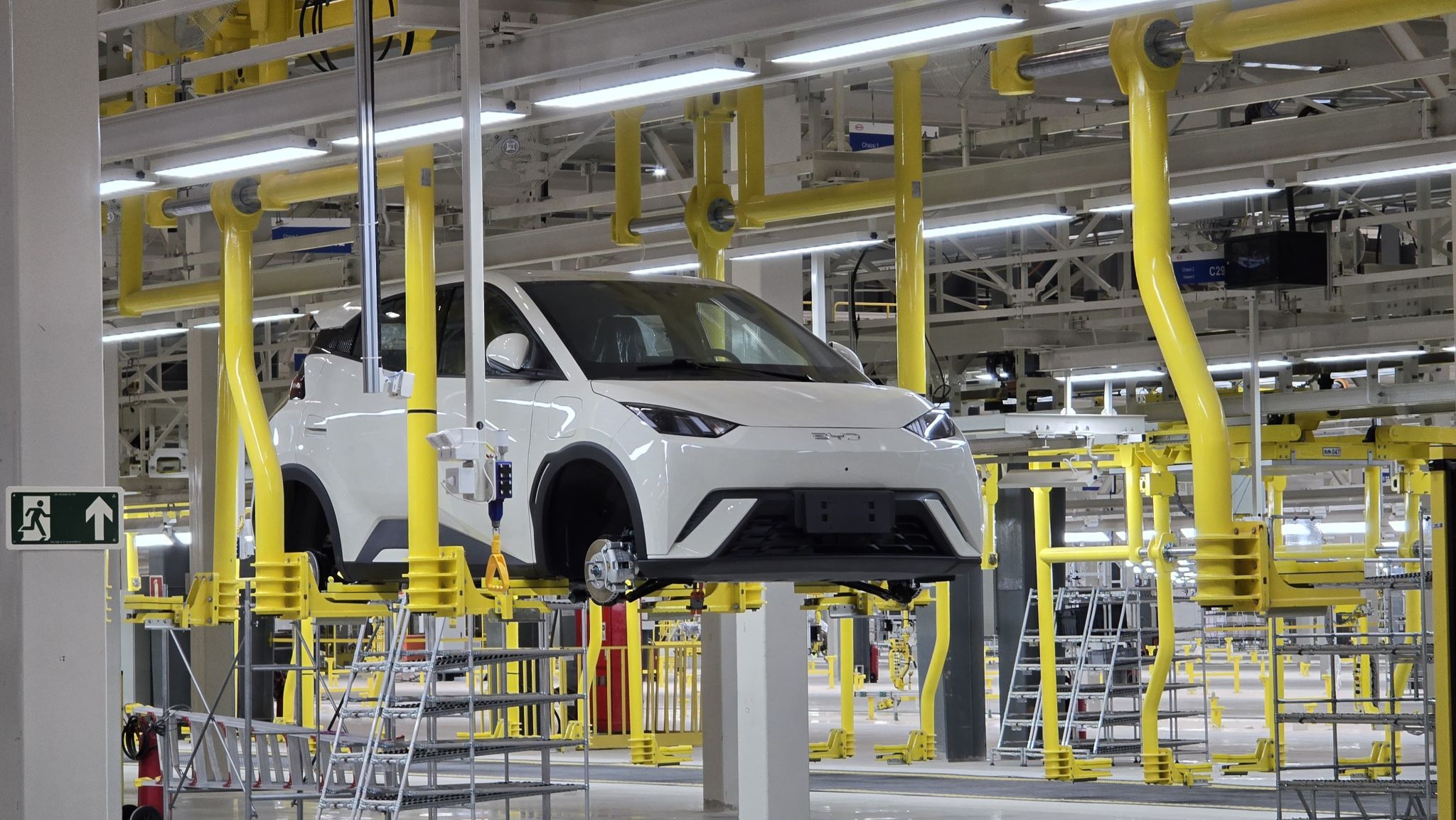
- The SKD ( semi knocked-down) method means that the car arrives at the assembly line semi disassembled. That is, it is imported in practically ready-made kits and is just assembled at the factory in a simple process. The bodywork is already painted, some finishes are assembled, the mechanics are all ready as well and the tires are mounted on the wheels.
- The CKD ( complete knock-down) method means that the car is still brought in kits, but this time more disassembled, allowing the participation of some local suppliers and, in some cars, the body is painted on the assembly line. There is a greater complexity of production and usually this process requires more employees.
- Complete production happens when practically all stages of vehicle manufacturing take place in the country, including engineering, welding, painting, final assembly and wide use of local suppliers.
Government decision favors Chinese and revolts ‘traditional’ automakers
The discontent of automakers that have been installed in the country for several years with the federal government’s decision happens, as the reopening of the zero tax benefits Chinese manufacturers, which are starting production in the national territory, especially BYD. The brand is still finalizing the implementation of its manufacturing complex in Camaçari, in the state of Bahia, using the old Ford facilities.
Anfavea also claims that the government excluded the main players of the national automotive industry in the tax negotiations. The president of the association, Igor Calvet, harshly criticized the lack of transparency in the process and the abrupt change in the rules. The executive reiterated that, although the entity values institutional dialogue, it will not hesitate to call on the Judiciary.
Advantage for Chinese companies to establish their factories and maintain their stocks
BYD and the government of Bahia argue that the temporary maintenance of incentives for the kits is essential to avoid a price escalation in electrified models for the final consumer and accelerate the national energy transition. From the perspective of the brands that will use the benefits, Milad Kalume Neto, executive director of K.LUME and specialist in the Brazilian automotive sector, points out that the government’s decision allows these companies to:
- Increase your inventories while your factories are not ready;
- Expand market share, preserving their local image;
- Do not increase prices to rebuild inventory when they run out and thus preserve your margins;
- Strategically attack the segments with higher added value and where the dispute is more financially interesting, such as SUVs;
- Take more incentive measures, both in retail and in direct sales, via commercial actions, such as subsidized rates, discounts, appreciation of the vehicle in exchange for a new one, among others.
Kalume also says that the zero tax by the end of the year helps in the transition process between CKD/SKD to local production, allowing automakers to complete the installation of factories and production stages.
The specialist in the automotive sector also recalls that “the vast majority of traditional companies started their operations with the import of ready-made vehicles (CBU), moving to CKD, SKD until the definition by local production with an increase in localization occurring progressively. It is not possible to imagine that any company comes to a market already wanting to build a factory without testing the market first.”
Meanwhile, Ari Araújo Jr; coordinator of the Economic Sciences course at Ibmec BH, points out that, in contrast to the complaints of Anfavea and Fiesp, the measure increases competition in the market and may reduce prices. In addition, quotas can accelerate the adoption of electrified vehicles, facilitate the entry of new automakers into the country, and encourage Brazil’s integration into global chains.
The measure also generates unpredictability, legal uncertainty and slows down the development of the industry
According to Anfavea, the relaxation in the collection of the import tax on electric cars via SKD/CKD kits directly threatens the livelihood of the Brazilian manufacturing ecosystem. A technical study by the entity estimates a loss of R$ 24.3 billion in federal tax collection and the risk of eliminating 68 thousand direct jobs, reaching 191 thousand jobs sacrificed when the entire production chain is accounted for.
Fiesp joined the chorus of rejection, accusing the federal government of violating the principle of legal certainty by changing tax courses unexpectedly. For Milad Kalume, the biggest loss is in the legal uncertainty and the absence of predictability, which are so questioned by foreign investors.
Ari Araújo Jr also reinforces that the automotive industry requires high and long-term investments, so frequent changes in industry dynamics can increase uncertainty and the cost of investing. The coordinator of the Economic Sciences course at Ibmec BH also says that this can lead companies to postpone or reduce projects in the country:
Regarding jobs, there is a risk of negative impact on the chain already installed, especially in the auto parts industry, which depends on local production. If the assembly with imported content grows at the expense of domestic production, there may be a reduction in jobs. On the other hand, there may also be some compensation with jobs in assembly and distribution. The net effect depends on how companies adjust their strategies.”
The economist also points out that there is a cost in terms of domestic production. By making the import of disassembled kits cheaper, the incentive for complete local manufacturing is reduced, which can reduce the added value in the country. According to him, it is a dilemma between short-term gains, price and efficiency, and possible losses in production capacity in the long term.
In addition, the executive director of K.LUME points out that the jobs generated in Brazil by the SKD regime, which are related to tooling, welding, assembly and others, are already becoming obsolete, as indicated by signs from the Chinese industry. Currently, what is gaining space in the production chain are new functions associated with low-cost ADAS, software development and other forms of technology.
Milad Kalume highlights:
We need to have local production with technology exchange and this will only happen in the long term, but it is a process that must start now. Since 2003 we have been regional leaders in production and sales in South America, but this is not enough for the context of this new industry.”
The specialist in the automotive sector also reinforces that the federal government is responsible for putting an end to import quotas, otherwise, companies will continue to accept the extension of benefits indefinitely.
Risk for the auto parts market
Anfavea’s technical study also projects that the proliferation of the assembly of imported kits on a large scale may lead to losses of around R$ 96.8 billion in sales for the national auto parts sector, represented by the National Union of the Automotive Vehicle Components Industry (Sindipeças).
Milad Kalume says that the SKD and CKD regimes generate less demand for local auto parts, as the vehicle arrives almost ready. This leads to reduced investment and less progress in the development of local technologies, in addition to a lack of technology transfer between headquarters and subsidiaries. According to the expert, this can weaken the scale for the production of elements necessary for this new technological demand and high added value.
Finally, Milad Kalume says that, in Brazil, “we have the local capacity and intelligence to develop it, but we have to have long-term and apolitical planning. Investors like security and today we have already announced new investments in factories by other Chinese companies and in plants already produced, via MOVER, which exceed R$ 130 billion.”
SEE MORE ABOUT

0 Comments
Comments are the sole responsibility of their authors and do not represent the opinion of this site. Comments containing profanity or offensive language will not be published. If you identify anything that violates the terms of use, please report it.