Anfavea celebrates 70 years and bets on continuous progress
Automotive sector celebrates 70 years of the manufacturers' association in the face of old challenges, as well as the Chinese escalation in the country
Journalists were honored in the celebration of Anfavea's 70th anniversary (Photo: Anfavea | Disclosure)
By
Fernando Calmon Published on 2026-05-09 at 05:00 PM
Updated on 2026-05-09 at 05:19 PM
An intense program in Brasília (DF) that began with a solemn session in the plenary of the Federal Senate, ended in an event at the National Theater and marked the seven decades of the foundation of the National Association of Automotive Vehicle Manufacturers. The entity is made up of 27 companies that manufacture automobiles, light commercial vehicles, trucks, buses, as well as self-propelled agricultural and road machinery. It is a manufacturing activity of great weight (about 20% of the Industrial Domestic Product), represented by 53 factories throughout the country in nine states and 38 municipalities.
The Brazilian automobile industry accounts for 1.3 million jobs (about 110,000 in manufacturers), as well as auto parts producers (270,000), dealerships (300,000) and other sectors. Thousands of people depend directly or indirectly on the automobile industry. From a pulverized network of suppliers at all levels, including accessories, services, logistics and even gas station attendants.
Igor Calvet, president of Anfavea, said: “Seventy years after the creation of Anfavea, we are still moved by the same idea that brought us here: to believe in Brazil. In the coming months I will have the honor and responsibility of announcing the mark of 100 million vehicles produced on Brazilian soil. A milestone that gives the dimension of the legacy we have built and the mission that we renew with each new investment cycle”.
The total to be disbursed by 2032 is expected to exceed R$ 100 billion, an estimate that includes Chinese manufacturers not affiliated with the entity. Whether they will ever join Anfavea is still unknown. However, China’s largest brand has just applied to join the Association of European Automobile Manufacturers (ACEA, in French). The latter limited itself to informing that it is studying the matter.
April: good results despite the short calendar
Those who look only at the surface of the April numbers may have the false impression that the light vehicle market has lost steam. The total of 236,712 registrations represents a decrease of 8.2% compared to March. However, April had only 20 working days, two less than the previous month. When the focus is on the daily average, the scenario changes: there were 11,836 units/day, a record for the year and the best performance since the end of 2024.
For Milad Kalume Neto, from K.Lume Consultoria, if April had the same working days as March, the result would exceed any expectations. In the interannual comparison, there was a relevant jump of 20% over April 2025. As for the cumulative index in the first four months, the increase of 16.4% to 832,000 units already puts 2026 above the pre-pandemic levels of 2019, which consolidates a consistent recovery.
A phenomenon that deserves attention is the Chinese “invasion”, which shows no signs of respite. According to the consultancy Bright, the 40,927 units sold in April meant 17.3% of market share, compared to 14.7% in March. The result reflected the performance of the hybrid and electric models combined.
The overall balance points out that the five largest traditional brands (Fiat, VW, GM, Hyundai and Toyota, in that order) grew 13% this year, slightly below the 16.4% of the total market. But this may still change according to the investments already announced for the coming years.
Other observations from K.Lume: almost 60% of sales were cash and 40% financed. These face still very high interest rates, a reflection of inflation that threatens to break 4.5% per year, above the tolerance of 3%, I add. The segment of more expensive cars retracted 17%.
The overall balance of sales in 2027 may be higher than expected at the beginning of this year by both Anfavea and Fenabrave. This entity attributes this year’s good results to the Sustainable Car program (C3 was recently included; now there are six brands).
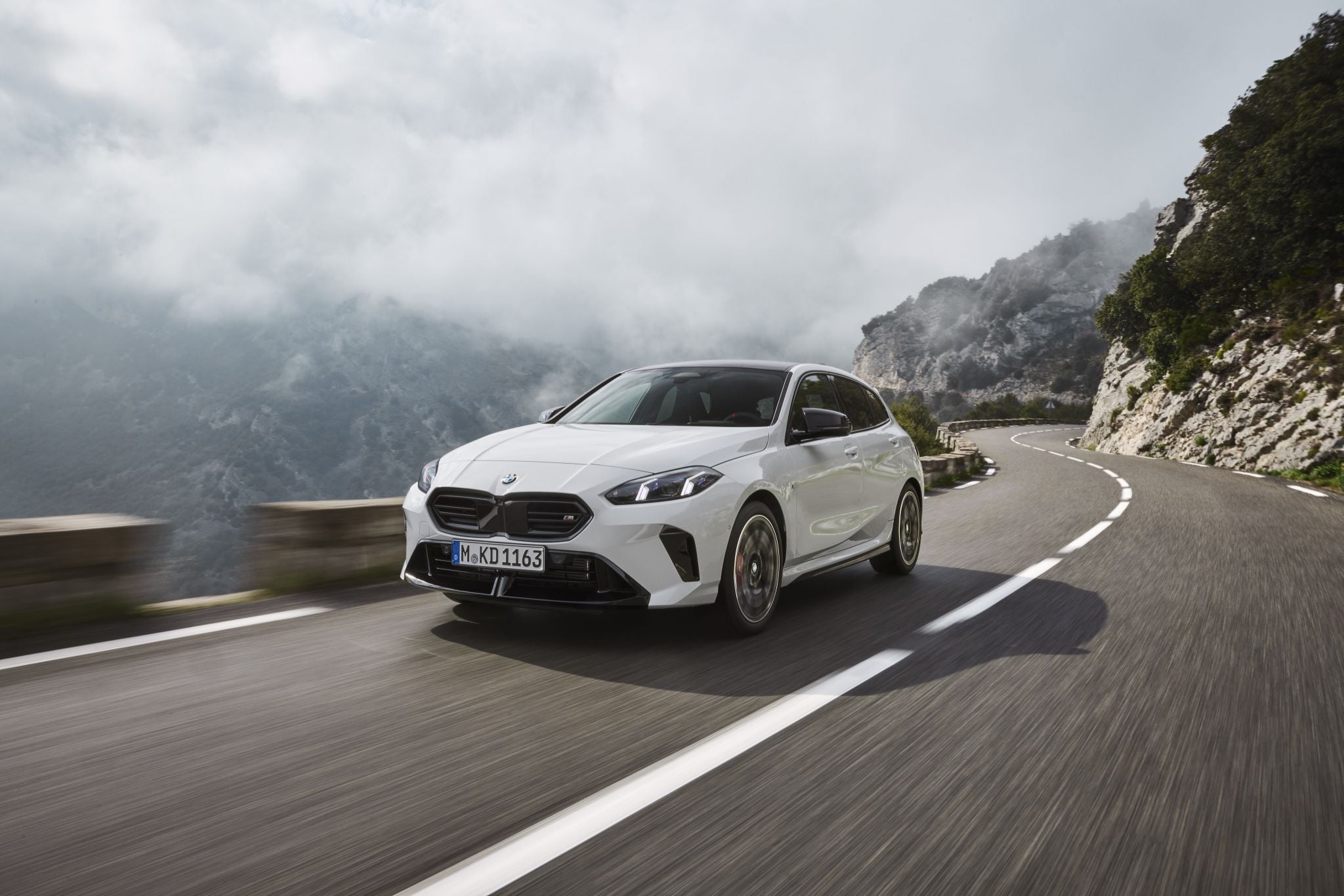
BMW M135 xDrive, a hatchback to command respect
In a world dominated by SUVs, it is always good to have a hatchback offer as sophisticated as it is in above-average performance. The rear with four exhaust outlets, the roof deflector and the lower ground clearance that guarantees brilliant cornering behavior immediately draw attention. During initial impressions from São Paulo to Itu (round trip, about 200 km), the M135 xDrive demonstrated that the 317 hp and 40,7 kgfm ensure performance, especially in curves, superior to competitors with similar numbers of power and torque, such as the Civic Type R or GR Corolla. These two models, without representing a premium brand, have prices not much lower.
BMW’s entry-level sporty hatch costs R$ 459,950.00 (GR Corolla with carbon fiber composite roof, R$ 461,990.00). Impressive in the German model is the performance in sport mode: it changes from the roar of the engine (with the appreciated bangs) to the gear change as abrupt as admired by drivers who understand and value this behavior. There is even more excitement. Just keep the flap on the left side of the steering wheel activated and for 10 seconds the engine releases additional power. Acceleration from 0 to 100 km/h in 4.9 s demonstrates its sportiness, although the driver must respect the fact that the stability control is temporarily overridden. In this case, no abuse in curves.
Another attractive factor is its interior. In addition to the top-level finish, the steering wheel grip, driving position, two 10.25-inch curved screens draw attention. (instruments) and 10.7 in. (multimedia with the usual mirroring, wireless), in addition to physical buttons where they should always be.
Comments are the sole responsibility of their authors and do not represent the opinion of this site. Comments containing profanity or offensive language will not be published. If you identify anything that violates the terms of use, please report it.