The debates have taken place with great frequency in the Commission of Traffic and Transport of the Chamber of Deputies. This week the work advanced on several fronts, including the regulation of speed control radars. In addition to not being able to be hidden (including portable ones), as is already the case, those installed on roads with two or more lanes in the same direction must have an electronic panel to indicate the speed of the vehicle at the time of passage in each one.
There would be the inclusion of theoretical notions of driving cars with automatic transmission to obtain the National Driver’s License (CNH). Accidents due to errors in the operation of these transmissions are uncommon, but they happen even in the exams carried out. The creation of preferential lanes for motorcycles only on roads in state capitals, the Federal District and federal and state highways was approved. The well-known blue lane also on roads is debatable because it narrows the lane for overtaking. It requires in-depth debates, but this requirement would be ideal only in the design of new roads. Even on current avenues, with different lane widths, there are risks of accidents.
Debates continue about reducing the minimum age from 18 to 16 years old to obtain a CNH. This change is correct, but there is still resistance. It is now discussed that 16-year-olds receive temporary permission to drive under the supervision of someone already qualified.
As for the so-called “Provisional Measure of the Good Driver”, under analysis in Congress, which would establish automatic renewal for drivers without points in the last year of validity of the CNH, there are disputes. Doctors and psychologists defend regular health assessment also of amateur drivers (today only professionals). Debate is necessary, but perhaps automatic renewal could cover two years without points.
Another proposal determines that license plates inform the municipality and state where the vehicle is registered. Residents would theoretically feel safer. There are doubts about this, including abroad, not to mention the cost of changing license plates again, unless it only applied to zero-km vehicles.
There is still a long way to go. In addition to the Constitution and Justice and Citizenship Commission), the texts still need final approval by the plenaries of both legislative houses (Chamber and Senate), as reported by the Câmara de Notícias Agency.
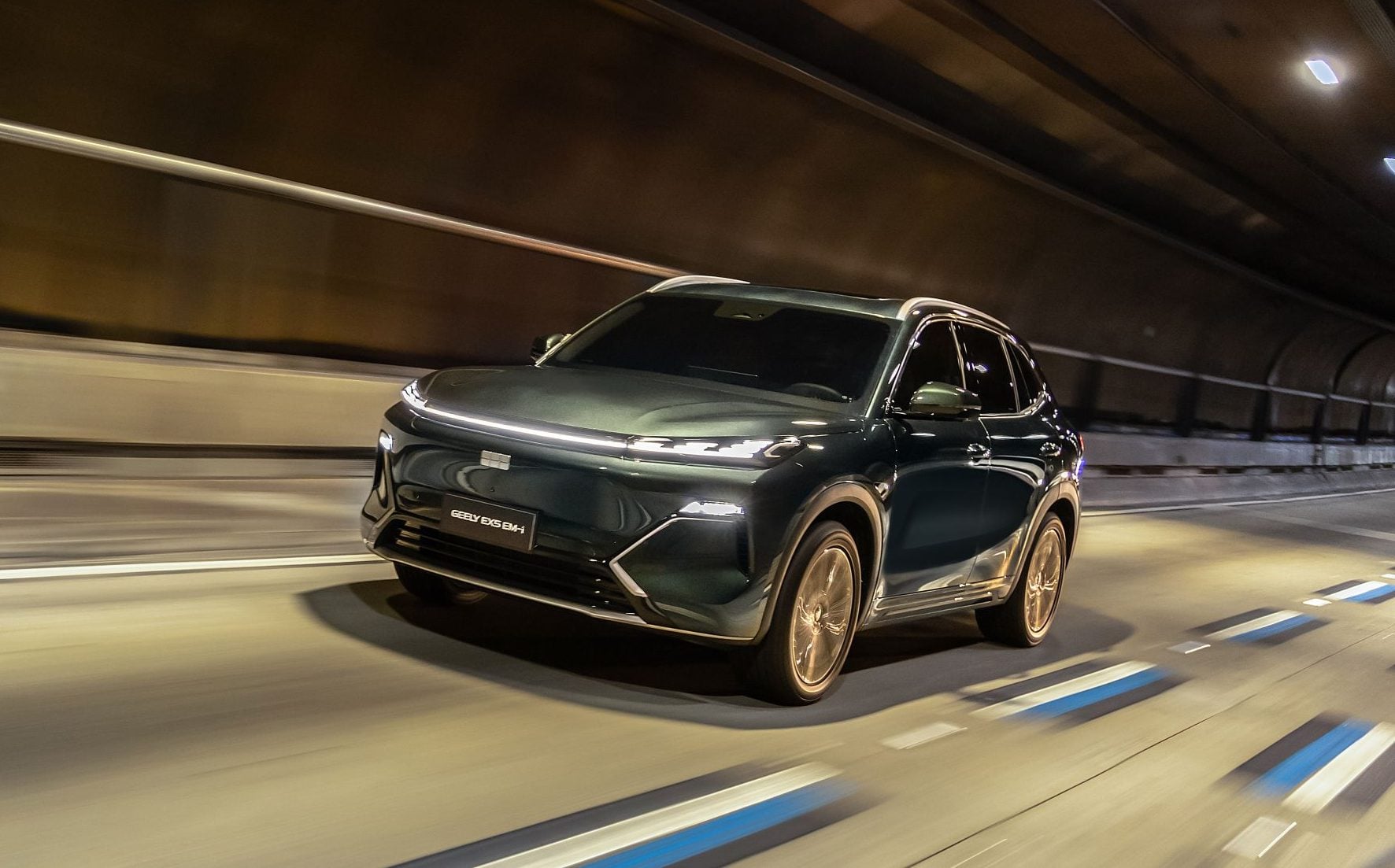
EX5 EM-i plug-in hybrid: 1,300 km range
Hybrid model has already had national production confirmed for the second half of the year (Photo: Geely | Disclosure)
Geely expands operations in Brazil with the EX5 EM-i, the brand’s first plug-in hybrid SUV in the country, in the Pro, Max and Ultra versions. Inserted in one of the fastest growing segments, it bets on energy efficiency, on-board technology and good use of space. With a length of 4,740 mm and a wheelbase of 2,755 mm, it is positioned among medium-large SUVs.
Style follows contemporary Chinese standard, clean surfaces, LED lighting and continuous signature in the superior versions. At the rear, taillights maintain this identity with a three-dimensional effect. 428 L trunk (VDA), expandable to 2,065 liters with rear seat folded down.
Inside, it prioritizes comfort and versatility, a good 10.2-inch digital instrument panel, data projection on the windshield and a large 15.4-inch multimedia center. that combines digital interfaces and physical commands. Finish adopts a sober proposal, focus on ergonomics and usability. In addition to good legroom in the rear seat.
In mechanics, the plug-in hybrid set combines a 1.5-L gasoline engine, 100 hp, 12.7 kgf·m and electric, 218 hp, 26.7 kgf·m Combined values: 262 hp and 38 kgf·m. Average range in electric mode reaches 112 km (Inmetro standard, while in combined it reaches up to 1,300 km according to the manufacturer. The battery, 29.8 kW⋅h (in the top version), allows fast recharging from 30% to 80% in about 16 minutes. Acceleration 0 to 100 km/h, 7.8 s.
In urban use, it stands out for its silence in electric mode and the smooth transition between combustion engine and electric. Driving favors comfort, with light steering and suspension adjusted to absorb irregularities. There is no sporty proposal, but the set consistently meets the daily routine, with predictable behavior and focus on efficiency.
Initially imported, the EX5 EM-i will be produced in Brazil later this year in São José dos Pinhais (PR), in partnership with Renault, which reinforces Geely’s long-term strategy in the Brazilian market.
Prices: R$ 199.990 to R$ 244.990.
Ituran expands IoT opportunities
The Internet of Things (IoT) has progressed rapidly in the field of connecting everyday physical objects to the internet. Through sensors, software, and chips, it is possible to collect, exchange data with each other and with users. Its great advance allows remote control, automation, and monitoring from refrigerators to cars.
The Israeli multinational Ituran maintains an active presence in Brazil in order to monitor, track and recover stolen or stolen vehicles. For those who do not have the resources to pay for a traditional insurance policy or vehicles over eight years old whose premiums are very expensive, it can become an option. However, the company also serves the insurance companies themselves by facilitating quick location of vehicles, before they are dismantled and subsequent illegal sale of parts.
After bringing together IoT and data platform, it advanced to motorsport through the Porsche Cup. High-frequency telemetry, performance analysis and AI could be applied with a gain of precious seconds in pit stops. The system must withstand extreme conditions on racetracks such as vibration, temperature and high data sampling rate, as well as scrapes and small accidents. In this way, both day-to-day fleets and private vehicles gained a more robust product.
Comments are the sole responsibility of their authors and do not represent the opinion of this site. Comments containing profanity or offensive language will not be published. If you identify anything that violates the terms of use, please report it.