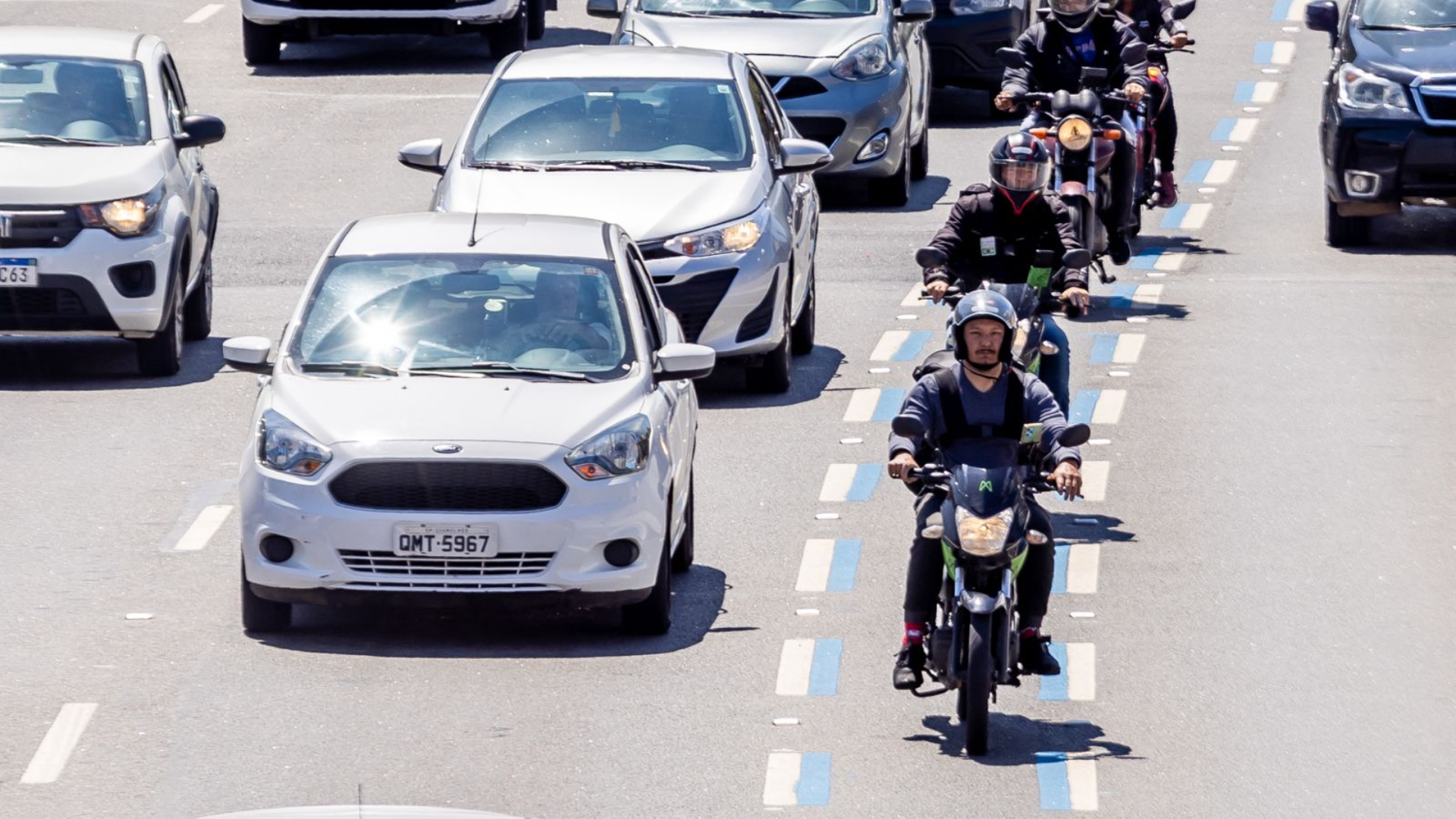
The Blue Belt began to be implemented in some Brazilian cities in order to ensure more safety for motorcyclists, in addition to organizing traffic. However, research proving effectiveness and even the drivers themselves have differed opinions about the exclusive lane.
According to the São Paulo Traffic Engineering Company (CET-SP), the severity of accidents in the capital of São Paulo has dropped, but a survey by USP, the Federal University of Ceará (UFC) and the Cordial Institute, points out that fatality rates have more than doubled in the city.
In the midst of all this, the Traffic and Transport Commission of the Chamber of Deputies has just approved Bill 1656/25, which provides for preferential lanes in Brazilian capitals, the Federal District and federal and state highways. Even though the measure has not yet become law, this convergence further fuels concerns about safety in the month of Yellow May – an international awareness movement for the reduction of traffic accidents and deaths.
The Blue Belt began to be implemented in the city in 2022 (Photo: São Paulo City Hall | Disclosure)
Blue Belt of positive results
The study conducted by CET-SP was the 2nd Consolidated Report of the Blue Belt, released by the city of São Paulo at the end of April. He stated that the average severity rate of motorcycle accidents in the evaluated locations, in the comparison between before and after implementation, reduced by 26.6%.
According to the study, 233.3 km of Blue Belt implemented in 36 lanes (46 sections) were analyzed between January 2022 and December 2025. Different weights were considered for accidents with injuries and deaths, and the entire survey related the data analyzed to the volume of vehicles, the period and the length of the stretch. The conclusion was that the incidence and severity of accidents outside the Blue Belt is 9.5 times higher than inside the signaling.
The CTE-SP data also pointed to a reduction in the average speed of motorcyclists after the implementation of the Blue Belt.
According to the data, the implementation of signaling reduced, on average, 5.5% of the point speed of motorcycles, from 54 km/h to 51.1 km/h, in addition to a drop of 4.3% in the operating speed, an indicator used to evaluate the predominant pattern of circulation on the roads. At points near radars, the rate of non-compliance with the regulated limit went from 44.2% to 27.6%.
The “other side” of the track
Before the CET-SP study, in January, a survey by USP, the Federal University of Ceará (UFC) and the Cordial Institute, with technical support from Vital Strategies, pointed out that the Blue Lane for motorcyclists did not make traffic safer, but increased the fatality rate in specific situations.
Among the main results of the scientists, two stood out:
Fatal accidents involving motorcyclists at intersections increased between 100% and 120%;
The average speed of motorcyclists rose from 58.3 km/h to 72.2 km/h.
In this research, the scientists compared avenues with a Blue Belt to similar ones without the signage. Among the criteria analyzed were the number of lanes, traffic volume and road characteristics. Avenida 23 de Maio, for example, was compared to Radial Leste.
According to the authors, the results showed that the Blue Belt did not show significant improvement in safety indicators in several scenarios. In some cases, the data pointed to worsening after the implementation of the signaling.
The study separated occurrences recorded in the middle of the blocks and accidents near intersections, within a radius of up to 10 meters. It was precisely in these places that the most worrying numbers appeared.
For the data obtained, fatal accidents involving motorcyclists more than double at intersections located on roads with the Blue Belt, with an increase between 100% and 120%.
In this evaluation, the increase in speed between one intersection and another makes motorcyclists reach these critical points in conditions of greater risk.
The speed of the drivers was measured through images captured by drones. On avenues with a limit of 50 km/h and the presence of the Blue Strip, 96% of motorcyclists traveled above the allowed speed. On roads without signaling, the percentage was also high, but lower: 71%.
The universities’ research also pointed out that 475 motorcyclists died in traffic in the capital in 2025, a number almost 15% higher than that recorded in 2022, the year in which the Blue Belt began to be implemented. Compared to 2024, there was a slight drop of just over 1%. The lowest number of deaths was recorded in 2023, when 402 motorcyclists lost their lives in São Paulo traffic.
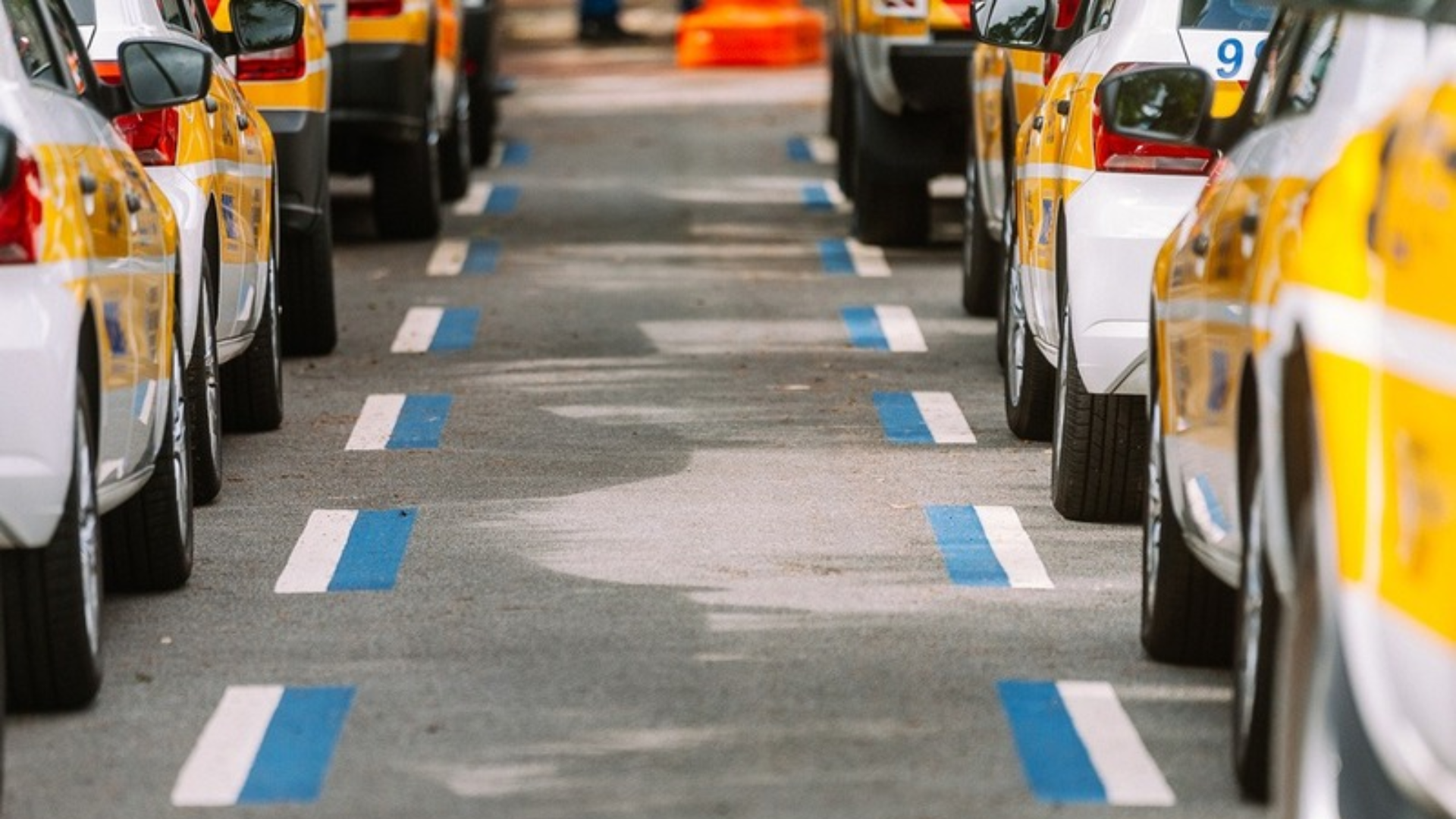
Demarcation is inspired by a similar Malaysian strategy that is effective in security (Photo: São Paulo City Hall | Disclosure)
Two surveys and two opinions
The polls differ on the point of average velocity and their conclusions. The motivation for this may be the method of analysis between each one.
The CTE-SP considered its results by comparing data from the roads that received the Blue Belt for motorcyclists with the same, when they did not yet have the lane. USP, on the other hand, verified the new routes in comparison to other similar avenues that do not contain the exclusive lane.
In a note, CET-SP also stated that the “report also responds to one of the main criticisms of the project: the hypothesis that the Blue Belt would stimulate the increase in the speed of motorcycles. CET data indicate otherwise.”
The researchers from the universities state in the document that “assessing the impact of a road safety intervention requires more than comparing numbers ‘before and after’ its implementation. To correctly estimate the effect of a measure, it is necessary to know what would have occurred if the intervention had not been applied. This prediction, the so-called counterfactual, is the basis of any impact assessment. The more robust the methodology used to estimate this counterfactual, the more reliable the conclusions about the impact of the measure will be.”
Certainly, this difference in research method has a significant impact on the results.
Trend of nationalization of the Blue Belt
The negative result survey does not seem to have convinced the Chamber of Deputies, since the project to nationalize the preferential ranges advances.
As a justification, the rapporteur of the project, deputy Flávio Nogueira, highlighted that the measure brings safety and efficiency to traffic.
“The blue lane demarcated exclusively for motorcycles organizes traffic, increases safety and reduces accidents”. Nogueira said he is based on models such as the one in the city of São Paulo.
The National Blue Belt project goes to the Constitution and Justice and Citizenship Commission (CCJ) for analysis in a conclusive manner. If approved without reservations, the proposal will not need to go through the plenary of the Chamber, going directly to the Senate before becoming law.
Comments are the sole responsibility of their authors and do not represent the opinion of this site. Comments containing profanity or offensive language will not be published. If you identify anything that violates the terms of use, please report it.