

Detran SP driving test can be done with your own car; check rules
New rule of the qualification process has come into force, but raises questions about the risks without the double command
By
Julia Vargas
Published on 2026-05-07 at 07:00 AM
Updated on 2026-05-07 at 07:25 AM
Published on 2026-05-07 at 07:00 AM
Updated on 2026-05-07 at 07:25 AM
Be the first to comment.
Summarize with:
Since May 1st, the DMV-SP has allowed candidates for the National Driver’s License (CNH) to take the practical driving test using their own vehicle. The measure, based on Resolution No. 1,020/2025 of Contran, reduces bureaucracy in the process and reduces costs for the citizen.
But, at the same time, it raises questions about road safety, since along with this new change also comes the end of the obligation of the double command pedal, the device that allows the examiner to reduce speed and stop the vehicle.
SEE ALSO:
- Be aware: recovered airbag does not exist
- Lack of double pedal causes run over in Detran test
- CNH do Brasil; understand what a new driving test is like and why it became easier
What your car needs to have for the Detran SP test
It is not enough just to take the vehicle to the test site. To ensure the validity of the examination and visual identification before the examiners, the car must comply with strict requirements:
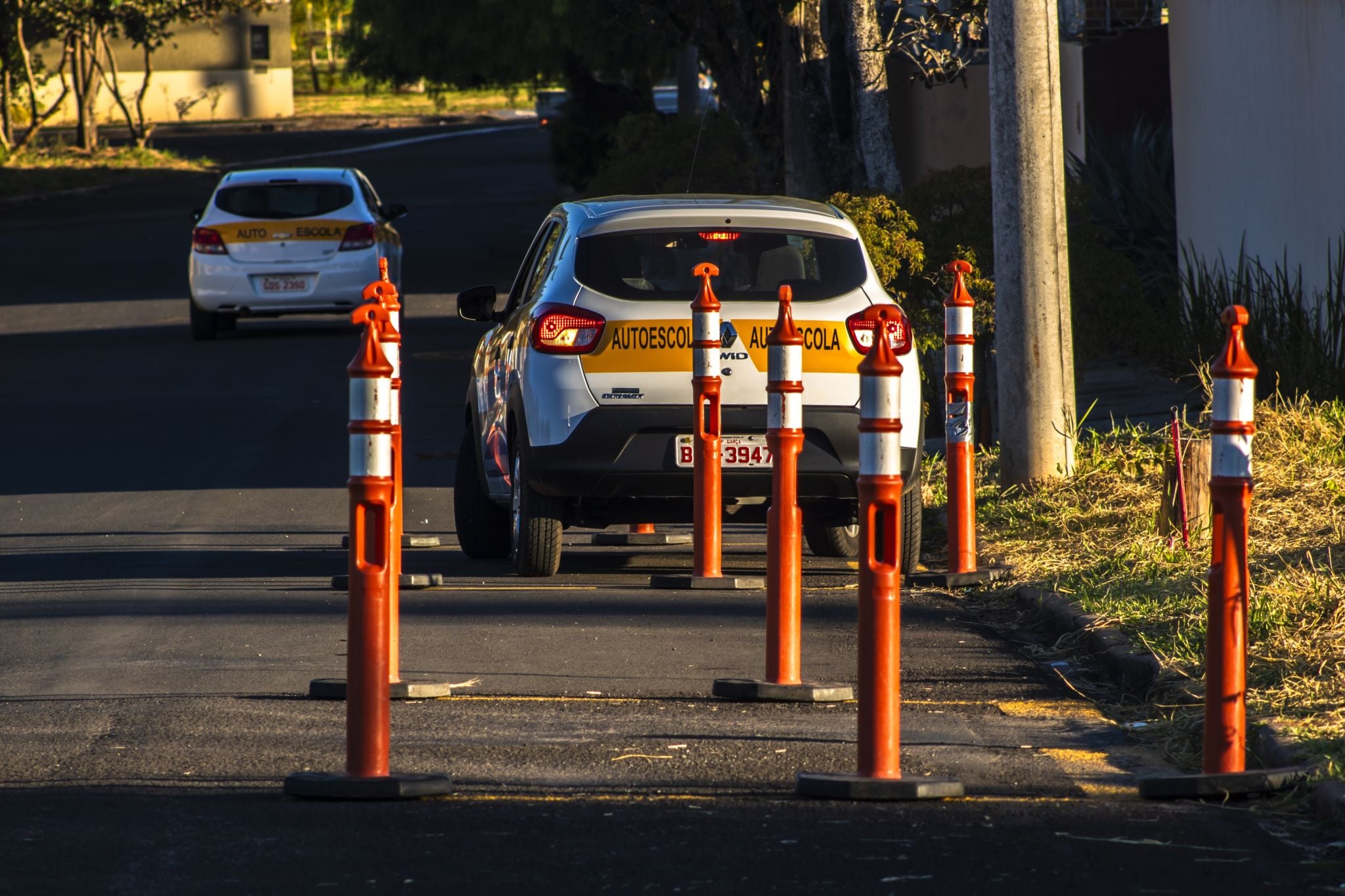
- Identification: The car must have a removable white strip 20 cm wide, fixed at mid-height on the bodywork, with the inscription “DRIVING SCHOOL” in black.
- Documentation: The vehicle must be properly licensed and in perfect condition.
- Technology: Vehicles with automatic transmission and electric motors are now accepted.
Cost and Scheduling
The process was digitized for easy access. Check out the main data:
- Exam fee: R$ 52.83.
- Where to schedule: Directly through the official Detran-SP portal.
- Coverage: Valid for all municipalities in the state of São Paulo.
Absence of dual command can be a risk in Detran tests
This flexibility was well received by many, since the number of license issuances has been growing since then, but there is a safety factor that is also widely questioned: the lack of dual command.
Driving school vehicles have brake and clutch pedals on the passenger side, allowing the examiner to intervene in the event of a serious error. In the private car, this safety device does not exist.
This means that the candidate needs an even greater technical and emotional mastery, since any unforeseen event or failure will not have immediate external help. At the end of March, four people were run over during a driving test held in Goiânia (GO), after a candidate lost control of a private vehicle that did not have dual control.
Other changes that are part of the new CNH rules
The permission to use one’s own vehicle is just one of the numerous pieces of the federal CNH program in Brazil. The objective of the new rules is to modernize, reduce bureaucracy and streamline driver training with measures such as:
- End of the mandatory goal;
- Change in the evaluation criteria of the driving test, such as the end of eliminatory absences, making it easier;
- Medical and psychological exams up to 40% cheaper;
- Reduction of the minimum workload of mandatory practical classes;
- Free online theoretical course;
SEE MORE ABOUT

0 Comments
Comments are the sole responsibility of their authors and do not represent the opinion of this site. Comments containing profanity or offensive language will not be published. If you identify anything that violates the terms of use, please report it.