


Manufacturers react against illegality of the new ethanol content in gasoline
Without new technical tests, the government's measure violates the legislation and generates strong resistance from the industry due to mechanical risks and economic damage
By
Boris Feldman
Published on 2026-05-06 at 07:10 PM
Updated on 2026-05-07 at 11:53 AM
Published on 2026-05-06 at 07:10 PM
Updated on 2026-05-07 at 11:53 AM
Be the first to comment.
Summarize with:
The entities linked to the production of automobiles and motorcycles decided to clash head-on against an absurdity: the government’s already confirmed intention to raise the ethanol blend in gasoline from 30% to 32% “by force”, without carrying out prior tests (“provisionally, for 180 days”).
President Lula even stated that the tests have already been carried out. Lie. What happened were trials (last year) with the content of 32% only as a margin of tolerance when ethanol rose from 27% to 30%. It is basic: if the objective now is to set the standard at 32%, the new validation tests must be carried out with 34% ethanol to ensure the same technical safety.
SEE ALSO:
- Gasoline with more alcohol: government tests are insufficient, experts warn
- E30 gasoline: good for nature, but turned on the yellow light
- Do you have an SUV or diesel pickup? This tip will help you
This time, the resistance is widespread. Anfavea (association of automakers), the auto parts sector (Sindipeças) and Abeifa (association of importers) have already formally expressed themselves – in a jointly signed document – against the new increase. The only thing that draws attention is the silence of the CNT (National Transport Confederation), which should be defending the consumer, who pays the bill at the pump. Because another lie of the government is to “explain” that the increase in fuel consumption caused by the new ethanol content would be compensated by the reduction in the price of gasoline at the pump. It never was.
However, the most forceful and objective manifestation came from Abraciclo, an entity that represents motorcycle manufacturers, which contests the idea of pushing this new content “down our throats”.
Abraciclo clashes with the government
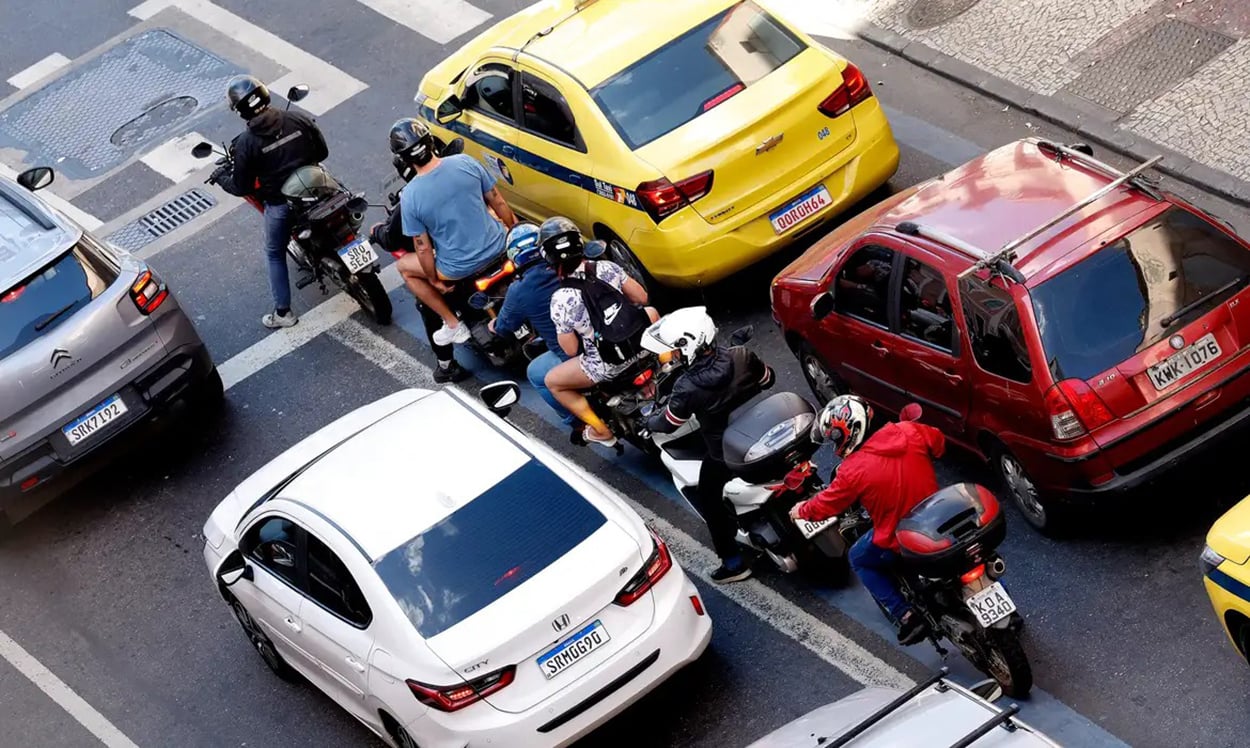
Abraciclo is clear: the increase from 27% to 30% of ethanol in gasoline has already brought serious flaws. In the case of motorcycles, the problems are much more pronounced than in cars. Among the main defects reported are:
- Difficulty starting on cold mornings;
- Failures in acceleration resumptions, which directly compromises the safety of the motorcyclist in situations of overtaking or leaning in curves.
In addition to the physical risk, there is also the economic one. What about international trade? The Mercosur/European Union agreement encouraged the export of Brazilian products to Europe and vice versa. But there ethanol varies between 5% and 10%. If our motorcycles are not compatible with the global standard, the national industry will have to invest fortunes to develop “special” models just to meet European gasoline. This raises costs, reduces scale, makes the final product more expensive and makes exports unfeasible – harming competitiveness.
The damage to industry and foreign trade
In addition to the physical risk, there is the economic risk. What about international trade? Brazil exports to Europe and vice versa, but there ethanol varies between 5% and 10%. If our motorcycles are not compatible with the global standard, the national industry will have to invest fortunes to develop “special” models just to meet European gasoline. This raises costs, makes the final product more expensive and makes exports unfeasible – harming competitiveness.
Who ‘guarantees the guarantee’?
There is also a question of legal liability. If a motorcycle has a defect caused by excess alcohol, for which it was not designed, the factory ends up being unfairly responsible for a problem caused by the fuel.
Abraciclo reinforces that it has never been against biofuel. On the contrary, there is strict support for ethanol. But she was outraged when, in the increase of the content from 27% to 30%, she participated in the commission that analyzed the proposal, spoke out against it but was not heard. The approval of new levels (biodiesel in diesel, ethanol in gasoline) is the responsibility of the National Energy Policy Council (CNPE) of the Ministry of Mines and Energy. Which does not deal with the subject (as it should) technically, but politically.
Increasing the content without rigorous testing is not only technical imprudence, it is illegal. The Law of the Fuel of the Future is crystal clear: the increase in the ethanol content in gasoline (or biodiesel in diesel) can only occur through tests that prove technical feasibility. Abraciclo does not agree that the tests should be only for drivability, but also for the long term, to verify the compatibility of the components with the new percentage of alcohol.
What many suggest are smarter measures that, instead of increasing the content of anhydrous ethanol in gasoline, the federal government could encourage – through some kind of subsidy, in addition to campaigns:
- The use of hydrous ethanol in flex-fuel engines, which are already 80% of the Brazilian fleet, but 70% of them are still fueled with gasoline;
- Create favorable conditions for engines that burn only ethanol, as at the time of Proálcool.

SEE MORE ABOUT

0 Comments
Comments are the sole responsibility of their authors and do not represent the opinion of this site. Comments containing profanity or offensive language will not be published. If you identify anything that violates the terms of use, please report it.