

Realistic Truck Sticker Tricks Drivers and Mobilizes U.S. Police
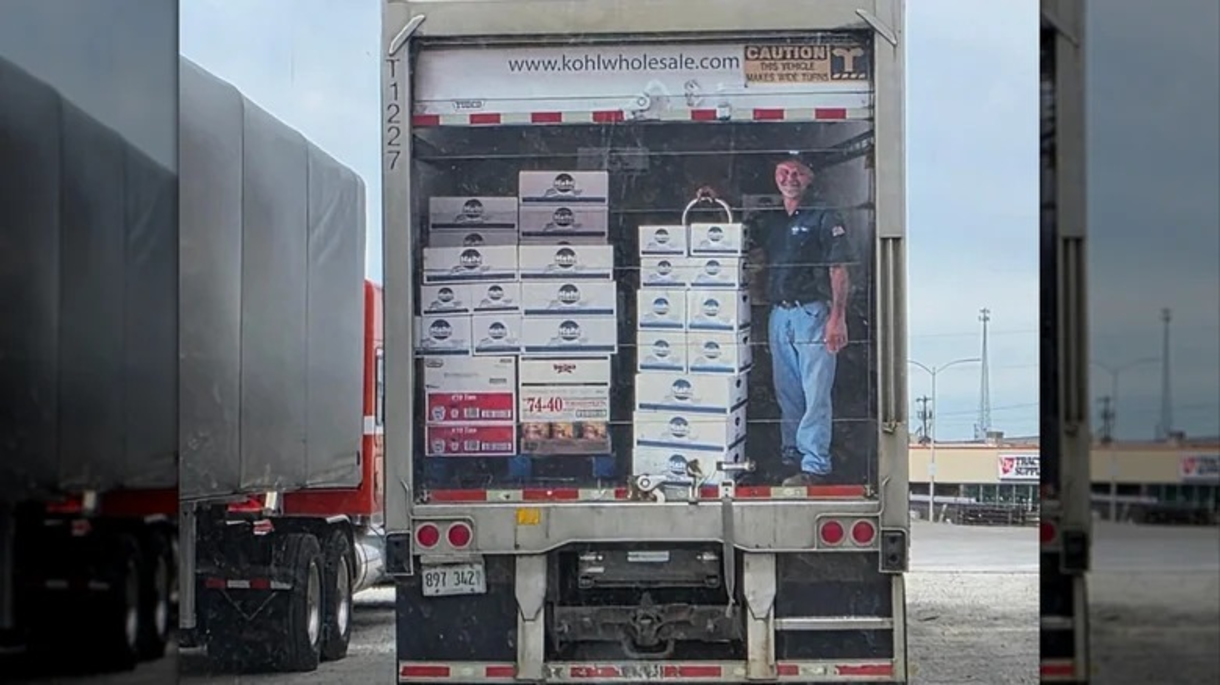
Three-dimensional image on semi-trailer door creates depth perception and makes drivers believe that the vehicle was traveling open
By
Tom Schuenk
Published on 2026-05-13 at 05:00 PM
Updated on 2026-05-13 at 05:19 PM
The success of the illusion is due to the detailed work of the designer, who integrated authentic elements into the sticker, such as the company’s website and real security alerts. Although the situation ended in laughter, the incident raises a warning about the dangers of this type of art in traffic. Recently, a driver in Scotland collided with a wall when he mistook a mural for a tunnel, and semi-autonomous driving systems, such as Tesla’s, have already failed to interpret two-dimensional graphic representations as real paths.
Published on 2026-05-13 at 05:00 PM
Updated on 2026-05-13 at 05:19 PM
Be the first to comment.
Summarize with:
The police in Macon, Missouri (USA), received several complaints that mobilized the contingent of the police force. The reports indicated a man standing in the back of a moving truck, apparently at risk. However, upon intercepting the vehicle, authorities discovered that it was an ultra-realistic graphic sticker applied to the door of the Kohl Wholesale company’s implement.
SEE ALSO:
- Listening to Drake helps you drive better; Foo Fighters and classical music get in the way, says study
- Yamaha launches special 70th anniversary R-Series line in Brazil
- Study reveals that extreme temperatures are the biggest enemy of electrified cars
Between creative design and security risks
The image depicts an employee standing next to boxes, using perspective techniques that simulate the depth of the open chest, completely fooling human perception at high speed.
The success of the illusion is due to the detailed work of the designer, who integrated authentic elements into the sticker, such as the company’s website and real security alerts. Although the situation ended in laughter, the incident raises a warning about the dangers of this type of art in traffic. Recently, a driver in Scotland collided with a wall when he mistook a mural for a tunnel, and semi-autonomous driving systems, such as Tesla’s, have already failed to interpret two-dimensional graphic representations as real paths.
The challenge for artificial intelligence
With this, the episode raises an essential debate for the engineering of autonomous driving software. For AIs to operate safely, they need to be trained to differentiate physical obstacles from sophisticated optical illusions. In addition to avoiding collisions, the future challenge is to ensure that intelligent systems know how to ignore visual simulations to avoid unnecessary triggering of authorities.
SEE MORE ABOUT

0 Comments
Comments are the sole responsibility of their authors and do not represent the opinion of this site. Comments containing profanity or offensive language will not be published. If you identify anything that violates the terms of use, please report it.