


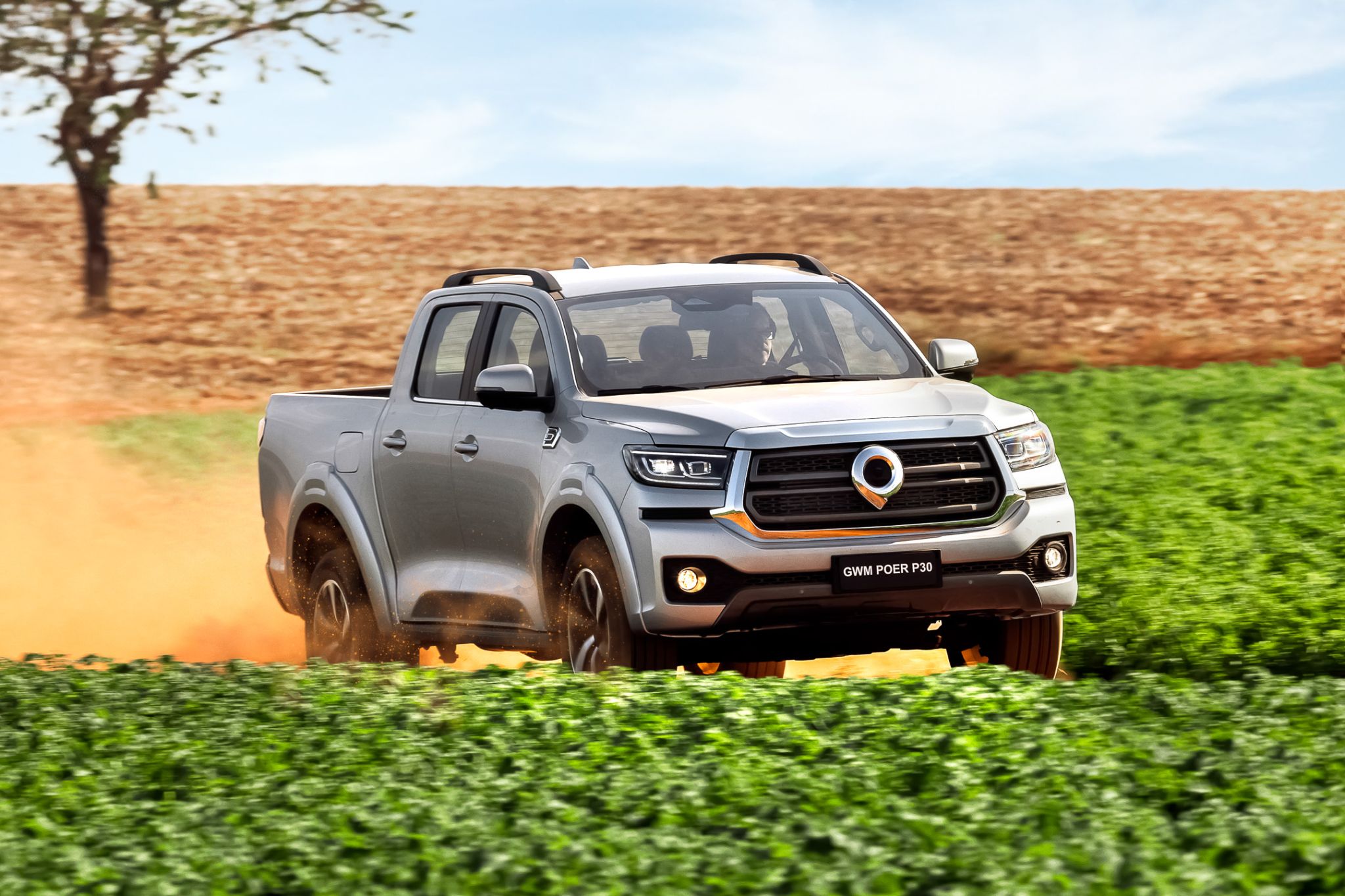
GWM Poer will get a diesel hybrid system next year, with an improvement of up to 30% in consumption
Technology under development for six years will have plug-in versions and promises to reduce fuel consumption by up to 30% in off-road markets
By
Júlia Haddad
Published on 2026-05-11 at 12:00 PM
Updated on 2026-05-11 at 12:19 PM
Published on 2026-05-11 at 12:00 PM
Updated on 2026-05-11 at 12:19 PM
Be the first to comment.
Summarize with:
GWM has confirmed that it will launch its first vehicles equipped with diesel hybrid systems from 2027. The technology, under development by the Chinese automaker for about six years, will have full hybrid (HEV) and plug-in (PHEV) variants, with China and Australia as the first markets to receive the novelty.
According to Nicole Wu, the automaker’s technology director, in an interview with the Australian website Drive.au, the electrification of the diesel cycle is strategic for segments of pickup trucks and large SUVs, where the demand for high torque is constant. The executive stressed that the electric aid is essential to mitigate emissions of nitrogen oxides (NOx) and particulate matter, two of the main regulatory obstacles of this type of motorization today.
SEE ALSO:
- Why are Chinese manufacturers bringing combustion engines back?
- Chery to launch new brand in Brazil to sell SUVs above Omoda & Jaecoo
- Hidden air conditioning button helps save fuel; here’s how to use it
The new sets will be integrated with the 2.0 and 2.4 turbodiesel engines already used by the brand — including the Poer pickup, sold in Brazil — and also with a future 3.0 V6 engine. In the plug-in versions, GWM will adopt the Hi4-T all-wheel drive architecture, a system that already equips electrified gasoline models such as the Tank 300 and Tank 500.
One of the exponents of the new line will be precisely the Tank 500. In the full hybrid configuration with a 2.4 turbodiesel engine and 1.71 kWh battery, the SUV delivers 197 hp and 51.0 kgfm, surpassing the 184 hp and 48.9 kgfm of the conventional version. The system uses a nine-speed dedicated hybrid transmission (DHT) to optimize power delivery.
According to the manufacturer’s projections, the transition to electrified diesel allows accelerations up to 40% more agile compared to traditional models. In the field of efficiency, the expectation is for a reduction in fuel consumption of between 15% and 30%, depending on the driving cycle and battery charge.
SEE MORE ABOUT

0 Comments
Comments are the sole responsibility of their authors and do not represent the opinion of this site. Comments containing profanity or offensive language will not be published. If you identify anything that violates the terms of use, please report it.