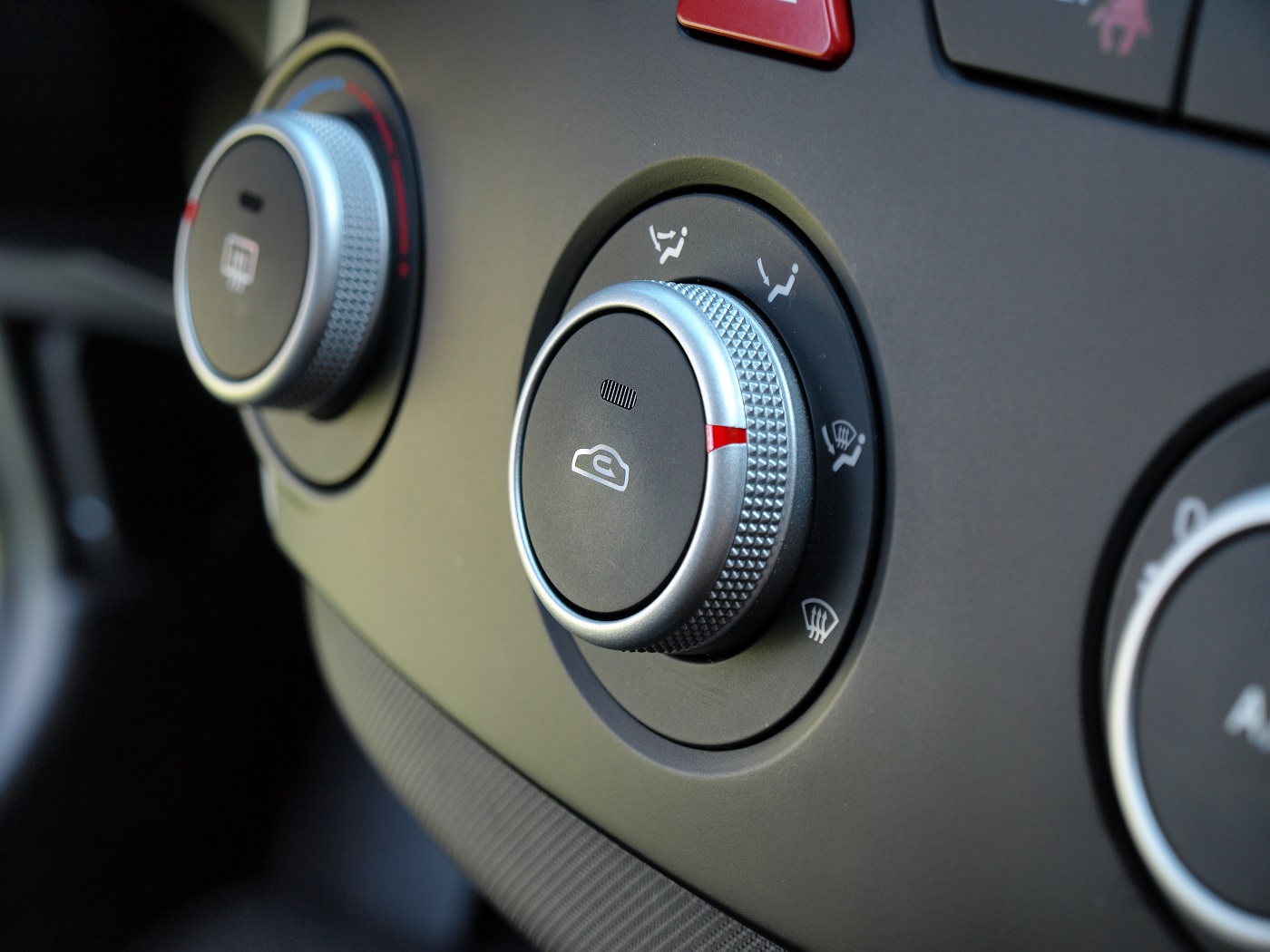
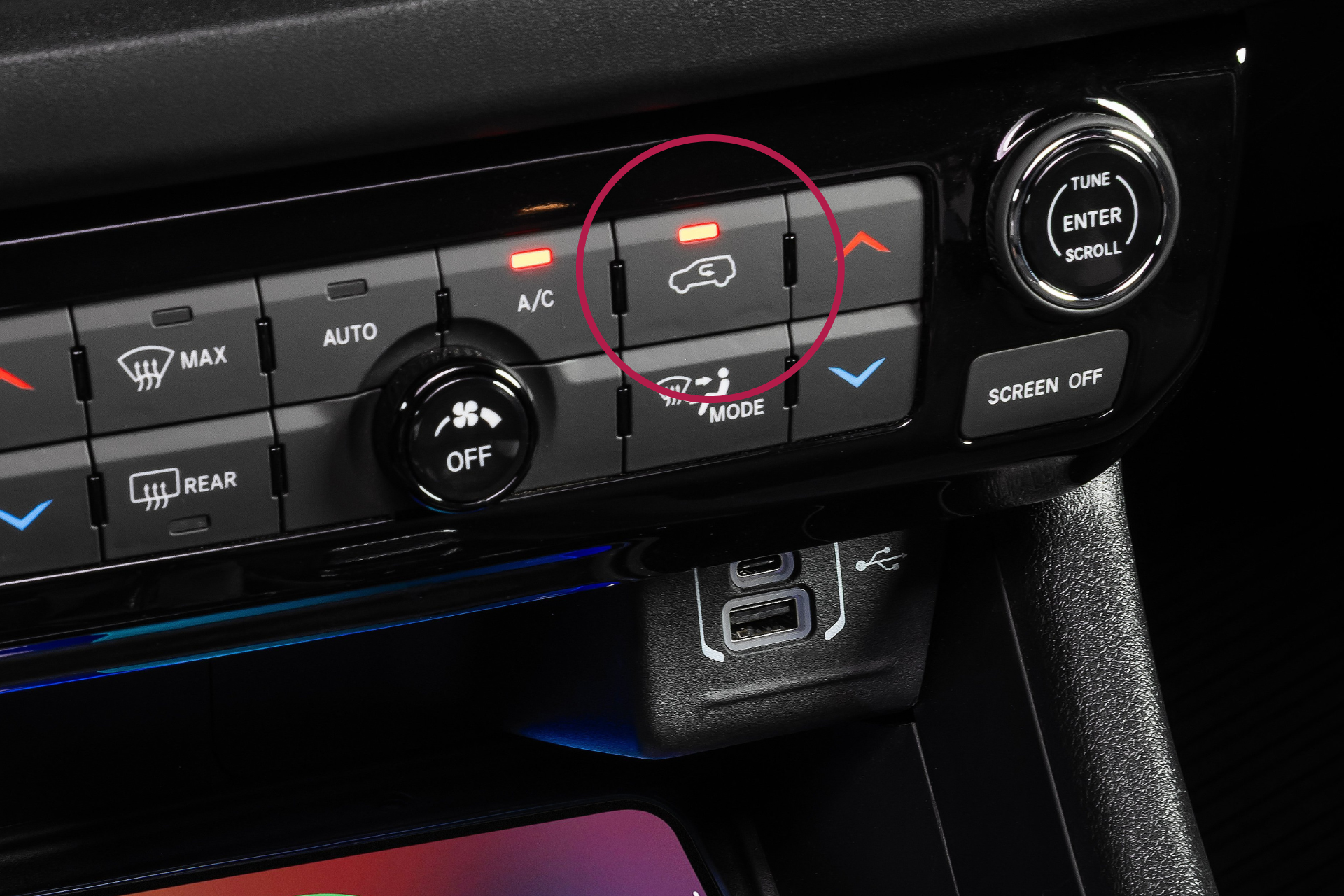
Often ignored on vehicle dashboards, the air conditioning recirculation button — identified by the icon of a car with a circular arrow inside — is a strategic tool for those looking for energy efficiency and thermal comfort. The feature changes the origin of the air circulating in the passenger compartment, bringing direct impacts on engine performance and the health of occupants.
When activated, the function interrupts the capture of outside air and starts to reuse the air that is already inside the cabin. This process is essential to accelerate the cooling or heating of the interior, since the system starts to work with an air mass already close to the desired temperature. As a result, the air conditioning compressor requires less effort, which translates into a slight reduction in fuel consumption.
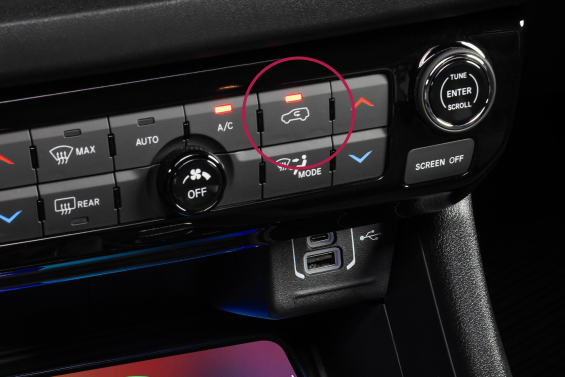
Air recirculation button can get lost amid other dashboard functions (Photo: Jeep | Disclosure)
In addition to savings, recirculation acts as a physical filter against pollution of the urban environment. In tunnels, traffic jams or when traveling behind heavy vehicles, the feature prevents the entry of smoke, strong odors and toxic gases, preserving the quality of the air breathed. However, experts warn that use should be moderate.
Keeping the system closed for prolonged periods can increase the concentration of carbon dioxide (CO2), which reduces oxygenation and can cause a feeling of drowsiness in the driver. On cold or rainy days, the lack of air renewal also favors the fogging of the windows due to the moisture expelled by breathing. The ideal is to alternate the use of the function and ensure that the cabin filter is in good condition to prevent the proliferation of fungi and bacteria.
Comments are the sole responsibility of their authors and do not represent the opinion of this site. Comments containing profanity or offensive language will not be published. If you identify anything that violates the terms of use, please report it.