A 40-year-old Polish truck driver has been sentenced to 13 and a half years in prison in the United Kingdom for trying to smuggle a load of cocaine valued at about R$ 54 million (US$ 9.4 million). To evade customs inspection, the drug was hidden in a shipment of underwear from Skims — the clothing brand of American businesswoman and socialite Kim Kardashian.
The sentence was handed down by the Crown Court in Chelmsford, England, after investigations by the National Crime Agency (NCA). The case illustrates a recurring tactic of organized crime: the use of corrupted drivers to transport illicit substances in the midst of goods of legal circulation.
The approach in the port and the hiding place in the doors
The driver, identified as Jakub Jan Konkel, was intercepted by border agents as he disembarked at the port of Harwich, in the Essex region. He was returning by ferry from Hook of Holland in the Netherlands. During the inspection, the vehicle was subjected to an X-ray scan.
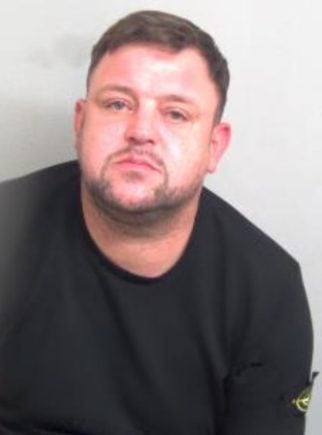
Jakub Jan Konkel (Photo: Reproduction)
The electronic equipment confirmed that the 28 pallets of Skims clothing were entirely legitimate and that there were no irregularities mixed in the boxes. The contraband, however, was located in compartments embedded in the trailer’s rear door frames, which had been modified. There, authorities found 90 one-kilogram packages of cocaine.
Suspicious stop and disproportionate bribery
The official investigations concluded that neither the celebrity’s brand nor the transport company had any knowledge of the criminal operation. The logistics of trafficking were unmasked after police discovered a discrepancy in the driver’s tachograph: an unreported 16-minute stop. Authorities point out that it was exactly in this brief interval that the drug was housed in the truck.
After initially denying involvement, Konkel confessed to the crime. He admitted to having accepted to carry out the illegal transport in exchange for a payment of only US$ 5,200 (about R$ 29,000). The amount of the bribe is considered derisory in view of the magnitude of the crime, representing a tiny fraction of the price of the drug seized on the parallel market.
Comments are the sole responsibility of their authors and do not represent the opinion of this site. Comments containing profanity or offensive language will not be published. If you identify anything that violates the terms of use, please report it.