

Installation of electric car chargers at home; understand how it works
Check out the three steps of installing these devices, safety rules and precautions that the owner must take
By
Julia Vargas
Published on 2026-05-31 at 01:00 PM
Published on 2026-05-31 at 01:00 PM
Be the first to comment.
Summarize with:
The electric vehicle has already become a repeated fixture on the streets of Brazil, registering a growth of 175% in the first four months of 2026, according to the National Federation of Motor Vehicle Distribution (Fenabrave). With more and more battery-powered cars in Brazilians’ garages, the question arises: how does the installation of electric car chargers work?
For most drivers, in addition to savings, the convenience of charging at home is one of the main positive points of this type of vehicle. However, recharging an electrified model is not the same as turning on a common appliance: it requires planning, safety and compliance with strict technical standards .
SEE ALSO:
- Traveling by electric car is possible; Here’s how to find a charger
- What do you need to have to install an electric car charger in your home?
- Number of fast chargers skyrockets in Brazil, but the success of electric cars keeps pressure on the grid
In this article, you can see what are the steps to equip your home with this device, what are the requirements necessary to install it and the main safety rules.
1. Evaluation of the power grid and its ability to receive the charger
According to Emerson Yokoyama, electrical engineer and member of the Electric and Hybrid Vehicle Mentoring of the Society of Mobility Engineers (SAE), before installation it is necessary to make an assessment of the electrical network.
The first step is to check the energy standard of your home or condominium and check if the current network supports the new energy demand, which is considerable and continuous. The main adaptations in the residential electrical network involve:
- Load verification: analyze whether the limit contracted with the energy concessionaire supports the charger and the simultaneous use of other appliances installed in the residence;
- Adequacy of the input standard: in some cases, it will be necessary to request the adjustment of the infrastructure to receive or expand the energy supply from the concessionaire;
- Modernization of the switchboard: update the switchboard if necessary with new circuit breakers, protection devices and replacement of old wiring.
In addition, before starting any installation, it is essential that the building’s Inspection Certificate (AVCB) is verified. And in addition to the change in the electrical network, it is necessary to find out if it will also be necessary to make adaptations in the building’s fire and panic safety project.
According to the Minas Gerais Fire Department (CBMMG), if it is necessary to regularize the building, the safety conditions of the building where the Electric Vehicle Power System (Save) will be inserted must be analyzed by a qualified technician.
Choice of electric car charger should also be a priority
Knowing from the beginning which type and model of charger you are going to use is also important, as it will help define the level of safety necessary for possible adaptations in your home. According to the electrical engineer and member of SAE, these are the main characteristics of the devices:
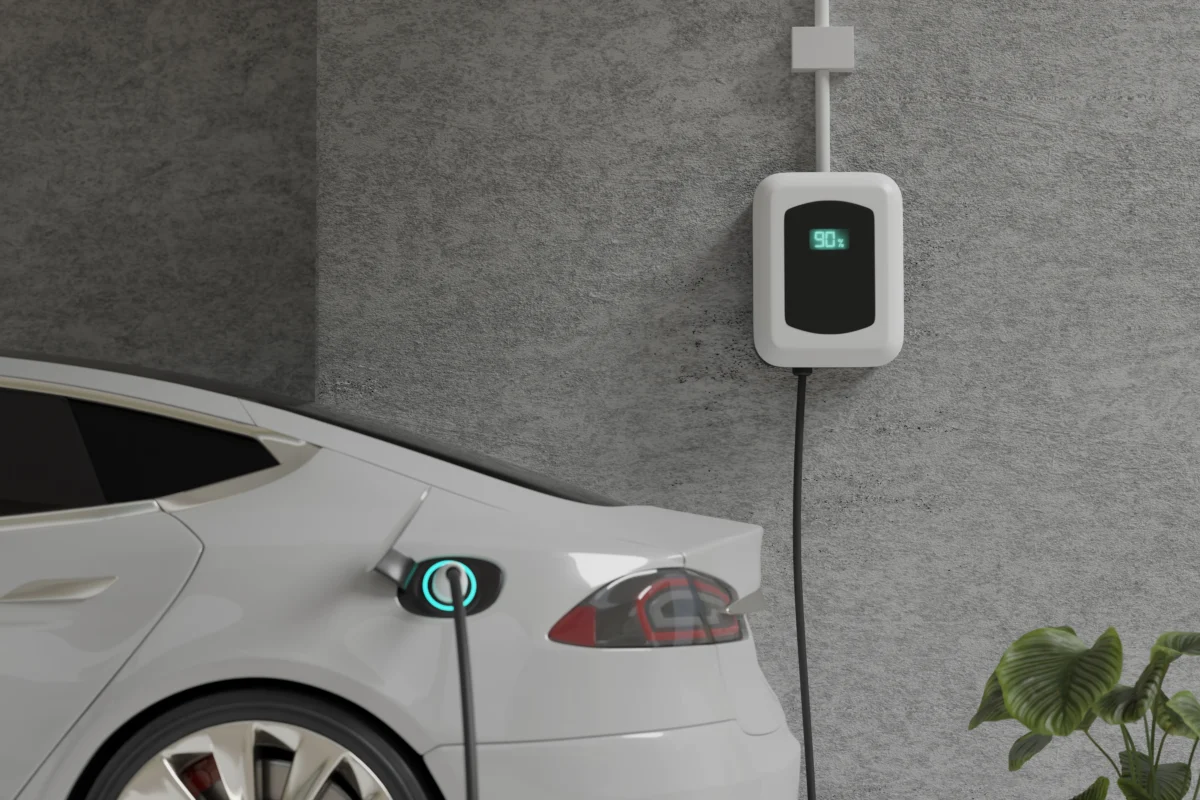
- Wallbox – fixed equipment that requires dedicated electrical infrastructure, with a protection panel and exclusive circuit breakers. It offers greater safety as it is built for continuous use and subjected to weathering, making it the safest option for daily use.
- Portable charger – this model is usually connected to common outlets and should be used carefully so as not to overload electrical circuits, being more used when you do not have the option of the Wallbox charger.
2. Definition of the place where the charger will be installed with dedicated circuit
The charger should be in the closest possible position to where the vehicle usually parks. The electrical installation cannot be an “extension” of another circuit, it must be independent and strictly follow the Brazilian technical standards with surge protection and a high use factor.
What do the rules say?
For Emerson Yokoyama, the installation must comply with ABNT NBR 17019 (specific for electric vehicle charging stations) in addition to NBR 5410 (general standard for low voltage installations). Together, they require:
- Independent and exclusive circuits for each charger;
- Dedicated Surge Protection Devices (SPD) and Shocks (DR);
- Sizing for high usage factor (continuous load for long hours);
- Residual Differential Switch (IDR).
Safety regulations in São Paulo
Each state can define technical instructions, through the Fire Department, to increase the safety of electrical installations against possible fires. These standards define criteria for safety, electrical protection, grounding, cable sizing, protection devices, and even requirements for use in condominiums and public areas.
São Paulo is one of the pioneering states in establishing guidelines for this type of installation due to the growing number of electric vehicles in circulation. Earlier this year, Governor Tarcísio de Freitas (Republicans), signed Law No. 18,403, called the Right to Recharge law, which ensures the right to charge electric vehicles in commercial and residential condominiums in the state.
This law works in association with the specific rules provided for in Technical Instruction No. 41 of the São Paulo Fire Department and in Ordinance No. 003/970/2026 published in March, which provides more specifically for Save in residential buildings. The text clarifies the technical and safety requirements, as well as the responsibility for the installation:
- Technical responsibility: the installation and warranty of the system are the exclusive responsibility of the qualified professional or the installation company, in compliance with the applicable technical standards, so it is mandatory to have a Technical Responsibility Note (ART);
- Prohibition of improvised solutions: the use of common sockets, adapters, extensions or non-dedicated chargers for vehicle recharging is prohibited. Only Wallbox is allowed;
- Emergency shutdown: it is mandatory to install an emergency switch for manual shutdown of the system, according to the technical specifications of the Ordinance;
- Integration with fire systems: the charging points must be integrated with the building’s fire alarm systems, ensuring automatic shutdown in emergency situations;
- Mandatory signage: the building must have clear signage on the correct use of the charging system, the location of manual shutdown devices, emergency procedures and activation of the Fire Department and contacts for maintenance and technical support.
Check out in detail how the installation of electric car chargers in homes in the state of São Paulo should be done:
3. Hire a qualified professional to install the electric car charger
Installation must be done by a qualified professional (specialized electrician or engineer). Márcio Severine, Counselor and Director of Infrastructure of the Brazilian Electric Vehicle Association (ABVE) points out that it is important to hire a qualified technician to prepare the electrical project and the ART.
The Technical Responsibility Note is an important official document that binds a registered electrical engineer to the authorship of a project, formalizing their legal responsibility for the installation and ensuring that technical standards have been followed. In addition, consumers and condominiums should look for companies with proven experience, technical responsibility and specific knowledge in charging infrastructure.
SEE MORE ABOUT

0 Comments
Comments are the sole responsibility of their authors and do not represent the opinion of this site. Comments containing profanity or offensive language will not be published. If you identify anything that violates the terms of use, please report it.