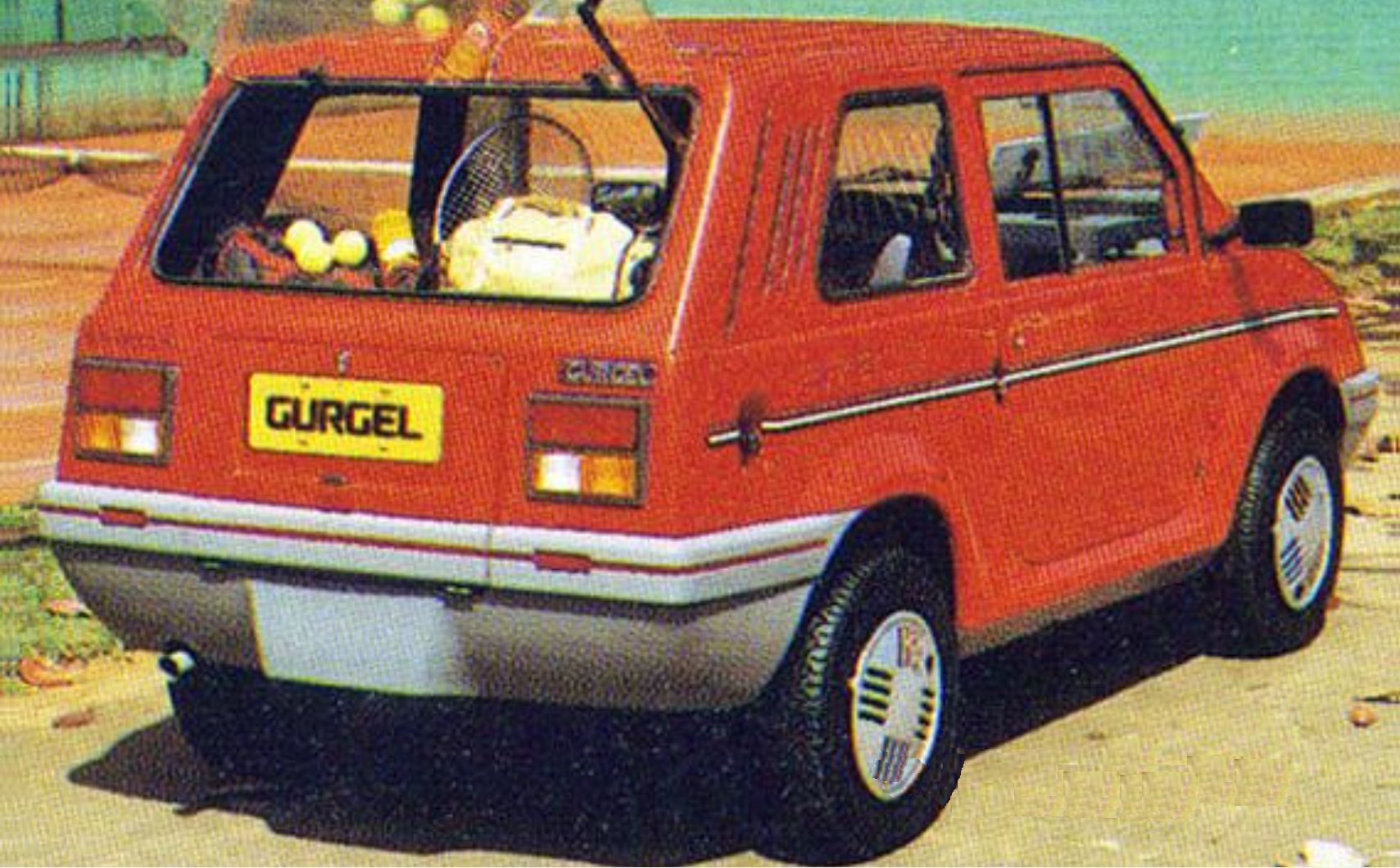
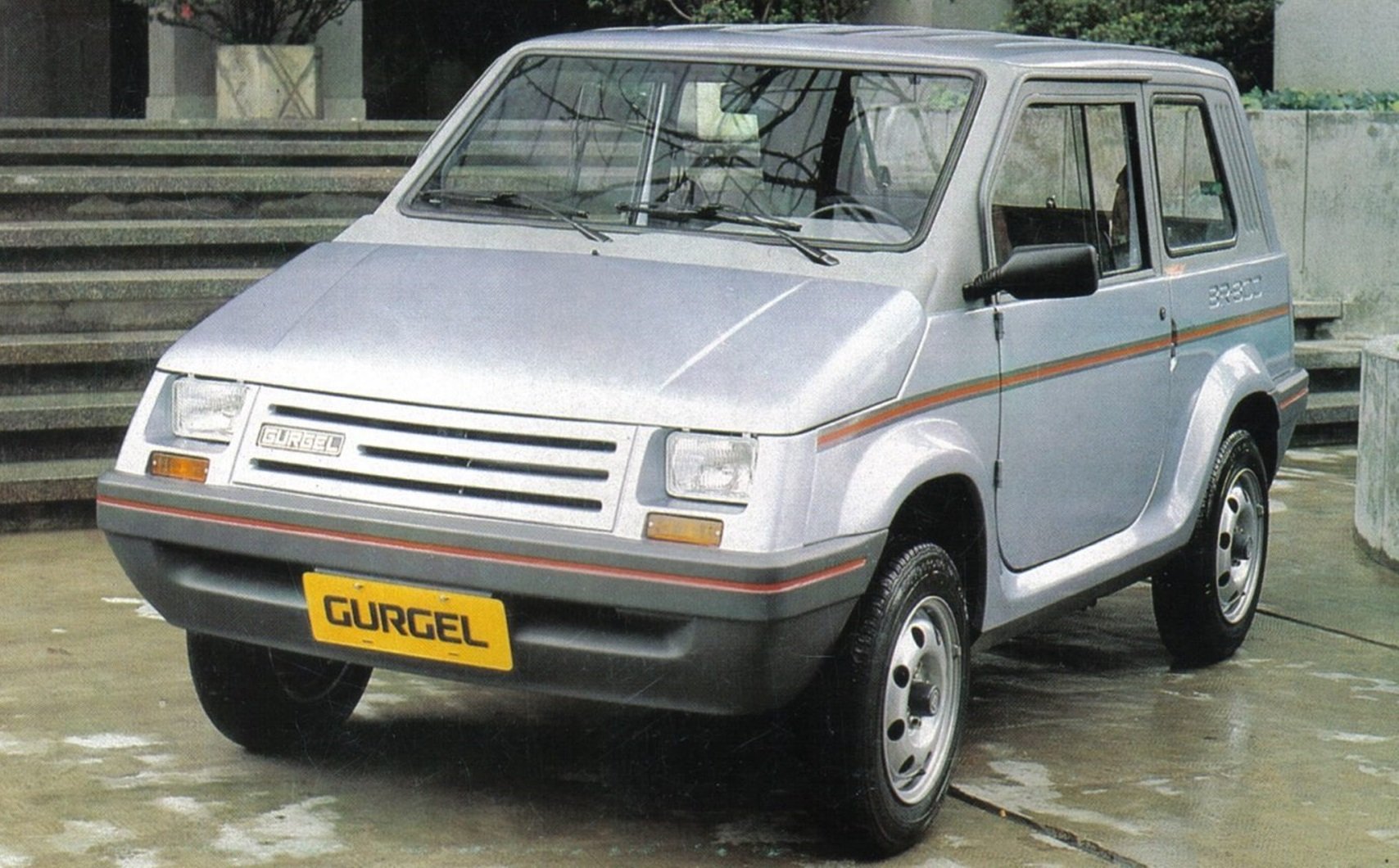
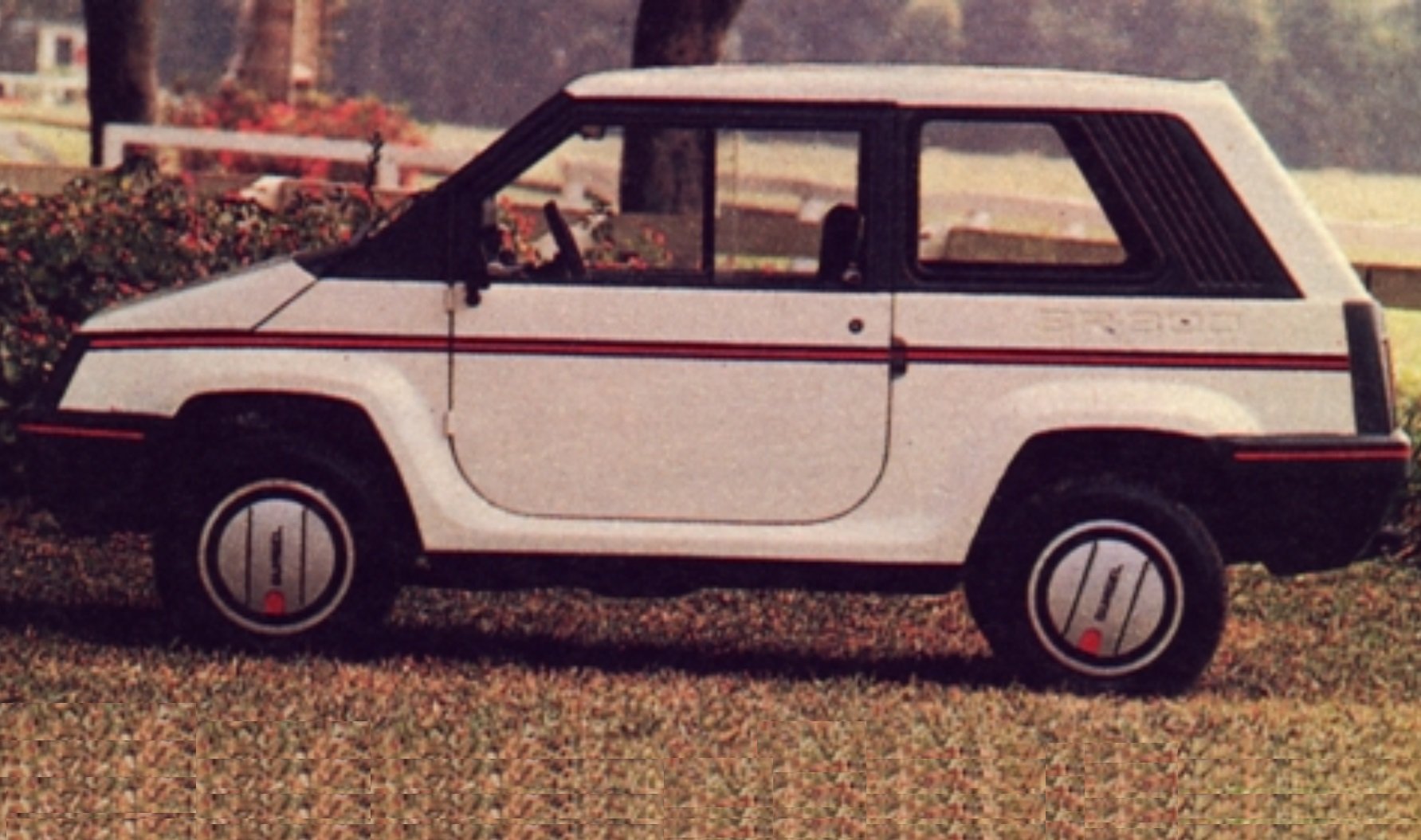
It was 1987, and Gurgel was going through a good moment with the success of the X-12, its famous jeep built with a fiberglass body and which used much of the mechanics of air-cooled Volkswagens. Front suspension, brakes, steering, platform, engine and gearbox were inherited from the German brand’s models. Only the rear torsion bars gave way to coil springs. The result was a vehicle that was robust, simple to maintain, and capable of tackling difficult paths with ease.
It was in this scenario that Gurgel decided to take a bolder step. The idea was to create a small urban car capable of meeting the needs of those who circulated mainly in large centers. The project envisaged a car that was compact, easy to park, economical, agile in traffic, cheap to buy and suitable for small families or for daily professional use.
To speed up development, the manufacturer chose to use mechanical components already on the market. In this way, it would reduce costs and avoid long periods of testing and validation.
Tiny, BR-800 could have been a practical solution for urban use, but performance was too bad even for the city
Thus was born the BR-800. The model used suspension elements from one manufacturer, steering components from another, in addition to brakes, gearbox, differential and several other sets already available in the national industry.
Half Fuscão
On the engine, however, Gurgel’s engineering had to work harder. Starting from the well-known air-cooled Volkswagen 1600 engine, the engineers developed a new block for only two cylinders. Maintaining the same bore and stroke ratios as the original engine, they created a propeller with approximately half the volumetric capacity. The old 1600 was thus transformed into an 800 cm³ engine.
The main difference from the Volkswagen set was the cooling system. While the German engine used air cooling, Gurgel encapsulated cylinders and cylinder heads to receive liquid cooling. The flywheel and clutch were practically the same as those used by Volkswagen.
Mounted longitudinally at the front, the engine was coupled to a Chevette gearbox and also used the cardan, crossarms and part of the rear axle of the Chevrolet model. The strategy simplified the project and reduced development costs.
Fiberglass body was a solution that lowered production costs
According to the discourse at the time, all these components had already been tested and approved by other manufacturers, eliminating the need for new investments in validation. With this, Gurgel was able to significantly accelerate the development and preparation schedule of the production line.
Still in 1987, the company was already working on the implementation of the factory, on operating costs and on defining the volume necessary to meet the demand, which it believed existed, for a popular and economical car. Everything seemed to be going very well.
To raise funds for the project, Gurgel started to sell shares in the market. As an incentive, it announced that shareholders would have priority in the purchase of the first units of the new car, whose production was scheduled to begin in 1988.
The initiative generated enormous enthusiasm. Many consumers wanted to be the first owners of the new low-consumption national car.
Gurgel vs Senna
Before reaching the market, the model had another name: CENA, an acronym for National Economic Car. Coincidence or not, the sound immediately reminded the surname of Ayrton Senna, then one of the biggest Brazilian celebrities.
The pilot appealed to the courts claiming that Gurgel could be trying to associate his image with the new product. The request was accepted, forcing the manufacturer to abandon the original name. The name BR-800 then emerged, a reference to Brazil and the displacement of the engine.
Built on a tubular steel chassis covered by a fiberglass body, the BR-800 was marked by extreme simplicity. Even by the standards of popular cars of the time, the finish was quite spartan and fell far short of consumer expectations.
Measurements below 3.20 m was a point in favor to run the city
When the car arrived at dealerships, many criticisms arose. The promise of an economical, practical, comfortable and affordable vehicle did not materialize in the expected way.
Costing between US$ 5 thousand and US$ 7 thousand at the time, the BR-800 was 20% to 30% cheaper than models such as Gol, Uno and Chevette. On the other hand, it offered little interior space, a very simple finish and only slightly better consumption than its competitors.
The performance was also disappointing. The top speed was around 110 km/h, making road trips unpleasant. In practice, the cruising speed was close to 80 km/h, considered low by Brazilian road standards.
0 to 100 km/h of the BR-800 in his time
Acceleration was another critical point. The BR-800 took between 40 and 45 seconds to reach 100 km/h, a number far from what was expected even for a popular car.
Because of these factors, simplified finish, reduced interior space, fragile construction and modest performance, the model quickly lost its initial charm. Much of the expectations created during its development ended up frustrating buyers.
Produced between 1988 and 1991, the BR-800 totaled approximately 7,100 units manufactured, a result far below Gurgel’s projections. In 1992, it was replaced by the Supermini, a direct evolution of the original design that remained in production until the manufacturer’s bankruptcy in 1995.
The proposal of an urban, economical and affordable car made sense for large Brazilian centers. However, the project accumulated limitations and misguided choices that prevented its commercial success. Even so, the BR-800 remains one of the most interesting and genuinely Brazilian chapters in the history of our automobile industry.
Comments are the sole responsibility of their authors and do not represent the opinion of this site. Comments containing profanity or offensive language will not be published. If you identify anything that violates the terms of use, please report it.