The increase in the content of ethanol added to gasoline to 32% was accompanied by calamous publications on social networks. A common statement is that this new mixture will corrode engines, especially those that are not flex.
Despite being a mixture with a high level of ethanol, it is not as harmful to the car as they are boasting on social networks. This is taking into account gasoline that has not been adulterated – so we always recommend filling up at trusted stations.
The ethanol in E32 gasoline is not the one at the pump
Hydrous ethanol has water, anhydrous that is added to gasoline does not have it (Photo: Chevrolet | Disclosure)
Before talking about engines, let’s explain how fuels are made. The E100 ethanol that we buy directly at the pumps is hydrous, which can have 4% to 5% water.
It is not added to the fuel: it is the result of its production process. If the water level is much higher than that, the station may be adulterating the fuel.
The ethanol that is part of gasoline is anhydrous, which does not have water. It is even more expensive than hydrous, as it needs to undergo treatment to achieve this result.
This anhydrous ethanol is added to gasoline to act as an antiknock agent, which has the effect of increasing its octane rating. This addition is made all over the world, but in percentages of up to 10%. In Brazil, the content is higher with the justification of our sugarcane production and to reduce dependence on foreign oil.
How the gasoline engine handles these changes in the mixture
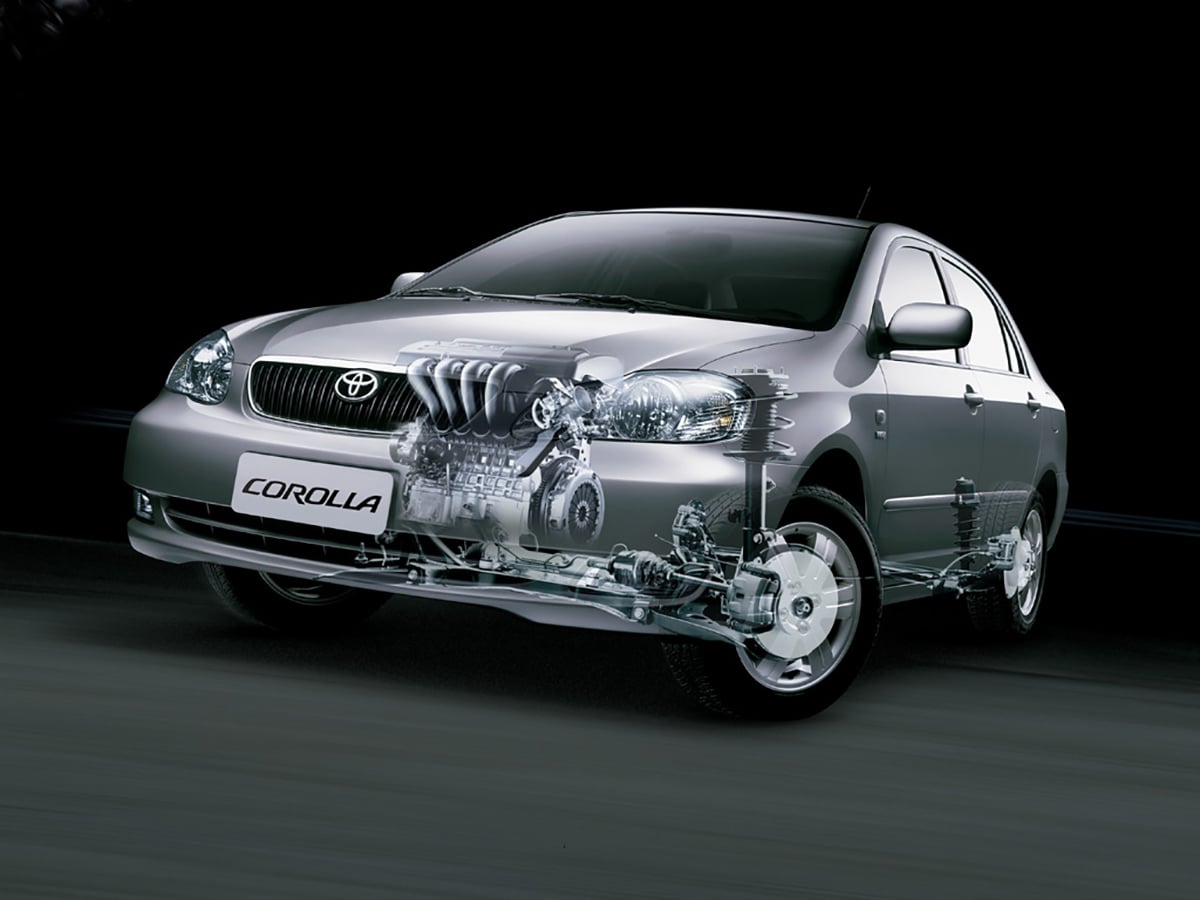
With the adoption of the lambda probe, cars are now able to correct a large margin of ethanol mixed with gasoline, much higher than the 32% of the current fuel (Photo: Toyota | Disclosure)
To understand how these changes in the concentration of anhydrous ethanol in gasoline really affect non-flex engines, we talked to engineer Erwin Franieck. He is an RD&I advisor and mentor at SAE Brasil and has been working with electronic injection since the beginning of this technology in Brazil.
Cars sold in Brazil from 1997 onwards already have the lambda probe, which reads fuel burn. This data is used by electronic injection to adjust the map according to the fuel used and other factors.
This same probe is responsible for “identifying” which fuel or mixture between them is used in flex engines. In gasoline-only models, it identifies the ethanol content for the ECU to hit the spot.
The stoichiometric ratio is the ideal ratio of air mass to fuel mass required for a complete burn. For pure gasoline, it is approximately 14.6:1, and for ethanol, it is 9.0:1.
According to Erwin Franieck, the injection systems used from 1997 onwards have a base of 20% of stoichiometric variation of mixture at partial load. At idle speed it allows more, 30%. This safety margin for the addition of ethanol is global. It also applies to imported models.
Erwin exemplified the stoichiometric variation between the old E22 gasoline and the new E32, which is below 5%. That is, engines over 20 years old have the ability to adapt to the current fuel; only a change in consumption will be felt.
The engineer mentioned that he has already tested gasoline with up to 40% ethanol in his single-fuel car and the operation was normal. The point that requires care from drivers is the quality of the fuel.
Adulteration is the real problem
With the popularization of flex-fuel cars, the owners of stations in bad faith changed the way they adulterate gasoline. Instead of adding solvents, they started to put more ethanol in the mixture.
The problem for gasoline-only cars is the use of hydrous ethanol for this scam. This water can attack and corrode internal parts of the engine. Engines with direct injection are even more sensitive.
In flex or alcohol engines, there is a treatment to avoid this. Their management allows them to run on up to 23% water; above that, failures can occur.
Pre-1997 engines and motorcycles require more attention
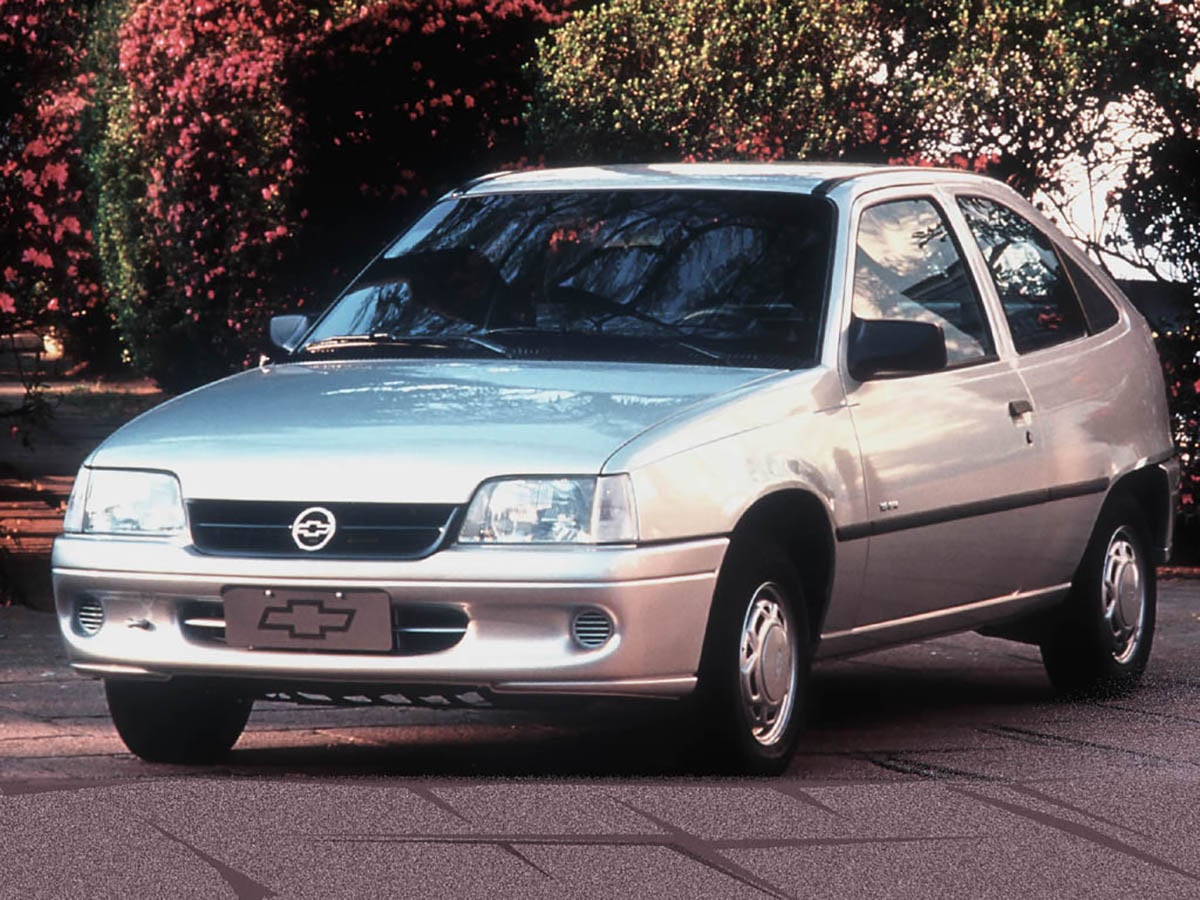
Engines prior to 1997 are more sensitive because old injections do not have a great capacity for adaptation (Photo: Chevrolet | Disclosure)
Everything we say about lambda probe and the adaptability of injections applies to cars made from 1997 onwards, including imported ones. Injection systems without a lambda probe do not have this type of flexibility.
Carburetor engines, including motorcycle engines, may also not do well with E32 gasoline. Ethanol can attack aluminum components of the carburetor, in addition to requiring a different set-up than the original.
Manufacturers are ready for increases in ethanol
content Although this recent increase in ethanol content in gasoline was approved without testing, manufacturers guarantee that their single-fuel cars will work properly. Chevrolet confirmed that the Equinox and Silverado, its non-flex cars, are able to run with the E32.
The U.S. brand said its regional engineering center is able to develop the vehicles according to local conditions. This tropicalization helps reduce the risks of problems related to gasoline with high ethanol content.
GWM also claims that all of its petrol cars sold in the country can use E32 petrol without any problems. It says that its cars were validated before being launched in the country and are also ready for larger blends such as E35.
According to the Chinese brand, its cars receive calibration of the engine and fuel system to be sold in Brazil. All the particularities of Brazilian gasoline with its high level of ethanol were considered.
GWM now adopts a flex engine in the Haval H6 and Tank 300 lines, with future launches already arriving with this technology.
Will E32 gasoline corrode your engine?
The ethanol that is mixed in gasoline does not have water, the problem is adulteration (Photo: Shutterstock)
Hydrous ethanol can indeed corrode engines that were not made to receive it, which is not the case with flex-fuel vehicles or vehicles powered exclusively by alcohol. One of the main changes in these engines is the use of anti-corrosion treatments in the parts that come into contact with the fuel.
Gasoline, on the other hand, even the new E32, does not present this risk. The use of anhydrous ethanol in the mixture is done exactly to avoid this problem.
Anhydrous ethanol itself is hygroscopic and can absorb up to 6% of water. However, when it is mixed with gasoline there is no risk, which removes the risk of corrosion of the internal parts.
What can happen is that the gasoline evaporates inside the tank, but it is picked up by the recirculation system and returns to the reservoir or is burned by the engine. All of this is foreseen within the vehicle project.
In addition, the engines sold in Brazil are already prepared to deal with ethanol. Rogério Gonçalves, director of Fuels at the Brazilian Association of Automotive Engineering (AEA), explains:
Brazilian engines are developed for gasoline with ethanol, whether they are flex or not. Ethanol has been used in Brazilian gasoline since the 70s, with the creation of Proálcool.”
The risks of engine damage exist with adulterated fuels. E32 gasoline, when compared to the old E30 or the premium E25 (which is still offered), will only increase the vehicle’s consumption.
This is true even for imported cars officially sold in Brazil. The models we have in our market undergo tropicalization to be able to run on our gasoline and meet other demands, as Rogério Gonçalves points out:
In theory, no need for maintenance is foreseen in the vehicles due to the increase in the ethanol content in gasoline. Imported vehicles that have not been ‘tropicalized’ by the automakers for Brazilian gasoline deserve special attention and, if necessary, can use premium gasoline, which remains with 25% ethanol.”
If you have the habit of filling up at reliable stations with no history of fuel adulteration, new gasoline will not be a problem.
Comments are the sole responsibility of their authors and do not represent the opinion of this site. Comments containing profanity or offensive language will not be published. If you identify anything that violates the terms of use, please report it.