


Driving while drowsy can be just as dangerous as drunk driving
According to Abramet, falling asleep at the wheel is the 3rd largest cause of accidents; Understand what happens in the mind of a sleep-deprived driver
By
Julia Vargas
Published on 2026-08-06 at 05:00 PM
Published on 2026-08-06 at 05:00 PM
Be the first to comment.
Summarize with:
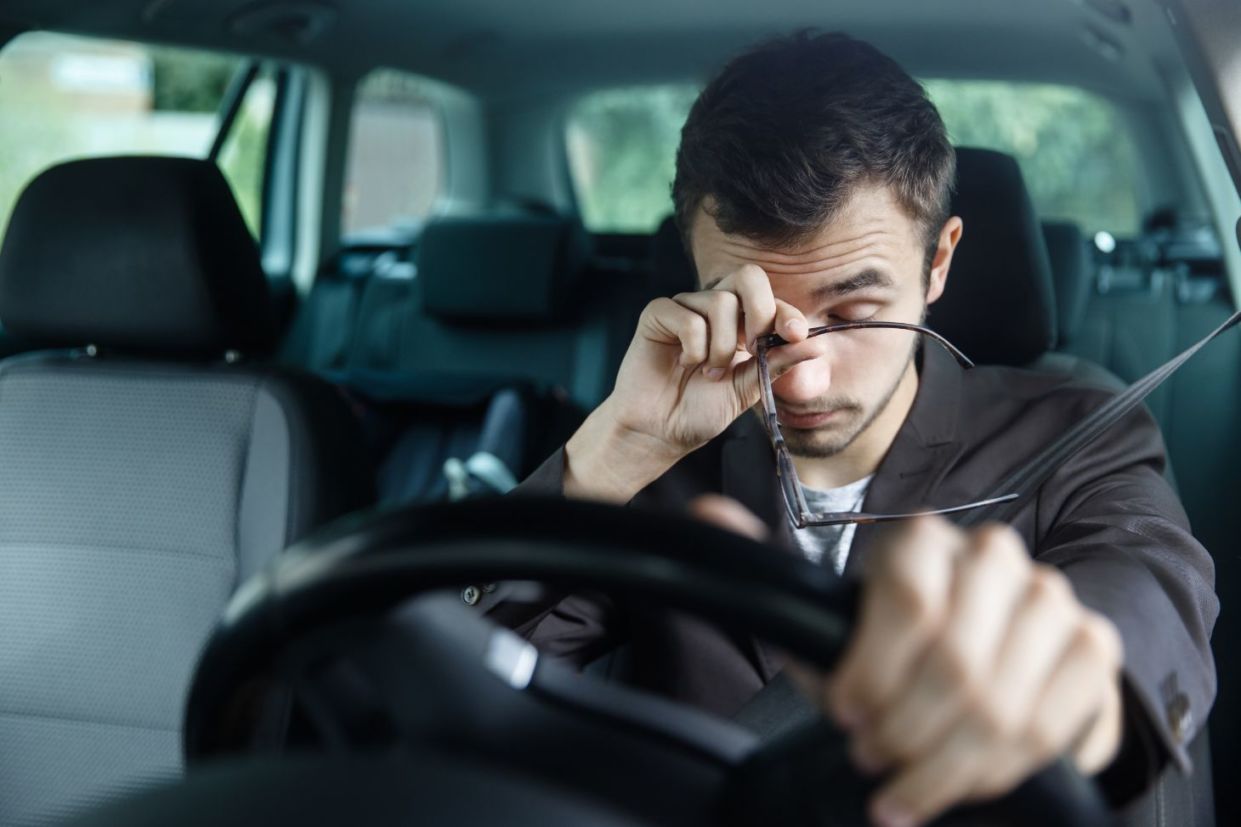
Despite being something common and natural for many people, the act of driving requires a lot of attention and mastery of cognitive abilities from the driver. However, after long working hours or journeys on the road, these abilities are impaired by fatigue and, especially, by sleep, whose symptoms can be compared to drunkenness.
According to a 2019 report by the Brazilian Association of Traffic Medicine (Abramet), falling asleep at the wheel is the 3rd leading cause of traffic accidents in the country. Another more recent study carried out by Denox, in partnership with MedNet, showed that the situation is critical and goes beyond sleep, since 60% of road accidents in Brazil have driver fatigue as their main cause.
SEE ALSO:
- Falling asleep at the wheel, how to avoid it?
- Fatigue at the wheel is the cause of 60% of accidents on highways
- Traffic deaths caused by alcohol have been on the rise since the pandemic
Sleep restriction and tiredness are huge risks on the roads
Adalgisa Lopes, a road safety specialist and president of the Association of Traffic Clinics of the State of Minas Gerais (Actrans-MG) says that 90% of traffic accidents are caused by human factors, and fatigue is among the main triggers. The specialist also highlights some effects of sleep:
The driver loses track of his own limit, believing that he can last another hour when his cognitive functions are already severely degraded. Risk perception is distorted, frustration tolerance decreases, and irritability and impulsivity arise. This considerably increases the risk of accidents.”
Giovana Varonni, a specialist in Traffic Psychology at Actrans, details what happens in the mind of a sleep-deprived driver. According to her:
- Staying awake for 19 hours in a row generates a degradation of psychomotor performance equivalent to a blood alcohol level of 0.05%.
- Twenty-four hours without sleep is equivalent to 0.10%, a level that constitutes a traffic crime in Brazil.
- The exhausted brain activates involuntary defense mechanisms, such as microsleep, which lasts from one to five seconds. In this interval, the driver may have his eyes open, but is clinically asleep. At 80 kilometers per hour, four seconds of microsleep means almost 90 meters traveled without any control of the vehicle.
Varonni also describes the phenomenon of road hypnosis: prolonged driving on monotonous roads induces a state of dissociation in which the driver performs the movements automatically, but the mind is disconnected from the environment. The result is so-called inattentional blindness, in which the driver looks at the road, but the brain does not process what is in front of it.
Danger is even greater for truck drivers and bus drivers
Fatigue and sleep are risk factors for all drivers, but especially for professional drivers, who are protected by the Rest Law. However, legislation is often left aside and this group has to deal with long working hours, pressure for deadlines and the need to travel long distances in the shortest possible time.
Per day, almost 280 drivers were fined for violating the Rest Law on the country’s federal highways. According to Actrans, part of the problem is the lack of infrastructure for truck drivers to rest.
The association points out that there are only 139 certified Stop and Rest Points throughout the national territory, distributed in 22 states and along 37 highways. This is a very small number compared to the Brazilian federal highway network, which has 75.8 thousand kilometers, according to PRF data.
There are vast stretches where the driver cannot find a safe place to park and sleep. The options are reduced to stopping on the side of a dark and deserted highway, at the risk of theft, or moving on. And many drivers prefer to continue the trip so as not to miss the cargo or the delivery deadline and end up risking their own lives and those of others.
How to avoid falling asleep at the wheel
If you notice the initial symptoms, such as heavy eyes, or those longer blinks, the most correct decision is only one: don’t fight with sleep. Fighting this battle is useless, since in this situation there is a reduction in reasoning capacity, lack of attention, loss of reflexes, memory failures, among other problems.
But still, there are some useful tips and precautions that work as palliatives to prevent the first signs from arriving and you end up dozing off while driving:
- Always have snacks with you: it is always worth leaving some cookies and other snacks in the vehicle that leave you chewing longer and to ingest gradually. Chewing gum or gummy candy also fulfill this function;
- Caffeinated drinks: coffee, energy drinks, and cola drinks can be good allies to avoid drowsiness, as long as they are taken in moderation;
- Seat position: adjusting the seat so that the driver is more upright, even with a slight discomfort, can also be a good strategy, as long as it does not impair the act of driving;
- Music volume: listening to music at a higher volume, which does not hinder your attention in traffic is a good option. Whether on the radio or on your playlist, give preference to upbeat songs known to you;
- Wind helps you stay awake: opening the window and allowing the wind to blow in the face, helps the driver to stay awake;
- Schedule stops: in cases of trips or long distances, take breaks on the way between hours driving. Always get out of the car, breathe fresh air, walk and stretch. Washing your face, wrists and hands with cold water is also interesting.
Although these tips are useful, it is necessary to make it clear that they are only palliative. If you feel that sleep is coming, the best thing to do is to stop in the first safe place, always so as not to fall asleep at the wheel. Even if this break is for a 20 or 30-minute nap.
SEE MORE ABOUT

0 Comments
Comments are the sole responsibility of their authors and do not represent the opinion of this site. Comments containing profanity or offensive language will not be published. If you identify anything that violates the terms of use, please report it.