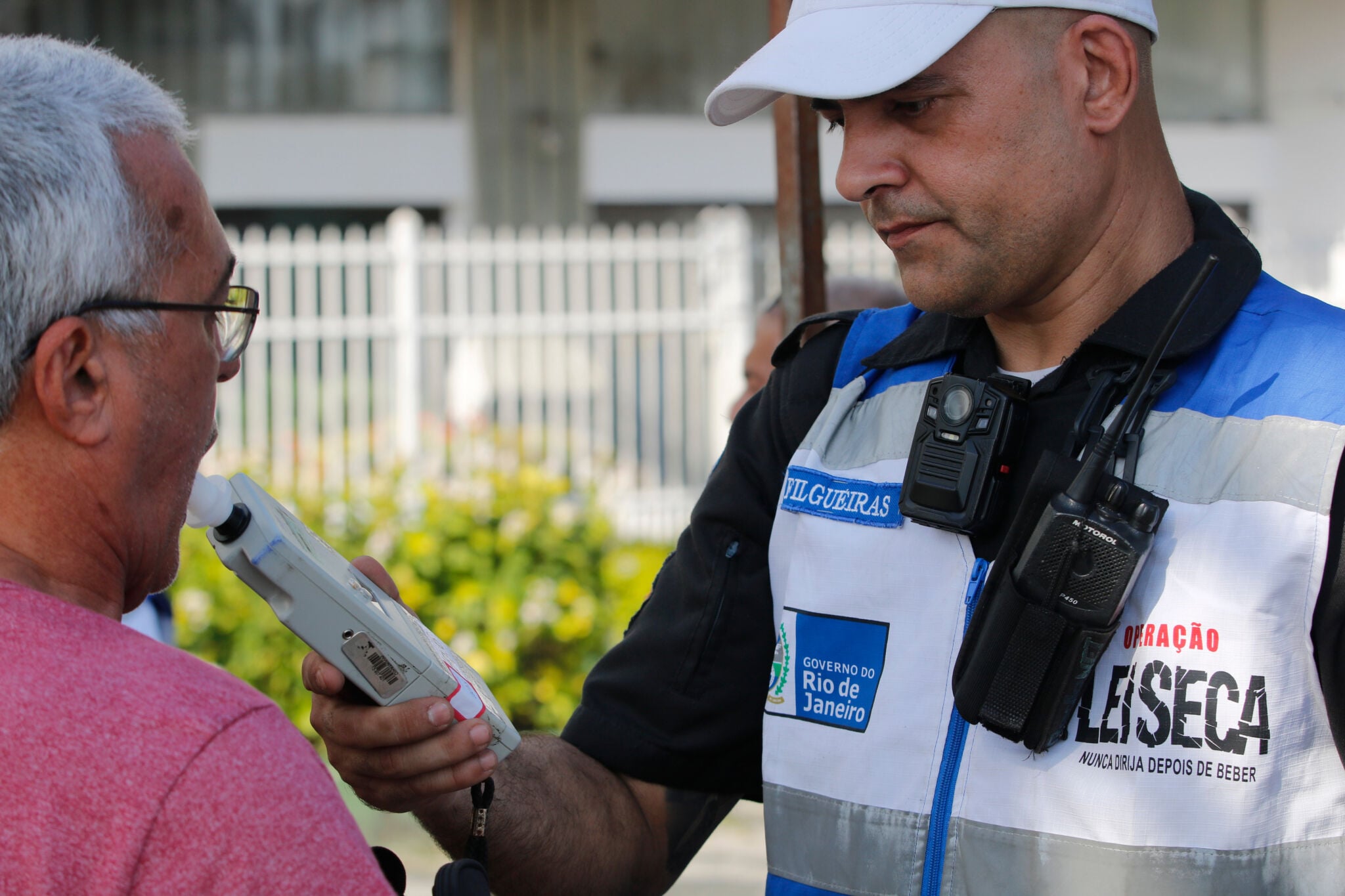
The rate of traffic deaths related to alcohol consumption fell by 19.5% in Brazil between 2010 and 2024. The analysis, released this Friday (19), National Dry Law Day, was carried out by the Health and Alcohol Information Center (Cisa), a national reference on the subject.
To give you an idea, in 2010, the number was 15 thousand deaths. In 2024, there were 13,075. However, the study considers that the number rose again from 2020 (when 11,600 people lost their lives), after the Pandemic.
According to the coordinator of Cisa, Mariana Thibes, the Dry Law has not stopped working and is a legislation that serves as a reference for the world by reducing traffic accidents and saving lives in Brazil.
“This reduction was in the order of more than 30%, since the law came into existence (in 2008) until recent years,” said Mariana in an interview with Agência Brasil. She agrees, however, that there is a loss of momentum in view of “new challenges”. The Dry Law began to be less efficient, as the numbers reveal.
“We had been observing a constant downward curve until 2019, and from then on the death rate began to grow after the pandemic,” he added.
Mariana explains that this occurred because, although inspection has increased in recent years, the ways to circumvent have also become increasingly sophisticated. “People can communicate, use apps and know where inspections are happening.”
Impunity
In addition, she regrets that a sense prevails in the population that it is possible to go unpunished by the Dry Law. To contain this, he defends the intensification of inspection actions, access to emergency care and prevention actions that especially reach the male public (the one who dies the most in traffic).
According to Cisa, as of 2019, alcohol use is responsible for 36.6% of traffic incidents among men and 26.3% among women. “The highest risk profile affected by deaths are young men.”
One problem is that the inspection coexists with limitations, such as the number of operations with the use of breathalyzers and the increase in the fleet and accidents with motorcycles.
As of 2019, alcohol use is responsible for 36.6% of traffic incidents
Awareness
The Cisa coordinator recommends that, in order to sensitize society not to drink and drive, campaigns need to become more strategic. “It is necessary to go beyond the ‘shock’ announcements”.
“International evidence shows that fear-only messages have a short-term effect, but fail to change behavior in a sustained way,” she said.
What would work, in his opinion, would be to combine education, clarification and people’s perception of real risk.
“The person needs to believe that he will be inspected and that he will be punished.”
The data show that most of the infractions happen on weekends and during the night.
Therefore, one way would be to promote the culture of viable alternatives, such as night and accessible transportation, and ride-hailing apps. “When we only raise awareness, but also do not bring an alternative, we are left with a clear limit.”
Tocantins leads
According to the data, 18 states had a death rate per 100 thousand inhabitants higher than the national average (6.2), such as Tocantins (13.4), Piauí (12.1) and Mato Grosso (11.1). Regarding hospitalizations, 16 states have a higher rate. The largest are in Espírito Santo, Pará and Acre.
“In the case of states with the highest death rate, we can think about structural issues, more dangerous highways, for example, lower density of inspection and access to emergency services on the roads,” said Mariana Thibes.
She pointed out that the habit of drinking and driving can be different depending on the states. “These are specific realities that need to be investigated further so that the government can also provide adapted responses.”
Comments are the sole responsibility of their authors and do not represent the opinion of this site. Comments containing profanity or offensive language will not be published. If you identify anything that violates the terms of use, please report it.