


Brazil spends billions to resurface roads every year, but the hole is lower — literally
The country spends billions a year to plug the same gaps; Engineers say the error is at the base of the track, not the patched surface
By
Júlia Haddad
Published on 2026-06-19 at 03:00 PM
Published on 2026-06-19 at 03:00 PM
Be the first to comment.
Summarize with:
Holes, cracks and sinks are usually treated as the problem to be solved. For road engineering, however, they are only the symptom – and confusing one with the other is costly. The country spends billions every year to cover the same failures: the DNIT alone invested about R$ 8 billion in 2025 in the maintenance of federal highways and, even so, 62% of the network evaluated by the CNT Highway Survey was still in regular, bad or very bad condition at the end of the year.
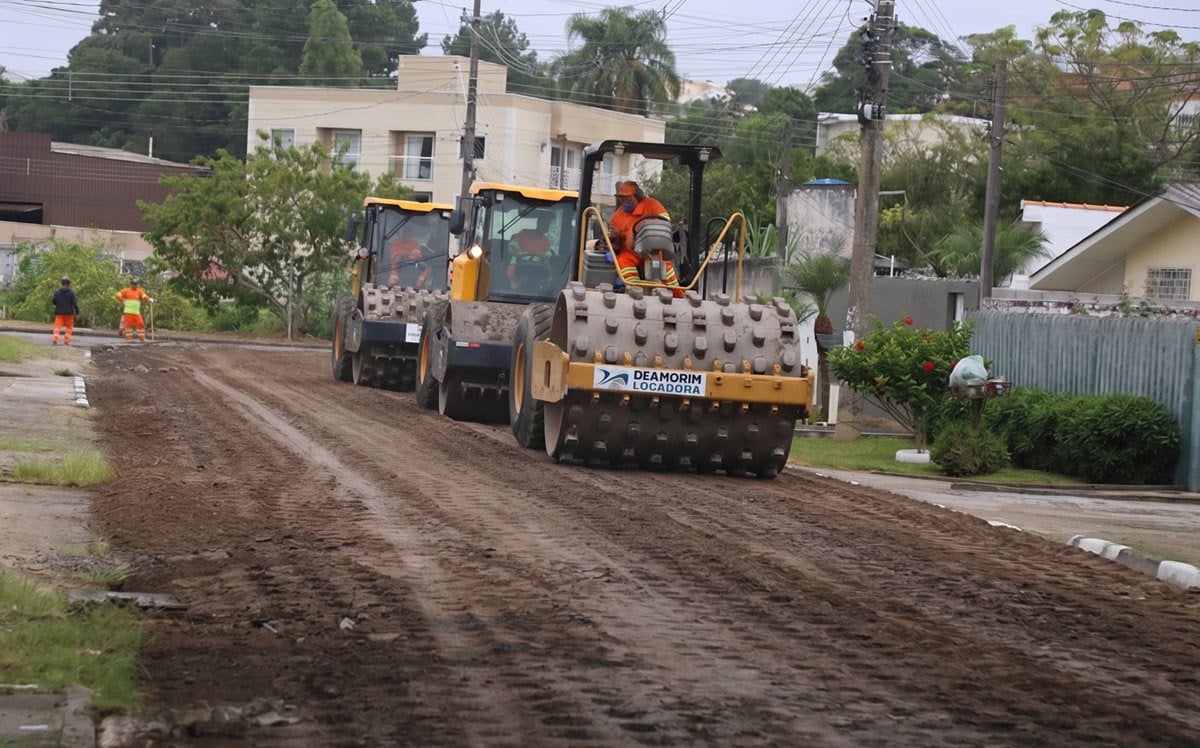
The recurring target of this waste is resurfacing. When the sinking of the road is born from a collapse in the base or sub-base, covering the surface with a new asphalt layer solves only in appearance. “If the surface deformation is caused by a collapse in the base or sub-base, performing just one resurfacing is throwing money away,” says Bernardo Oliveira, business unit manager at Construtora De Amorim. Without correcting the origin, he says, the lane will not support the weight of traffic and will need to be entirely torn out in the future.
The count of ignoring the root is high. According to the CNT, the poor quality of the pavement raises the operating cost of transport in the country by an average of 31.2% – a proportion that reaches 35.8% on highways under public management. Only in diesel burned too much because of bad roads, the estimated waste is R$ 7.2 billion per year, equivalent to 1.2 billion liters. To recover the entire network, the entity calculates the need for R$ 101 billion.
The problem is that the money invested is far below what is necessary. An audit by the TCU pointed out that the DNIT would need R$ 17 billion in 2025 alone – R$ 12.6 billion just for pavement maintenance – but it had about half of that. The lag pushes the mesh to the most expensive stage of all: reconstruction.
SEE ALSO:
- Your ride can become Uber Black for free because of the movies; see how
- Jeremy Clarkson, ex-Top Gear, reveals he has “aggressive” prostate cancer
- How much does it cost to see Brazil at the World Cup at the last minute? We calculate different travel itineraries
Reversing the cycle, the experts say, relies less on cutting-edge technology and more on simple method changes. The first is to diagnose before paving: investigate the lower layers, with tests and equipment such as ground penetrating radar, instead of acting only on what appears.
The second is to take care of drainage, as the water that infiltrates saturates the base and subgrade and accelerates cracks and sinkings; Keeping it away from the structure is one of the cheapest and most effective interventions. The third is to switch from emergency repair to preventive maintenance. Seal cracks and apply surface treatments in time postpones
SEE MORE ABOUT

0 Comments
Comments are the sole responsibility of their authors and do not represent the opinion of this site. Comments containing profanity or offensive language will not be published. If you identify anything that violates the terms of use, please report it.