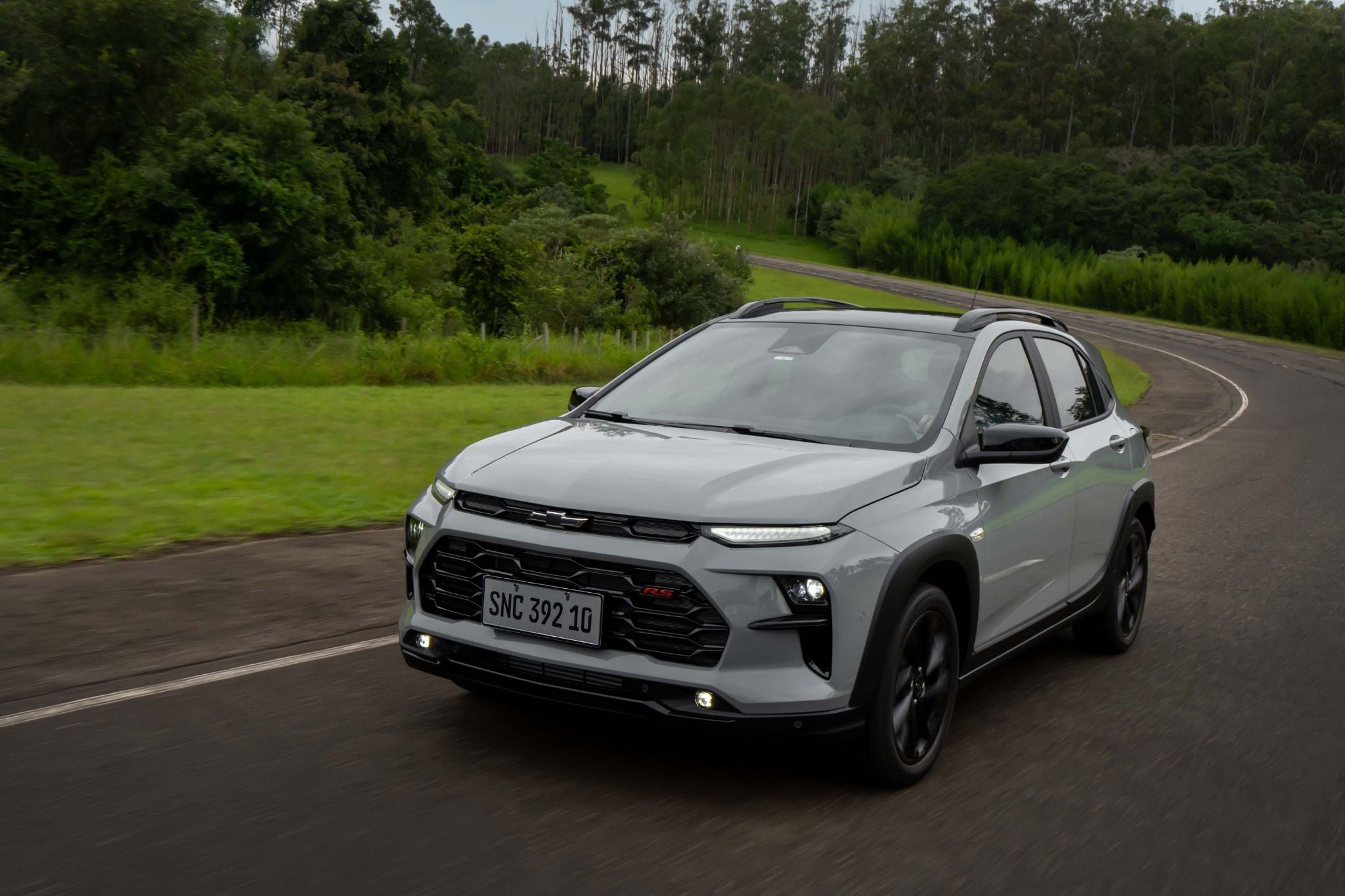
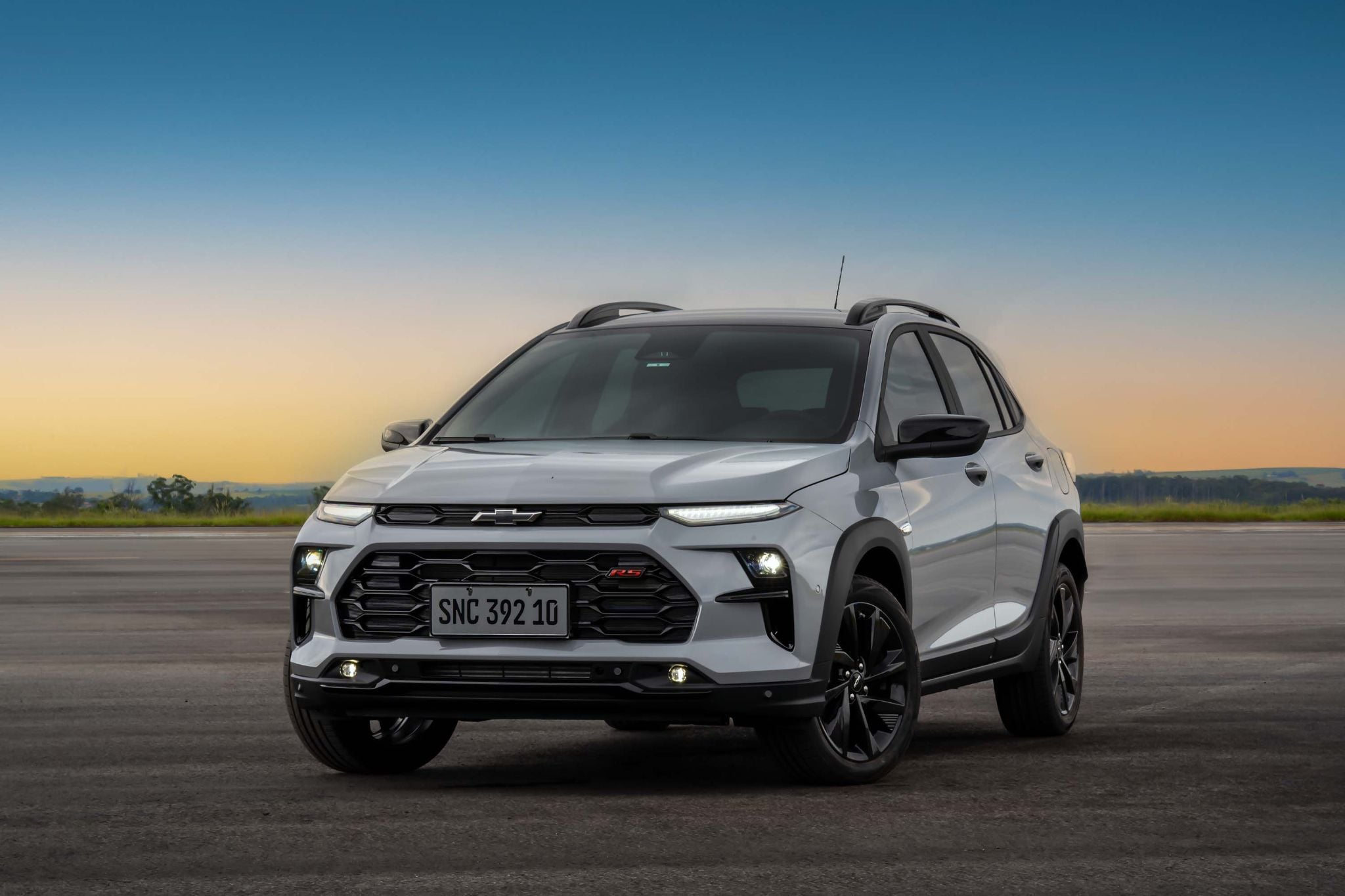
The Chevrolet Sonic RS 2027 finally appeared in motion in the first dynamic test held in Brazil. The brand’s new compact SUV enters one of the most disputed segments in the domestic market, targeting already consolidated rivals. General Motors classifies it as a direct competitor of Volkswagen Nivus and Fiat Fastback, due to its 4.23 m in length, using a segmentation scale (which it itself elaborated in its presentation) that lists separate measurements every 20 cm.
If it were valid for this methodology, the Fastback (4.44 m) would be at a higher level and the “forgotten” Citroën Basalt (4.34 m) should also appear in the dispute. In fact, the French have the best balance when it comes to measurements. Because its wheelbase of 2.64 m is unbeatable.
Thus, Tera, Fiat Pulse and Renault Kardian, would be on a step below, in the little group of up to 4.20 m. But in fact, they are his real rivals. And when we get behind the wheel, perception becomes confirmation.
Sonic line has only two versions with prices of R$ 129.990 and R$ 135.990
But let’s leave GM’s convincing formula in the background and let’s go to Sonic in fact. With prices between R$ 130 thousand and R$ 136 thousand, it is positioned in the average of compacts. But far from the prices of the cheaper options of rivals. The lean line makes it clear that GM will still test the market. If the car succeeds, less expensive options should enter the portfolio.
Chevrolet Sonic RS uses 1.0 turbo engine from Tracker and Montana
Under the hood, the Chevrolet Sonic RS features the well-known 1.0-liter turbocharged three-cylinder engine. The engine delivers 115 hp and 18,9 kgfm of torque. This is the unit that equips Montana and Tracker, which use direct fuel injection. The Onix uses indirect injection, in which the mixture is made before entering the combustion chamber. But the question everyone asks themselves is whether Sonic has an oil-soaked strap. The answer is yes. But it adopts the more modern and resistant version than the previous one.
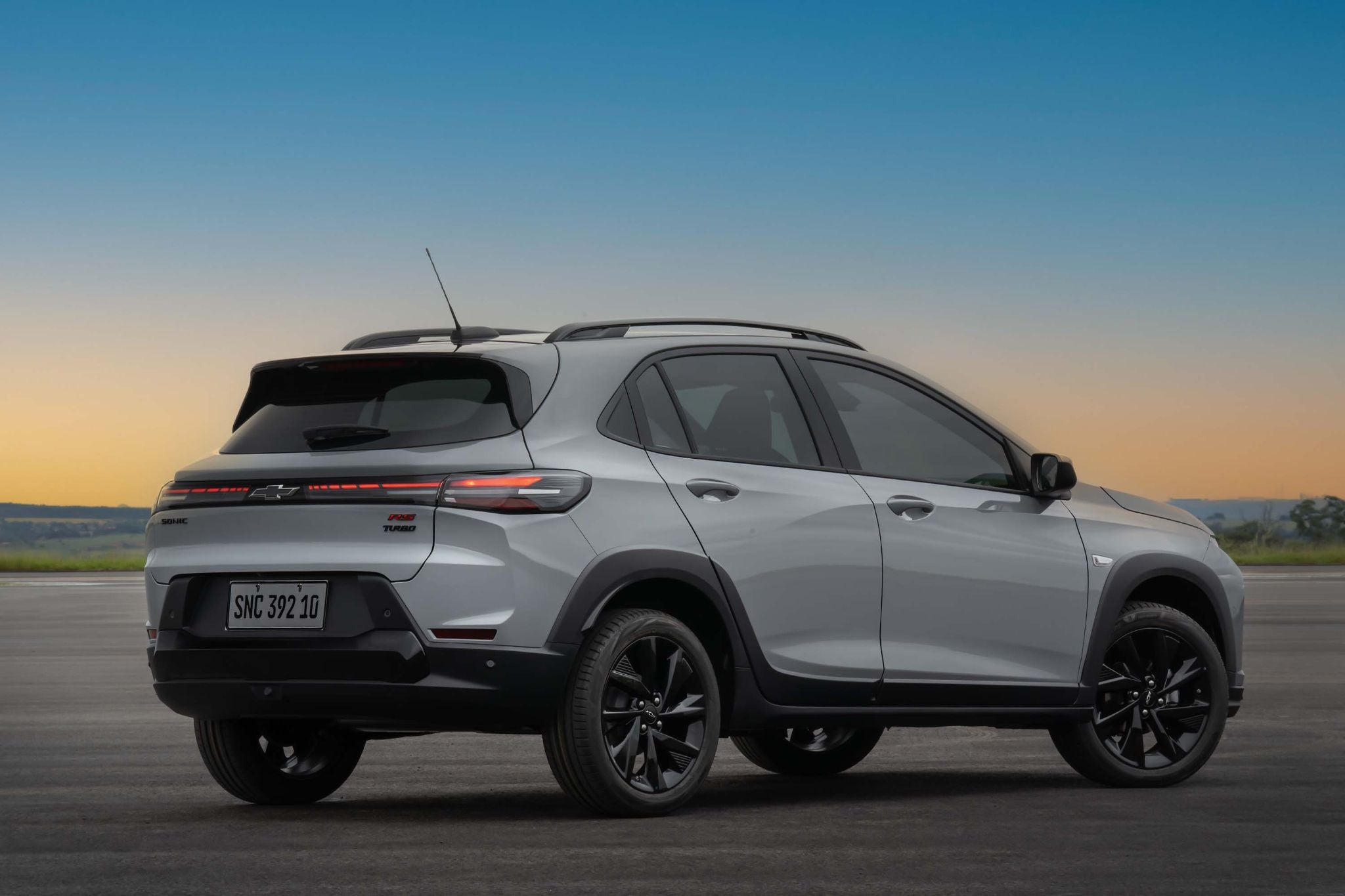
Lengthening of the rear gave more space to the trunk with styling inspired by the Equinox EV
During the first contact, the set showed quick responses and behavior similar to that of the Onix. The engine ensures agility in urban use and sufficient road retakes, maintaining a calibration focused on comfort and efficiency. The automatic transmission with torque converter also follows the already known Chevrolet standard. The shifts are smooth and the relationship with the engine favors daily use, especially in urban traffic.
Despite the sporty appeal of the RS version, don’t expect the same behavior from it as a Pulse Abarth. Quite the opposite. Sonic is balanced, has the strength to overcome an overtake, but nothing that makes a runner.
Chevrolet’s compact SUV bets on space and large trunk
Although it is an anabolized Onyx, the Chevrolet Sonic RS 2027 has grown in length. The increase happened mainly in the front and rear overhangs, making the compact SUV visually more full-bodied. This “stretching” on the edges gave Sonic more luggage compartment volume. There are 392 liters (VDA), against 303 for the Onix.
Compared to the PTK trio (Pulse, Tera and Kardian) the Sonic does well, as it has an advantage over the VW (350 liters) and the Fiat (370 liters), but would lose to the Renault (410 liters). But as GM says it competes with Fastback (516 liters) and Nivus (4.15 liters), the Chevrolet lags far behind. Ah, there’s also the Basalt (490 liters).
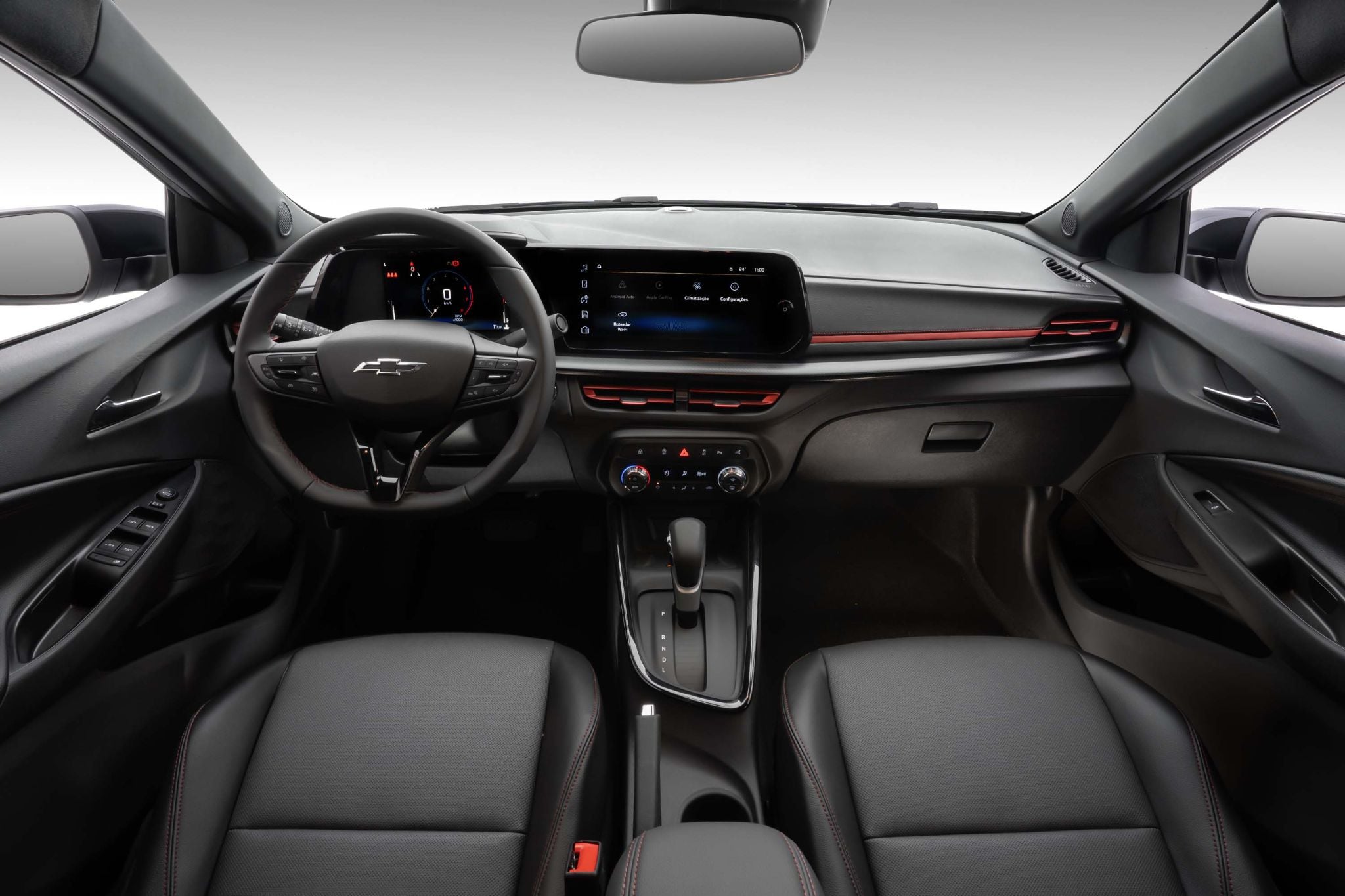
Inside, the panel layout is the same as the Onix, but with a more sophisticated finish
Chevrolet also tries to sell the model as a “coupe SUV”, although the roof trim does not have such striking characteristics of this style. GM’s marketing team also points out that the roof does not fall on the passengers’ heads. Of course, it’s a hatchback. Perhaps, if the car had been made on the basis of the Onix Plus (2.65 m wheelbase) and took advantage of the rear overhang, as Fiat did with the Fastback that rests on the structure of the Cronos, it would really have the measurements to nail that it is a coupe in fact.
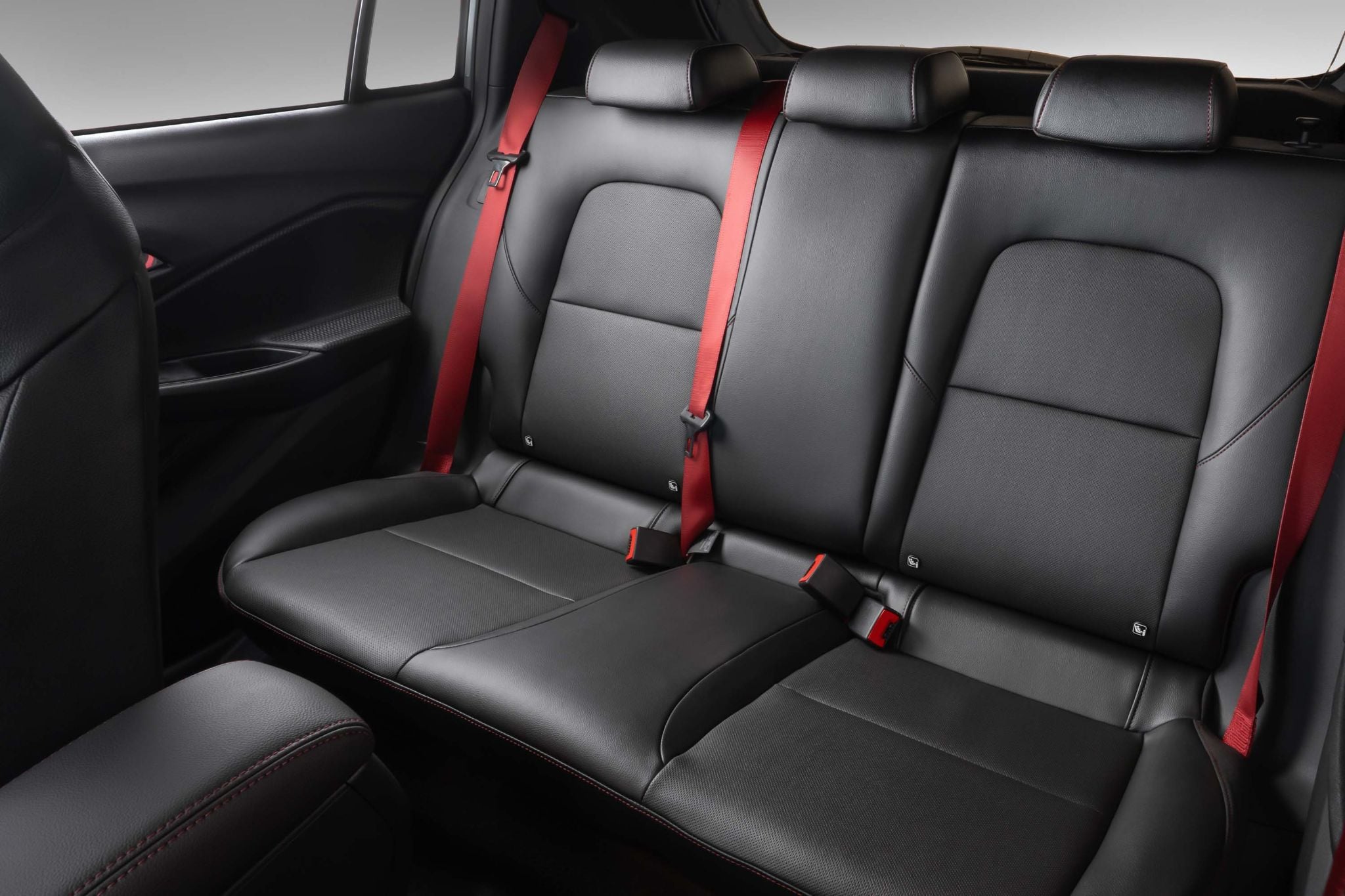
But the interior space serves four occupants with reasonable comfort, although the rear seat is tighter for five passengers, which makes it unfriendly on long trips.
Chevrolet Sonic RS 2027 bets on content
Like the main rivals in the segment, the Chevrolet Sonic RS 2027 bets on a full equipment list. The compact SUV features a digital panel, multimedia center, induction cell phone charger and digital air conditioning.
In safety, the model follows the trend of the segment with driving assistants that were previously exclusive to higher categories. Among the items available are forward collision warning and lane keeping assistant.
This technological set helps justify the higher prices of today’s compact SUVs, especially when compared to the hatchbacks from which they derive.
Chevrolet Sonic RS suspension prioritizes firmness
In dynamic behavior, the Chevrolet Sonic RS 2027 showed firmer suspension adjustment, a feature that pleases part of the Brazilian consumer. The set absorbs irregularities without excess softness and conveys a feeling of stability at higher speeds.
Rear seats accommodate two passengers well, taking a third to the center compromises comfort in “economy class”
The architecture follows the traditional formula of the segment, with McPherson suspension at the front and torsion axle at the rear. There are no sophisticated solutions, but the arrangement remains in line with the standard of Volkswagen Tera, Fiat Pulse and Renault Kardian.
But it is worth mentioning that the greater free height and the entry and exit angles higher than those of the Onix make it more suitable for playing on uneven floors. It is not an off-road, but slowly, it faces ditches and depressions without suffering too much.
Is Chevrolet Sonic RS worth it?
The arrival of the Chevrolet Sonic RS 2027 puts GM in an extremely competitive dispute. The compact SUV segment already brings together well-established models with a strong market presence. It is still too early to determine whether the model will be able to bother the leaders of the category, but the first contact shows a balanced, comfortable car in line with what the Brazilian consumer is currently looking for.
But GM definitely needs to review its positioning strategy. Because the centimeters more than Kardian, Tera and Pulse should be sold with a trump card and not an argument to justify the approach to larger models.
Comments are the sole responsibility of their authors and do not represent the opinion of this site. Comments containing profanity or offensive language will not be published. If you identify anything that violates the terms of use, please report it.