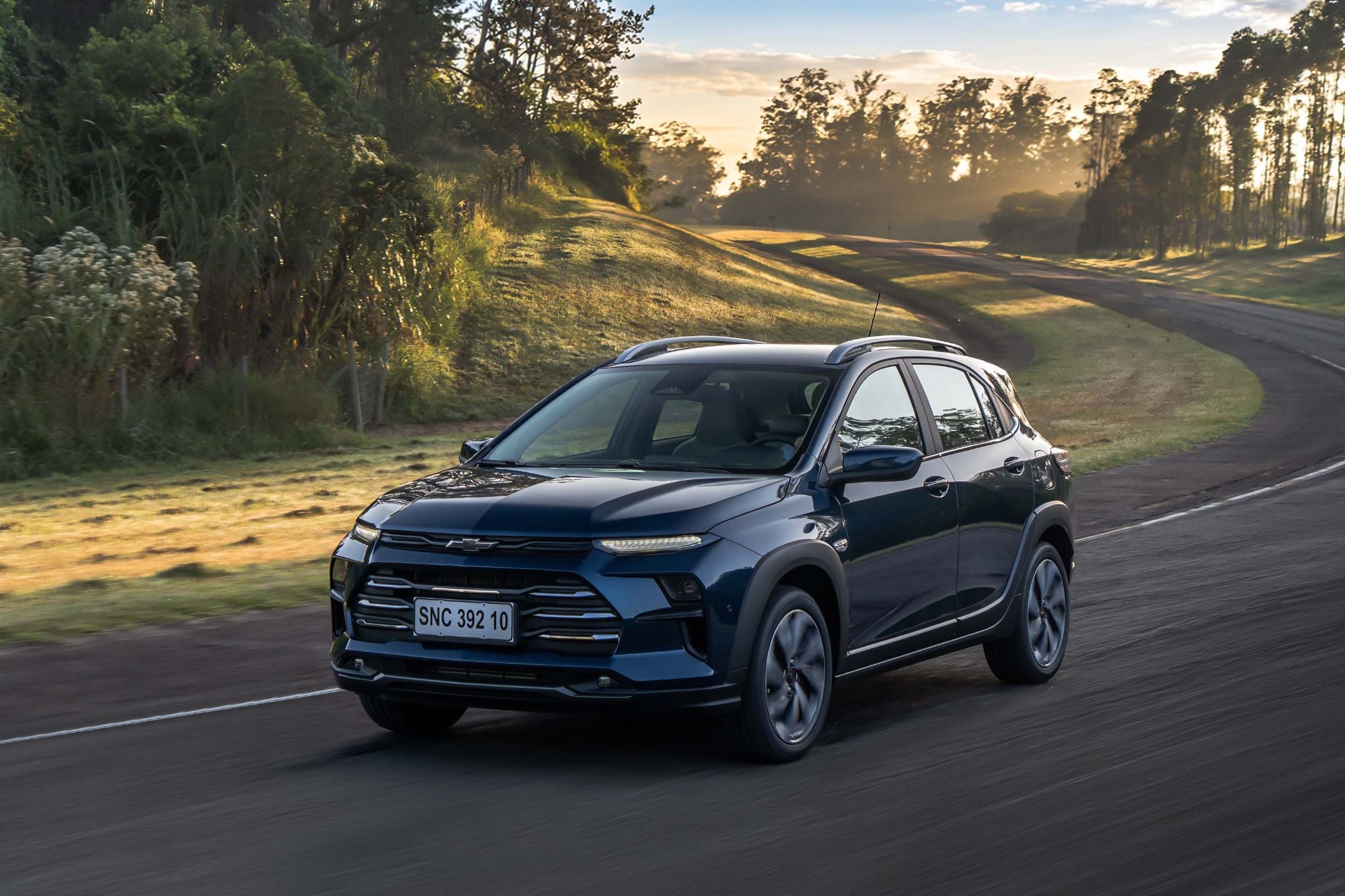
Chevrolet launched the new Sonic as a new entry-level SUV, to sit below the Tracker. It is derived from the compact Onix and uses “basically” the same turbo engine. So the biggest question of consumers falls on the controversial oil-bathed timing belt – yes, the new model and uses.
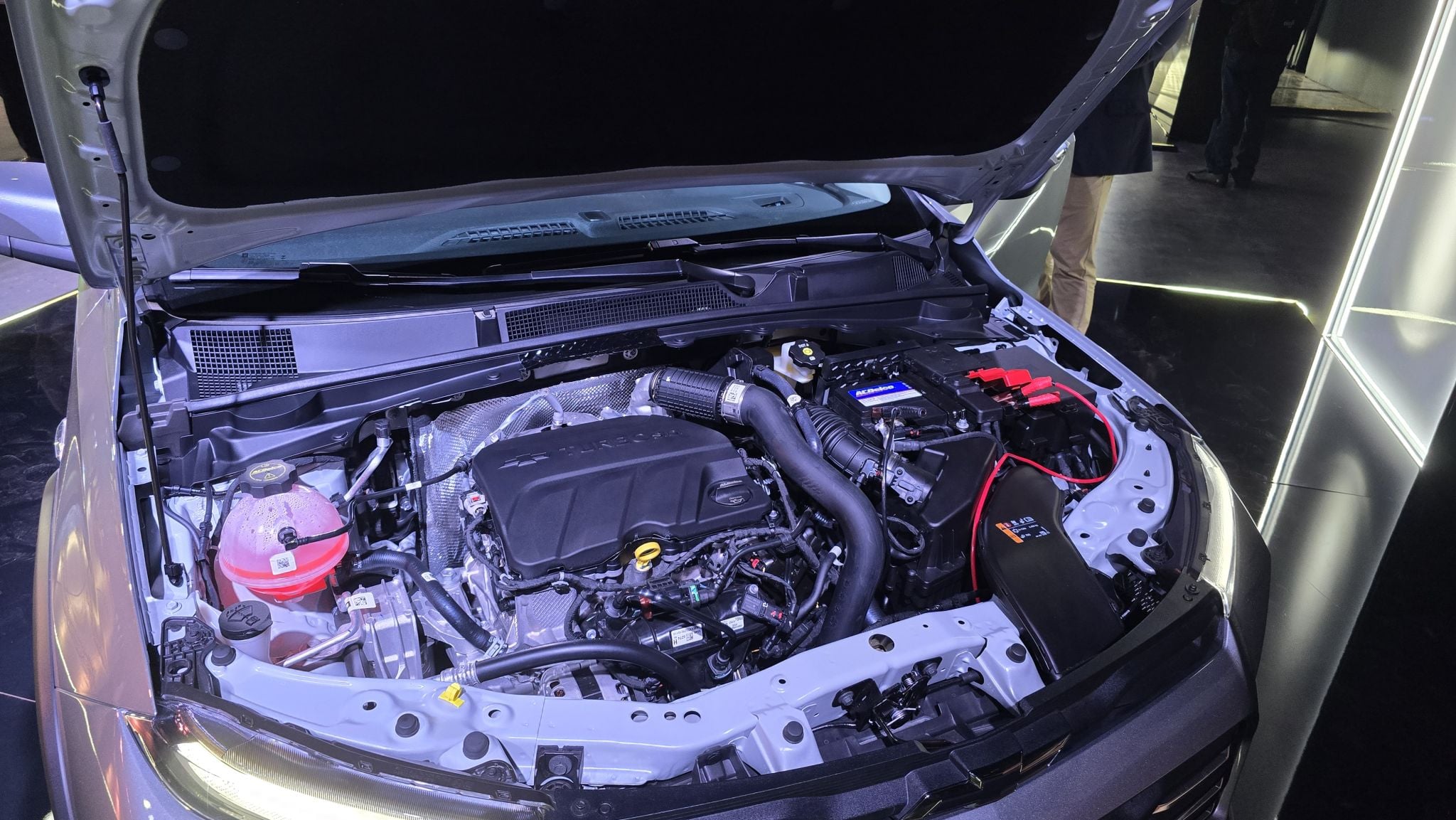
But General had already taken measures to regain (or at least try) consumer trust, and they are present in the engine of the new Sonic which, it is worth noting, is the same used by the Tracker and differs from the Onix by using direct fuel injection. It develops 115 hp of power and 18,9 kgfm of torque.
The new Sonic has the same warranty that Chevrolet already offers for other models equipped with the 1.0 turbo engine with oil-bathed timing belt: 15 years or 240 thousand km. In the Tracker service manual, the replacement of the component is also provided for with these same deadlines. The “rest” of the car comes with a 5-year warranty.
In addition, in 2025, GM changed the supplier of the timing belt, which started to come reinforced with fiberglass.
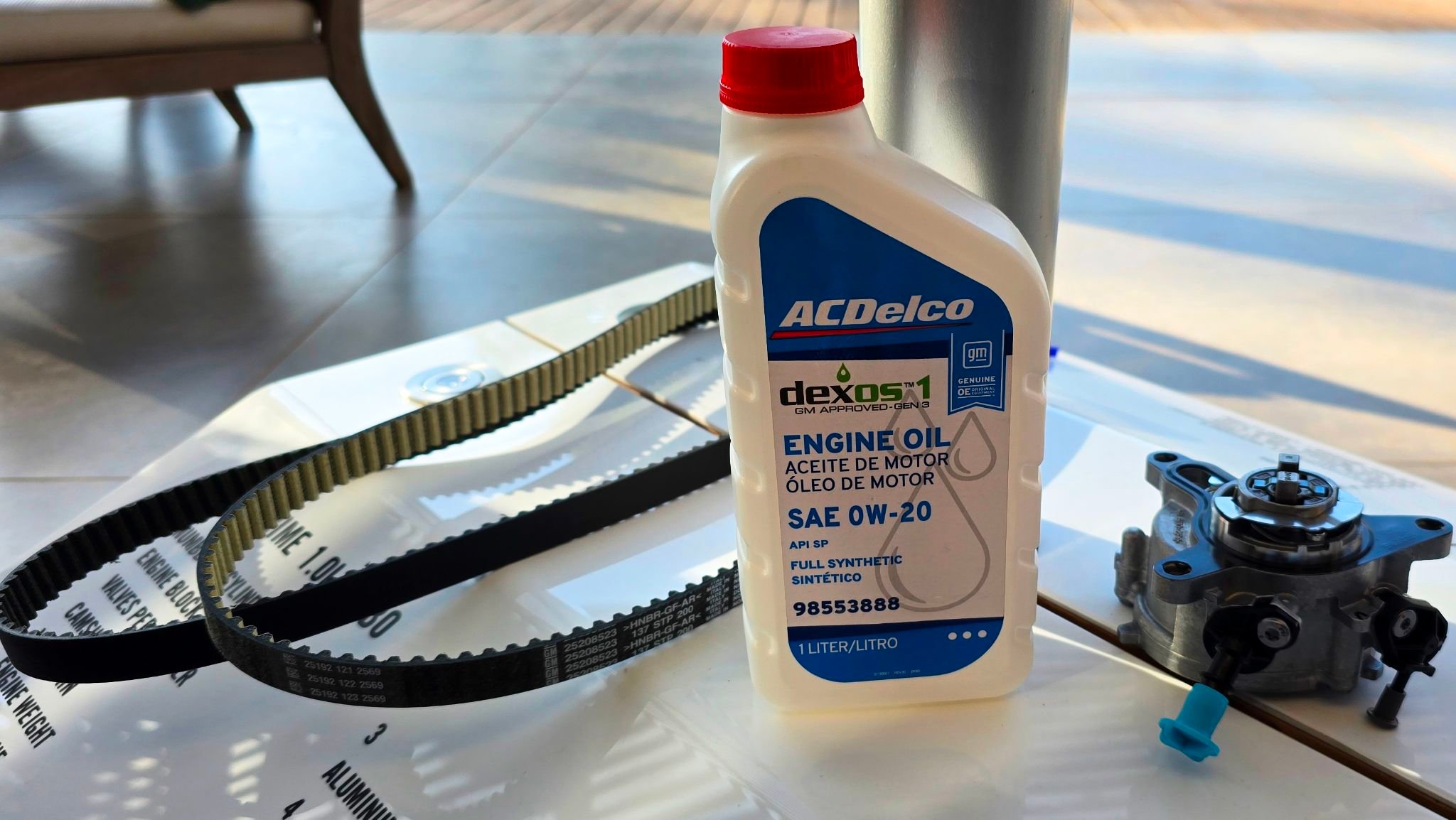
What Chevrolet’s new timing belt looks like
The new belt still requires specific oil, but is more resistant to inappropriate lubricants (Photo: Eduardo Rodrigues | AutoPapo)
According to Chevrolet, the old timing belt could loosen part of the coating if engine oil outside the recommended specification was used. These loose parts could clog the fisherman and impair lubrication. They could also in the vacuum pump and created the risk of brake failure.
The new timing belt, which is in use in the Sonic, better withstands this neglect of the lubricant. The new timing belt is made of hydrogenated nitrile synthetic rubber, with Teflon coating and fiberglass and kevlar reinforcement.
It resists the wrong oil for longer, but it is recommended to use only lubricants with Dexos1 GEN3 certification. The advantage of the new belt is that its outer coating resembles a fabric, when it is attacked by the incorrect lubricant it releases “lint” that does not clog the fisherman or the vacuum pump.
This new belt has a warranty of 240 thousand km or 15 years, whichever comes first. But to have this coverage, it is necessary to carry out oil changes in the authorized network.
Where Sonic’s engine is different from Onix’s
The 1.0 turbo engine with direct injection debuted in the Tracker and delivers more torque than the unit used by the Onix (Photo: Eduardo Rodrigues | AutoPapo)
The Chevrolet Onix is the only car of the brand that still uses the 1.0 turbo engine without direct injection, it has the traditional sequential multipoint system. That’s why it yields 115 hp and 16,8 kgfm, against the 115 hp and 18,9 kgfm of Sonic and Tracker.
Yes, both engines deliver 115 hp, but they had their power reduced to enter the Federal Government’s sustainable car program. For a few months of 2025 the Tracker’s turbo engine with direct injection delivered 121 hp, the Sonic received it already with the limitation.
Direct injection made the Tracker more economical. But in the case of Sonic, it served to make the consumption of the model identical to that of the Onix. That is, it compensated for the raised suspension, larger tires and the increase in aerodynamic drag. See the table comparing the models:
Car
Urban
consumption
Road consumption
Sonic
8.4 km/l (E) / 12 km/l (G)
10.4 km/l (E) / 14.8 km/l (G)
Onix Turbo
8.2 km/l (E) / 12 km/l (G)
10.5 km/l (E) / 14.8 km/l (G)
Direct injection also brought additional care to the owners. Chevrolet recommends the use of a full tank of regular gasoline or additives if the vehicle runs for 10 thousand km only on ethanol
This recommendation entered the Montana and Tracker manual along with direct injection and will certainly be in Sonic’s. This alternation between fuels serves to clean ethanol residues in the engine injectors.
Apart from this indication, the engine maintenance plan adopted by Sonic is the same as that of the Onix turbo. Anyone who leaves the hatch for its high-suspension cousin will not feel any differences in their pockets.
Comments are the sole responsibility of their authors and do not represent the opinion of this site. Comments containing profanity or offensive language will not be published. If you identify anything that violates the terms of use, please report it.