The fever of electric scooters, self-propelled scooters, scooters and the like has already modified national legislation, with the creation of Resolution No. 996 of the National Traffic Council (Contran), and even led to controversy in cities saturated with these devices, as is the case of Rio de Janeiro (RJ). Even so, vehicles aimed at micromobility continue to be on the rise. However, according to the Brazilian Association of Traffic Medicine (Abramet), it is necessary to warn of the risks of this equipment, important for urban travel, but introduced very suddenly and without adequate preparation for the citizen.
In an interview with AutoPapo, Abramet brought the point of view of safety and health regarding electric scooters and the like. For medical specialists, vehicles are important, but the health of citizens must be treated with greater care.
Micromobility vehicles, such as electric scooters, small scooters, light motorcycles, and other self-propelled equipment, represent an important shift in urban mobility. They offer practicality, low cost, less occupation of urban space and can contribute to reducing congestion and emissions”, points out the association. “However, any innovation in mobility must be accompanied by a rigorous analysis of its impacts on road health and safety. The question is not only whether these modes are useful, but whether the current road system is prepared to receive them safely. In many places, the expansion occurred faster than the adaptation of infrastructure, legislation, inspection and traffic education. This creates a scenario of vulnerability.”
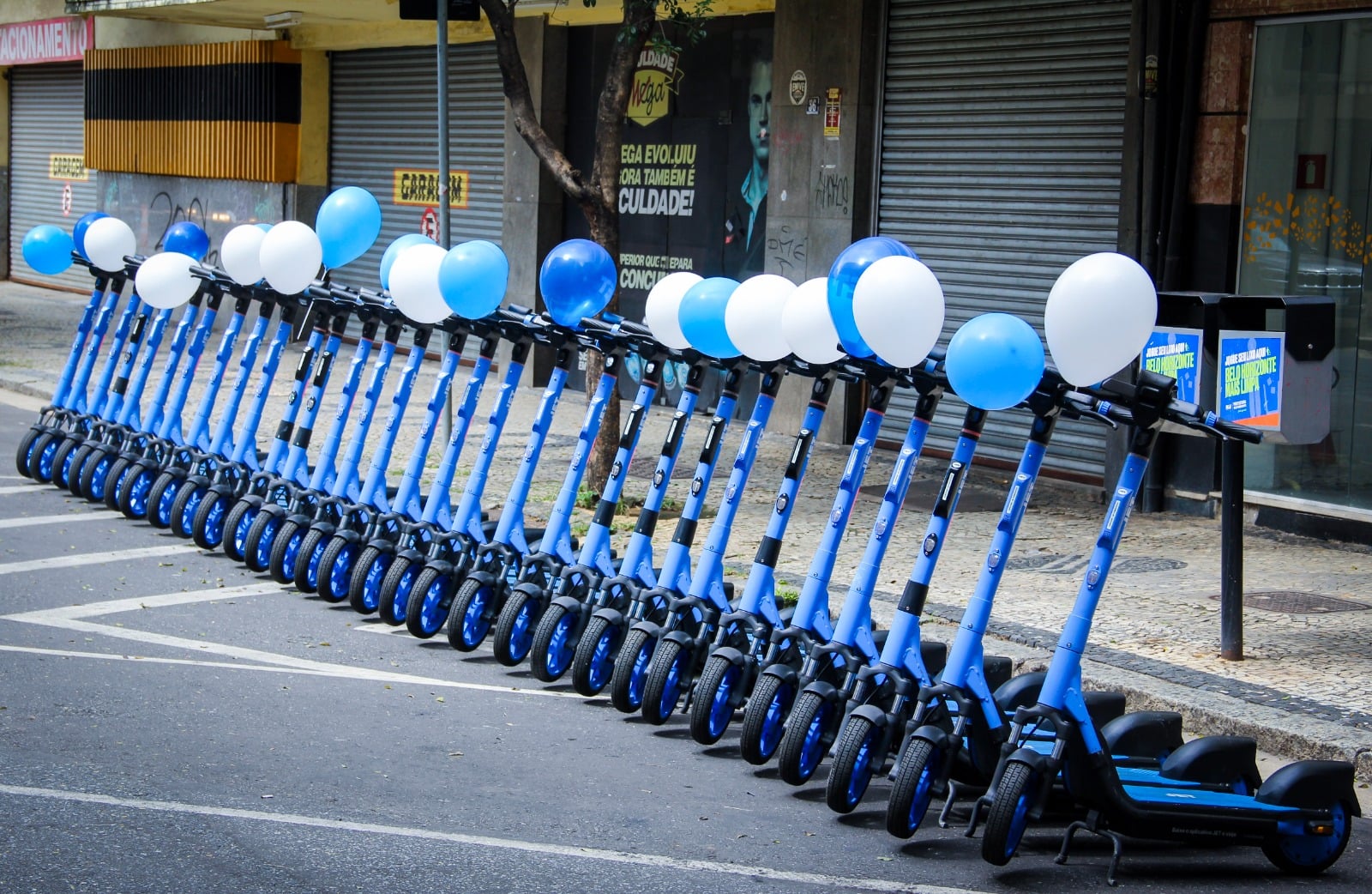
In Belo Horizonte (MG), 1500 electric scooters were made available for rent by the company JET (Photo: JET | Disclosure)
According to a study by the National Transport Confederation (CNT), 62% of Brazilian roads are in poor or very bad driving conditions. These mobility devices are even more fragile, sensitive and prone to breakdowns than cars or other larger modes of transport.
In addition, also in 2025, the Brazilian Institute of Geography and Statistics (IBGE) found that only 1.9% of the population lives on stretches of streets marked for bicycles, while 54.1% of the country’s municipalities do not have any signage for bike lanes, cycle routes and bike lanes. These types of roads are the most suitable for the circulation of the vehicles in question.
Abramet pointed out that, from a safety point of view, these electric scooters and the like have particular characteristics: small wheels, less stability, low structural protection and great sensitivity to irregularities in the floor. Potholes, unevenness, rails, wet floors and obstacles that would go unnoticed by a car can cause serious falls. In addition, many users have little prior experience and often do not use protective equipment.
“Because they are compact, silent, often used on short trips and often linked to the idea of leisure or practicality, there is a tendency to underestimate the risks involved. Many users do not perceive them as vehicles potentially capable of generating important trauma, which favors risky behaviors, such as the absence of protective equipment, overconfidence, simultaneous use of cell phones and driving in inappropriate environments”, reinforced the association.
In this situation, the citizen would be exposed to risks mostly linked to bodily injury. In the most severe cases, head trauma, facial injuries, fractures of the upper and lower limbs, and complex orthopedic trauma may occur.
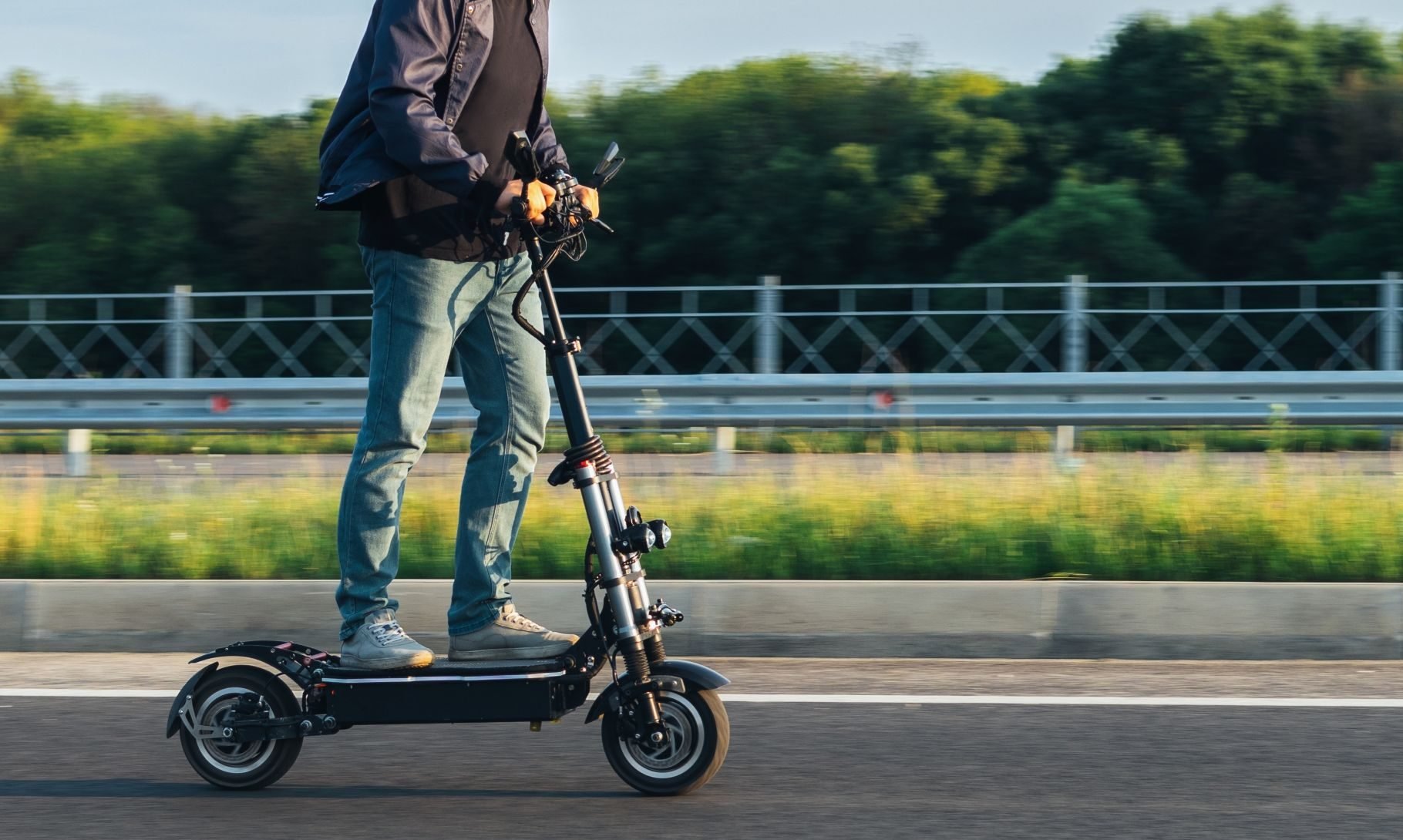
Electric scooters, depending on their capacity and size, also fall into the category that does not require a CNH (Photo: Shutterstock)
“Unlike automobiles, these vehicles offer little or no passive protection structure, such as reinforced bodywork, crumple zones, airbags, seat belts or other mechanisms capable of absorbing part of the energy of the impact. In this way, in situations of fall or collision, a significantly greater portion of the energy generated is transferred directly to the user’s body,” said the association.
Among the biggest risks when driving these vehicles are: falls due to sudden loss of stability; collisions with cars, motorcycles, cyclists and pedestrians; use without helmet and protective equipment; distraction by cell phones; driver inexperience; circulation on non-adapted roads; and speed incompatible with the urban environment.
Abramet emphasizes that these characteristics significantly increase exposure to serious injuries, including head trauma, facial injuries, fractures of the upper and lower limbs, and complex orthopedic trauma. In more severe cases, potentially fatal injuries can also occur, such as thoracic, cervical and abdominal trauma.
Studies point to greater severity in certain cases
Studies, predominantly international, have shown a significant growth in emergency care related to micromobility vehicles, especially electric scooters. Systematic reviews indicate that falls represent the main mechanism of trauma, associated with very low rates of helmet use among injured users.
Also according to Abramet, a review involving 34 studies identified a high frequency of upper limb fractures, noting that most events originated from falls. Another review demonstrated a higher incidence of head, neck, and extremity injuries, as well as a greater need for surgical procedures in certain groups of users. There is also evidence of an association between low adherence to helmet use and a higher occurrence of traumatic brain injuries.
Reducing the speed limit could be a safety alternative
Data from an observational study carried out at a German university hospital reinforce that, at speeds of 20 km/h, the proportion of accidents with serious head and neck injuries is 43.8%, while among cyclists, the rates are 22.4%.
“When hitting obstacles such as curbs, road irregularities or curbs, the scooter can act as a kind of lever, abruptly projecting the driver forward and generating high forces on the upper limbs and, especially, face and head, substantially increasing the risk of serious injuries”, explains Abramet.
The association points out that estimates suggest that reducing the speed of an electric scooter from 25 km/h to 15 km/h can reduce the risk of head injury by approximately 50% in pedestrians involved in collisions. This finding reinforces a central principle of road safety: small reductions in speed can result in a significant reduction in the severity of injuries, especially among more vulnerable users.
Doctors score
Abramet’s position is that micromobility can bring important benefits, but it must be integrated into the road system within a public health and road safety approach. This requires adequate infrastructure, clear regulation, user education, inspection and encouragement of the use of protective equipment. Innovation without safety can turn a mobility solution into a new public health problem,” says the Association.
Comments are the sole responsibility of their authors and do not represent the opinion of this site. Comments containing profanity or offensive language will not be published. If you identify anything that violates the terms of use, please report it.