


China defines how much cars should consume in 2030 and who can open electric factory
Beijing wants to see Chinese automakers among the ten largest in the world in sales and average consumption of 11.5 kWh/100 km in passenger cars
By
João Paulo Profeta
Published on 2026-09-15 at 10:00 AM
Published on 2026-09-15 at 10:00 AM
Be the first to comment.
Summarize with:
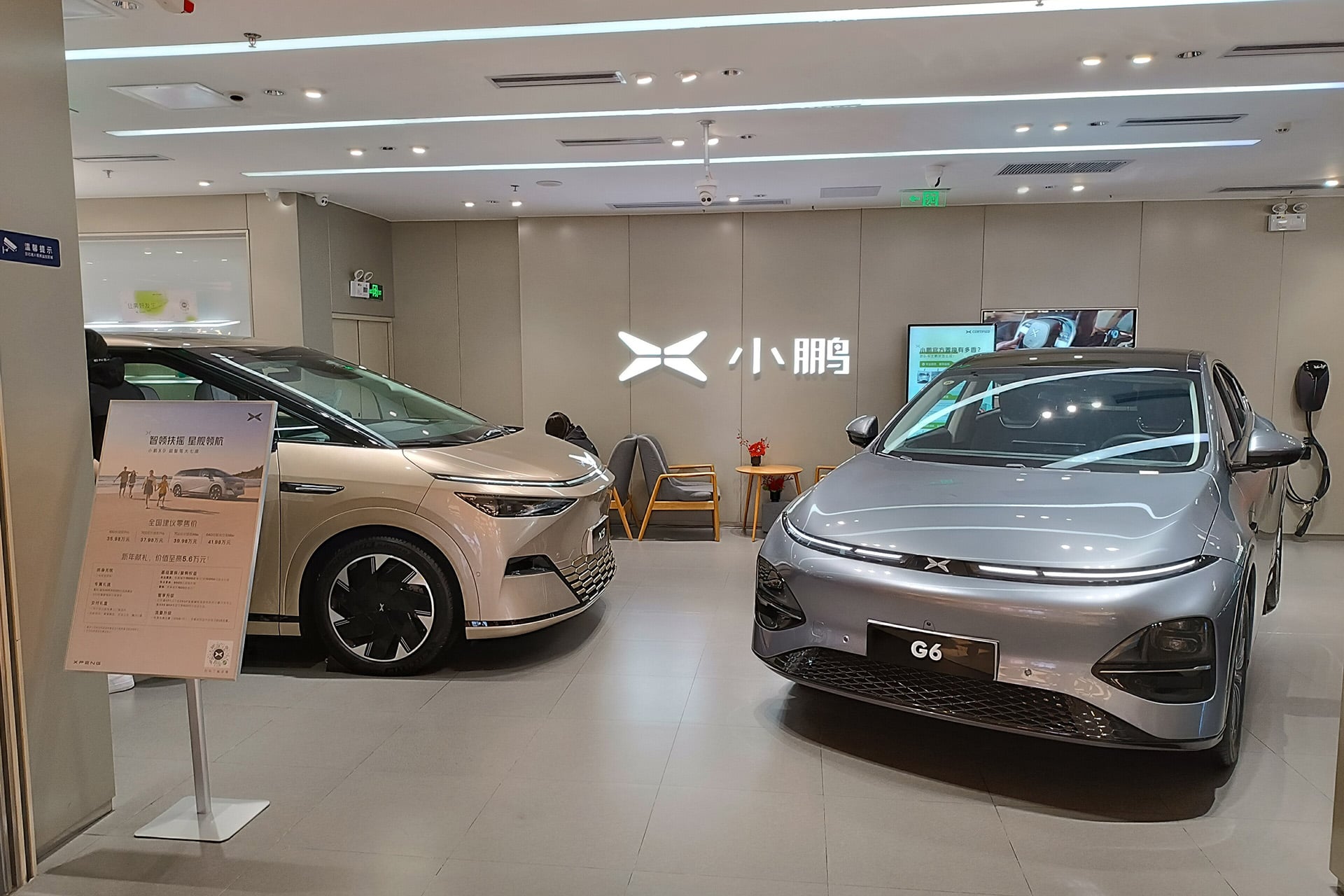
The Chinese government has published the development plan for the smart and connected new energy vehicle (NEVs, which include electric and hydrogen cars) industry for the period from 2026 to 2030, with the goal that these models will account for 70% of domestic passenger car sales by the end of the decade. For commercial vehicles, the target is 40%.
The document, dated September 9, was released on Friday (11) by the Ministry of Industry and Information Technology (MIIT) and jointly signed by nine government agencies, including the National Development and Reform Commission and the Ministry of Transport.
Autonomous driving, consumption and consolidation
Autonomous driving is one of the central axes. By 2030, the government wants high-level automation on highways, urban expressways and part of municipal roads, with safety performance substantially superior to that of human drivers. Demonstrations are planned with passenger cars, buses, long-distance logistics and urban delivery.
The plan also sets efficiency targets: average consumption of 11.5 kWh/100 km for passenger trams and 3.3 liters per 100 km — equivalent to about 30.3 km/l — for the passenger fleet as a whole. It also aims for a 15% gain in labor productivity compared to 2025 and wants to see several Chinese automakers among the ten largest in the world in sales, as well as local suppliers among the hundred largest.
Another chapter deals with curbing excess capacity. The government promises strict conditions to authorize new independent manufacturers of NEVs, control of installed battery capacity and encouragement of mergers and consolidations between regions. There is also a message to local governments: the text calls for curbing subsidies, tax exemptions and irregular land transfers used to attract investment.
On the technology front, the plan points to gaps in automotive semiconductors, operating systems, industrial software, and critical materials, as well as improvements in safety, recharging speed, and cold performance of batteries. It envisions high-power recharging, rural networks, vehicle-to-grid integration, and zero-carbon road freight corridors for electric heavy-duty trucks.
What is a Chinese
Five-Year Plan The text is not an isolated piece: it is the sectoral breakdown of the 15th Five-Year Plan, approved on March 12 by the country’s National People’s Congress. Inherited from the Soviet model and adopted by China since 1953, the five-year plans are the country’s main state planning instrument.
The master document outlines broad guidelines, with few deadlines. It is up to ministries, provinces and state companies to unfold it in a cascade, in sectoral plans such as the one released now – and it is in them that the numerical goals appear. Since March, the system has also had its own legal basis, with the National Development Planning Law.
In practice, these targets guide the credit of state-owned banks, provincial policies and investment decisions of automakers. That is why they move the market: in July, when the MIIT only announced that it would accelerate the preparation of the plan, the shares of automakers listed in Hong Kong rose.
SEE MORE ABOUT

0 Comments
Comments are the sole responsibility of their authors and do not represent the opinion of this site. Comments containing profanity or offensive language will not be published. If you identify anything that violates the terms of use, please report it.