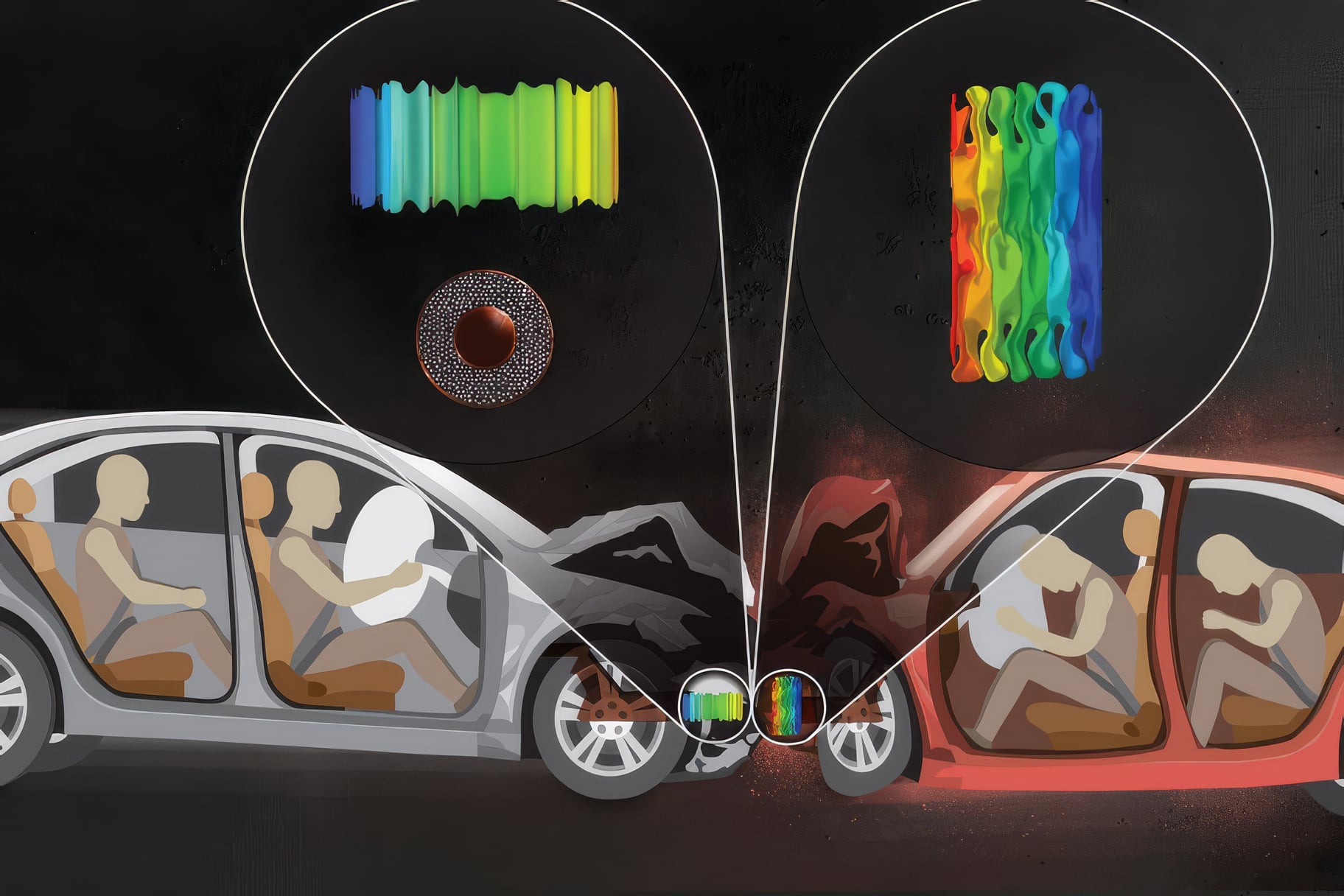
A material that resembles a metal sponge can make frontal crashes much less dangerous without making the car heavier. This is what a study from North Carolina State University, USA, published in the Journal of Composites Science, noted by the Inovação Tecnológica website, points out.
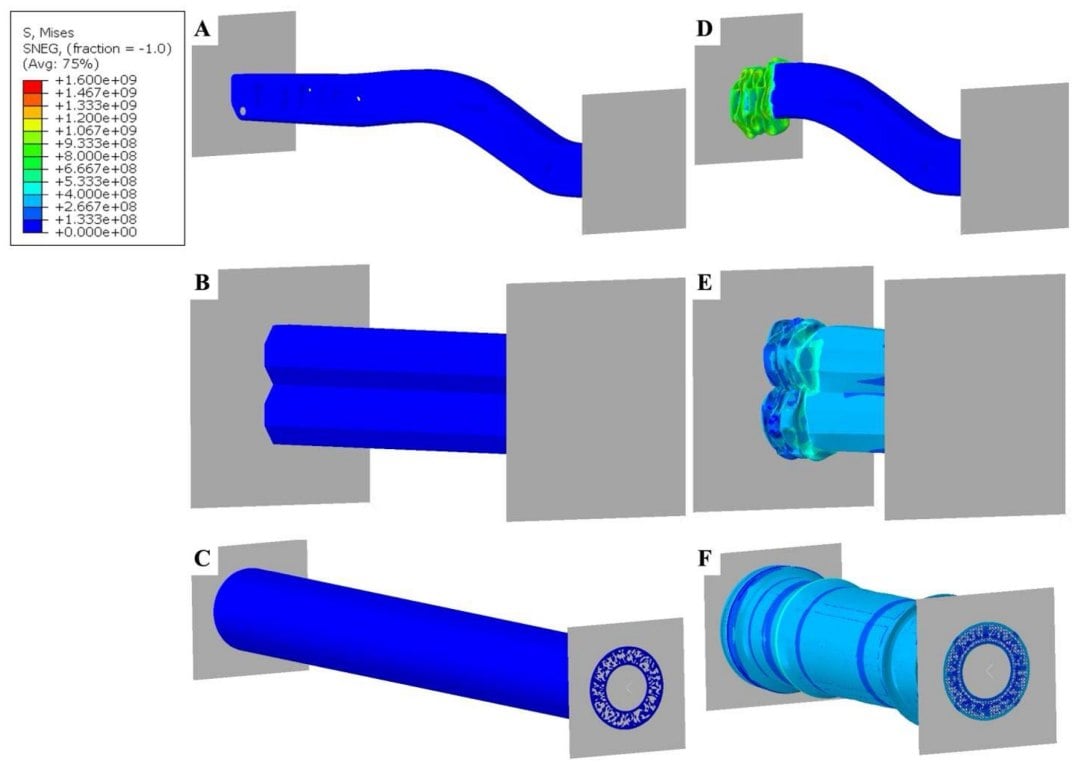
The researchers simulated collisions by replacing the front spars — the bars behind the bumper that absorb the impact — for aluminum tubes with a metal foam core. In a crash at 88 km/h, the part reduced the maximum deceleration suffered by the car by about 84%, compared to the rectangular steel spar, common in most cars.
The danger is not the crash, it’s the stop
It seems counterintuitive, but what hurts in a collision is not so much the force of the shock as the speed with which the body stops. That’s why the stringers are made to dent in a controlled way: the slower the deceleration, the less damage to the occupants.
That’s where the metallic foam fared best. The Head Injury Criterion — an index that estimates the chance of severe head trauma — dropped by about 83% compared to the rectangular spar and 45% compared to the octagonal double-section aluminum design. In practice, the car could crash 32% to 48% faster before crossing critical limits.
Hollow steel balls
Photo: Journal of Composites Science | Reproduction
Composite Metal Foam, or CMF, is made of small, hollow steel spheres dipped into a metal matrix. The result is light, strong, and great at absorbing compression—so much so that it’s already studied for armor, airplane wings, and bulletproof vests.
Professor Afsaneh Rabiei, who signs the work with Aman Kaushik, points out that all comparisons used pieces of the same weight and length. In other words, the gain in safety does not take a toll on consumption. She says that it would even be possible to shorten the pieces.
As metallic foam also resists heat and fire well, the authors point to its use in electric cars, especially in battery protection structures. It is worth remembering: the results come from computer models, not physical tests.
Until a few decades ago, bumpers were made of steel: they protected the bodywork, but they hardly absorbed energy — the one who paid the bill was the one inside. That’s what led the industry to polypropylene. Now the metal threatens to come back, in another form.
Comments are the sole responsibility of their authors and do not represent the opinion of this site. Comments containing profanity or offensive language will not be published. If you identify anything that violates the terms of use, please report it.