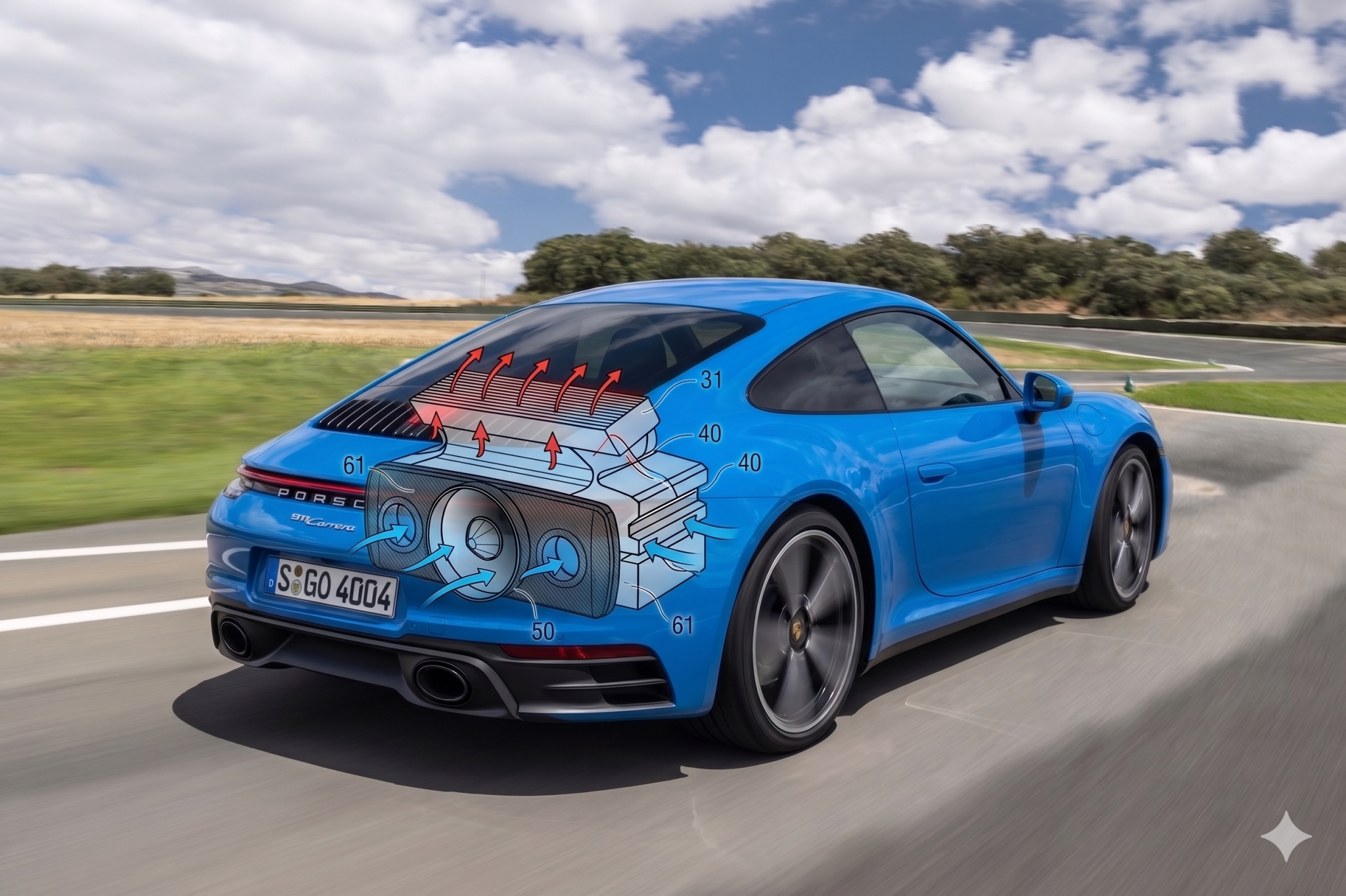
Porsche has filed a patent that proposes the partial rescue of one of its trademarks: the air-cooled engines, definitively abandoned in 1998 with the end of the 993 generation of the 911 model. The new engineering project, however, is not a step backwards, but a hybrid solution. The German manufacturer has developed a system that combines conventional liquid cooling with a very high capacity forced air flow, aiming to optimize aerodynamics and reduce the weight of its sports cars.
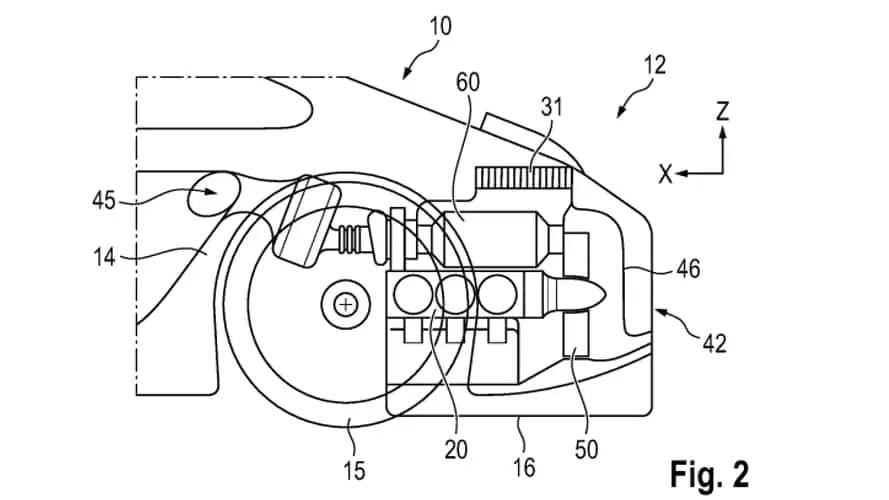
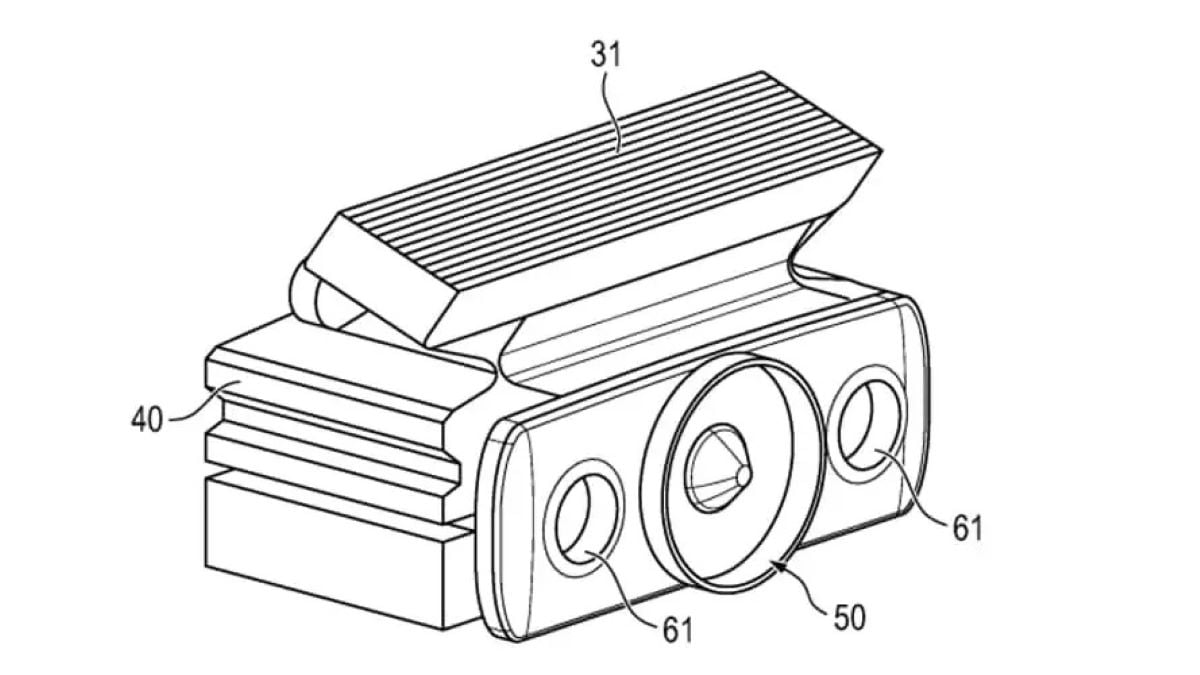
According to the documentation presented, the six-cylinder boxer engine continues to depend on coolant galleries. The innovation lies in the encapsulation of the mechanical assembly within a large structure that channels the air. An oversized fan pulls the external flow, forcing it not only on the block and crankcase — which return to the classic thermal dissipation fins — but also on the exhaust system and turbochargers.
The main advantage of the technology is that it allows the drastic reduction of the dimensions of the front radiators. In some scenarios, Porsche is considering using only a compact radiator at the rear of the vehicle. This decreases frontal aerodynamic drag, reduces the volume of circulating liquid in the car and relieves the continuous strain of the water pump, which translates into greater energy efficiency.
The aerodynamic gain, however, takes its toll on mechanical complexity. To manage the massive volume of air—estimated at 5,800 cubic feet per minute, more than double the capacity generated by the fans of the older 911—the system requires precise control. The patent describes that the propeller will have its own clutch and even a small transmission with multiple gears to adjust the rotational speed to the thermal demand of the engine.
Designed for application in mid-engine or rear-engine vehicles, such as the 718 and 911 lines, the solution still has no confirmed date to reach the assembly lines. The record, however, shows the effort of Stuttgart’s engineering to circumvent modern environmental requirements without detracting from the architecture that consecrated the brand.
Comments are the sole responsibility of their authors and do not represent the opinion of this site. Comments containing profanity or offensive language will not be published. If you identify anything that violates the terms of use, please report it.