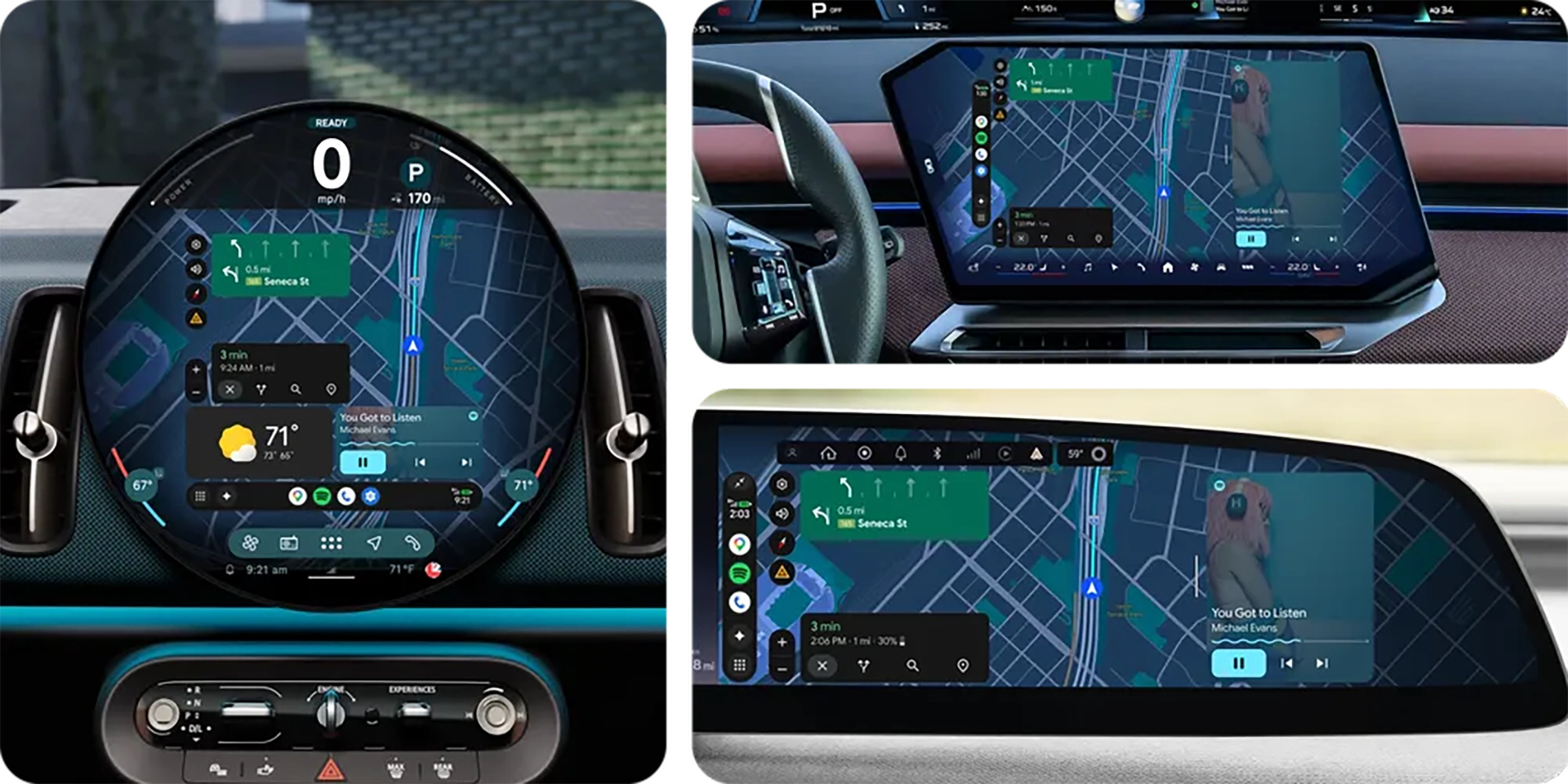
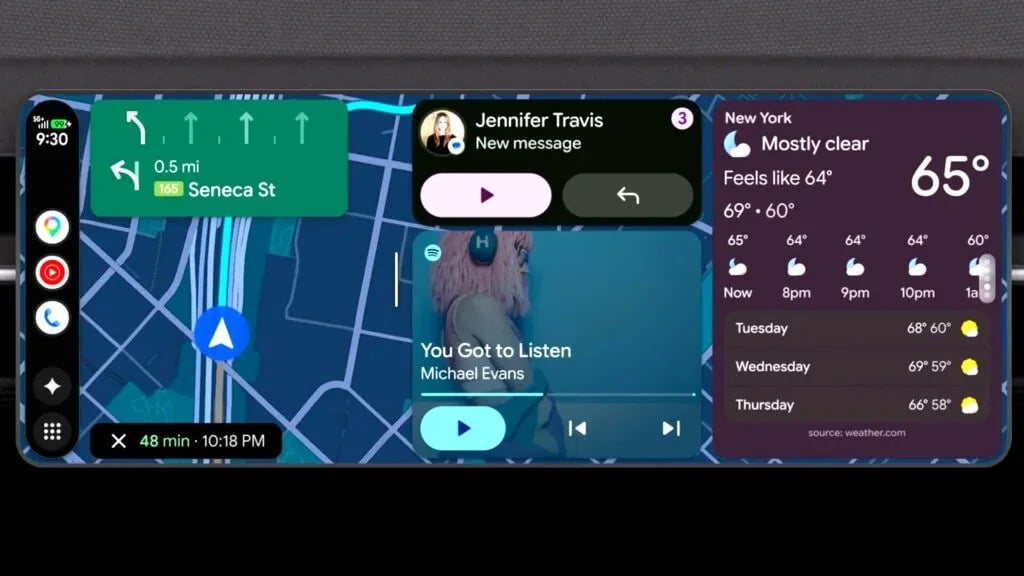
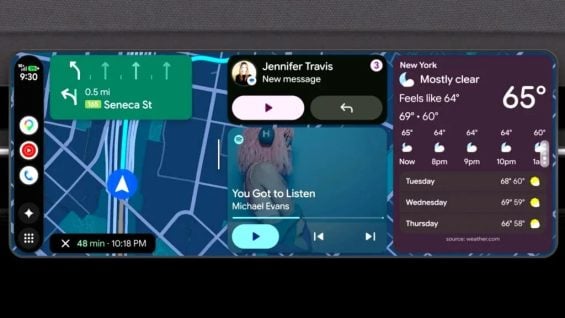
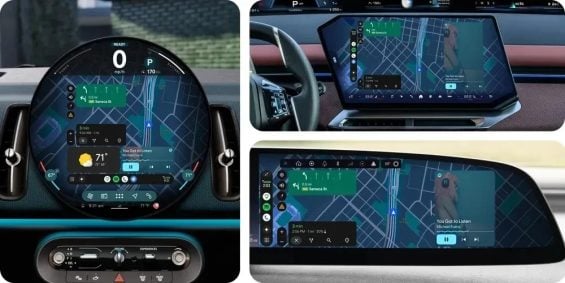
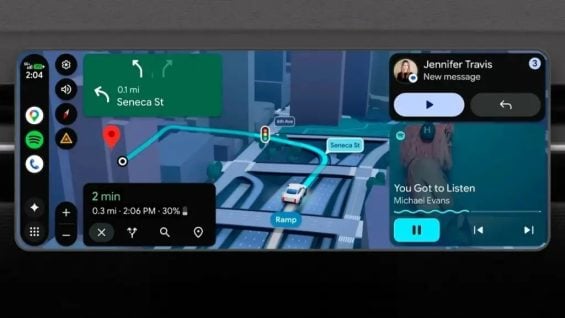
Google has announced a comprehensive update to Android Auto and vehicles with the brand’s integrated system, bringing visual changes, new entertainment features and improved integration with artificial intelligence. The main novelty is the adoption of the Material 3 Express design language, the same one already used in the company’s latest smartphones. The goal is to offer a highly customizable interface capable of adapting to different panel formats — from circular multimedia centers to wider horizontal displays.
With a base that already exceeds the mark of 250 million compatible vehicles in circulation, the platform introduces customizable widgets on its main screen. The change allows drivers to quickly access essential information and shortcuts, such as the weather, favorite contacts, larger-format clocks, photos and even built-in commands for the garage, all directly from the car’s console.
For waiting times, such as during the recharging of electric vehicles, the system now officially supports the playback of YouTube videos in high resolution. The feature will arrive in 2026 for models from automakers such as BMW, Ford, Hyundai, Mercedes-Benz and Volvo. For safety reasons, image reproduction only works with the car parked. When moving, the video is automatically locked, but the audio continues to be transmitted, allowing occupants to continue listening to podcasts or shows. Sound fidelity has also received attention, with the arrival of Dolby Atmos in apps like Spotify and YouTube Music.
In the field of productivity and assistance, the integration with Gemini artificial intelligence stands out. Drivers can now ask technical questions about the vehicle itself by voice command. It is possible, for example, to ask the meaning of a specific warning light on the dashboard or to ask if an object of a certain size fits in the trunk.
Immersive navigation and mobile office
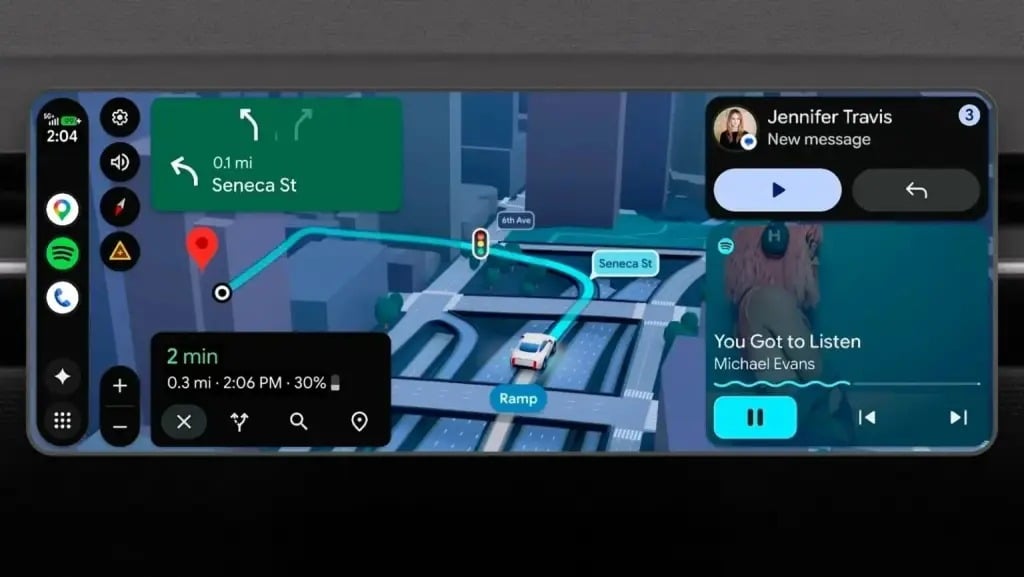
The driving experience will be enhanced by practical improvements to Google Maps. The application will use the vehicle’s front camera to identify traffic lanes in real time, ensuring more accurate guidance during lane changes and exits on complex roads. For the corporate public, models that already have Google’s system integrated will receive native support for videoconferencing applications, such as Zoom, which ensures an intelligent transition between audio and video functions during the commute.
Comments are the sole responsibility of their authors and do not represent the opinion of this site. Comments containing profanity or offensive language will not be published. If you identify anything that violates the terms of use, please report it.