World Cup: infractions and fines you can take when cheering
Themed decorations, honking, painted streets and more; Check out actions that are infractions and what rules to follow to avoid fines
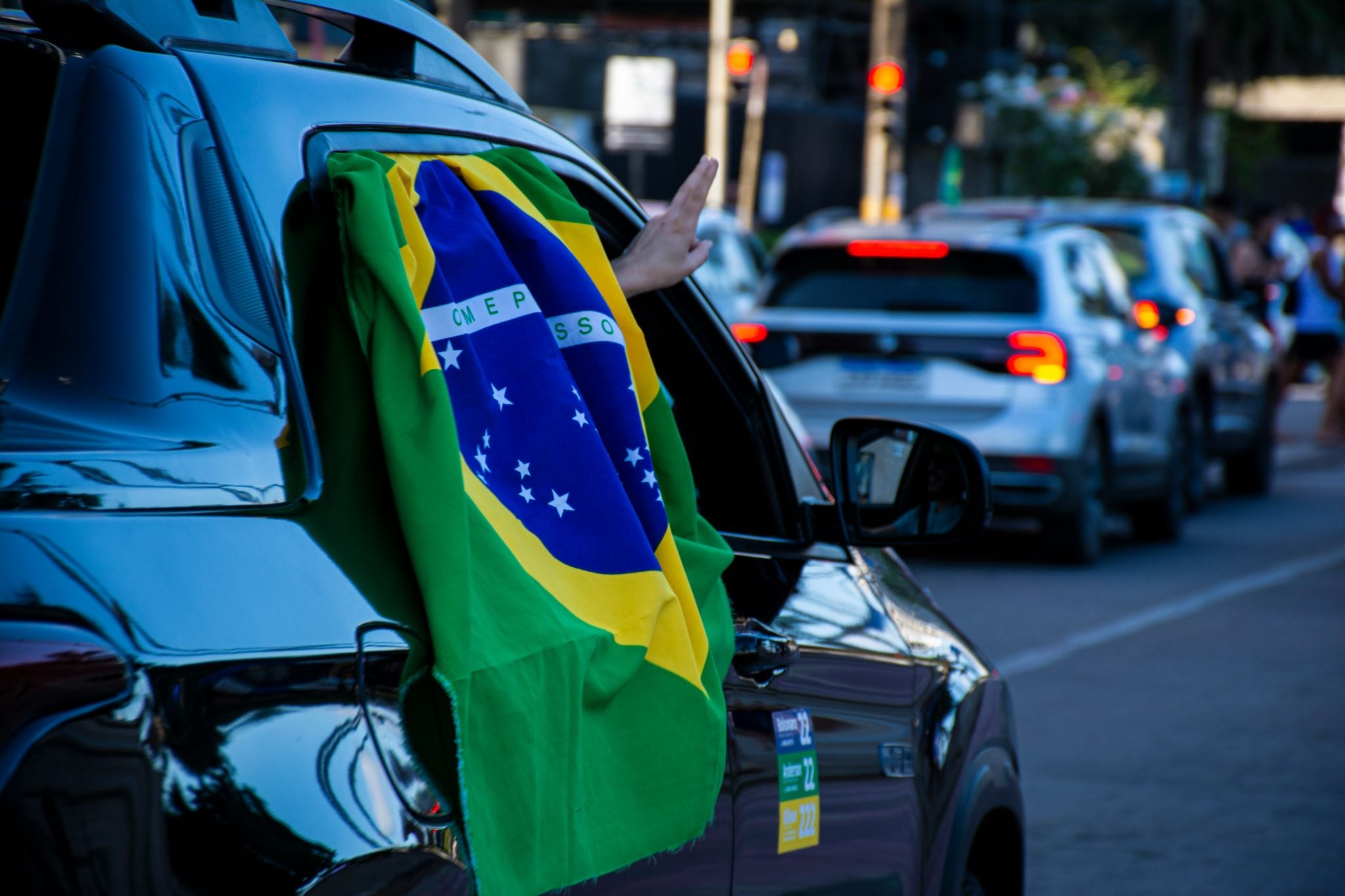
Conducts can range from light infractions (R$ 88.38) to very serious (R$ 2,934.70) with detention from six months to three years. (Photo: Igor Constantino | Unsplash)
The beginning of the World Cup is just around the corner and with it also comes the patriotic spirit that is already beginning to take over the population. It is in this atmosphere that Brazilians cheer in the most diverse ways and are looking forward to the long-awaited sixth championship. However, the celebrations, even if well intentioned and used, can constitute traffic violations and generate fines, suspension of the right to drive and even imprisonment.
Disobeying what is provided for in the Brazilian Traffic Code (CTB), taking initiatives without prior authorization from the public authorities and non-compliance with technical road safety standards can turn the green and yellow party into losses. Check out what are the most common conducts when celebrating the World Cup that can lead to a fine.
Flags and other decorations can generate fines depending on how you place them
The golden rule for fans who want to decorate the vehicle is based on two pillars: the total preservation of the driver’s visibility and the perfect fixation of objects. The ornament also cannot interfere with driving: if the driver is driving with only one hand to hold the flagpole with the other, there is a great risk.
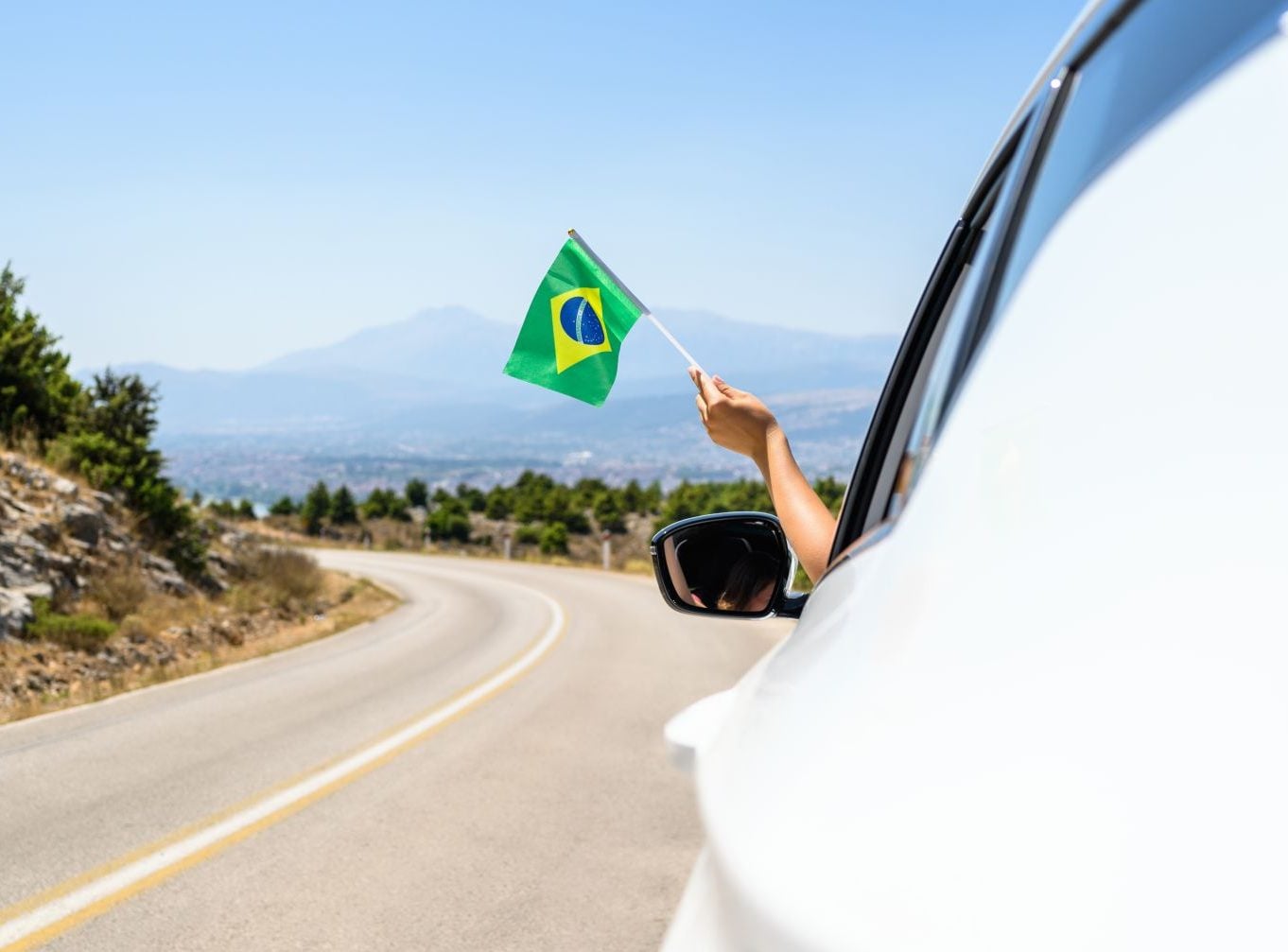
Driving with only one hand on the wheel is also a traffic violation. (Photo: Shutterstock)
According to article 252 of the CTB, the driver is required to drive with both hands on the wheel and anyone who does not comply with this requirement is committing an average infraction with a fine of R$ 130.16 and four points on the National Driver’s License (CNH).
Flags on the mirrors, windows and hood
You can, yes, decorate your car with the Brazilian flag, as long as it does not cover the surface of the rearview mirrors and does not obstruct the driver’s field of vision , even when fixed to the windows. This also goes for other types of props.
If the intention was to cover the hood of the vehicle with the flag, there is no exact regulation provided for by law, so there is no prohibition. However, the same rule mentioned above also applies to this case, because if it is poorly affixed, the fabric can come loose and impair the driver’s visibility.
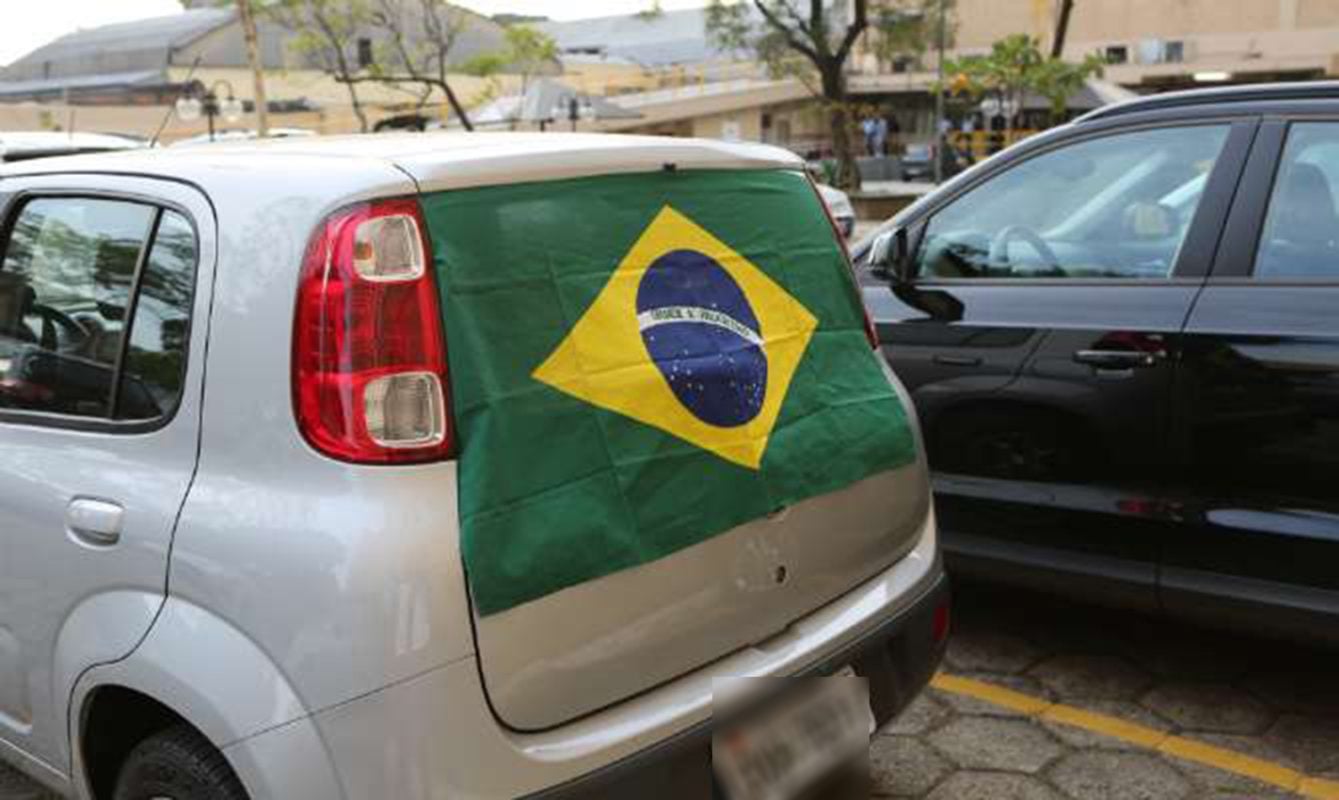
Props that obstruct visibility are not allowed and the driver is subject to a fine. (Photo: Reproduction)
If the inspection catches props or flags covering mirrors or preventing full visibility through the windows, the driver will be fined for committing a minor infraction with a fine in the amount of R$ 88.38 and the addition of three points to the CNH, according to article 230 of the CTB.
In addition, improper installation of fabrics on the hood generates a great risk, as the force of the wind can cause the fabric to come loose, lift against the windshield and block the driver’s vision. Another risk is that the flag hangs or even hits another vehicle. If the prop covers mandatory items such as the vehicle’s license plate or headlights, the severity of the act increases, being a very serious infraction with a fine of R$ 293.47 and seven points on the license.
Paints, adhesives and films
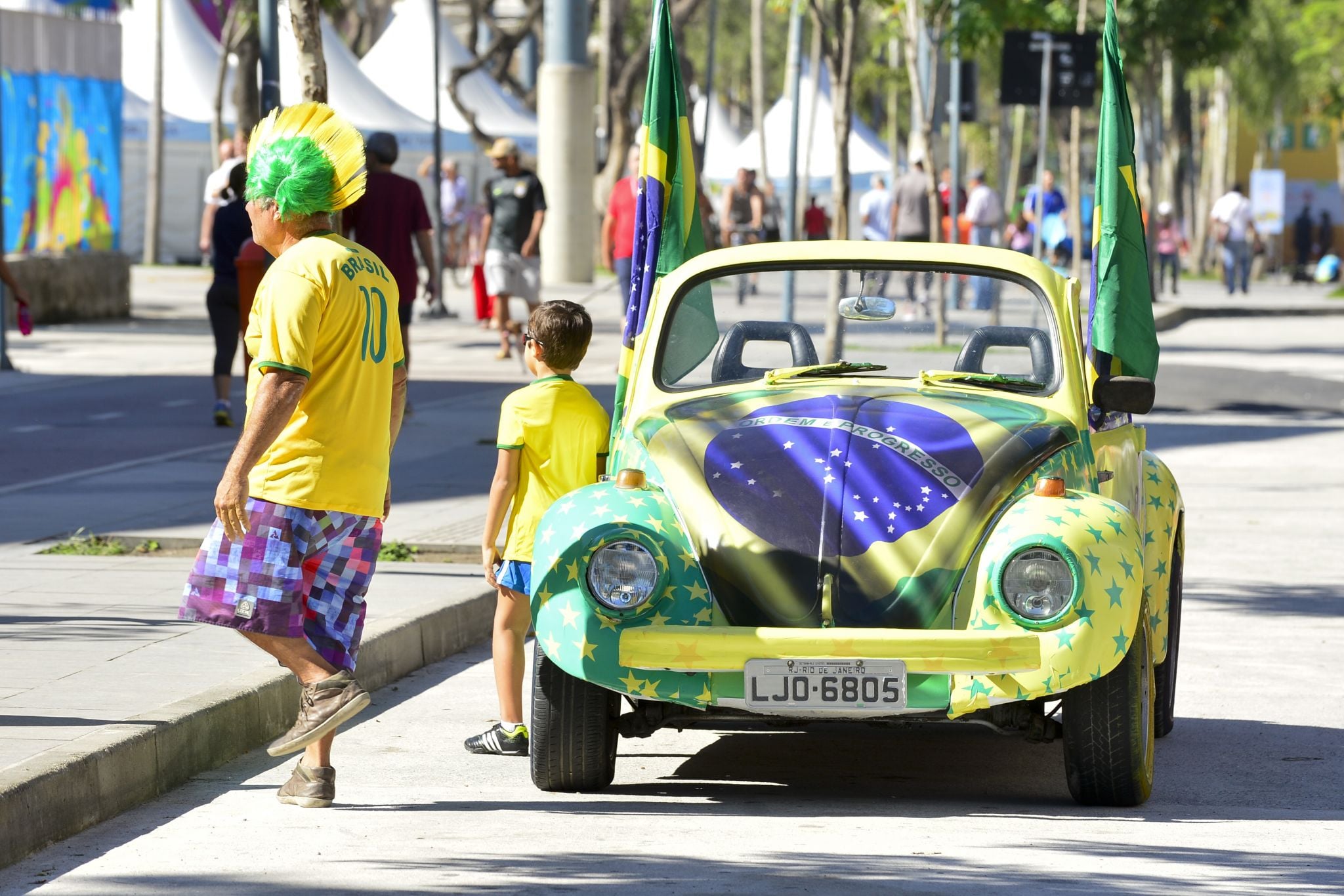
These strategies to make your car look like the Brazilian National Team are allowed by law, but with certain limits. Adhesives, films and paints can be applied, as long as they are restricted to the allowed areas and do not alter the color of the model by more than 50%.
If more than half of the vehicle is covered, the change must appear on the car’s document. In addition, the decoration can never compromise the glazed area essential for drivability and peripheral visibility.
If the vehicle is more than 50% covered, this change must be included in the document, otherwise it can generate a fine. (Photo: Shutterstock)
Conduct
Nature of the Infringement
Points on the CNH
Fine (R$)
Decoration obstructing visibility
Lightweight
3 points
R$ 88,38
One-handed
driving
Average
4 points
R$ 130,16
Flag covering license plate or headlights
Very
serious
7 points
R$ 293,47
Honking is even legal to celebrate, but it is prohibited by the CTB
Sounding the horn when Brazil scores a goal or wins a game is an almost natural gesture for those who are following a football match while driving. However, honking can generate some risks and is a punishable conduct.
The vehicle driver may only use a horn, as long as it is a brief sound, in the following situations:
I – to make the necessary warnings in order to avoid accidents;
II – outside urban areas, when it is convenient to warn a driver that he intends to overtake him.”
In addition, the CTB prohibits the use of the horn in some circumstances, which are very common during the World Cup. According to article 227:
Use a horn:
I – in a situation other than a simple brief sound as a warning to pedestrians or drivers of other vehicles;
II – prolonged and successively under any pretext;
III – between twenty-two (10 p.m.) and six a.m. (6 a.m.);
IV – in places and times prohibited by the signs;
V – in disagreement with the standards and frequencies established by CONTRAN”
Infraction – light (3 points on the CNH);
Penalty – fine (R$ 88.38).
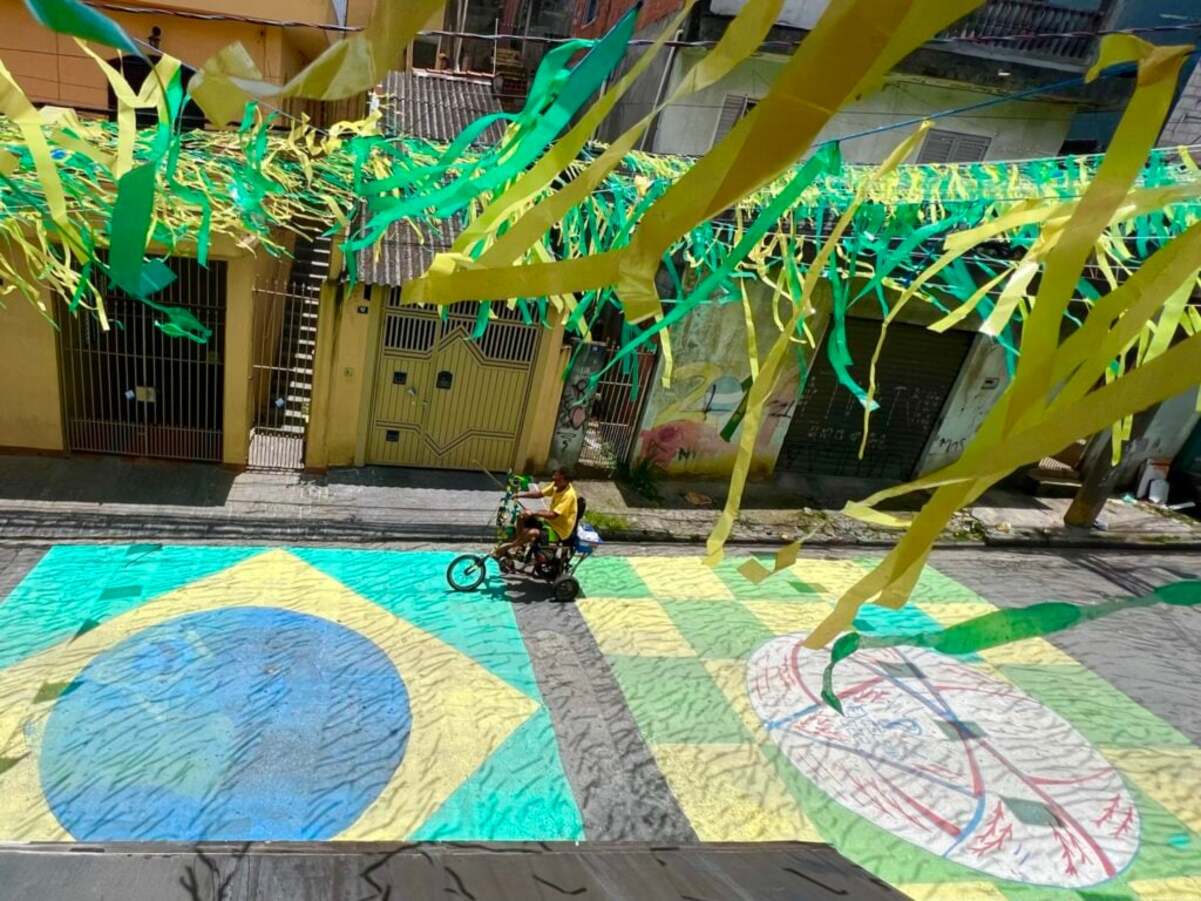
World Cup street decorations have strict rules
As they are part of the municipal public heritage, any interventions on urban roads may need the permission of city halls or condominium administrations. Therefore, before you start hanging ornaments and coloring the roads, go to the official website of the city hall where you will probably find the specific notices about the period of the tournament. If the city does not have a page dedicated to the topic, look for the service channels of the secretariat responsible for urban planning.
The city hall of each municipality is responsible for establishing what is allowed or not in the decoration of the streets, but the CTB also provides general rules that must be followed. (Photo: Mateus Fernandes | Mural Agency | Reproduction)
While some cities require detailed designs up to a month in advance, others are more flexible. To receive the technical approval, the proposal cannot be for avenues and ring roads of high circulation, only for secondary streets that:
they are residential in profile;
have a low flow of vehicles;
they do not have traffic lights or complex intersections.
In addition, according to the CTB, it is expressly forbidden to place inscriptions or ornaments that may generate confusion, obstruct, damage or interfere with the visibility of road signs. That is, no type of paint can cover signs, traffic lights, crosswalks and other ground paintings.
Cases of non-compliance with local rules are subject to inspection, with the immediate removal of props and the application of fines.
You can even have one to celebrate at the World Cup, but if you do, don’t drive
The World Cup is a time of celebration and relaxation, so regardless of the result, those who like to drink are always tempted to have one on game days. And it’s more than permissible to do that, as long as you don’t drive.
This type of infringing conduct that puts people’s lives at risk is very common and has very strict penalties provided for by the Dry Law. Driving under the influence of alcohol, according to the Traffic Code, can be classified as both an infraction and a traffic crime, which have different punishments.
When the occurrence is considered an infraction, there is a penalty and administrative measure:
Art. 165: Driving under the influence of alcohol or any other psychoactive substance that determines dependence”
Infraction – very serious;
Penalty – fine (R$ 2,934.70)
Suspension of the right to drive for 12 months.
Administrative measure – collection of the driver’s license and retention of the vehicle.
The legislation also provides that the fine is applied twice in case of recurrence in a period of up to 12 months (R$ 5,869.40).
When it comes to a traffic crime, the situation is even more serious.
Art. 306: Driving a motor vehicle with altered psychomotor capacity due to the influence of alcohol or other psychoactive substance that determines dependence”
Penalties – in addition to the fine, the law provides for detention from six months to three years and suspension or prohibition of obtaining a permit or license to drive a motor vehicle.
The difference between the articles of the CTB is in the verification of drunkenness at the wheel by means of blood test, breathalyzer or by the existence of signs of alteration of psychomotor capacity. This modification is verified by a clinical examination by a medical expert or by the identification of the traffic authority agent himself.
Comments are the sole responsibility of their authors and do not represent the opinion of this site. Comments containing profanity or offensive language will not be published. If you identify anything that violates the terms of use, please report it.