World Cup 2026: check out what is allowed in street paintings and decorations
Themed decorations and paintings require authorization and follow strict rules; Check out the rules and prohibitions to avoid fines
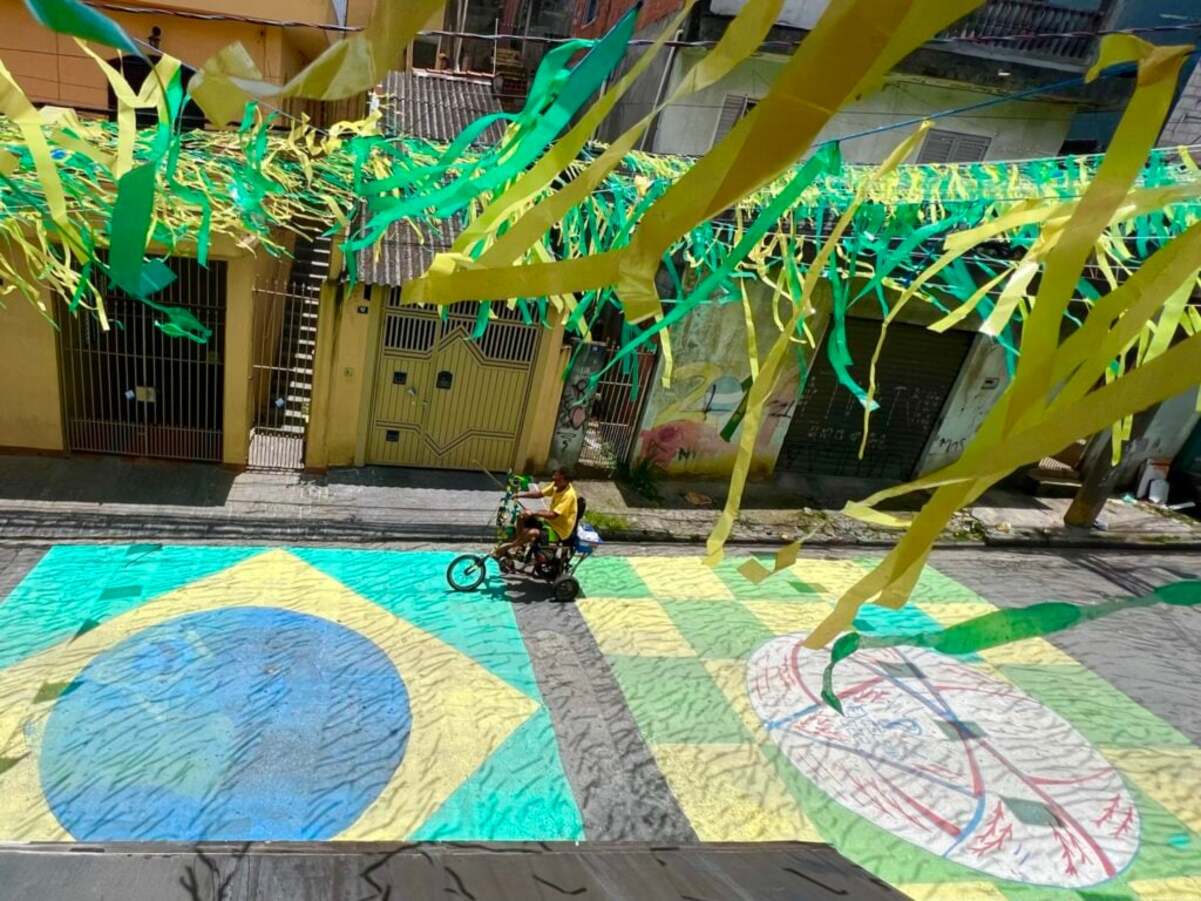
The city hall of each municipality is responsible for establishing what is allowed or not in the decoration of the streets, but the CTB also provides general rules that must be followed. (Photo: Mateus Fernandes | Mural Agency | Reproduction)
With the 2026 World Cup approaching, the fan spirit begins to take over a good part of the population, bringing with it one of the most classic ways to manifest this animation: street paintings and themed decorations. However, the practice of painting the asphalt and spreading flags in green and yellow comes up against a series of traffic regulations and municipal legislation little known to the public.
The lack of prior authorization from the government and the non-compliance with technical standards for road safety can transform community task forces into infractions that generate financial losses for residents.
As they are assets that make up the municipal public heritage, any interventions on urban roads depend on the approval of city halls or condominium administrations. In this way, each body has the autonomy to create its decrees, ordinances and inspection rules.
Therefore, before you start hanging ornaments and coloring the roads, you need to have permission from the local city hall. While some cities require detailed designs up to a month in advance, others are more flexible with strictly residential streets.
To receive the technical approval, the request must comply with strict road safety requirements. In general, the release is usually restricted to secondary streets that:
they are residential in profile;
it has a low flow of vehicles;
they do not have traffic lights or complex intersections.
Avenues and ring roads with high circulation should not receive authorization due to the risk of accidents and being run over, damage to the flow of traffic or the distraction of drivers.
In addition, according to the Brazilian Traffic Code (CTB), it is expressly forbidden to place inscriptions or ornaments that may cause confusion, obstruct or interfere with the visibility of road signs.
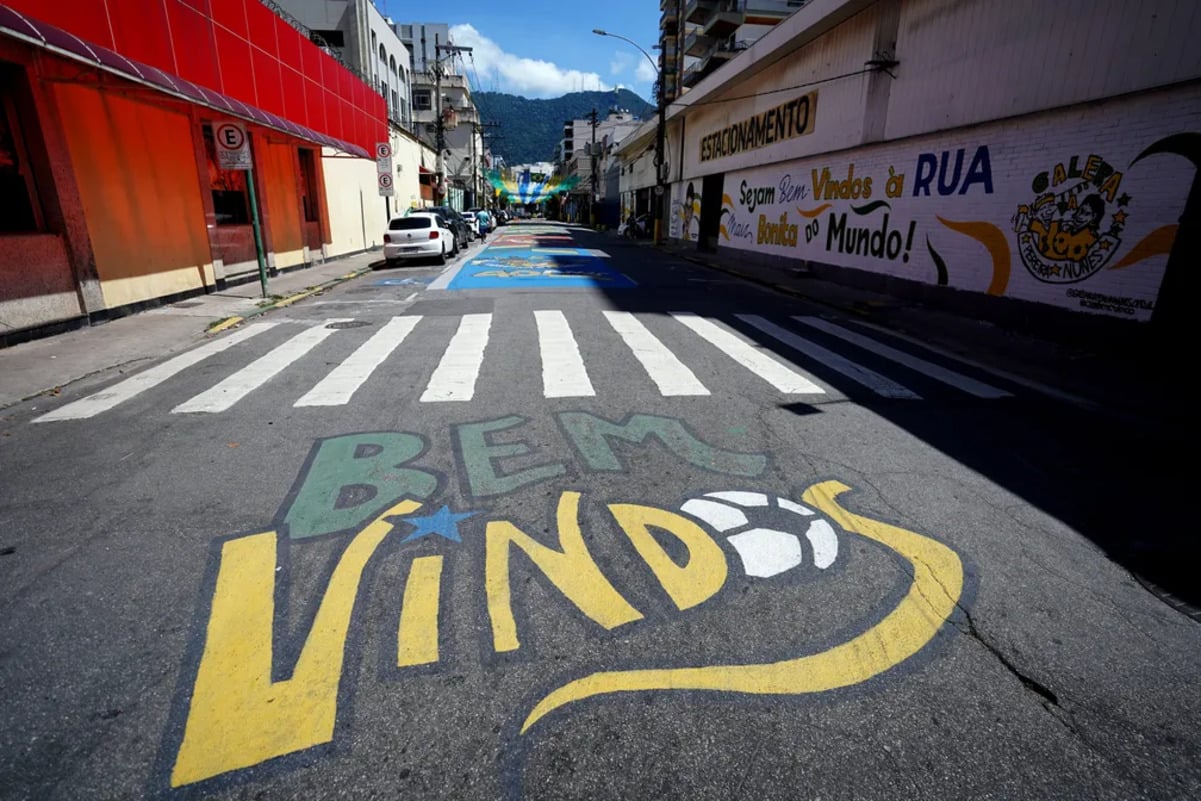
Decorations cannot interfere with road signs. (Photo: Marcos Serra Lima | g1 | Reproduction)
That is, no type of paint can cover, damage or hinder the visibility of signs, traffic lights, crosswalks, channel marks and other ground paintings. The CTB also states that the paintings and decorations cannot convey commercial or offensive messages.
Cases of non-compliance with local rules are subject to inspection, with the immediate removal of props and the application of fines.
Condominium fined residents who painted streets without authorization in the DF
The justification for the penalty was based on the Civil Code and the internal regulations of the place, on the grounds that there was an aesthetic change in a common area without prior consultation.
How to check street decoration and painting rules for the World Cup
For those who want to make the most of the World Cup atmosphere and organize the painting task force in a legal way, the starting point is the official website of the city hall. You will probably find the specific notices open for the tournament period.
If the city does not have a page dedicated to the topic, it is possible to look for this information in the service channels of the secretariat responsible for urban planning. Usually they are linked to agencies such as the Secretariat of Urban Mobility, Secretariat of Traffic or Secretariat of Urbanism.
Example regulation details prohibitions in Belo Horizonte
In Belo Horizonte, the city hall established that decoration proposals must be submitted to internal analysis by the traffic and heritage sectors. The authorizations granted will be valid until the end of the tournament, on July 19, 2026, under the condition that the organizers undertake to carry out the cleaning and fully restore the original conditions of the roads after the festive period.
Fan actions are allowed only if they do not constitute public events with public attraction, marketing of products or associated advertising. Technical constraints include:
Places prohibited for painting: painting curbs, square floors and sidewalks (especially those covered with Portuguese stones) is not allowed. Intervention on roads paved with cobblestones or polyhedral blocks is also prohibited.
Areas considered historical heritage or cultural protection perimeters: require the formal consent and favorable manifestation of preservation agencies, such as the State Institute of Historical and Artistic Heritage (IEPHA) and the National Institute of Historical and Artistic Heritage (IPHAN), before the beginning of any visual alteration.
High-flow roads: Paintings are restricted to residential streets with less flow, being prohibited on large avenues, marginal lanes and the Ring Road.
Setback zones: In authorized places, festive drawings must be made only on the asphalt of the road with removable paint, maintaining a minimum setback of 3 meters in relation to corners, crosswalks, bike lanes and traffic signs.
Installation of props: The fixing of flags or ornamentation cannot occur on trees, public lighting poles, plate structures or building facades.
Comments are the sole responsibility of their authors and do not represent the opinion of this site. Comments containing profanity or offensive language will not be published. If you identify anything that violates the terms of use, please report it.