


What changes in the Dry Law: understand the new rules for alcohol and drug tests
Contran defines new procedures, creates screening to point out alcohol intake and foresees the use of equipment to detect psychoactive substances
By
Julia Vargas
Published on 2026-08-20 at 04:00 PM
Published on 2026-08-20 at 04:00 PM
Be the first to comment.
Summarize with:
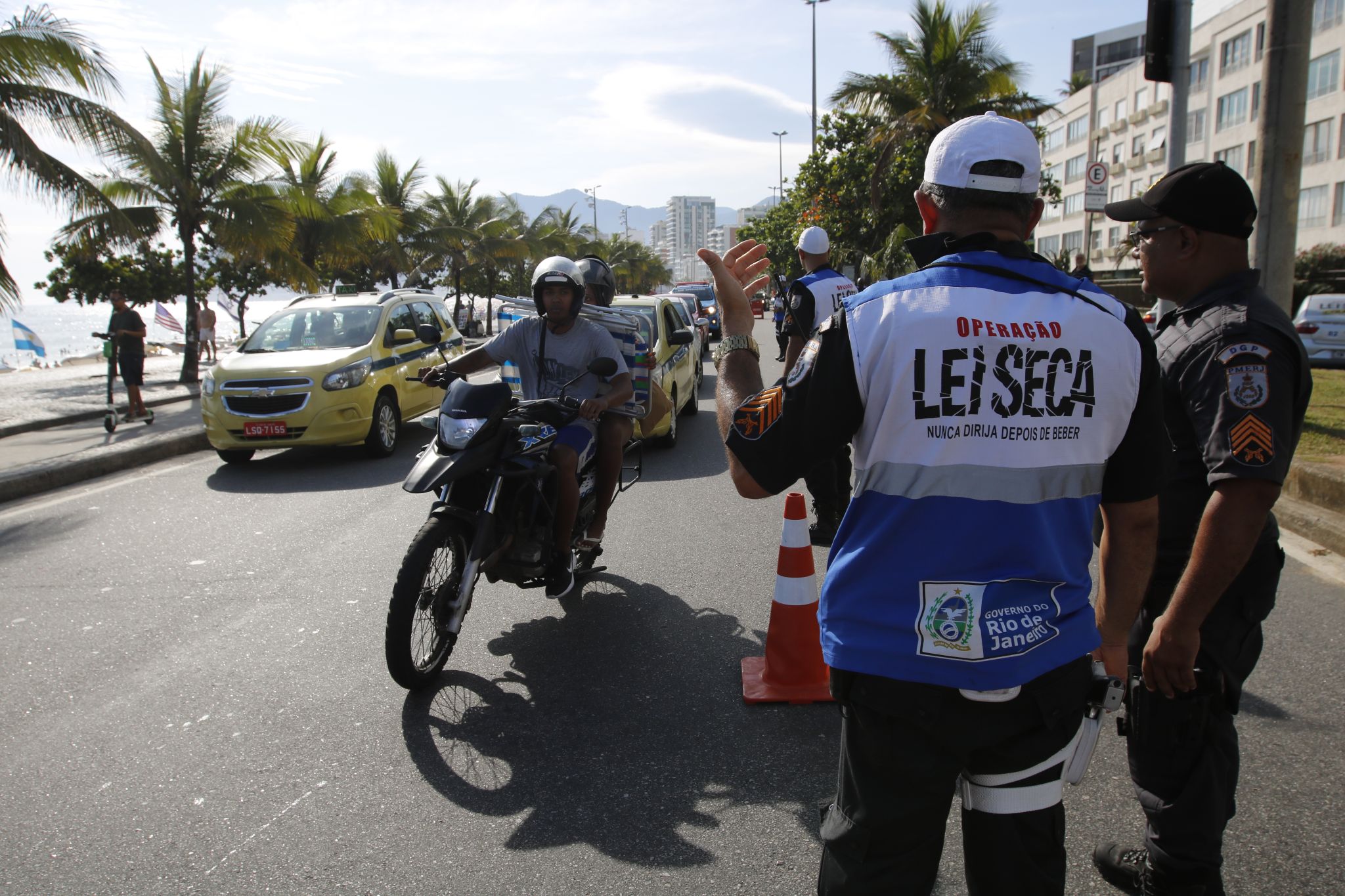
The National Traffic Council (Contran) has approved new rules for the enforcement of the Dry Law in Brazil, introducing rapid screening steps, guidelines for the detection of psychoactive substances and mandatory tests in serious accidents. The resolution regulates operational procedures used by traffic agents without changing the penalties and fines already provided for in the Brazilian Traffic Code (CTB).
Although the change is already approved, the inspection with the new tests will only happen after the certification of the devices and procedures, that is, if you are stopped in a blitz today, you will not experience these changes. The changes involving inspection forms and codes for framing infractions will have a period of 60 days to come into force.
SEE ALSO:
- Drunk driver who causes death may have his driver’s license suspended for 10 years and a fine of R$ 14.6 thousand
- Traffic deaths caused by alcohol have been on the rise since the pandemic
- Engine oil additive is a trap
During this period, the bodies of the National Traffic System must adapt their computerized systems. Until the change, the codes currently in force continue to be used. In this article you can see what the news is and how the approaches of the traffic authorities will work.
What changes at the time of the blitz with the new rules of the Dry Law?
The main changes at the time of inspection are centered on screening, the new equipment used and specific procedures.
Rapid screening and pre-testing for alcohol consumption
One of the main changes introduced by Resolution 1,031/26 is the creation of an initial screening stage, which includes:
- Pre-test or passive test: agents will be able to use alcohol detection equipment to identify signs of alcohol consumption.
- Orientation character: the result of the screening does not generate a fine or prove the infraction in isolation; it only serves to indicate the need for confirmation in the traditional breathalyzer.
- Breathalyzer: the breathalyzer continues to be used normally in alcohol inspections.
- In cases where the result is positive, it will be necessary to follow the procedures provided for in the regulations to confirm the situation.
Detection of drugs and psychoactive
substancesIn addition to the initial test, there are also new rules regarding the devices used to detect the consumption of alcohol and substances
- Detection of other substances: the new legislation allows specific equipment to be used to identify the consumption of psychoactive substances.
- Required certification: devices to detect drugs must be certified by Inmetro via the Brazilian Conformity Assessment System (SBAC). There is no single model or obligation of immediate use in all checkpoints.:
- Signs of change: the assessment of psychomotor capacity remains valid as a means of inspection.
- Qualitative analysis: ss tests indicate only the presence of the substance, not the concentration.
- Double proof: the presence of traces (such as medications) does not generate an automatic fine. The traffic agent must register, mandatorily, at least two visible signs of alteration of psychomotor capacity.
- Breathalyzer: the breathalyzer continues to be used normally in alcohol inspections
Residual alcohol and retest
The text that updates the Dry Law also defines procedures for situations that may interfere with the results of the tests:
- False positives: Consumption of foods or products with residual alcohol in the mouth (such as liquor candies, loaf bread, or mouthwashes) will be retested before any conclusion about infraction is made.
- Retest: repetition of the procedure will also be carried out when technical or operational factors prevent the obtaining of a result considered valid.
Claims and refusal to test
- Fatal accidents: it is mandatory to carry out tests for alcohol and other substances in drivers involved in accidents with death.
- Rule for refusal: Denying the test remains a very serious infraction. The new rule prohibits applying, in the same approach, simultaneous fines for refusal and for driving under the influence.
Refusing the breathalyzer test at a Prohibition checkpoint remains a very serious infraction, even if the driver does not show signs of drunkenness. The driver will have to bear:
- Fine: R$ 2,934.70, (10x the amount of the fine for a very serious infraction).
- Suspension of CNH: 12 months.
- CNH collection: the document can be collected during the inspection.
- Vehicle restraint: the car is held until a licensed driver can take the wheel.
- Recidivism: if the driver commits the same infraction again within 12 months, the fine is doubled, reaching R$ 5,869.40.
Validity
periodsThe rule enters into force on the date of its publication in the Official Gazette of the Union, granting a period of 60 days for the adaptation of computerized systems and framing codes of traffic agencies. The practical application of psychoactive substance tests will occur gradually, according to the certification and availability of equipment.
SEE MORE ABOUT

0 Comments
Comments are the sole responsibility of their authors and do not represent the opinion of this site. Comments containing profanity or offensive language will not be published. If you identify anything that violates the terms of use, please report it.