


Traffic noise can increase the risk of depression, anxiety, Parkinson’s and even high cholesterol
Studies reveal that continuous exposure to vehicle noise alters body markers, increasing the risks of psychological disorders and diseases
By
Julia Vargas
Published on 2026-07-29 at 07:00 PM
Published on 2026-07-29 at 07:00 PM
Be the first to comment.
Summarize with:
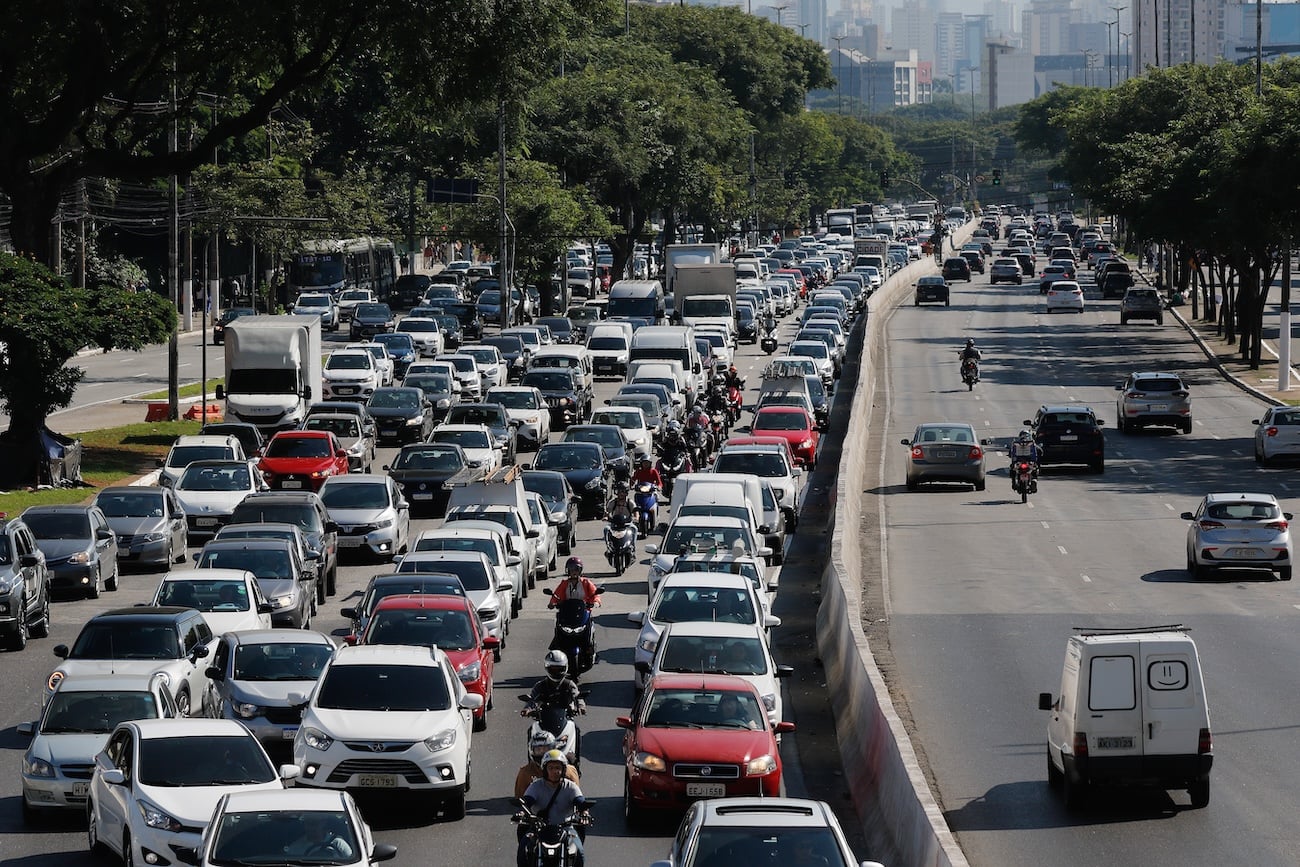
The intense flow of traffic and vehicle congestion are frequently debated issues in search of a solution to improve mobility, especially in large urban centers. However, another problem that can be just as worrisome, is little discussed: the impact of traffic noise on our health.
The constant noise of cars, motorcycles, buses, and trucks is usually seen only as an unavoidable nuisance, but a set of recent scientific research shows that it is a relevant risk factor for physical and mental health, being associated with the development of depression, anxiety, changes in cholesterol levels, and even an increased risk of diagnosing Parkinson’s disease.
SEE ALSO:
- Only 15 decibels: Embraer’s flying car noise rules advance at Anac
- The ‘annoying noise’ of electric cars is a safety feature
- Car making water noise? Learn how to solve it
Studies published by universities around the world and in scientific journals, such as Environmental Research and JAMA Neurology, bring evidence that the noise produced by traffic acts as a continuous biological stressor capable of profoundly deregulating the body.
Traffic noise puts mental health at risk
A study led by the University of Oulu in Finland and published in the journal Environmental Research followed 114,353 young people living in the Helsinki metropolitan area for up to ten years (from 8 to 21 years old). The objective was to map the impacts of continuous exposure to road and rail noise in the places where the participants lived.
The study confirmed that exceeding the safety limit recommended by the World Health Organization (WHO), set at 53 decibels (dB), significantly increases the likelihood of young people developing depression and anxiety. Noise above the limit is no longer a mere discomfort and starts to act as a direct psychological stressor on the young population.
- Tolerance limits: the risk of anxiety is lower when noise levels are between 45 and 50 dB in the quietest part of the house, but it suffers a significant jump when it exceeds the range of 53 to 55 dB.
- Profiles of greater vulnerability: the association between noise and anxiety was more pronounced among men and in individuals whose fathers had no history of mental health disorders.
Night noise disrupts metabolism and raises cholesterol
The effects of traffic noise go beyond the psychological sphere and directly affect cardiovascular and metabolic health. In another paper published in Environmental Research, researchers from the University of Oulu also analyzed data from more than 200,000 adults from the United Kingdom, the Netherlands and Finland.
The study focused on traffic noise during the night, a time when the body is most susceptible to sleep interruptions, and evaluated 155 blood biomarkers of the participants. The research concluded that nighttime noise pollution produced by vehicles traveling on highways or highways can cause higher levels of blood cholesterol and metabolites related to fat accumulation in adults. Both are known risk factors for diseases such as type 2 diabetes and high blood pressure.
Prolonged exposure to nocturnal noise above 50 dB was associated with:
- Increased levels of total cholesterol and LDL cholesterol (the so-called “bad cholesterol”);
- Elevation of metabolites associated with the accumulation of fat in the blood;
- Greater predisposition to cardiometabolic diseases, such as high blood pressure and type 2 diabetes.
The WHO recommends that nighttime noise should not exceed 45 dB. The researchers emphasize that nighttime noise subtly but consistently affects the body’s biological markers.
Association of traffic noise with Parkinson’s disease
In the neurological field, a large-scale study published in JAMA Neurology followed more than 3 million adults in Denmark over nearly two decades. The data showed an association between long-term exposure to traffic noise and a higher risk of Parkinson’s disease diagnosis.
The results showed that people exposed to higher levels of noise had a modest but statistically significant increase in the risk of developing the disease.
Among the main findings of the Danish research, the following stand out:
- Gradual increase in risk: the increase of approximately 11 dB in the façade of the house most exposed to vehicular traffic was associated with a 3% increase in the risk of Parkinson’s.
- The role of the “silent façade”: residences that had at least one significantly quieter side (with a difference of 10 dB or more in relation to the noisy façade) showed a protective effect on the health of the residents.
Still, the authors caution that the study is observational and identifies only a statistical association between the factors analyzed. This means that the results do not allow us to say that traffic noise is the cause of Parkinson’s disease.
How does traffic noise affect the body and what can be done?
Although the research uses different methodologies, the scientific literature points to similar biological mechanisms:
- Sleep deprivation and fragmentation: Nocturnal noise impedes the deep stages of rest.
- Chronic stress: The brain interprets the constant sound as a warning signal, activating the frequent production of cortisol (the stress hormone).
- Inflammation and oxidative stress: The prolonged biological response to stress can accelerate inflammatory processes in the body, affecting cellular metabolism and the central nervous system.
Measures to reduce the damage of traffic noise
Given the impact on public health, experts recommend that urban planners and managers take preventive measures, such as:
- Expansion of green spaces in cities to dampen sound;
- Guarantee of architectural projects that provide rooms facing internal or quiet areas;
- Lowering speed limits in residential areas and encouraging the use of quieter tires in vehicles.
SEE MORE ABOUT

0 Comments
Comments are the sole responsibility of their authors and do not represent the opinion of this site. Comments containing profanity or offensive language will not be published. If you identify anything that violates the terms of use, please report it.