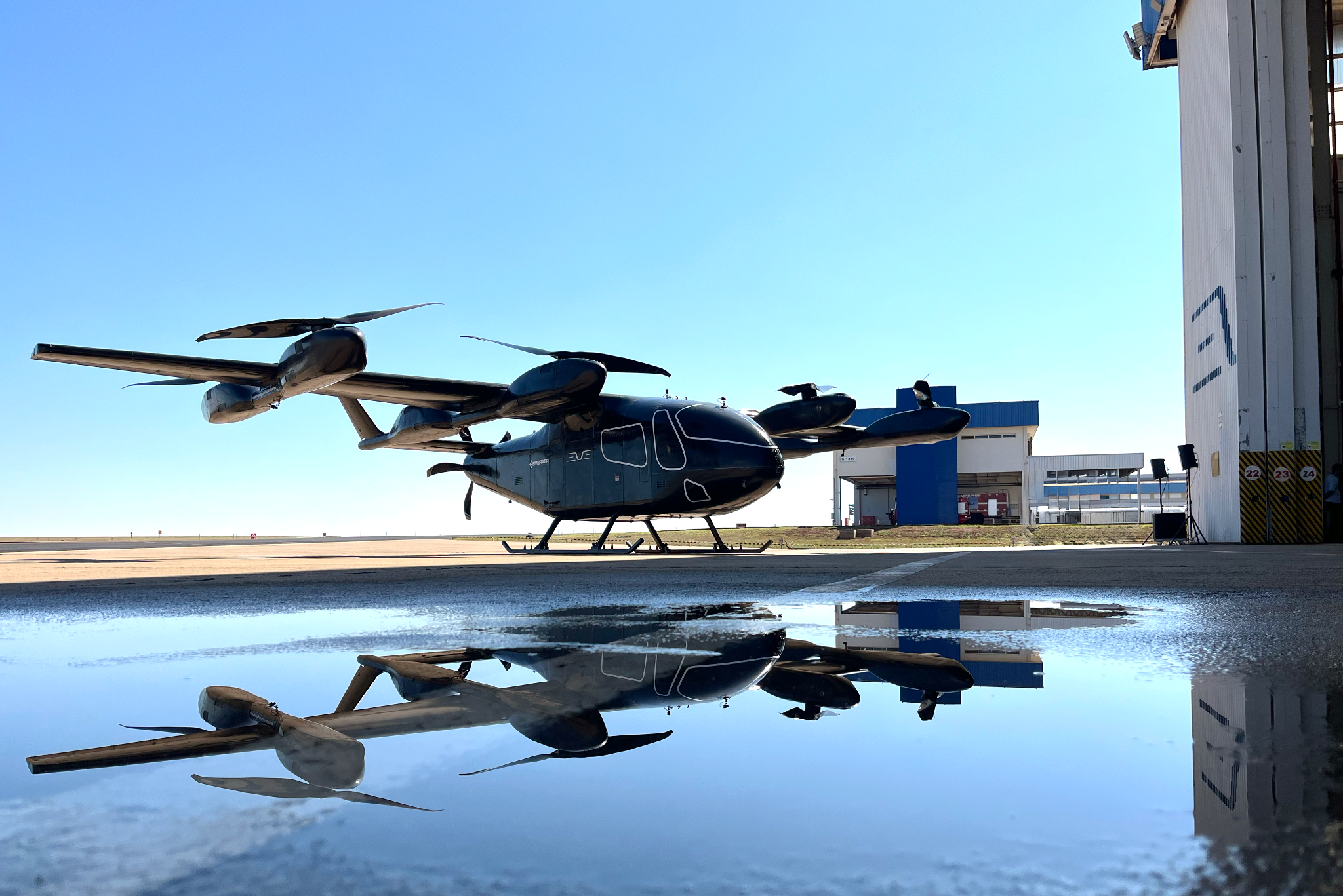
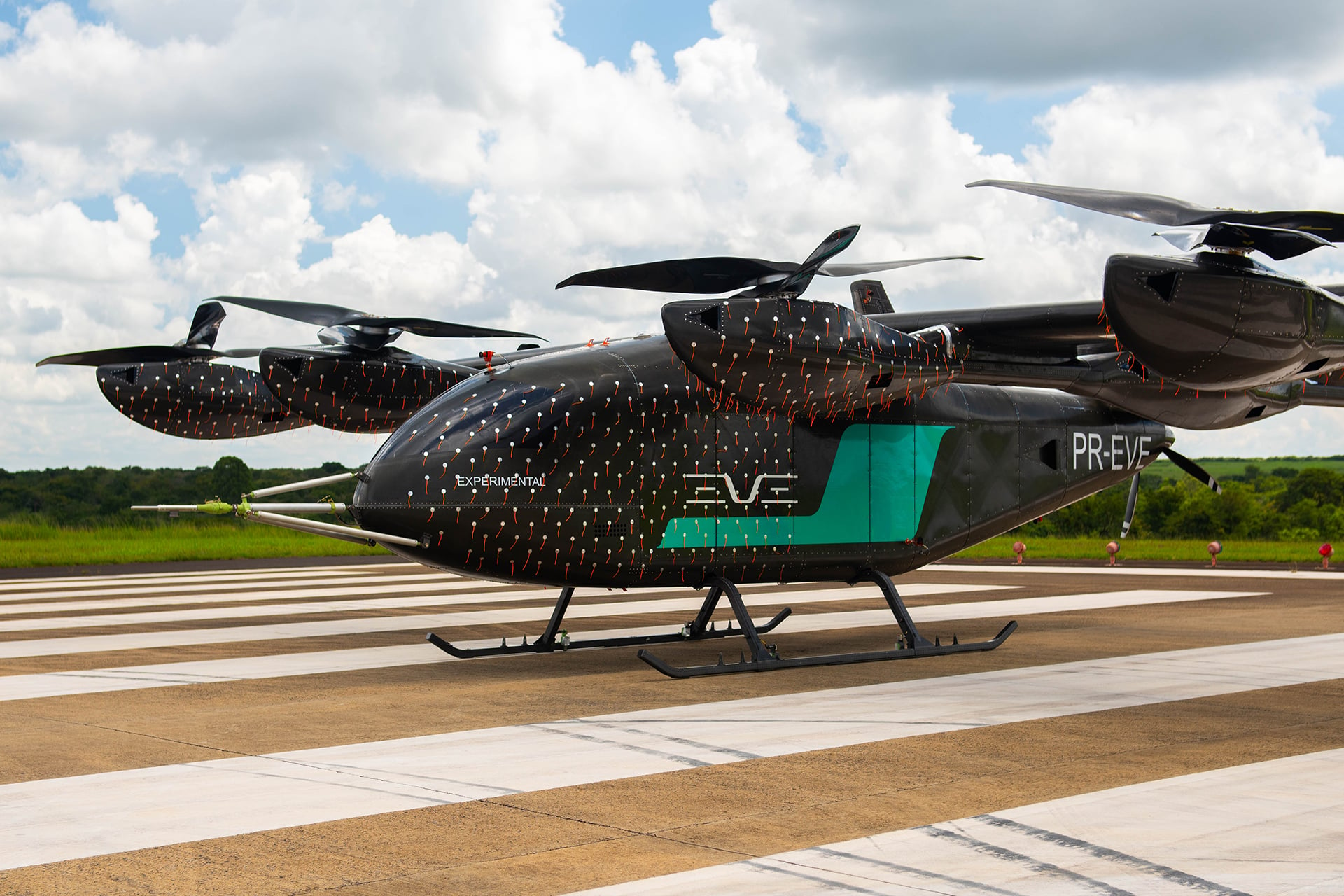
The National Civil Aviation Agency (Anac) has opened a public consultation on the technical noise criteria of the Eve 100, the eVTOL developed by Eve, a subsidiary of Embraer. It is the first stage of acoustic certification aimed specifically at this type of aircraft in Brazil and a necessary step to release the first commercial flights, scheduled for this decade.
According to the document, the flight tests will measure the sound emitted by the aircraft. The proposal foresees that, at 150 meters high and under ideal travel conditions, the noise perceived by those on the ground will be around 15 decibels, a level close to that of a whisper. The consultation receives contributions until the 8th. For Eve’s CEO, Johann Bordais, the publication is a milestone that helps create a regulatory framework adapted to an emerging technology and aligned with international standards.
What is Eve’s eVTOL
An acronym for “electric vertical take-off and landing vehicle”, the eVTOL is often referred to as a “flying car”. It takes off like a helicopter, but it is 100% electric and much quieter, designed for short-distance urban and regional transport. The Eve 100 uses eight rotors for vertical ascent and fixed wings for cruise flight. It carries a pilot and four passengers, with a range of up to 100 km.
The aircraft will be manufactured in Taubaté (SP), in a plant with a capacity of up to 480 units per year. Eve claims to accumulate about 2,800 orders, including firm orders and letters of intent, valued at around US$ 14 billion. The most recent came this week: an agreement of intent for 30 aircraft with Moov, aimed at tourism and regional mobility in Cape Verde. The start of commercial operations is expected in 2027.
Comments are the sole responsibility of their authors and do not represent the opinion of this site. Comments containing profanity or offensive language will not be published. If you identify anything that violates the terms of use, please report it.