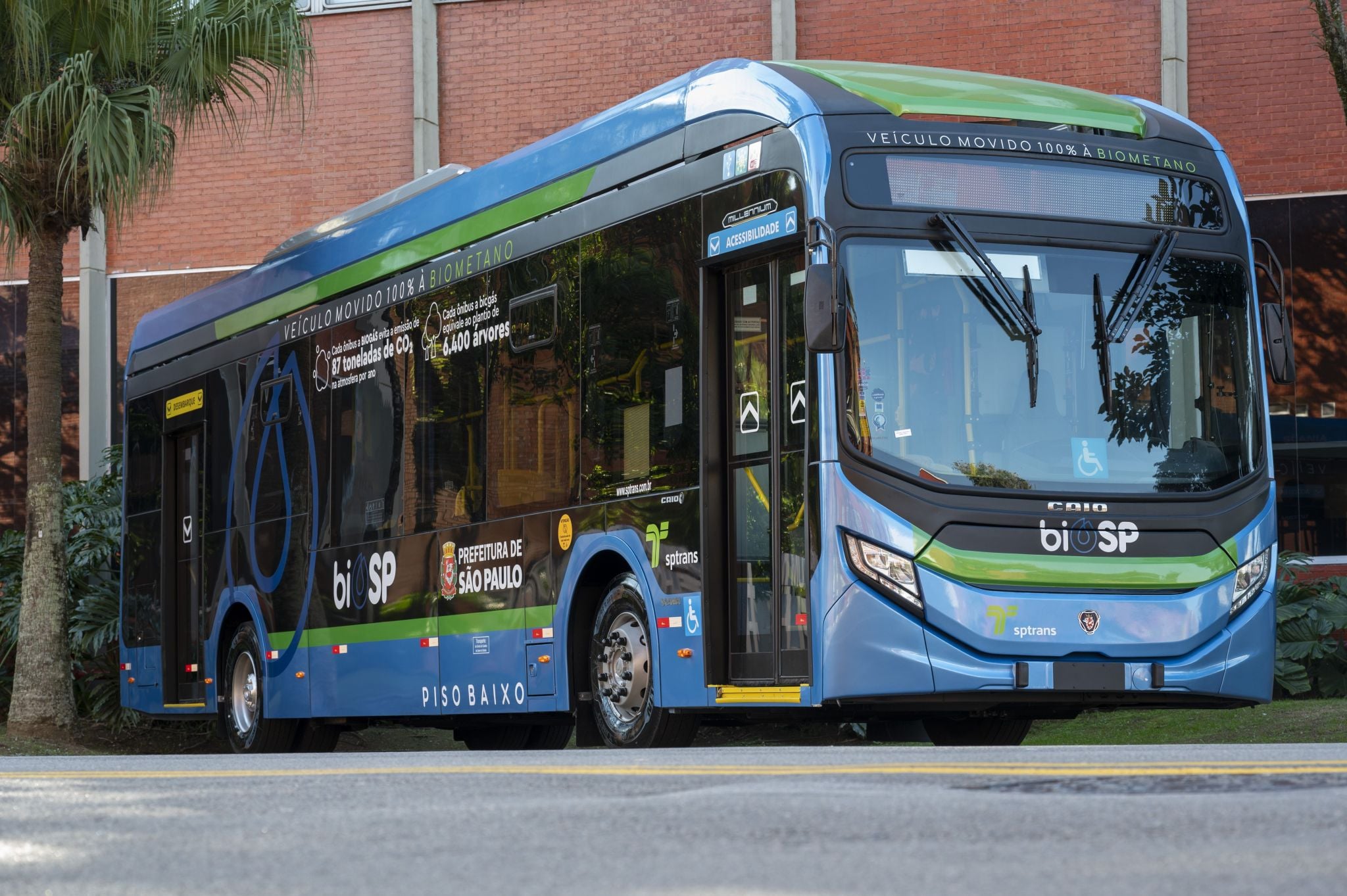
Scania is preparing to start tests with its bus powered by 100% biomethane. The model was configured in the SPTrans standard and will circulate through the streets of the capital of São Paulo to collect data in real situations of use.
The new model, which is currently in the final phase of homologation in the capital of São Paulo, was developed jointly by Scania and Caio. The project unites the K chassis with the OC09 104 engine, which delivers 280 horsepower and maximum torque of 135 kgfm, integrated into the ZF automatic transmission (model 6AP1420).
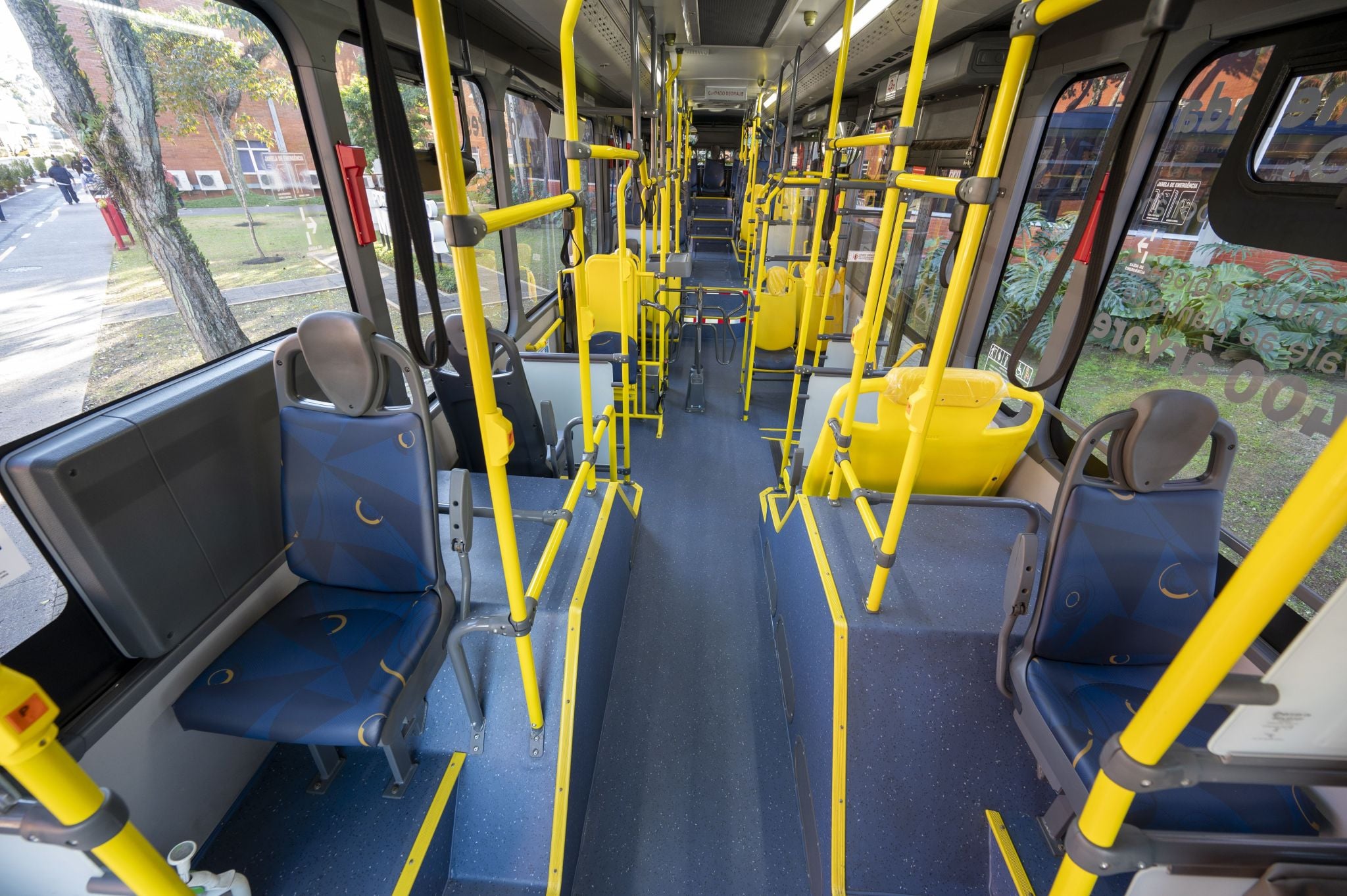
The body is the Millennium, developed by Caio in the low-floor configuration (although it can also be built in a version with normal floor). It is 13 meters long and has the capacity to carry up to 88 passengers. The chassis features air suspension on both the front and rear axles, autonomous emergency braking (AEB) and has safety options such as adaptive cruise control and lane keeping assistant (LDW).
Carbon
fiber gas cylinders
The great technological novelty of the model is the new cylinders for gas storage, made entirely of carbon fiber, a material widely used in high-performance sports cars, such as Ferrari and McLaren.
To be configured in the low-floor model, gas cylinders, made of carbon fiber, were installed on the roof of the vehicle (Photo: Scania | Disclosure)
According to the automaker, these reservoirs are built in carbon fiber material and are 70% lighter than conventional ones, which makes it possible to mount them on the roof of the vehicle without compromising stability. The 4 cylinders have a capacity of 235 liters of gas each, totaling 940 liters (or 220 m³ of gas). This configuration guarantees a range of 300 to 350 kilometers, depending on the severity of the operation.
Expansion of gas
vehiclesScania has been betting heavily on the gas-fired matrix in Brazil. The automaker, which already consolidates a line of road trucks with this technology, also has a robust portfolio of buses. In 2014, the manufacturer brought a unit imported from Sweden for testing, becoming the first bus powered by CNG/Biomethane to run on Brazilian roads. Two years later, it produced the first national CNG bus and, in 2019, made the first commercial deliveries in the country.
Currently, Scania offers four urban and intercity gas configurations in the national market:
K 280 4×2 (urban up to 14 m);
K 340 6×2/4 (15 m urban);
K 340 6×2/2 (articulated up to 21 m);
K 340 4×2 (with intercity vocation).
Globally, the brand reveals that it has sold more than 6 thousand gas buses in the last 10 years, 40% of which was destined for Latin American countries.
Datasheet: Scania K 280 B4X2 Bus (CNG / Biomethane)
Comments are the sole responsibility of their authors and do not represent the opinion of this site. Comments containing profanity or offensive language will not be published. If you identify anything that violates the terms of use, please report it.